


Lowes Perforated Metal Sheet
For maintenance managers, design engineers, and industrial purchasing teams, sourcing materials often begins with a search for immediate availability. A common starting point for quick-fix solutions or prototyping is a retail hardware store, leading many to search for a lowes perforated metal sheet. While retail outlets serve the DIY and residential construction markets effectively, industrial filtration and heavy-duty processing applications require a level of precision, material integrity, and customization that standard consumer-grade products cannot provide.
In the context of industrial manufacturing, Perforated & Expanded Metal serves as a critical component in filtration systems, chemical processing, and structural engineering. Understanding the gap between retail-grade materials and industrial-specification components is essential for ensuring the longevity and efficiency of your equipment. This guide explores the technical considerations, material requirements, and engineering benchmarks necessary for selecting the right perforated metal for professional B2B applications.
Understanding the Limitations of Retail-Grade Perforated Metal
A lowes perforated metal sheet is typically designed for general-purpose use, such as decorative panels, radiator covers, or simple ventilation grilles. These products are manufactured to meet broad consumer needs, which often results in limitations regarding material thickness, alloy variety, and hole pattern precision.
From an engineering perspective, the primary limitations of retail-grade perforated metal include:
* Material Gauge: Retail sheets are often available only in thinner gauges (higher gauge numbers), which may lack the structural rigidity required for high-pressure hydraulic systems or heavy-duty industrial strainers.
* Alloy Selection: Most retail inventory is limited to aluminum or mild steel. In industrial environments involving corrosive chemicals, high temperatures, or strict hygiene standards (such as food and beverage or pharmaceutical processing), high-grade stainless steel (304, 316, or 316L) is mandatory.
* Hole Pattern Consistency: Industrial filtration requires exact hole diameters and pitch to ensure predictable flow rates and particle retention. Retail products may have wider tolerances that lead to inconsistent filtration performance.
* Size Constraints: Off-the-shelf sheets come in fixed dimensions. For industrial OEM applications, custom dimensions with specific margins (unperforated edges) are often required to facilitate welding or mechanical fastening into a larger assembly.
Key Engineering Specifications for Industrial Perforated Metal
When transitioning from a general-purpose lowes perforated metal sheet to an industrial-grade solution, engineers must define several critical parameters to ensure the component performs as expected within a filtration or processing system.
Hole Shape and Orientation
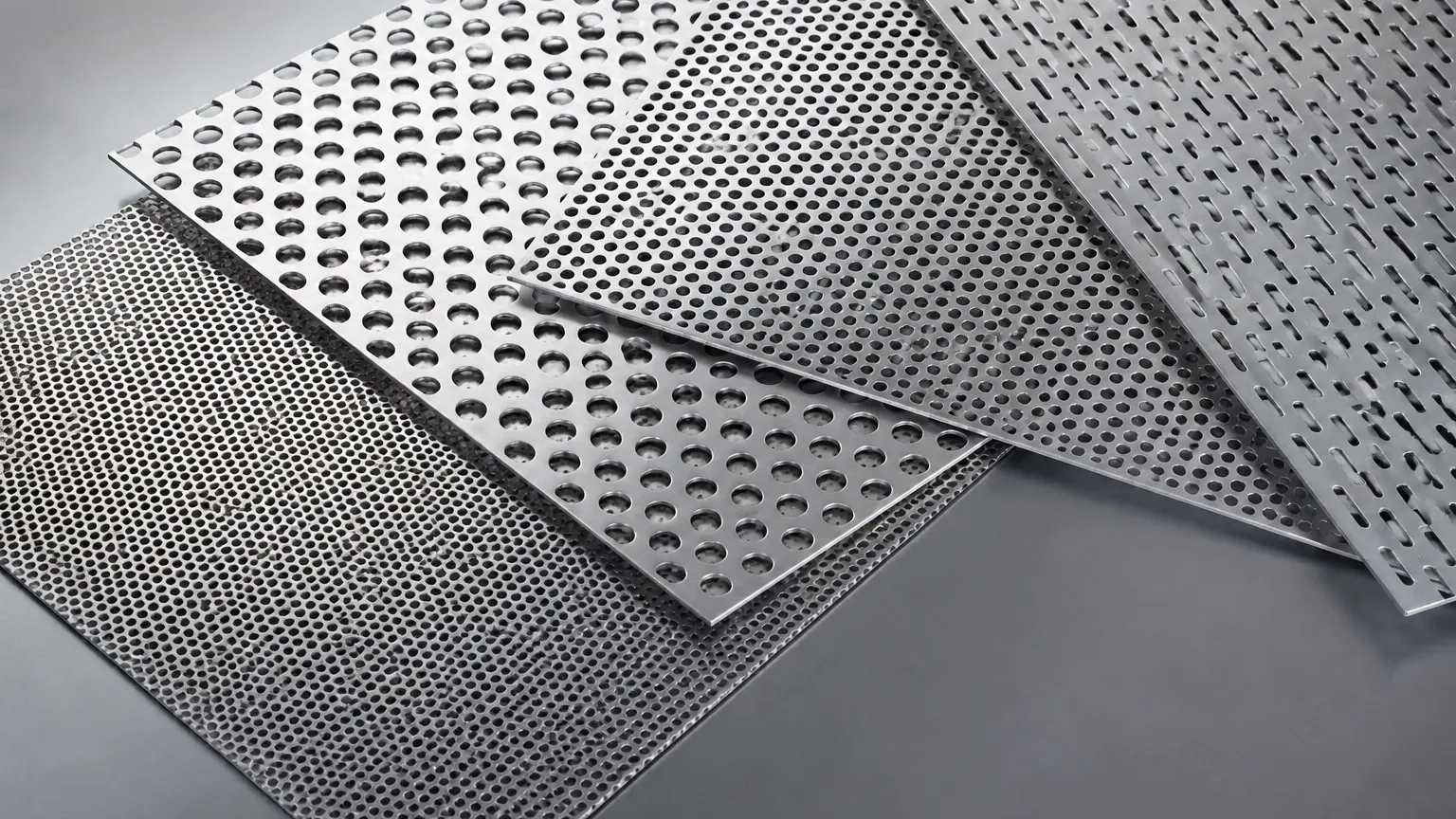
While round holes are the most common due to their structural strength and ease of manufacturing, industrial applications may require square, slotted, or hexagonal patterns. The orientation—whether the holes are in a 60-degree staggered pattern or a straight line—significantly impacts both the strength of the sheet and the flow characteristics of the fluid or gas passing through it.
Hole Diameter and Pitch
The diameter of the perforation determines the minimum particle size that will be retained. The pitch (the distance from the center of one hole to the center of the next) determines the "open area" percentage. In industrial filtration, even a fraction of a millimeter difference in hole diameter can alter the pressure drop across the filter, potentially leading to system inefficiencies or pump strain.
Sheet Thickness (Gauge)
Industrial Perforated & Expanded Metal must withstand mechanical stresses, including backwashing cycles and high-velocity flow. Selecting the correct thickness is a balancing act: a thicker sheet offers more durability but may increase the weight and cost, while a sheet that is too thin may vibrate or deform under pressure.
Material Selection: Beyond Standard Aluminum and Steel
One of the most significant differences between a standard lowes perforated metal sheet and a professional filtration component is the chemistry of the metal itself. For B2B applications, material selection is dictated by the operating environment.
Stainless Steel 304 vs. 316L
In many industrial settings, 304 stainless steel is the standard for its excellent corrosion resistance and cost-effectiveness. However, for marine environments or chemical processing involving chlorides, 316L stainless steel is preferred. The "L" denotes low carbon content, which improves weldability and prevents sensitization—a common cause of corrosion in the heat-affected zones of welds.
Specialty Alloys
For extreme environments, such as those found in petrochemical refining or aerospace, standard stainless steel may be insufficient. In these cases, engineers look toward specialty alloys like Monel, Inconel, or Hastelloy. These materials offer superior resistance to oxidation and carburization at high temperatures, capabilities that are never found in retail-grade metal sheets.
Surface Finishes
Industrial perforated metal can be treated with various finishes to enhance performance. Electropolishing is common in the pharmaceutical and food industries to create a microscopically smooth surface that resists bacterial growth and is easier to clean. Passivation is another critical process that restores the protective oxide layer on stainless steel after the perforation process.
Evaluating Open Area and Filtration Efficiency
The "Open Area" is a mathematical representation of the percentage of the sheet that consists of holes. This is perhaps the most critical calculation for any engineer designing a filtration system. While a lowes perforated metal sheet might list a general description, industrial suppliers provide precise calculations.
The formula for a 60-degree staggered round hole pattern is:
`Open Area % = (D² * 90.69) / P²`
*(Where D is the hole diameter and P is the pitch)*
Why does this matter?
1. Flow Rate: A higher open area percentage allows for higher flow rates and lower initial pressure drops.
2. Structural Integrity: As the open area increases, the structural strength of the sheet decreases. If the open area is too high for the thickness of the metal, the sheet may fail under the mechanical load of the fluid.
3. Filtration Accuracy: In multi-stage filtration, the perforated metal often serves as a support (core) for a finer wire mesh. In this role, the perforated metal must provide maximum support with minimum interference to the flow.
Customization vs. Off-the-Shelf Solutions
The primary advantage of working with a dedicated manufacturer like Kaifil over purchasing a lowes perforated metal sheet is the ability to customize the product to the exact requirements of the application. Industrial projects rarely fit into the "one size fits all" category.
Custom Margins
In a retail sheet, the perforations usually run to the very edge of the material. In industrial fabrication, "margins" (blank areas around the edges) are often necessary. These solid borders provide a clean surface for welding the sheet into a filter cartridge or bolting it into a housing without compromising the hole pattern.
Secondary Operations
Industrial perforated metal often requires more than just flat sheets. Manufacturers provide secondary services such as:
* Rolling and Welding: Transforming flat sheets into precision-welded cylinders for filter cartridges.
* Bending and Forming: Creating complex shapes for machine guards or internal vessel components.
* Degreasing: Removing manufacturing oils, which is essential for oxygen service or food-grade applications.
Total Cost of Ownership and Long-Term Durability
While the initial price of a lowes perforated metal sheet may seem attractive for a quick repair, the total cost of ownership (TCO) in an industrial setting often tells a different story. Retail-grade materials that are not suited for the specific chemical or mechanical stresses of a factory floor will fail prematurely.
Premature failure leads to:
* Unscheduled Downtime: The cost of stopping a production line to replace a failed filter often far exceeds the cost of the filter itself.
* Downstream Damage: If a perforated screen fails, fragments of the screen or unfiltered debris can move downstream, damaging expensive pumps, valves, or sensitive instrumentation.
* Contamination Risks: In the food, beverage, and pharmaceutical sectors, using the wrong grade of metal can lead to batch contamination, resulting in significant financial loss and regulatory issues.
Investing in high-quality Perforated & Expanded Metal ensures that the component is engineered for the specific lifecycle requirements of the equipment, providing a much lower TCO over the life of the system.
Conclusion: Making Informed Purchasing Decisions
When evaluating sources for perforated metal, it is vital to distinguish between a commodity product and an engineered component. While a lowes perforated metal sheet is a valid solution for residential and light-duty tasks, industrial filtration demands a higher standard of material science and manufacturing precision.
Engineers and purchasing professionals should confirm the following before finalizing a specification:
1. Material Grade: Is the alloy suitable for the chemical environment?
2. Tolerances: Does the hole diameter and pitch meet the required filtration accuracy?
3. Certifications: Does the material require Mill Test Reports (MTRs) for traceability?
4. Configuration: Are custom margins or secondary forming operations needed for installation?
By focusing on these technical parameters, industrial teams can ensure they select filtration solutions that optimize performance, reduce maintenance intervals, and provide reliable service in demanding environments.
