


Micro Perforated Metal Sheet
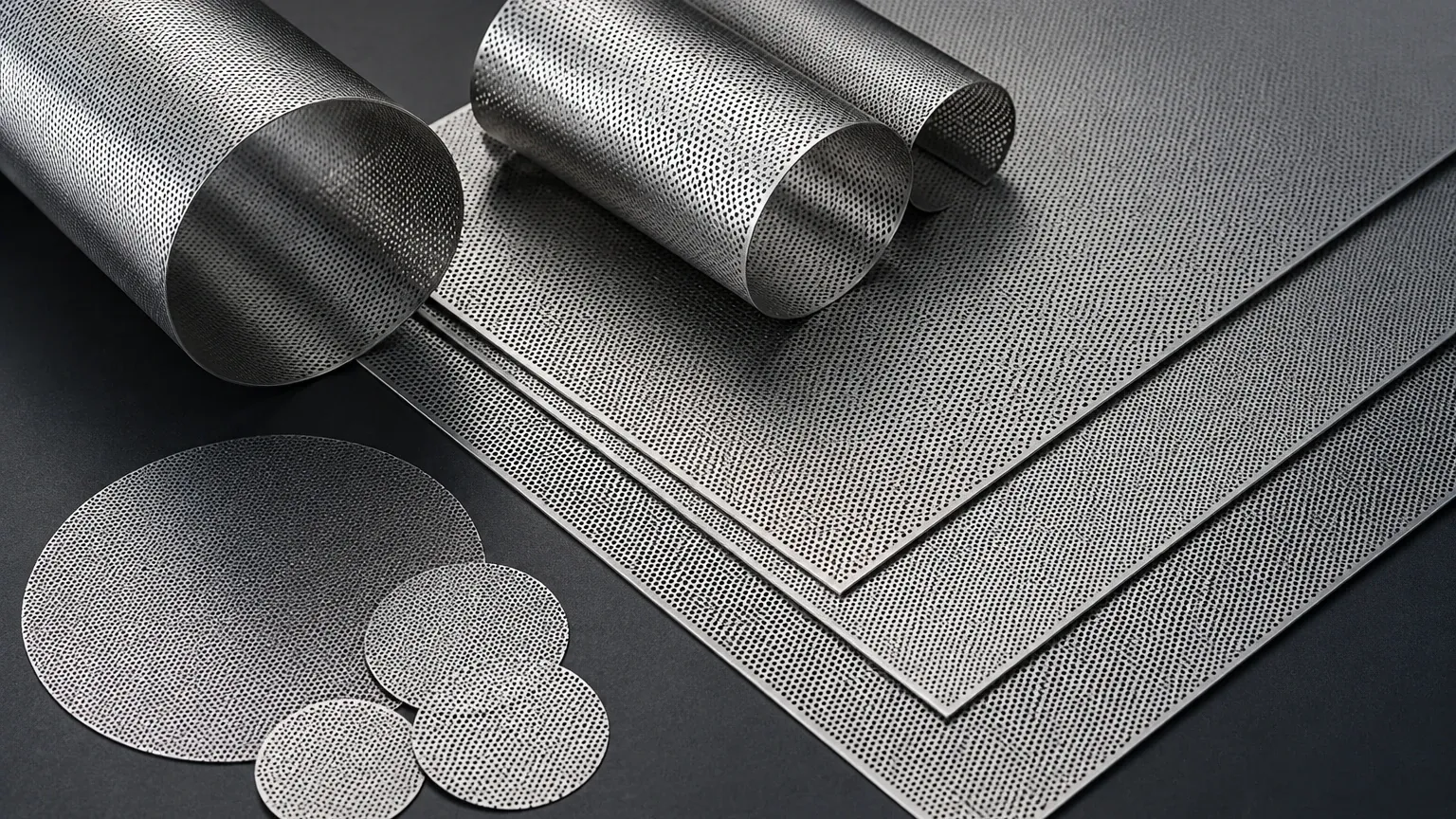
In the landscape of industrial filtration and precision engineering, the micro perforated metal sheet represents a critical advancement over standard perforated materials. While traditional perforated metal is often used for structural or aesthetic purposes, micro perforated sheets are engineered for high-precision applications where filtration accuracy, flow control, and structural integrity must coexist. For engineers and procurement specialists, understanding the technical nuances of these components is essential for optimizing system performance and ensuring the longevity of industrial equipment.
As a specialized manufacturer, Kaifil provides high-performance Perforated & Expanded Metal solutions designed to meet the rigorous demands of chemical processing, pharmaceutical manufacturing, and the food and beverage industry. This guide explores the technical specifications, manufacturing processes, and engineering considerations necessary for selecting the right micro perforated metal sheet for your specific application.
Technical Characteristics of Micro Perforated Metal
The primary distinction of a micro perforated metal sheet lies in the ratio between the hole diameter and the sheet thickness. In standard perforation, the hole diameter is typically equal to or greater than the material thickness. Micro perforation, however, often involves hole diameters that are significantly smaller than the sheet thickness, or holes that range from 0.05mm to 1.5mm in diameter.
Material Selection
The choice of material is the first and most critical decision in the engineering process. Because these sheets are often exposed to corrosive chemicals, high temperatures, or strict hygienic requirements, stainless steel is the industry standard.
* Stainless Steel 304: Suitable for general industrial applications where moderate corrosion resistance is required. It is commonly used in food processing and architectural applications.
* Stainless Steel 316L: The preferred choice for marine environments, pharmaceutical production, and chemical processing. The addition of molybdenum and a lower carbon content provides superior resistance to pitting and crevice corrosion, especially in chloride-rich environments.
* Specialty Alloys: For extreme environments, materials such as Hastelloy, Monel, or Titanium may be utilized to withstand specific chemical reactions or extreme thermal cycling.
Hole Patterns and Geometry
The geometry of the perforations affects both the filtration efficiency and the mechanical strength of the sheet. Common patterns include:
1. Round Holes: The most common and structurally stable pattern. Round holes provide a good balance between open area and sheet strength.
2. Square Holes: Often used when a higher open area is required, though they may introduce stress concentrations at the corners.
3. Slotted Holes: Ideal for filtering elongated particles or for applications requiring specific flow directions.
4. Hexagonal Patterns: Offers the highest possible open area while maintaining significant structural rigidity.
Manufacturing Processes for Precision Micro Perforation
Producing a micro perforated metal sheet requires advanced manufacturing techniques that go beyond traditional mechanical punching. Depending on the required precision and material thickness, several methods are employed.
Chemical Etching (Photo-Chemical Machining)
Chemical etching is a non-contact process that uses acid to dissolve metal in specific areas defined by a light-sensitive mask. This method is ideal for extremely thin sheets and complex patterns. Because it does not involve mechanical force, the material remains burr-free and stress-free, maintaining its original physical properties. This is often the preferred method for the finest filtration requirements.
Laser Drilling
Laser drilling utilizes high-energy light beams to vaporize the metal. This process allows for extremely small hole diameters with high aspect ratios (the ratio of hole depth to diameter). Laser drilling is highly versatile and can be used on thicker materials than chemical etching, though it may leave a slight heat-affected zone (HAZ) around the holes that may require post-processing.
High-Precision Mechanical Punching
For larger production runs where the hole diameter is at least equal to the material thickness, high-precision mechanical punching remains the most cost-effective solution. Modern CNC-controlled presses can achieve tight tolerances and high repeatability, making this suitable for industrial-grade Perforated & Expanded Metal components used in heavy-duty filtration.
Engineering Considerations: Open Area and Flow Dynamics
When specifying a micro perforated metal sheet, engineers must calculate the "Open Area Percentage." This figure determines the flow rate, pressure drop, and filtration efficiency of the component.
Calculating Open Area
For a standard 60-degree staggered round hole pattern, the formula for open area percentage is:
Open Area % = (D² × 90.69) / P²
* D: Hole Diameter
* P: Pitch (the distance from the center of one hole to the center of the adjacent hole)
An increase in the open area generally leads to a lower pressure drop and higher flow rates, but it also reduces the mechanical strength of the sheet. Engineers must find the "sweet spot" where the sheet is porous enough for efficient filtration but strong enough to withstand the operational pressure (Delta P) without deforming.
Pressure Drop and Resistance
In high-velocity systems, the micro perforated sheet acts as a flow restrictor. The pressure drop across the sheet is influenced by the fluid viscosity, velocity, and the sharpness of the hole edges. In precision applications, such as hydraulic systems or gas diffusion, the smoothness of the internal hole walls—achieved through chemical etching or electropolishing—can significantly reduce turbulence and energy loss.
Industrial Applications of Micro Perforated Sheets
The versatility of the micro perforated metal sheet makes it indispensable across various high-tech and heavy industrial sectors.
Pharmaceutical and Biotechnology
In pharmaceutical manufacturing, precision is paramount. Micro perforated sheets are used in centrifuge baskets, fluid bed dryers, and tablet coating equipment. The smooth surface finish and precise hole sizes ensure that active pharmaceutical ingredients (APIs) are processed without contamination and with minimal product loss.
Food and Beverage Processing
From sugar refining to juice extraction, micro perforated sheets serve as primary filters. In the dairy industry, they are used in cheese molds and whey separation. The use of 316L stainless steel ensures compliance with food safety standards and allows for rigorous Clean-in-Place (CIP) cycles.
Chemical and Petrochemical
Micro perforated sheets are often used as support structures for finer wire mesh filters or as standalone strainers in corrosive chemical streams. They provide the necessary mechanical backing to prevent the deformation of delicate filter media under high pressure while contributing to the overall filtration surface area.
Electronics and Acoustic Damping
Beyond filtration, micro perforated metal sheets are used in the electronics industry for EMI/RFI shielding and heat dissipation. In acoustics, they are engineered to act as sound absorbers in environments where traditional foam or fabric materials would fail due to heat or moisture exposure.
Evaluation Criteria for Purchasing and OEM Customization
When sourcing micro perforated metal sheets, procurement teams should evaluate potential suppliers based on technical capability and quality assurance. Before finalizing a specification, consider the following factors:
1. Dimensional Tolerances
Confirm the manufacturer’s ability to maintain tight tolerances on both hole diameter and pitch. In precision filtration, even a 5% variance in hole size can lead to bypass or clogging issues. Ask for technical data sheets that specify the standard deviation in their perforation process.
2. Surface Finish and Edge Quality
For many B2B applications, the presence of burrs or sharp edges is unacceptable. Burrs can trap particles, leading to bacterial growth in food applications or causing turbulence in hydraulic systems. Specify whether the sheets require deburring, pickling, or electropolishing to achieve the necessary surface roughness (Ra) values.
3. Structural Integrity and Flatness
The perforation process can introduce internal stresses that cause the metal sheet to curl or buckle. Ensure the supplier uses leveling processes to provide flat sheets that can be easily integrated into your housing or machinery. If the sheet is to be welded into a cartridge, confirm the weldability of the material after perforation.
4. Customization and OEM Support
Standard off-the-shelf sheets rarely meet the specific needs of complex industrial systems. Kaifil specializes in custom Perforated & Expanded Metal solutions, offering tailored hole patterns, non-standard margins, and secondary fabrication services such as rolling, welding, and framing. Partnering with a manufacturer that offers engineering support can help reduce the total cost of ownership by optimizing the design for both performance and manufacturability.
Maintenance and Longevity
The durability of a micro perforated metal sheet is one of its primary advantages over synthetic filter media. However, maintaining performance requires a proper cleaning regimen.
* Backwashing: Many micro perforated systems are designed for automated backwashing, where fluid flow is reversed to dislodge particles from the surface.
* Ultrasonic Cleaning: For sheets with extremely small holes that have become blinded by fine particulates, ultrasonic cleaning is highly effective at vibrating debris loose without damaging the metal structure.
* Chemical Cleaning: Because stainless steel is resistant to many harsh chemicals, caustic or acidic washes can be used to remove organic buildup or scale, provided the chemical compatibility is verified beforehand.
Conclusion
The micro perforated metal sheet is a sophisticated engineering component that demands a deep understanding of material science, fluid dynamics, and manufacturing technology. By carefully selecting the appropriate material, hole geometry, and manufacturing process, engineers can significantly enhance the efficiency and reliability of their filtration systems.
Whether you are designing a new chemical reactor, upgrading a food processing line, or developing a specialized hydraulic filter, the technical expertise and manufacturing capabilities of Kaifil ensure that your Perforated & Expanded Metal components meet the highest industrial standards. Prioritizing precision and quality in the selection phase leads to reduced maintenance costs, fewer system failures, and a more efficient industrial operation.
