


Perforated Metal Near Me
When engineers and procurement professionals search for "perforated metal near me," the underlying requirement is rarely just about geographic proximity. In the context of industrial filtration and precision engineering, this search reflects a need for accessibility, technical reliability, and a streamlined supply chain. While a local metal service center may provide general-purpose sheets, specialized applications—such as those found in chemical processing, pharmaceutical manufacturing, or high-pressure hydraulic systems—demand a deeper level of manufacturing expertise.
Selecting the right Perforated & Expanded Metal requires an understanding of material properties, hole geometry, and the mechanical stresses the component will face. For many industrial users, the "nearness" that matters most is the manufacturer’s ability to provide technical support, material traceability, and customized engineering solutions that align with specific filtration goals.
Understanding the Industrial Demand for Perforated and Expanded Metal
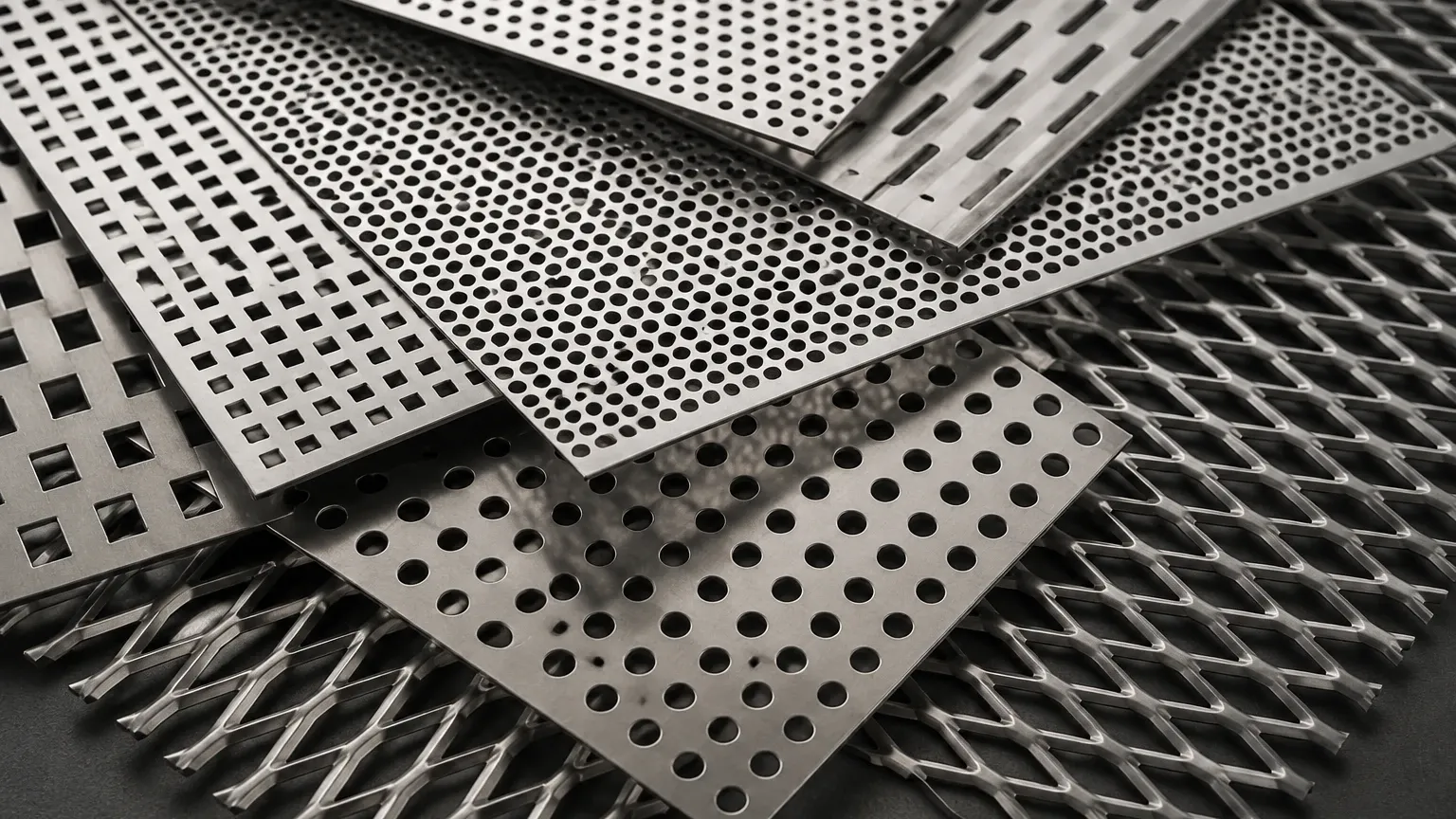
Perforated and expanded metals serve as the structural backbone for many industrial filtration systems. Although they are often grouped together, the manufacturing processes and resulting mechanical properties differ significantly.
Perforated Metal
Perforated metal is produced by mechanically punching or laser-cutting holes into a solid metal sheet. This process allows for extreme precision in hole size, shape, and spacing. In filtration, perforated metal is often used as a support core for finer wire mesh or as a primary coarse filter. The ability to maintain wide margins (unperforated areas) makes it easier to weld into cylindrical filter cartridges or custom housings.
Expanded Metal
Expanded metal is created by simultaneously slitting and stretching a sheet. This process results in a diamond-shaped pattern. Because no material is lost during production, it is often a more cost-effective solution for large-scale applications. However, the stretching process creates angled strands that can influence flow dynamics and structural rigidity differently than flat perforated sheets. In many industrial settings, expanded metal is favored for its high strength-to-weight ratio and its ability to act as a robust protective screen.
Why Technical Expertise Outweighs Geographic Proximity
For a local hardware supplier, perforated metal is a commodity. For a specialized manufacturer like Kaifil, it is an engineered component. When sourcing "perforated metal near me," technical buyers should prioritize manufacturers who can address the following engineering challenges:
1. Filtration Accuracy: The precision of the hole diameter directly impacts the size of particles retained. In critical chemical or food-grade applications, even a minor deviation in hole tolerance can lead to system failure or product contamination.
2. Pressure Drop Management: The "open area" percentage determines how much resistance the filter adds to the system. A manufacturer must be able to calculate the optimal balance between structural integrity and flow efficiency.
3. Material Integrity: Industrial environments often involve corrosive fluids or extreme temperatures. Sourcing locally without verified material certifications (MTRs) for 304 or 316L stainless steel poses a significant risk to the longevity of the equipment.
Engineering Specifications: Beyond the Standard Sheet
When evaluating Perforated & Expanded Metal for an industrial project, several technical parameters must be defined to ensure the component performs as expected under operational loads.
Hole Patterns and Pitch
The arrangement of holes—whether staggered or straight—affects both the strength of the sheet and the flow of the media. A 60-degree staggered pattern is the most common industrial choice because it provides the highest open area and uniform strength across the sheet. Straight patterns are typically reserved for aesthetic applications or specific mechanical indexing requirements.
Open Area Calculations
The open area is the ratio of the total area of the holes to the total area of the sheet, expressed as a percentage. For example, a perforated sheet with a high open area will allow for higher flow rates but may lack the structural rigidity required to withstand high-pressure differentials. Engineers must specify the required open area based on the viscosity of the fluid and the desired flow velocity.
Gauge and Thickness
The thickness of the material must be compatible with the hole diameter. As a general rule of thumb in mechanical punching, the hole diameter should not be smaller than the material thickness. If a project requires ultra-fine perforations in thick plates, specialized laser or waterjet cutting may be necessary, moving the project beyond the capabilities of standard local distributors.
Material Selection for Demanding Environments
The choice of alloy is perhaps the most critical factor in the success of a filtration component. While carbon steel may be sufficient for dry, non-corrosive environments, most industrial filtration applications require the durability of stainless steel.
* Stainless Steel 304: Offers excellent corrosion resistance and is suitable for most food and beverage or general industrial applications.
* Stainless Steel 316L: Contains molybdenum, providing superior resistance to chlorides and pitting. This is the standard for pharmaceutical, marine, and chemical processing environments.
* High-Nickel Alloys: For extreme temperatures or highly acidic environments, specialized alloys may be required to prevent premature structural failure.
By working with a manufacturer that specializes in these materials, purchasing teams ensure that the "perforated metal near me" search results in a product that can withstand years of service rather than months.
Customization and OEM Integration
Standard 4×8 sheets of perforated metal are rarely the final solution for an industrial engineer. Most projects require custom fabrication to fit into existing machinery or to meet the specifications of a new system design.
Customization options often include:
* Custom Margins: Leaving specific areas of the sheet unperforated to facilitate clean welding or mounting.
* Forming and Welding: Rolling perforated sheets into cylinders or cones to create filter elements.
* Surface Finishing: Electropolishing or pickling to ensure the metal is free of contaminants and has enhanced corrosion resistance, which is vital for the pharmaceutical and food industries.
Kaifil’s experience in providing OEM solutions means that the transition from a raw perforated sheet to a finished filter component is handled with an understanding of the end-use application. This level of integration is rarely available through local general-metal suppliers.
Evaluating a Supplier: What to Confirm Before Purchasing
Before finalizing a purchase based on a "perforated metal near me" search, technical teams should vet the supplier using the following criteria:
1. Quality Control Protocols
Does the supplier perform dimensional inspections? Are they capable of providing material heat numbers and certifications? In B2B sectors, traceability is non-negotiable.
2. Manufacturing Limits
What are the maximum and minimum hole sizes the supplier can produce? Can they handle the specific gauge of stainless steel required for your pressure ratings? Understanding these limits early prevents delays during the design phase.
3. Total Cost of Ownership (TCO)
A local supplier might offer a lower shipping cost, but if the material fails prematurely due to poor alloy quality or improper hole tolerances, the total cost—including downtime and replacement—will be significantly higher. A specialized manufacturer provides value through durability and performance optimization.
The Role of Perforated Metal in Modern Filtration
In modern industrial processes, the role of perforated and expanded metal has evolved. It is no longer just a "strainer." It is a precision-engineered component that must interface perfectly with other filtration media, such as multi-layer wire mesh or non-woven fabrics.
In hydraulic systems, for instance, a perforated inner core must provide enough collapse strength to protect the delicate mesh layers during high-pressure surges. In water treatment, expanded metal screens must resist biofouling and chemical cleaning agents. These requirements necessitate a supplier who understands the science of filtration, not just the mechanics of metalworking.
Conclusion: Finding the Right Partner
While the search for "perforated metal near me" is a logical starting point for any project, the success of industrial filtration depends on technical precision and material expertise. Local availability is a convenience, but specialized manufacturing is a necessity for high-performance applications.
Kaifil provides the engineering depth and manufacturing capability required to turn raw metal into high-performance filtration solutions. Whether you need standard perforated sheets or custom-engineered filter components, focusing on technical specifications and quality assurance will ensure your system operates at peak efficiency.
For detailed specifications on hole patterns, material options, and custom fabrication capabilities, engineers and purchasing professionals are encouraged to Review product options and application support to find the optimal solution for their specific industrial requirements.
