


Perforated Metal Nearby
When engineers and procurement professionals search for perforated metal nearby, the primary drivers are often lead time, shipping costs, and the desire for local technical support. However, in the context of industrial filtration and precision engineering, proximity is only one factor in a complex sourcing equation. Selecting the right material—whether it is perforated sheet or expanded metal—requires a deep understanding of mechanical properties, filtration efficiency, and manufacturing tolerances that local general-purpose metal service centers may not always provide.
Industrial applications, ranging from chemical processing to hydraulic systems, demand components that can withstand high pressure, corrosive environments, and rigorous cleaning cycles. This guide examines the technical considerations, sourcing strategies, and evaluation criteria necessary when seeking high-quality Perforated & Expanded Metal for specialized industrial use.
Understanding the Technical Differences: Perforated vs. Expanded Metal
Before initiating a search for a supplier, it is critical to distinguish between the two primary types of processed metal used in filtration and structural support. While they may appear similar in function, their manufacturing processes and physical characteristics differ significantly.
Perforated Metal
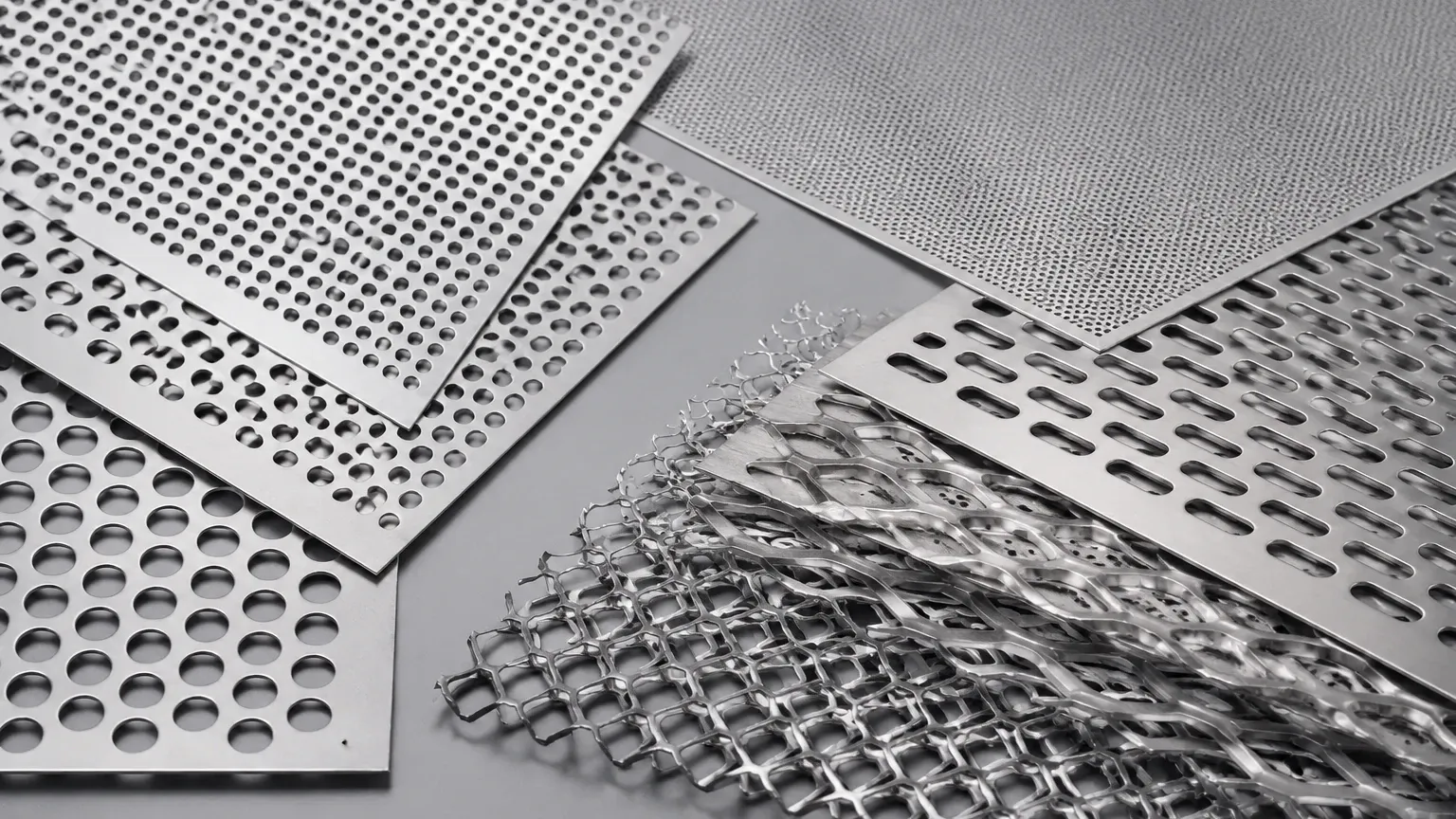
Perforated metal is produced by mechanically punching or laser-cutting holes into a solid sheet of metal. This process allows for extreme precision in hole size, shape, and distribution.
* Hole Patterns: Common patterns include round, square, slotted, and hexagonal. In filtration, round staggered patterns are the industry standard due to their balance of open area and structural strength.
* Precision: Punching allows for specific "margins" or unperforated areas along the edges of the sheet, which are essential for welding or mounting the component into a filter housing.
* Applications: It is frequently used as the inner support core or outer protective shroud for stainless steel filter cartridges.
Expanded Metal
Expanded metal is created by simultaneously slitting and stretching a sheet of metal. This process creates diamond-shaped openings without any material waste, making it a highly cost-effective alternative.
* Structure: The resulting mesh is a single piece of material with no joins or welds. The "strands" and "bonds" are set at a uniform angle to the plane of the sheet, which adds structural rigidity.
* Weight-to-Strength Ratio: Expanded metal provides excellent strength while remaining lightweight, making it ideal for large-scale strainers or architectural guards.
* Applications: It is often utilized in coarse filtration, air intake screens, and as a support layer for finer wire mesh media.
Key Evaluation Criteria for Industrial Suppliers
When evaluating a supplier for perforated metal nearby, industrial buyers must look beyond geographical convenience. A supplier’s technical capability to meet stringent engineering specifications is paramount. Consider the following criteria during the vetting process:
1. Material Grade and Traceability
For industries such as pharmaceutical or food and beverage processing, material integrity is non-negotiable. Suppliers should provide Mill Test Reports (MTRs) to verify the chemical composition of the alloy. Common materials include:
* Stainless Steel 304/304L: Standard corrosion resistance for general industrial use.
* Stainless Steel 316/316L: Enhanced resistance to chlorides and acids, essential for marine and chemical environments.
* Specialty Alloys: Hastelloy, Monel, or Titanium for extreme temperature or highly corrosive applications.
2. Manufacturing Tolerances
Standard commercial tolerances may not be sufficient for precision filtration components. Engineers should confirm the supplier’s ability to maintain tight tolerances on hole diameter, pitch (the distance between hole centers), and overall sheet dimensions. Variations in these specs can lead to inconsistent flow rates or assembly failures in the field.
3. Finishing and Secondary Operations
The punching and expanding processes can leave sharp burrs or oil residues on the metal surface. For filtration applications, secondary processes are often required:
* Degreasing: Removing lubricants used during the punching process to prevent fluid contamination.
* Deburring: Smoothing the edges to prevent damage to delicate filter media or injury to personnel.
* Leveling: Ensuring the sheets are perfectly flat for precise integration into automated assembly lines.
Sourcing Logistics: Proximity vs. Performance
The search for "perforated metal nearby" is often a search for reliability. While a local warehouse might offer 24-hour pickup for standard 4×8 sheets, they may lack the specialized equipment needed for custom fabrication.
The Limitations of Local Stockists
Local metal centers typically stock general-purpose patterns (e.g., 1/4" round holes on 3/8" centers). If your project requires a specific open area percentage to maintain a calculated pressure drop, or if you need a custom-width coil for a continuous manufacturing process, a local stockist may have to outsource the work themselves, adding time and cost to the transaction.
The Advantage of Direct Manufacturing
Working directly with a manufacturer like Kaifil provides access to engineering expertise that local distributors cannot match. Direct manufacturers can assist in calculating the "Open Area Percentage," which is critical for determining the flow capacity of a filter.
Open Area Calculation Example:
For a 60-degree staggered round hole pattern, the formula is:
`% Open Area = (D² x 90.69) / P²`
*(Where D = Hole Diameter and P = Pitch)*
A specialized manufacturer can adjust these variables to optimize the balance between filtration throughput and the structural integrity of the support tube.
Technical Specifications to Confirm Before Ordering
To ensure the perforated metal meets the requirements of the intended application, the following technical details must be confirmed with the supplier:
1. Hole Shape and Orientation: Round holes are standard, but slotted holes may be required for specific particle shapes. Specify if the pattern should be staggered (stronger) or straight (easier to align).
2. Gage or Thickness: The thickness of the material must be sufficient to withstand the differential pressure (ΔP) of the system without collapsing.
3. Margins: Specify the width of the solid metal borders on all four sides. "Finished" margins mean the pattern stops before the edge, while "Unfinished" means the pattern is sheared through the holes.
4. Flatness Requirements: If the metal is to be rolled into a cylinder for a filter cartridge, specific tension-leveling may be necessary to ensure a perfect seam weld.
Common Risks in Procurement and Mitigation
Procuring industrial components involves inherent risks, particularly when dealing with suppliers who do not specialize in filtration.
Material Substitution
A common risk is the substitution of a lower-grade alloy that looks identical to the specified material. This can lead to premature failure due to pitting corrosion. Always demand material certifications and, for critical applications, consider third-party alloy verification (PMI testing).
Tooling Wear
In perforated metal production, worn punches can create "slugs" or ragged edges. This not only affects the aesthetic but can also change the effective open area and create turbulence in fluid flow. Ask your supplier about their tool maintenance schedules and quality control checkpoints.
Shipping Damage
While sourcing nearby reduces transit time, perforated sheets—especially those with high open areas—are susceptible to bending or warping during transport. Ensure the supplier uses robust packaging, such as wooden crates or heavy-duty pallets, rather than simple shrink-wrap.
Customization and OEM Support
For B2B buyers, the value of a supplier is often found in their ability to provide OEM-specific solutions. Standard off-the-shelf products rarely meet the exact needs of high-performance hydraulic or chemical systems.
Customization options to discuss with a technical partner include:
* Custom Tooling: Developing unique hole patterns for proprietary filtration designs.
* Forming and Welding: Providing the perforated metal already rolled into cylinders or fabricated into baskets.
* Surface Treatments: Electropolishing for pharmaceutical applications or specialized coatings for increased wear resistance.
Conclusion: Making an Informed Decision
While finding perforated metal nearby can simplify initial logistics, the technical demands of industrial filtration require a supplier with specialized manufacturing capabilities. Engineers must prioritize material traceability, precision tolerances, and the ability to provide custom configurations over geographical proximity alone.
By focusing on the engineering requirements—such as open area calculations, deburring standards, and alloy integrity—purchasing teams can ensure that their filtration systems operate efficiently and have a long service life. Whether you are designing a new chemical processing line or replacing components in a hydraulic system, the right technical partner will provide the expertise necessary to move from a generic search to a high-performance solution.
