


Perforated Steel Nz
In the industrial landscape of New Zealand, the demand for precision-engineered components is driven by sectors such as dairy processing, viticulture, marine engineering, and water management. Among these components, perforated steel stands out as a fundamental material for filtration, separation, and structural support. For engineers and procurement specialists sourcing perforated steel in NZ, understanding the technical nuances of material selection, hole geometry, and manufacturing tolerances is essential to ensuring long-term operational efficiency and compliance with local safety and hygiene standards.
Perforated steel is produced through a mechanical punching or laser-cutting process that creates a pattern of holes, slots, or decorative shapes in metal sheets or coils. While it is often used for architectural purposes, its primary utility in heavy industry lies in its ability to manage fluid dynamics, provide mechanical protection, and act as a substrate for finer filtration media.
Technical Specifications and Hole Patterns
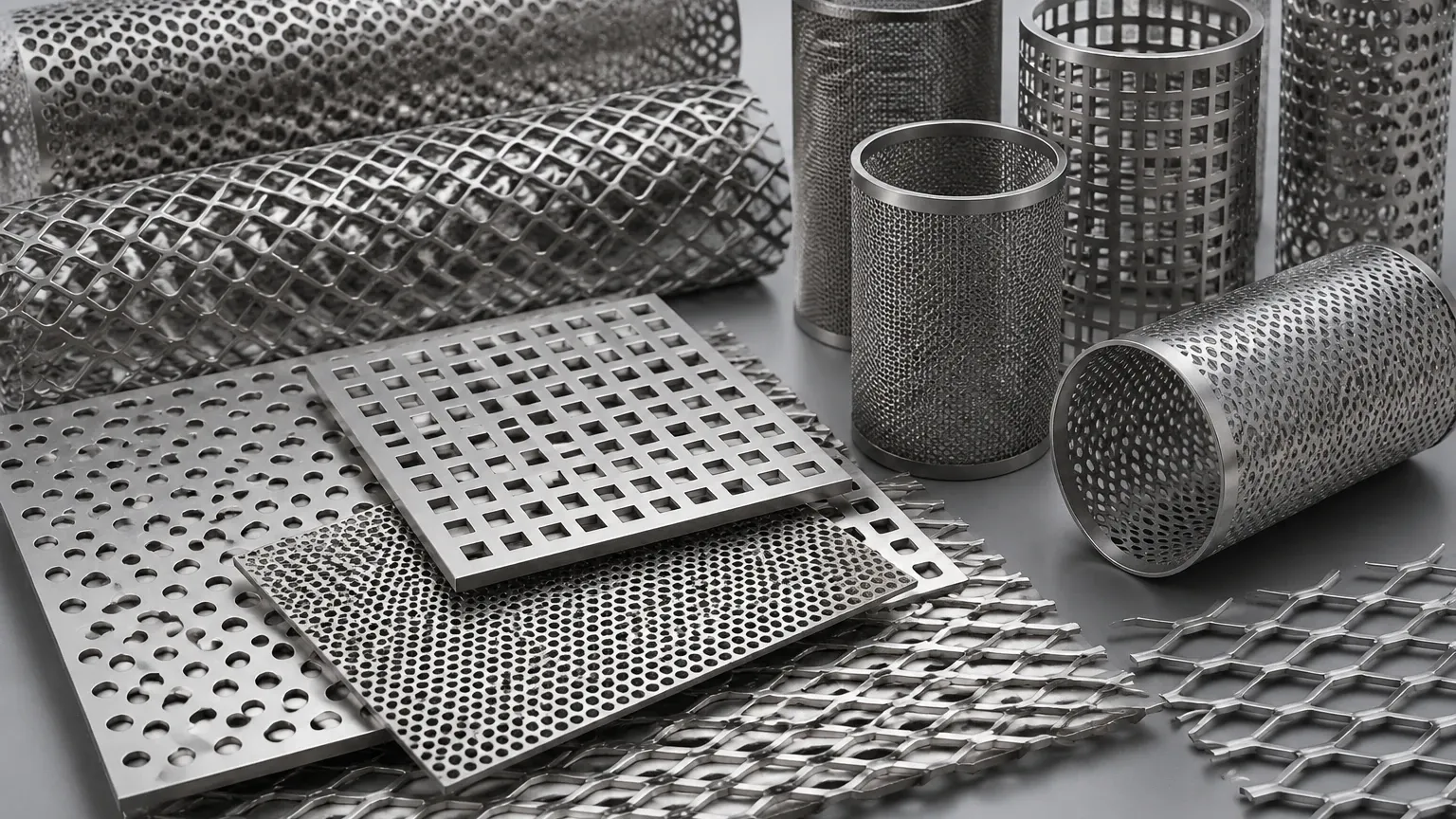
The performance of Perforated & Expanded Metal is largely dictated by its geometric configuration. Engineers must specify several variables that influence flow rates, pressure drops, and structural rigidity.
Hole Shapes and Their Functions
1. Round Holes: The most common and cost-effective pattern. Round holes offer the best structural strength and are ideal for standard filtration and sorting applications. They are typically arranged in a 60-degree staggered pattern, which maximizes open area and provides uniform strength across the sheet.
2. Square Holes: Often used when a higher open area is required for airflow or visibility. However, square holes can create stress concentration points at the corners, making them less suitable for high-pressure hydraulic applications compared to round holes.
3. Slotted Holes: Frequently utilized in the processing of seeds, grains, and liquids containing elongated particulates. Slotted perforations provide a directional flow and are less prone to "blinding" or clogging when handling fibrous materials.
Calculating Open Area
The "Open Area" is the percentage of the sheet that is occupied by holes. This is the most critical metric for filtration efficiency. For a standard 60-degree staggered round hole pattern, the formula is:
Open Area % = (D² × 90.69) / P²
Where *D* is the hole diameter and *P* is the pitch (the distance from the center of one hole to the center of the next). In NZ industrial applications, such as wastewater treatment, a high open area is often balanced against the need for the plate to withstand significant hydraulic pressure without deforming.
Material Selection for the New Zealand Environment
New Zealand’s unique environmental conditions—ranging from high-salinity coastal areas to chemically intensive dairy processing plants—require careful material selection for perforated steel. Choosing the wrong alloy can lead to premature stress corrosion cracking or pitting.
Stainless Steel Grade 304
Grade 304 is the industry standard for general-purpose applications. It offers good corrosion resistance and excellent formability. In NZ, it is commonly used in internal food processing equipment where contact with highly acidic or saline substances is limited.
Stainless Steel Grade 316/316L
For applications involving marine environments or aggressive chemical cleaning agents (common in the pharmaceutical and dairy sectors), Grade 316 is the preferred choice. The addition of molybdenum enhances resistance to chloride-induced pitting. Grade 316L (low carbon) is specifically recommended for components requiring extensive welding, as it prevents carbide precipitation that can lead to corrosion at the weld seams.
Specialty Alloys and Coatings
In specific high-temperature or highly corrosive chemical processing environments, exotic alloys or specialized coatings may be required. However, for the majority of NZ industrial filtration needs, high-quality stainless steel remains the most cost-effective and durable solution.
Applications in Industrial Filtration and Separation
Perforated steel serves as the backbone for many complex filtration systems. Its role extends beyond simple screening to providing the mechanical integrity required for high-pressure systems.
Support Cores for Filter Cartridges
In hydraulic and chemical filtration, pleated wire mesh or fiberglass media often lack the structural strength to withstand high differential pressures. Perforated steel tubes are used as internal support cores, preventing the collapse of the filter media under load. These cores must be manufactured with precise tolerances to ensure a flush fit within the filter housing.
Primary Intake Screens
For water treatment plants and irrigation systems across NZ, perforated steel plates act as primary intake screens. They prevent large debris from entering pumps and sensitive downstream equipment. The choice of hole size is determined by the smallest particle that must be excluded, balanced against the allowable pressure drop across the screen.
Centrifuge Baskets and Trommels
In the mining and food processing industries, perforated steel is fabricated into cylindrical baskets or trommels. These components are subjected to high centrifugal forces and abrasive wear. Engineering these parts requires a deep understanding of the material’s yield strength and the impact of the perforation pattern on the overall structural integrity of the cylinder.
Perforated vs. Expanded Metal: Engineering Trade-offs
When specifying materials for industrial projects, engineers often compare perforated steel with expanded metal. While both provide openings for flow, their manufacturing processes and physical properties differ significantly.
* Manufacturing: Perforated metal is created by removing material (the "slugs"), whereas expanded metal is slit and stretched, resulting in no material waste.
* Structural Integrity: Perforated steel generally maintains better dimensional stability and is easier to weld into complex shapes. Expanded metal, due to its truss-like structure, offers a high strength-to-weight ratio but can be more difficult to clean in hygienic applications because of the overlapping strands.
* Filtration Precision: Perforated steel allows for much tighter control over hole size and spacing, making it the superior choice for precision filtration where specific micron ratings or flow characteristics are required.
Customization and Engineering Considerations
For NZ-based projects, off-the-shelf perforated sheets rarely meet the exact requirements of specialized industrial machinery. Customization is often necessary to optimize performance.
Margins and Blank Areas
Standard perforated sheets often have "full holes" to the edge. However, for components that need to be welded into a frame or bolted to a flange, specifying "unperforated margins" is essential. This provides a solid metal border that simplifies the welding process and increases the strength of the attachment points.
Secondary Operations
Perforated steel often requires secondary processing before it is ready for installation. This includes:
* Leveling: The punching process can introduce internal stresses that cause the sheet to curl. Precision leveling ensures the final product is flat within tight tolerances.
* Forming and Rolling: Perforated sheets can be rolled into cylinders or formed into U-shapes for use as trough liners or filter housings.
* Surface Finishing: For the food and pharmaceutical industries, electropolishing or passivating the stainless steel is often required to remove surface contaminants and improve corrosion resistance.
Procurement and Quality Assurance for NZ Buyers
When sourcing perforated steel for New Zealand industries, the total cost of ownership should be prioritized over the initial purchase price. Poorly manufactured perforated metal can lead to catastrophic equipment failure, contamination of product batches, or frequent downtime for maintenance.
Key Evaluation Criteria
1. Hole Accuracy: Inconsistent hole sizes can lead to bypass (where larger particles pass through) or localized clogging. Buyers should verify that the manufacturer uses high-precision CNC punching equipment.
2. Burr Removal: The punching process naturally creates burrs on the underside of the sheet. In filtration applications, these burrs can trap debris or damage delicate filter media. High-quality perforated steel should be deburred as part of the manufacturing process.
3. Material Certification: Ensure that the supplier provides mill test reports (MTRs) to verify the chemical composition and mechanical properties of the steel, especially when Grade 316 is specified for corrosive environments.
Addressing the Logistics of NZ Supply
While New Zealand has local fabrication capabilities, specialized high-precision perforation often requires global manufacturing expertise. Partnering with a manufacturer that understands international standards (such as ASTM or ISO) and can provide customized OEM solutions ensures that the final product meets the rigorous demands of NZ’s industrial sectors.
Conclusion
Perforated steel is a versatile and indispensable material in the New Zealand industrial sector. Whether it is used as a support core in a high-pressure hydraulic system or as a primary screen in a dairy processing plant, its performance is dependent on precise engineering and material selection. By focusing on hole geometry, open area calculations, and the specific requirements of the application environment, engineers can select perforated steel solutions that offer durability, efficiency, and long-term value. For those seeking specialized configurations or high-performance filtration components, leveraging advanced manufacturing capabilities is the most reliable path to achieving optimized results in demanding industrial applications.
