


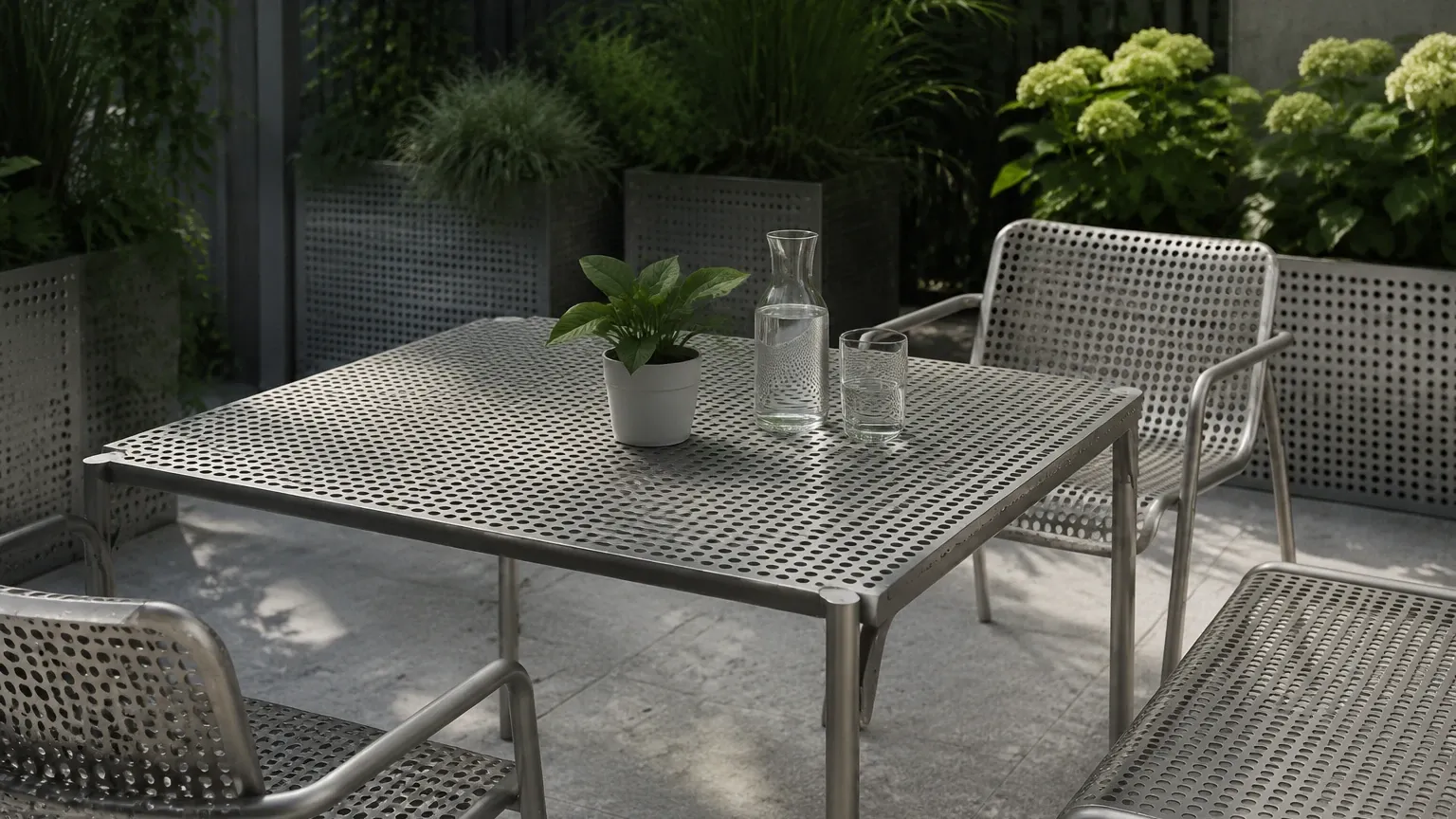
Perforated Metal Outdoor Furniture
In the realm of commercial and industrial landscape design, the selection of materials for outdoor furniture is a critical engineering decision. Unlike residential furniture, pieces intended for public parks, corporate campuses, transportation hubs, and urban plazas must withstand high-traffic usage, varying climatic conditions, and potential vandalism. Among the various materials available, Perforated & Expanded Metal has emerged as a primary choice for engineers and architects due to its unique combination of structural strength, aesthetic versatility, and functional performance.
This article examines the technical considerations, material properties, and manufacturing processes involved in utilizing perforated metal for outdoor furniture, providing a professional guide for procurement and engineering teams.
Understanding the Application of Perforated & Expanded Metal
To specify the correct material, it is essential to distinguish between the two primary types of processed metal used in furniture fabrication. While both offer ventilation and drainage, their manufacturing methods and physical characteristics differ significantly.
Perforated metal is produced by punching a series of holes into a solid metal sheet using a CNC punch press or laser cutting system. This process allows for extreme precision in hole placement and the ability to leave "margins" or unperforated borders, which are essential for structural mounting and welding. The versatility of perforated metal allows designers to choose from round, square, slotted, or decorative patterns to meet specific aesthetic and functional requirements.
Expanded metal, conversely, is created by simultaneously slitting and stretching a metal sheet. This process creates a diamond-shaped mesh pattern without any material waste. Because the metal is stretched rather than punched, the resulting mesh is often lighter per square foot than perforated sheet while maintaining a high strength-to-weight ratio. In outdoor furniture, expanded metal is frequently used for tabletops and bench seats where maximum airflow and grip are required.
Material Engineering: Why Stainless Steel Dominates Outdoor Applications
When specifying Perforated & Expanded Metal for outdoor furniture, material selection is the most significant factor affecting the product's lifespan. While carbon steel and aluminum are common, stainless steel remains the gold standard for high-performance industrial and commercial environments.
Corrosion Resistance
Stainless steel contains chromium, which forms a passive layer of chromium oxide on the surface. This layer protects the underlying metal from oxidation and corrosion caused by rain, humidity, and salt spray. For inland applications, Grade 304 stainless steel is typically sufficient. However, for coastal environments or areas exposed to de-icing salts, Grade 316 stainless steel is recommended due to its added molybdenum content, which provides superior resistance to pitting and crevice corrosion.
Thermal Stability and Durability
Outdoor furniture is subject to extreme temperature fluctuations. Stainless steel has a lower thermal expansion coefficient than many plastics, ensuring that joints and fasteners remain secure over time. Furthermore, the inherent hardness of stainless steel makes it resistant to scratching and denting, which is vital for maintaining the appearance of furniture in public spaces.
Technical Design Parameters: Hole Patterns and Open Area Percentages
For engineers, the "open area" of a perforated sheet is a critical metric. It refers to the percentage of the sheet that is comprised of holes versus solid metal. In the context of perforated metal outdoor furniture, the open area influences several functional aspects:
1. Drainage: Outdoor furniture must shed water quickly to prevent pooling, which can lead to discomfort for users and accelerated wear on the material. An open area of 30% to 50% is generally sufficient for rapid drainage.
2. Airflow and Temperature Control: Metal surfaces can become hot when exposed to direct sunlight. Perforations allow for convective cooling and airflow, significantly reducing the surface temperature of the seat or table compared to solid metal surfaces.
3. Acoustics and Wind Resistance: In high-wind areas, perforated panels reduce wind load on the furniture structure, preventing tipping or structural fatigue. Additionally, perforated patterns can help diffuse sound in busy urban environments.
Common patterns include staggered round holes, which provide the best balance of strength and open area, and square holes, which offer a more modern, geometric aesthetic but may require thicker gauges to maintain the same structural rigidity.
Structural Integrity and Load Considerations in Furniture Design
The integration of perforated metal into a furniture frame requires careful calculation of load-bearing capacity. When metal is perforated, its structural stiffness is reduced compared to a solid sheet of the same gauge. Engineers must account for this by selecting the appropriate sheet thickness (gauge) and supporting frame structure.
For bench seating, 11-gauge to 14-gauge stainless steel is commonly used. To prevent "oil-canning" (the popping sound or flexing of the metal when weight is applied), the perforated panels are often reinforced with under-seat supports or are formed with bent flanges. Flanging—the process of bending the edges of the perforated sheet—not only provides a smooth, safe edge for users but also significantly increases the moment of inertia of the panel, making it much more resistant to bending under load.
Manufacturing Precision: Customization and OEM Capabilities
As a professional manufacturer, Kaifil emphasizes the importance of precision in the fabrication of metal components. For outdoor furniture manufacturers, OEM (Original Equipment Manufacturer) capabilities allow for the creation of bespoke designs that align with specific branding or architectural themes.
Customization options include:
* Custom Margins: Leaving solid borders around the perforated area to simplify welding to the furniture frame.
* Bolt Hole Integration: Punching mounting holes directly into the perforated pattern during the initial manufacturing stage to ensure perfect alignment during assembly.
* Complex Geometries: Utilizing CNC technology to create curved or contoured panels that conform to ergonomic seating designs.
* Surface Finishes: Beyond the material itself, finishes such as electropolishing or high-durability powder coating can be applied. Powder coating is particularly popular for perforated metal outdoor furniture, as it provides an additional layer of protection and allows for a wide range of color options.
Maintenance, Durability, and Total Cost of Ownership (TCO)
From a procurement perspective, the Total Cost of Ownership (TCO) is a more valuable metric than the initial purchase price. While perforated stainless steel furniture may have a higher upfront cost than wood or plastic alternatives, its lifecycle costs are significantly lower.
* Minimal Maintenance: Stainless steel requires only periodic cleaning with mild soap and water to remove surface contaminants. Unlike wood, it does not require staining, sealing, or painting.
* Longevity: High-quality metal furniture can last 20 to 30 years or more in outdoor environments, whereas plastic components may degrade due to UV exposure within 5 to 10 years.
* Recyclability: At the end of its service life, stainless steel is 100% recyclable, contributing to corporate sustainability goals and potentially providing scrap value.
Selection Criteria for Engineering and Procurement Teams
Before finalizing a specification for Perforated & Expanded Metal components in outdoor furniture, technical professionals should confirm the following details with their manufacturer:
1. Environment Grade: Is the installation site coastal or industrial? (Determines Grade 304 vs. 316).
2. Load Requirements: What is the expected maximum weight capacity, and will the gauge and hole pattern support it without permanent deformation?
3. Safety Standards: Are the hole sizes small enough to prevent finger entrapment (especially in playground or public park settings)? Are the edges deburred and finished to prevent injury?
4. Coating Compatibility: If powder coating is required, is the metal surface properly prepped to ensure long-term adhesion in outdoor conditions?
5. Tolerances: What are the acceptable deviations in hole pitch and panel dimensions for seamless integration with the furniture frames?
By addressing these engineering considerations early in the design and procurement phase, organizations can ensure that their investment in perforated metal outdoor furniture results in a durable, functional, and aesthetically pleasing solution that stands the test of time. Kaifil remains committed to providing the technical expertise and high-performance metal components necessary to meet these demanding industrial standards.
