


Perforated Metal Oval
In the landscape of industrial filtration and material separation, the geometry of the aperture determines the efficiency of the entire process. While round and square perforations are ubiquitous, the perforated metal oval—often referred to as slotted or oblong perforated metal—serves a specific set of engineering requirements where flow dynamics, particle orientation, and structural integrity must be finely balanced. As a specialized component within the broader category of Perforated & Expanded Metal, oval-holed sheets are engineered to solve complex separation challenges in sectors ranging from food processing to chemical manufacturing.
For engineers and procurement specialists, selecting the correct perforated metal oval configuration involves more than choosing a hole size. It requires an understanding of how elongated apertures influence fluid velocity, pressure drop, and the mechanical behavior of the screen under load. This guide examines the technical specifications, application advantages, and selection criteria for oval perforated metal in industrial environments.
Engineering Characteristics of Perforated Metal Oval
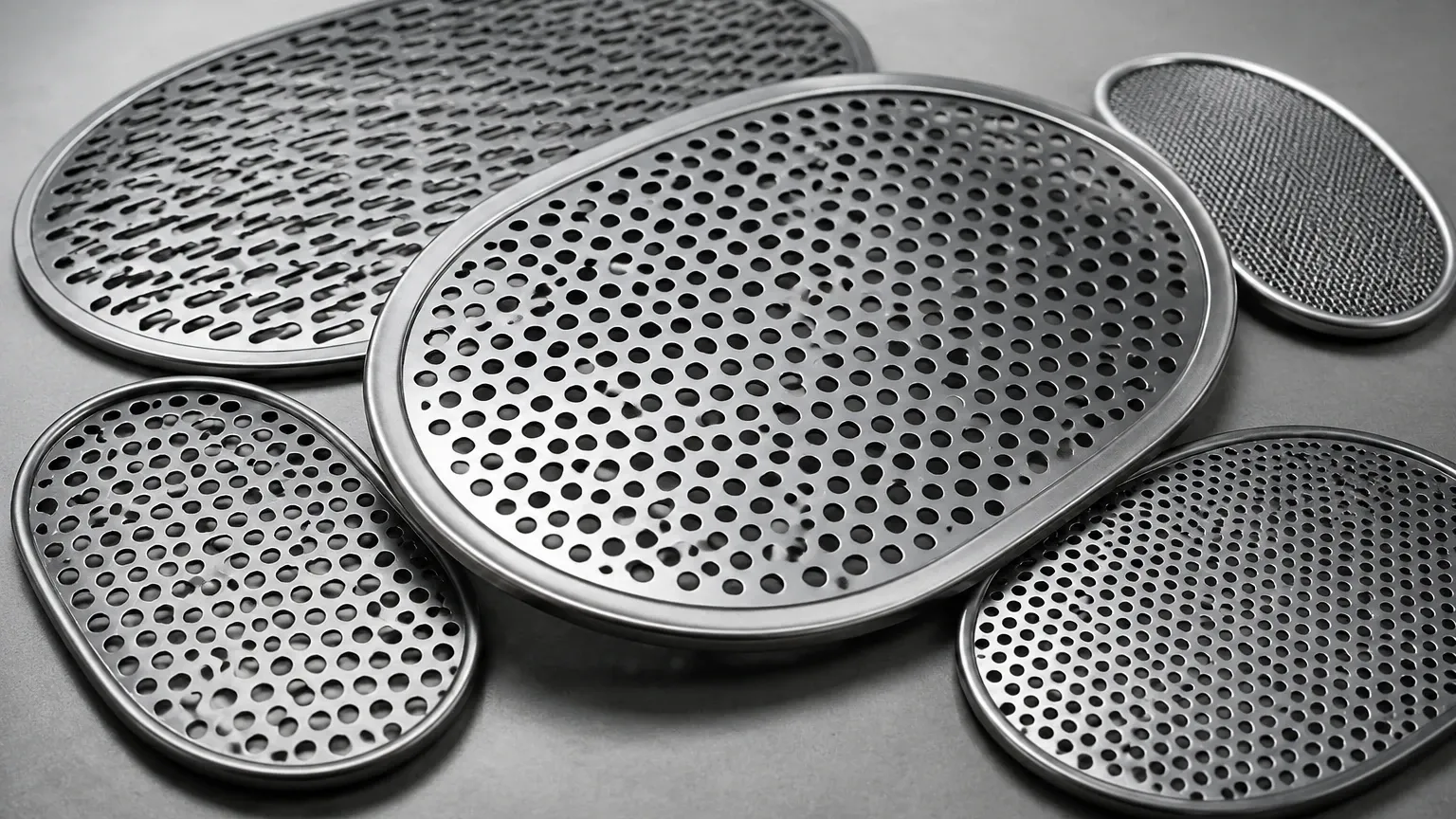
Perforated metal with oval holes is characterized by its length and width (L x W), the orientation of the holes, and the arrangement pattern. Unlike round holes, which are isotropic in their filtration characteristics, oval holes are directional. This directionality is a critical factor in how materials interact with the surface.
Hole Patterns and Orientation
There are two primary ways to orient oval perforations on a metal sheet:
1. Side-Staggered: The length of the oval runs parallel to the width of the sheet, and the holes are offset in subsequent rows. This is often used to maximize the open area while maintaining lateral strength.
2. End-Staggered: The length of the oval runs parallel to the length of the sheet. This configuration is frequently preferred in conveyor or vibrating screen applications where the material flow is longitudinal.
3. Straight Row: Holes are aligned both horizontally and vertically. While this offers the least structural stability compared to staggered patterns, it is sometimes required for specific aesthetic or alignment purposes in non-filtration applications.
Open Area Calculations
The open area percentage is the ratio of the total area of the holes to the total area of the sheet. For a perforated metal oval, this calculation is more complex than for round holes. Engineers must account for the radius at the ends of the slot. A higher open area reduces the pressure drop across the filter but can compromise the mechanical strength of the plate. In high-pressure hydraulic or chemical processing applications, finding the "sweet spot" between throughput and plate thickness is essential.
Material Selection: Why Stainless Steel is Standard
Kaifil specializes in stainless steel filtration solutions because the material properties of stainless steel complement the precision of perforated designs. When specifying a perforated metal oval, the choice of alloy is dictated by the operating environment.
* Grade 304/304L: The standard for most industrial applications. It offers excellent corrosion resistance and formability, making it suitable for food and beverage processing where hygiene is paramount.
* Grade 316/316L: Contains molybdenum, providing superior resistance to chlorides and acids. This is the preferred choice for pharmaceutical and chemical processing, as well as marine environments.
* Specialty Alloys: For high-temperature or highly corrosive environments, duplex stainless steels or nickel-based alloys may be used, though these require specialized perforation equipment due to their hardness.
Strategic Advantages of Oval Perforations
Why choose an oval hole over a standard round hole? The decision is usually driven by the physical characteristics of the media being filtered or the mechanical requirements of the system.
1. Orientation-Based Separation
In the agricultural and food processing industries, products like grain, seeds, or legumes are rarely perfectly spherical. A perforated metal oval allows for the separation of materials based on their width rather than their length. By vibrating the screen, elongated particles can be aligned to pass through or be rejected by the slots, a feat that round holes cannot achieve with the same precision.
2. Resistance to Blinding and Clogging
One of the primary failure modes in filtration is "blinding," where particles become wedged in the apertures. The elongated shape of an oval hole provides more "exit points" for a particle. If a particle is slightly larger than the width of the slot, the extra length of the oval often allows fluid to continue flowing around the obstruction, maintaining system pressure for longer periods between cleaning cycles.
3. Optimized Flow Rates
For a given width, an oval hole provides a significantly larger open area than a round hole. This allows for higher flow rates in liquid filtration systems without increasing the overall footprint of the filter cartridge. In hydraulic systems, this translates to lower energy consumption for pumps and reduced turbulence within the fluid stream.
Customization and Manufacturing Precision
Manufacturing a high-quality perforated metal oval requires precision tooling and advanced CNC punching or laser cutting capabilities. At Kaifil, the focus is on achieving tight tolerances that ensure consistent filtration performance across the entire surface of the component.
Tooling and Tolerances
The "bridge" (the distance between two holes) must be calculated to prevent the metal from warping during the perforation process. If the bridge is too thin, the structural integrity of the sheet is compromised; if it is too thick, the open area is insufficient. Precision manufacturing ensures that the edges of the oval holes are burr-free. In pharmaceutical and food applications, burrs are unacceptable as they can trap bacteria or shed metal fragments into the product stream.
Secondary Processing
Beyond the initial perforation, industrial filters often require secondary processing to meet application needs:
* Leveling: Ensuring the sheet is perfectly flat after the internal stresses of punching.
* Forming: Rolling the perforated sheet into cylinders for filter cartridges or bending it into specific shapes for machine guards.
* Welding: Using TIG or plasma welding to join edges without obstructing the perforated pattern.
* Surface Finishing: Electropolishing or pickling to enhance corrosion resistance and ensure a smooth, easy-to-clean surface.
Selection Criteria for Engineers and Purchasing Teams
Before ordering a perforated metal oval component, technical teams should confirm several critical parameters to ensure the product is fit for purpose:
1. Aperture Dimensions: Define the exact width and length of the oval. Small variations can significantly impact the "cut point" of the filter.
2. Pitch and Arrangement: Specify whether the stagger should be end-staggered or side-staggered based on the direction of material flow.
3. Plate Thickness: Thicker plates offer more durability but may increase the risk of "capillary trapping" in fine filtration. The thickness should be sufficient to withstand the differential pressure (ΔP) of the system.
4. Margins: Determine if the sheet requires "plain margins" (unperforated edges) for welding or mounting into a frame. Standard sheets are often perforated to the edge, which may not be suitable for custom filter housings.
5. Environmental Factors: Consider the chemical composition of the fluid, the operating temperature, and the cleaning protocols (e.g., high-pressure washdowns or chemical CIP cycles).
Total Cost of Ownership and Maintenance
While the initial cost of a custom perforated metal oval might be higher than standard round-hole mesh, the total cost of ownership is often lower due to increased durability and reduced downtime. Stainless steel oval screens are highly resistant to mechanical wear and can be cleaned and reused multiple times, unlike disposable synthetic filters.
Maintenance involves regular inspection for signs of erosion or mechanical deformation. Because oval holes are often used in high-flow or high-vibration environments, the bridges between holes can eventually fatigue. Choosing a manufacturer that understands these mechanical stresses and provides the appropriate material gauge is vital for long-term reliability.
Conclusion
The perforated metal oval is a sophisticated engineering solution for industries that require precise, high-flow separation. By leveraging the unique geometry of the oval aperture, engineers can optimize their systems for better particle retention, reduced clogging, and superior structural performance. Whether used in a complex chemical reactor or a simple food processing screen, the quality of the perforation and the choice of material are the foundations of successful filtration.
For those seeking to integrate these components into their operations, reviewing the available Perforated & Expanded Metal options is the first step toward a customized solution. By focusing on technical accuracy and application-specific design, Kaifil helps global customers achieve efficient and cost-effective filtration performance in the most demanding industrial environments.
