


Orange Perforated Metal
In industrial environments, the integration of functional design with safety-compliant aesthetics is a critical engineering requirement. Orange perforated metal represents a specialized category of industrial components where the mechanical utility of a perforated sheet is combined with a high-visibility finish. While the "orange" aspect is primarily a surface treatment—typically a powder coating or high-performance paint—it serves essential roles in hazard identification, machine guarding, and architectural branding. For engineers and procurement teams, selecting the right orange perforated metal involves balancing material properties, perforation geometry, and the technical specifications of the coating itself.
At its core, this material is a subset of Perforated & Expanded Metal solutions used across various sectors, from chemical processing to heavy machinery manufacturing. This guide examines the technical parameters, application logic, and procurement considerations for orange perforated metal in industrial contexts.
Technical Foundations of Orange Perforated Metal
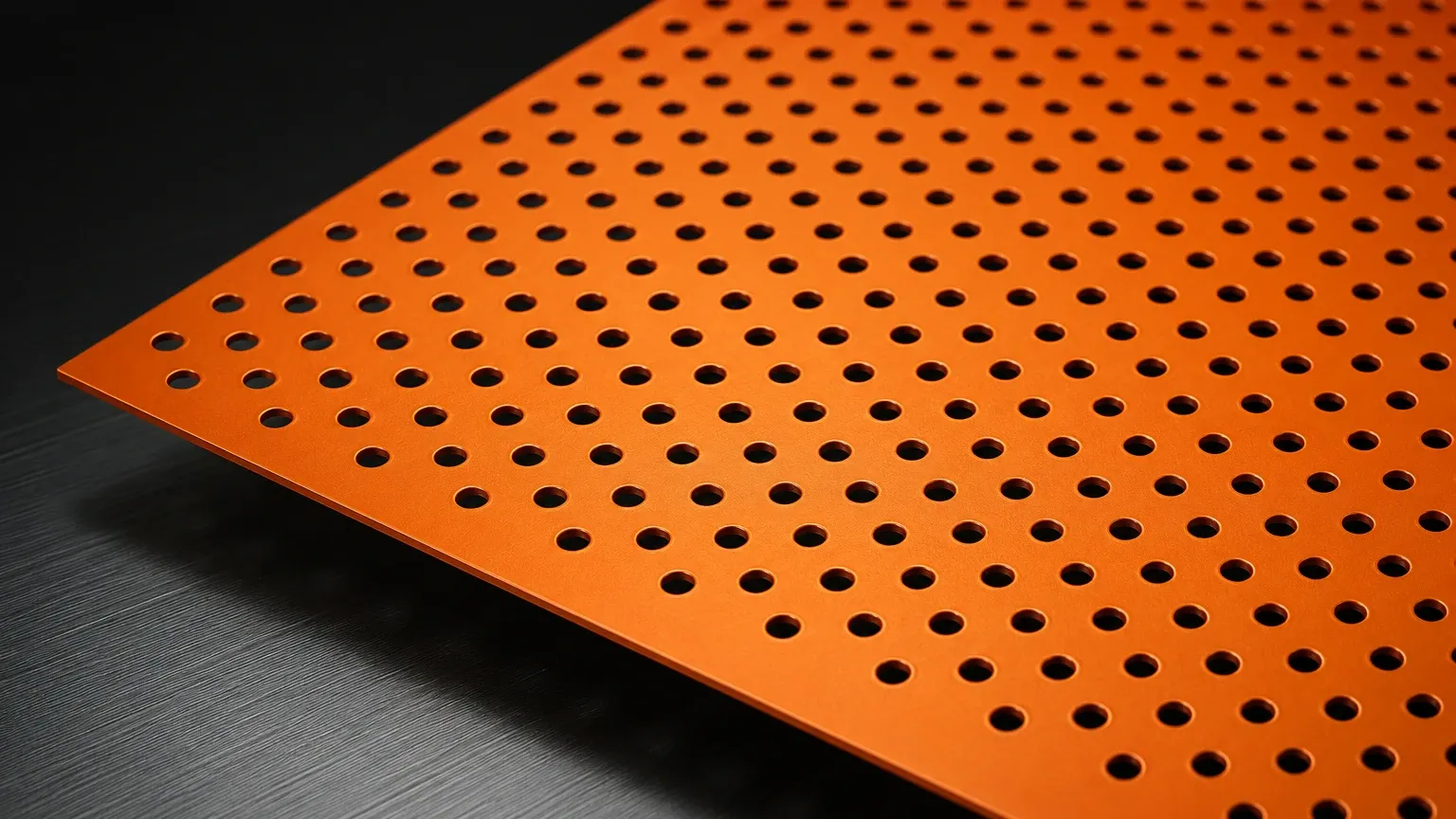
Orange perforated metal is produced by taking a standard metal sheet—most commonly carbon steel, aluminum, or stainless steel—and subjecting it to a precise punching or drilling process to create a pattern of holes. Once the mechanical perforation is complete, the sheet undergoes a multi-stage finishing process to apply the orange pigment.
Base Material Selection
The choice of base metal determines the structural integrity and environmental resistance of the component:
* Carbon Steel: The most common substrate for orange perforated metal due to its cost-effectiveness and high strength. Since carbon steel is prone to oxidation, the orange powder coating serves both as a visual indicator and a critical protective barrier against corrosion.
* Aluminum: Selected for applications requiring a high strength-to-weight ratio. Aluminum naturally resists corrosion, but the orange finish is often applied for safety visibility in aerospace or marine environments.
* Stainless Steel (304 or 316): Used in highly corrosive environments, such as chemical plants or offshore platforms. While stainless steel is often left unfinished, orange coatings are applied when safety regulations mandate specific color-coding for moving parts or hazardous zones.
Perforation Patterns and Open Area
The performance of the metal depends heavily on the "open area" percentage, which is the ratio of the total area of the holes to the total area of the sheet. Engineers must calculate this to ensure adequate airflow, light transmission, or sound dampening. Common patterns include:
* Round Holes: The most versatile and structurally sound pattern, offering the best balance between open area and sheet strength.
* Square Holes: Often used for high-visibility guards where a larger open area is required for visual inspection of internal machinery.
* Slotted Holes: Frequently utilized in sorting and filtration applications where directional flow or particle separation is necessary.
The Role of High-Visibility Finishes in Safety and Guarding
The primary reason for specifying orange perforated metal in an industrial setting is safety. Under OSHA (Occupational Safety and Health Administration) and ISO standards, specific colors are used to alert workers to potential hazards. Orange typically signifies "Warning" and is used for parts of machinery that may cause injury, such as pulleys, gears, and cutting edges.
Machine Guarding and Enclosures
When used as a machine guard, orange perforated metal provides a physical barrier that prevents contact with moving parts while allowing operators to visually monitor the equipment's operation. The perforation allows for heat dissipation, preventing the machinery from overheating, which is a common risk with solid metal enclosures. The orange color ensures that the guard itself is highly visible, reducing the likelihood of accidental contact or the failure to replace a guard after maintenance.
Safety Walkways and Barriers
In large-scale industrial facilities, orange perforated metal is often used for mezzanine railings, stair infill panels, and safety partitions. The high-visibility finish helps define boundaries in low-light environments or high-traffic areas where forklifts and heavy machinery are in operation.
Coating Technologies and Durability
The "orange" in orange perforated metal is not merely a cosmetic choice; it is a technical layer that must withstand industrial wear. The most common method for achieving this finish is electrostatic powder coating.
Powder Coating vs. Liquid Paint
Powder coating is preferred for perforated materials because it provides superior edge coverage. When a metal sheet is punched, the edges of the holes can be sharp and prone to coating failure. In the powder coating process, the charged particles wrap around the edges of the perforations, creating a uniform, durable shell.
Key advantages of powder coating for industrial filters and guards include:
* Impact Resistance: High resistance to chipping and scratching, which is vital in environments where tools or debris might strike the metal.
* Chemical Resistance: Specialized epoxy or polyester powders can be selected to resist oils, solvents, and cleaning agents used in industrial maintenance.
* UV Stability: For outdoor applications, UV-resistant powders prevent the orange pigment from fading (chalking), ensuring the safety color remains effective over the product's lifespan.
Color Standardization
In B2B procurement, simply specifying "orange" is insufficient. Engineers typically use the RAL color matching system to ensure consistency across different batches and components. Common shades include RAL 2004 (Pure Orange) or RAL 2008 (Bright Red Orange), which are standard for safety applications.
Engineering Considerations: Airflow and Pressure Drop
When orange perforated metal is used as a component in filtration or ventilation systems, the impact of the coating on the hole dimensions must be considered. Powder coating adds a measurable thickness (typically 2 to 4 mils) to the surface of the metal.
Dimensional Changes
For precision filtration applications, the thickness of the coating can slightly reduce the effective diameter of the holes. If a project requires a strict 2mm filtration accuracy, the engineer must account for the coating thickness during the initial perforation phase. Failure to do so can result in a lower-than-expected open area and an increased pressure drop across the panel.
Structural Integrity
Perforating a metal sheet inherently reduces its structural strength. When designing large panels of orange perforated metal, engineers must calculate the "equivalent solid material" properties to ensure the panel does not sag or vibrate excessively under load. The orientation of the holes (staggered vs. straight line) also affects the directional strength of the sheet.
Common Risks and Quality Evaluation
Specifying orange perforated metal involves identifying potential failure points that could compromise the safety or longevity of the installation.
Edge Corrosion and Burrs
The most significant risk in perforated metal is corrosion starting at the hole edges. If the perforation process leaves significant burrs (sharp metal protrusions), the powder coating may not adhere correctly, leading to premature peeling. High-quality manufacturing involves deburring the sheets before the coating process to ensure a smooth, continuous protective layer.
Coating Adhesion
In environments with high vibration or thermal cycling, the bond between the orange coating and the metal substrate can be stressed. Procurement teams should confirm that the manufacturer performs adhesion tests, such as the cross-hatch tape test (ASTM D3359), to verify that the finish will not flake off and contaminate the industrial process or filtration stream.
Environmental Suitability
If the orange perforated metal is intended for a chemical processing plant, a standard decorative powder coating will fail. The specific chemical exposure (acids, alkalis, or salts) must be disclosed to the manufacturer to ensure the correct resin type (such as a high-durability fluoropolymer) is used for the orange finish.
Procurement Checklist for Industrial Buyers
When ordering orange perforated metal for a project, providing comprehensive specifications will prevent delays and technical mismatches. The following data points should be confirmed before finalizing a purchase:
1. Base Material: Specify the grade (e.g., Aluminum 5052, Stainless 304, Cold Rolled Steel).
2. Gauge/Thickness: The thickness of the base metal before coating.
3. Hole Pattern: Diameter of the hole, the distance between centers (pitch), and the arrangement (60-degree staggered is the industry standard for strength).
4. Open Area Percentage: Required for airflow or light calculations.
5. Coating Specification: The RAL color code and the type of powder (Polyester, Epoxy, or Hybrid).
6. Margin Requirements: Define the "blank" areas around the edges of the sheet where no perforations should occur, which is necessary for welding or mounting.
7. Flatness Tolerances: Perforation can cause internal stresses that warp the metal; specify the required flatness for the final application.
Conclusion
Orange perforated metal is a high-utility material that bridges the gap between mechanical engineering and industrial safety. Whether it is used as a high-visibility machine guard, a color-coded filtration component, or a safety barrier in a warehouse, its effectiveness depends on the precision of the perforation and the quality of the protective finish. By understanding the relationship between material selection, coating durability, and open area calculations, engineers can ensure that their Perforated & Expanded Metal components meet both functional performance standards and rigorous safety requirements.
For specialized applications, working with a manufacturer capable of providing custom perforation patterns and high-performance industrial coatings is essential to achieving a long-term, cost-effective solution.
