


Oval Perforated Metal
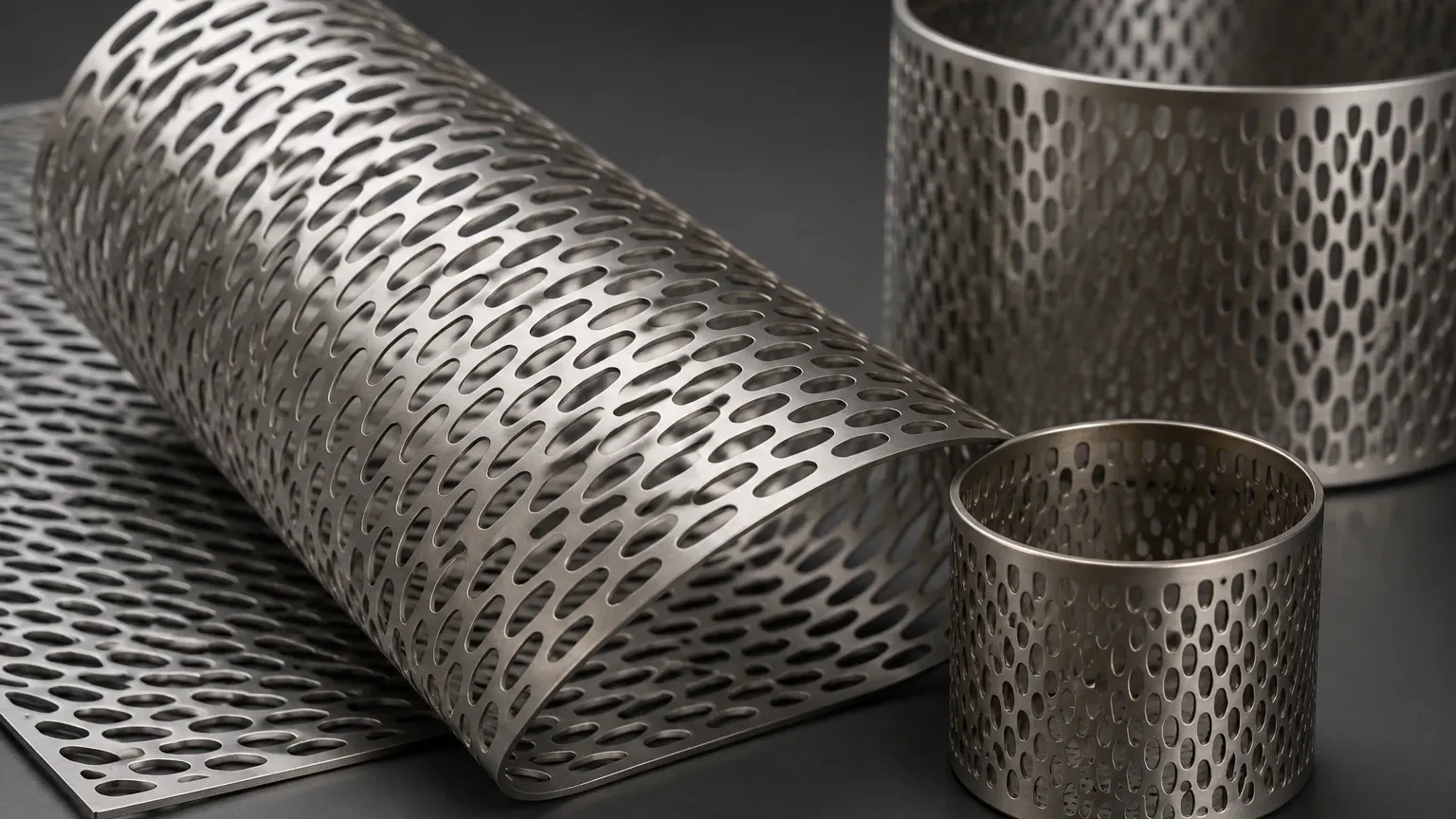
In industrial filtration and architectural design, the geometry of a perforation significantly influences both the mechanical performance and the fluid dynamics of a material. Oval perforated metal, often categorized under the broader umbrella of Perforated & Expanded Metal, represents a specialized solution for applications where standard round holes or square apertures do not meet specific technical requirements. Characterized by elongated holes with semicircular ends, this pattern offers a unique balance between open area, structural integrity, and directional flow control.
For engineers and procurement professionals, selecting oval perforated metal involves more than aesthetic choice. It requires a deep understanding of material properties, hole orientation, and the specific demands of the operating environment, whether that involves high-pressure hydraulic systems, chemical processing, or industrial food production.
Understanding the Geometry of Oval Perforated Metal
Oval perforated metal is produced by punching a series of elongated holes into a metal sheet. Unlike slotted holes, which typically have square ends, oval holes feature rounded ends. This geometric distinction is critical because rounded corners distribute stress more evenly than sharp corners, reducing the risk of stress-induced cracking or material fatigue during high-vibration applications.
Hole Orientation: Staggered vs. Straight Row
There are two primary ways to orient oval perforations on a sheet:
1. End-Staggered: In this configuration, the long axis of the oval is parallel to the length of the sheet, and the holes in adjacent rows are offset. This is often preferred for filtration applications as it creates a more tortuous path for fluids, potentially increasing the efficiency of particle capture.
2. Side-Staggered: Here, the long axis is perpendicular to the length of the sheet. This orientation is frequently used in sorting and grading applications where the material being processed moves across the width of the screen.
3. Straight Row: Holes are aligned perfectly in both horizontal and vertical columns. While easier to manufacture, straight-row patterns generally offer lower structural strength compared to staggered patterns.
The Aspect Ratio
The ratio of the length of the oval to its width is a key engineering specification. A higher aspect ratio (longer, narrower ovals) provides a different filtration profile than a lower aspect ratio. Engineers must specify the length (L), width (W), and the bridge (the distance between the holes) to ensure the sheet meets the required mechanical load-bearing capacity.
Material Selection for Industrial Environments
As a professional manufacturer specializing in custom stainless steel filtration solutions, Kaifil emphasizes the importance of material compatibility. The choice of metal determines the longevity of the perforated component in corrosive or high-temperature environments.
Stainless Steel (304, 316, 316L)
Stainless steel is the industry standard for oval perforated metal used in filtration.
* Grade 304: Offers excellent corrosion resistance and formability for general industrial use.
* Grade 316/316L: Contains molybdenum, which provides superior resistance to chlorides and acids. This is the preferred choice for marine environments, chemical processing plants, and pharmaceutical applications where hygiene and corrosion resistance are paramount.
Carbon Steel and Galvanized Steel
For applications where corrosion is not a primary concern or where the component will be coated/painted, carbon steel is a cost-effective alternative. Galvanized steel provides a middle ground, offering a protective zinc coating that prevents oxidation in moderately damp environments.
Aluminum and Specialty Alloys
Aluminum is selected for its high strength-to-weight ratio and natural resistance to atmospheric corrosion. In extreme cases, such as aerospace or specialized chemical reactors, alloys like Monel, Inconel, or Hastelloy may be used, though these require specialized punching equipment due to their hardness.
Engineering Specifications and Open Area Calculations
The "Open Area" is the percentage of the sheet that is occupied by holes. This is perhaps the most critical metric for filtration and ventilation applications, as it directly dictates flow rate and pressure drop.
Calculating Open Area for Oval Perforations
The formula for calculating the open area of an oval pattern depends on whether the holes are staggered or in straight rows. Generally, for a staggered pattern, the calculation involves the area of the oval (calculated as a rectangle plus two semicircles) divided by the total area of the repeating unit cell.
Engineers must balance the open area with the "Bridge" thickness. If the bridge is too narrow, the sheet may warp during the punching process or fail under mechanical stress. A common rule of thumb in the industry is that the bridge thickness should not be less than the material thickness, although advanced manufacturing techniques can sometimes push these boundaries.
Pitch and Margins
* Pitch: The center-to-center distance between holes. Smaller pitch increases the open area but reduces the strength of the metal skeleton.
* Margins: These are the unperforated areas along the edges of the sheet. Custom margins are often required to allow for welding, bolting, or fitting the perforated sheet into a filter housing or frame.
Comparison: Oval vs. Round and Slotted Perforations
Why choose oval perforated metal over other patterns? The decision is usually driven by the specific characteristics of the media being filtered or the mechanical requirements of the system.
| Feature | Oval Perforation | Round Perforation | Slotted Perforation |
| :— | :— | :— | :— |
| Flow Rate | High (directional) | Moderate (uniform) | Very High (directional) |
| Structural Strength | High (rounded ends) | Very High | Lower (sharp corners) |
| Clogging Resistance | Excellent for fibers | Standard | Excellent for elongated solids |
| Aesthetic Appeal | Modern/Industrial | Traditional | Industrial |
Oval holes are particularly effective at preventing "blinding" or clogging when filtering elongated particles or fibrous materials. In grain processing, for example, oval holes allow seeds of a specific shape to pass through while retaining debris, a task that round holes cannot perform as efficiently.
Applications in Industrial Filtration and Processing
Oval perforated metal is a versatile component found in numerous sectors. Its ability to be formed into cylinders, cones, or flat panels makes it ideal for custom filtration solutions.
1. Liquid and Gas Filtration
In the chemical and hydraulic industries, oval perforated sheets serve as the outer support core for pleated filter cartridges or as primary strainers. The elongated holes allow for high flow volumes while providing the rigid support necessary to withstand high differential pressures.
2. Food and Beverage Processing
In breweries and food processing plants, oval perforations are used in mash tuns and sorting screens. The smooth surface of stainless steel oval perforated metal ensures that food products are not damaged during processing and that the equipment can be easily sanitized to meet stringent health standards.
3. Grain Drying and Silo Ventilation
Oval holes are frequently used in the agricultural sector for drying floors. The shape allows for optimal airflow while preventing small grains from falling through the apertures. The structural strength of the perforated sheet allows it to support the weight of tons of grain.
4. Architectural and Acoustic Applications
Beyond industrial use, oval patterns are favored by architects for building facades, sunshades, and interior partitions. They provide a unique visual texture while managing light transmission and airflow. In acoustic panels, the open area of the oval holes allows sound waves to pass into sound-absorbing material behind the metal sheet.
Manufacturing Capabilities and Customization
Producing high-quality oval perforated metal requires precision tooling and advanced machinery. At Kaifil, the manufacturing process is tailored to meet specific OEM requirements, ensuring that every sheet or component meets exact tolerances.
Precision Punching
Modern CNC punching presses allow for the creation of complex oval patterns with extreme accuracy. This is vital for components that must fit into tight assemblies, such as stainless steel filter cartridges. Precision ensures that the margins are consistent and that there is no burr on the underside of the holes, which could disrupt flow or trap contaminants.
Secondary Processing
Rarely is a perforated sheet used in its raw, flat state. Customization often includes:
* Leveling: Ensuring the sheet is perfectly flat after the stresses of the punching process.
* Forming and Rolling: Bending the sheet into cylindrical or conical shapes for filter elements.
* Welding: Using TIG, MIG, or spot welding to join edges or attach end caps and flanges.
* Surface Finishing: Electropolishing, pickling, or powder coating to enhance corrosion resistance or aesthetic appeal.
Procurement Guide: Specifying Oval Perforated Metal
To ensure a successful procurement process, engineers and purchasing teams should confirm the following technical details before placing an order for Perforated & Expanded Metal:
1. Material Grade: Specify the exact alloy (e.g., SS 316L) based on the chemical environment.
2. Hole Dimensions: Provide the width (W) and length (L) of the oval.
3. Pattern Orientation: Define if the holes should be end-staggered, side-staggered, or straight-row.
4. Pitch and Open Area: Clearly state the required center-to-center distance or the target open area percentage.
5. Sheet Thickness: Ensure the gauge of the metal is sufficient for the mechanical load.
6. Margins and Blank Areas: Provide a drawing showing where perforations should start and stop.
7. Quantity and Delivery Format: Specify whether you require flat sheets, cut-to-size pieces, or fully fabricated components.
Conclusion
Oval perforated metal is a high-performance material that solves complex engineering challenges in filtration, separation, and structural design. By combining the benefits of high open area with the mechanical resilience of rounded geometries, it offers a superior alternative to standard perforation patterns in demanding industrial environments.
Whether you are designing a new hydraulic filtration system or seeking a durable material for industrial drying, understanding the nuances of oval perforations—from material selection to open area calculations—is essential. Partnering with a manufacturer like Kaifil, who understands the technical rigors of stainless steel filtration, ensures that your components will perform reliably under the most strenuous conditions.
