


Ombre Perforated Metal
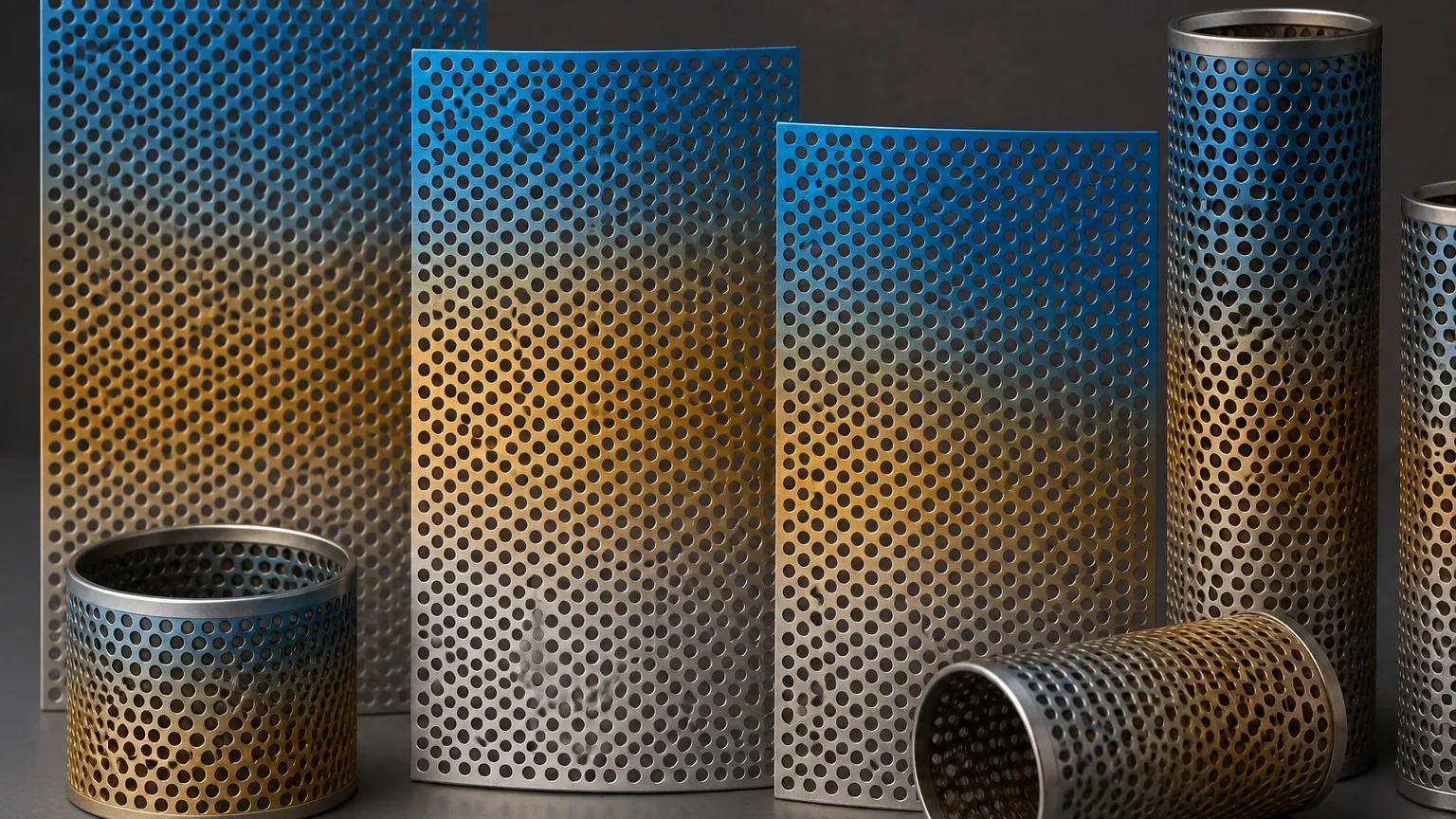
In the landscape of industrial fabrication, the term "ombre" has transitioned from a purely aesthetic descriptor to a technical specification in the production of specialized metal panels. Ombre perforated metal refers to a gradient pattern where the open area of a panel changes progressively across its surface. This is achieved by systematically altering the hole size, the spacing between holes (pitch), or the density of the perforations. While frequently recognized for its visual appeal in architectural cladding, this gradient approach serves critical functional roles in industrial filtration, fluid dynamics, and heat dissipation.
For engineers and procurement teams, understanding the technical nuances of Perforated & Expanded Metal is essential when specifying components that require variable performance characteristics across a single plane. Unlike standard perforated sheets with uniform hole patterns, ombre perforated metal requires precise CNC programming and a deep understanding of material stress to ensure that the transition from high to low porosity does not compromise the structural integrity of the component.
Technical Principles of Gradient Perforation
The engineering of ombre perforated metal relies on the manipulation of geometric variables to create a functional transition. There are three primary methods used to achieve an ombre effect in metal fabrication:
1. Variable Hole Diameters: In this configuration, the center-to-center distance (pitch) remains constant, but the diameter of the holes increases or decreases across the panel. This is often used when a specific visual flow is required while maintaining a consistent grid for mounting or support.
2. Variable Pitch (Hole Density): Here, the hole diameter remains uniform, but the distance between the holes changes. Increasing the density of holes in specific zones allows for higher throughput of air or liquid, while wider spacing increases the structural rigidity of the panel in load-bearing areas.
3. Staggered vs. Straight Row Transitions: Engineers can also transition from a straight-row pattern to a staggered pattern. Staggered patterns generally offer higher open area percentages and better structural strength for the same hole size, making them preferable for high-pressure filtration applications.
When designing these patterns, the "open area percentage" is the most critical metric. In an ombre design, this percentage is not a single value but a range. For instance, a panel might transition from a 10% open area at one edge to a 60% open area at the opposite edge. Calculating the average flow rate and the localized pressure drop at different points along this gradient is vital for industrial applications such as air diffusion or chemical processing.
Material Selection and Engineering Considerations
The choice of material for ombre perforated metal is dictated by the operating environment, specifically the presence of corrosive agents, mechanical load, and temperature fluctuations. As a specialist in stainless steel filtration, Kaifil emphasizes the selection of alloys that can withstand the punching or laser-cutting process without developing micro-fractures in the "bridges" (the metal remaining between holes).
* Stainless Steel (304 and 316L): These are the industry standards for ombre patterns used in filtration and chemical processing. Grade 316L is particularly valued for its superior corrosion resistance in marine or acidic environments. Stainless steel maintains its structural integrity even when the ombre pattern results in very thin bridges in high-porosity zones.
* Aluminum: Often selected for architectural ombre panels or lightweight industrial guards, aluminum offers excellent weight-to-strength ratios. However, it is more susceptible to deformation during the perforation process if the gradient involves very high open-area percentages.
* Carbon Steel: Used primarily in indoor industrial settings where cost is a primary factor and corrosion is not a significant risk. These panels usually require post-production treatment, such as powder coating or galvanization, to prevent oxidation.
Engineers must also consider the "margin"—the unperforated area around the edges of the sheet. In ombre designs, the margin provides the necessary stability to prevent the sheet from warping during the fabrication of the gradient pattern.
Functional Applications in Industrial Environments
While the term "ombre" might suggest a focus on appearance, the functional utility of gradient perforation is significant in several technical sectors:
Fluid and Airflow Management
In HVAC systems and industrial drying equipment, ombre perforated metal is used to control the distribution of air. By placing the lower open-area section closer to the fan or air source, engineers can equalize the pressure across the entire panel, ensuring a uniform flow of air further down the line. This prevents "hot spots" or uneven drying in food processing or chemical manufacturing.
Advanced Filtration Systems
In complex filtration assemblies, a gradient pattern can help manage the velocity of the media being filtered. By using an ombre pattern in a filter support tube or a primary screen, manufacturers can direct the flow toward specific areas of the filter medium, preventing premature "blinding" or clogging in high-pressure zones. This extends the service life of the filter cartridge and reduces maintenance cycles.
Acoustic Dampening
Variable perforation patterns are highly effective at attenuating sound across a broader range of frequencies. Standard perforated panels tend to target specific sound waves; however, the varying hole sizes in an ombre pattern can disrupt a wider spectrum of noise, making them ideal for engine room enclosures or industrial silencers.
Manufacturing Processes and Customization
Producing high-quality ombre perforated metal requires advanced manufacturing capabilities. Unlike standard perforated sheets that can be produced using high-speed rotary pins, ombre patterns typically require CNC (Computer Numerical Control) punching or laser cutting.
* CNC Punching: This is the most cost-effective method for large-scale production. The machine is programmed to change tools or skip hits to create the gradient. It allows for high precision and clean edges, which are essential for maintaining the calculated open area.
* Laser Cutting: For highly complex ombre designs or when working with very thick materials, laser cutting offers unparalleled flexibility. It allows for non-circular hole shapes (such as hexagons or custom slots) to be integrated into the gradient without the need for expensive custom tooling.
Customization is at the core of ombre metal production. Each application usually requires a unique gradient profile based on the specific flow requirements or structural constraints of the project. Manufacturers like Kaifil work closely with engineering teams to translate CAD designs into manufacturable patterns that balance the desired ombre effect with the physical limitations of the metal.
Performance Evaluation and Quality Control
When specifying ombre perforated metal, performance evaluation must go beyond visual inspection. Because the open area varies, the mechanical properties of the sheet also vary across its length. Key quality control metrics include:
1. Flatness Tolerances: The perforation process introduces internal stresses into the metal. Gradient patterns can cause uneven stress distribution, leading to "oil canning" or bowing. Professional fabricators use leveling rollers to ensure the finished panel meets strict flatness specifications.
2. Burr Height: In filtration applications, burrs can trap contaminants or cause turbulence. Ensuring clean punches across the entire gradient—from the smallest to the largest holes—is critical.
3. Structural Load Testing: For panels used in flooring or as protective barriers, the section of the ombre pattern with the highest open area must be tested to ensure it can withstand the required point load or uniform load.
4. Flow Resistance (K-Factor): Engineers must calculate the resistance to flow at various points of the gradient to ensure the ombre pattern achieves the intended fluid dynamic outcome.
Procurement Guide: What Engineers Should Confirm
To ensure a successful procurement process for ombre perforated metal, technical buyers and engineers should prepare a detailed specification package. Before moving to the production phase, confirm the following details with your manufacturer:
* Exact Gradient Map: Provide a CAD file that defines the hole size and pitch for every zone of the panel. Relying on a vague "ombre" description can lead to performance failures.
* Material Certification: Request mill test reports (MTRs) to verify the chemical composition and mechanical properties of the alloy, especially for 316L stainless steel used in corrosive environments.
* Surface Finish Requirements: Determine if the part requires passivation (for stainless steel), degreasing, or specialized coatings. For filtration components, a clean, oil-free surface is mandatory.
* Edge Requirements: Specify the width of the solid margins and whether the holes should be "finished" (no partial holes at the edges) or "interrupted" (holes cut off by the edge).
By addressing these technical parameters, procurement teams can ensure that the ombre perforated metal they receive meets both the functional and aesthetic requirements of their specific industrial application. Whether used for controlled air diffusion in a cleanroom or as a high-performance component in a filtration system, the precision of the gradient is the key to operational efficiency.
For more information on material options and custom fabrication capabilities, engineers can Review product options and application support to determine the best configuration for their specific filtration or industrial needs.
