


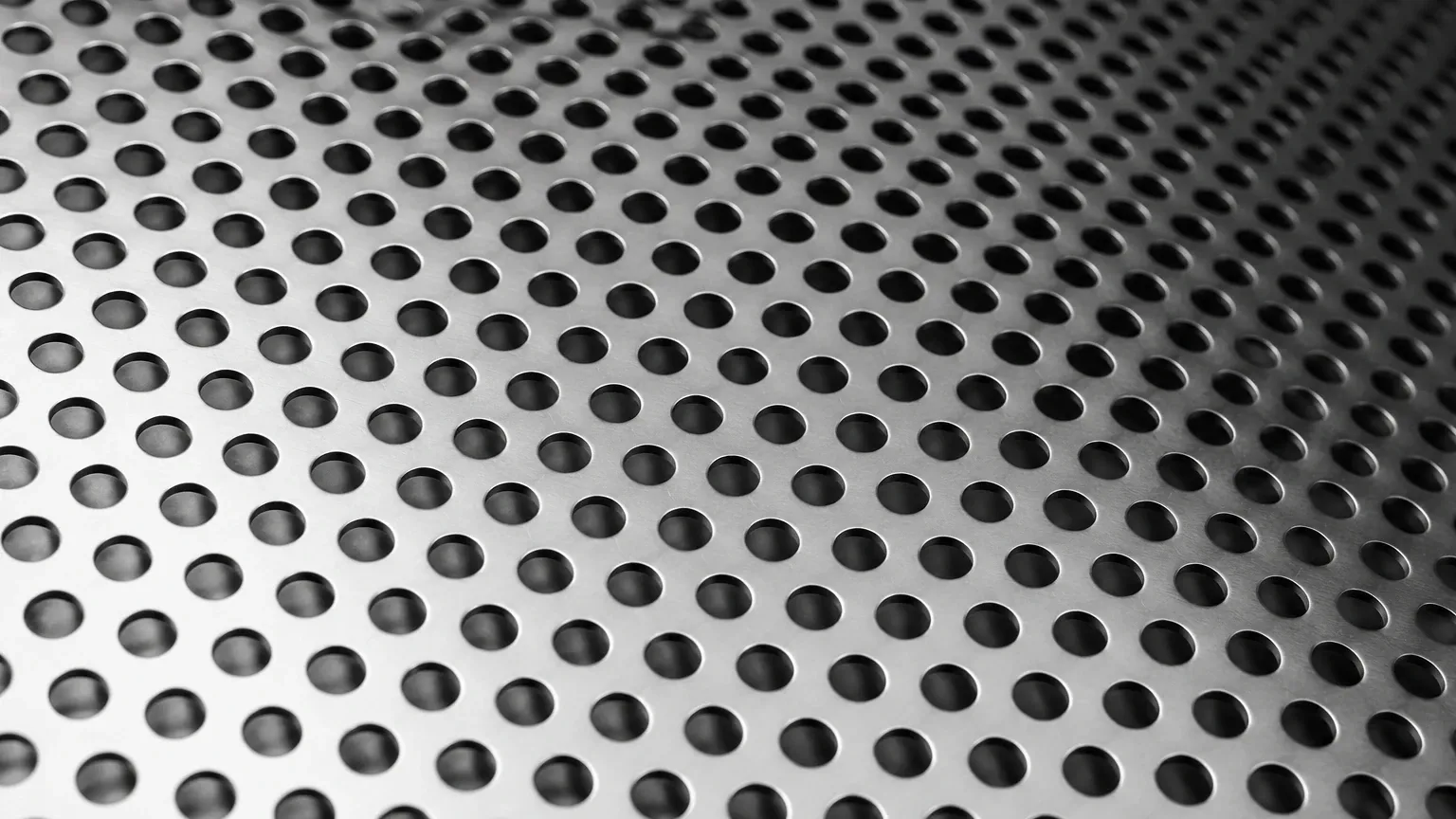
Offset Round Perforated Metal Texture
In the realm of industrial filtration and structural engineering, the selection of a specific pattern for Perforated & Expanded Metal is rarely an aesthetic choice. It is a decision driven by fluid dynamics, mechanical strength, and the specific requirements of the application. The offset round perforated metal texture, characterized by a 60-degree staggered hole arrangement, stands as the industry standard for high-performance filtration due to its unique balance of open area and structural integrity.
Understanding the technical nuances of this texture is essential for engineers and procurement teams tasked with selecting components for chemical processing, food production, or hydraulic systems. This guide examines the engineering principles, material considerations, and performance metrics associated with offset round perforated patterns.
The Fundamentals of Offset Round Patterns in Industrial Filtration
The term "offset round perforated metal texture" refers to a pattern where the holes in adjacent rows are shifted relative to one another. The most common configuration is the 60-degree staggered pattern, which forms an equilateral triangle between the centers of three adjacent holes. This geometry is significantly different from straight-line patterns, where holes are aligned both horizontally and vertically.
From a manufacturing perspective, the staggered offset is preferred because it provides the highest possible open area while maintaining the strength of the metal sheet. In a straight-line pattern, the "ligaments"—the metal areas between the holes—are aligned in a way that creates continuous weak points across the sheet. In contrast, the offset texture distributes mechanical stress more evenly, preventing the material from warping or failing under high-pressure flow conditions.
Structural Integrity and Stress Distribution
When designing a filtration system, the structural stability of the filter medium is as critical as its filtration accuracy. The offset round perforated metal texture excels in applications involving high differential pressure. Because the holes are staggered, the ligaments between them form a complex web that resists deformation.
Ligament Width and Strength
The ligament is the solid metal remaining between the perforated holes. In an offset pattern, the ligament width is calculated based on the hole diameter and the center-to-center distance (pitch). Engineers must ensure that the ligament is thick enough to support the intended load without compromising the required open area. A common engineering challenge is finding the "sweet spot" where the hole density is high enough for efficient flow but low enough to prevent the metal from becoming brittle or prone to cracking during fabrication processes like rolling or welding.
Directional Strength
Unlike woven wire mesh, which may have different tensile strengths in the warp and weft directions, perforated metal with an offset texture provides more uniform strength across the entire surface. This makes it an ideal choice for cylindrical filter cartridges and support baskets that must withstand radial pressure in hydraulic or liquid processing systems.
Material Science: Optimizing for Chemical and Thermal Resistance
The effectiveness of the Perforated & Expanded Metal depends heavily on the base material. While the offset round perforated metal texture provides the physical structure, the material provides the chemical and thermal resistance required for industrial environments.
1. Stainless Steel 304/304L: The most common choice for general industrial use. It offers excellent corrosion resistance and is suitable for most food and beverage applications where hygiene is paramount.
2. Stainless Steel 316/316L: Preferred for chemical processing and marine environments. The addition of molybdenum enhances resistance to pitting and crevice corrosion, especially in chloride-rich environments.
3. Specialty Alloys: For high-temperature or highly corrosive applications, materials such as Monel, Inconel, or Hastelloy may be used. These alloys maintain the integrity of the perforated texture even under extreme thermal cycling.
When selecting a material, engineers must also consider the thickness (gauge) of the sheet. Thicker sheets provide greater durability but may limit the minimum hole diameter achievable through standard punching processes. Generally, the hole diameter should not be smaller than the material thickness to avoid excessive tool wear and potential material distortion.
Quantifying Performance: Open Area and Flow Resistance
The primary functional metric for any perforated metal component is the percentage of open area. This figure dictates the flow rate and the pressure drop across the filter. For a 60-degree offset round perforated metal texture, the open area can be calculated using the following formula:
Percent Open Area = (D² × 90.69) / P²
*Where D = Hole Diameter and P = Pitch (center-to-center distance).*
Flow Dynamics
The staggered arrangement of the offset texture creates a more turbulent flow compared to straight patterns. In many filtration applications, this turbulence is beneficial as it helps prevent the rapid buildup of a "filter cake" on the surface, thereby extending the time between cleaning cycles. However, in high-velocity gas filtration, engineers must carefully model the pressure drop to ensure that the texture does not cause excessive energy loss within the system.
Filtration Accuracy
While perforated metal is often used as a primary filter for large particulates, it frequently serves as a support structure for finer wire mesh layers. In these "pleated" or "multi-layer" constructions, the offset round texture provides a rigid backbone that prevents the fine mesh from collapsing under pressure while ensuring that the maximum surface area of the mesh remains active.
Manufacturing Precision and Customization Capabilities
Customization is a hallmark of professional filtration solutions. The offset round perforated metal texture can be tailored to meet specific engineering drawings. Key customization variables include:
* Margins and Blank Areas: In many industrial components, it is necessary to have unperforated borders (margins) for welding or mounting. Precision manufacturing allows for "finished" margins where the pattern stops exactly where required, rather than leaving partial holes at the edges.
* Hole Size and Pitch: Depending on the particulate size being targeted, hole diameters can range from sub-millimeter precision to several centimeters. The pitch can be adjusted to increase or decrease the open area as needed.
* Surface Finishes: Beyond the mechanical punching, the metal can undergo secondary processes such as electropolishing, degreasing, or pickling. These processes are vital for the pharmaceutical and food industries to ensure that the offset round perforated metal texture is free of burrs, oils, and contaminants that could harbor bacteria.
Practical Application Guidance Across Key Industries
The versatility of Perforated & Expanded Metal makes it indispensable across various sectors:
Chemical Processing
In reactors and distillation columns, perforated plates with an offset texture are used to support catalyst beds and packing materials. The structural uniformity ensures that the catalyst is distributed evenly, preventing "channeling" where fluids bypass the reactive media.
Food and Beverage
From rotary screens in sugar processing to hop strainers in brewing, the offset round pattern is chosen for its ease of cleaning. The smooth surface of the perforated metal, especially when electropolished, allows for efficient Clean-in-Place (CIP) procedures, reducing downtime and ensuring product purity.
Water Treatment
In large-scale desalination and wastewater plants, perforated metal acts as a pre-filter to protect sensitive membranes from large debris. The durability of stainless steel offset patterns ensures a long service life even in continuous immersion.
Procurement Checklist: Ensuring Quality and Compliance
When sourcing components featuring an offset round perforated metal texture, purchasing teams and engineers should confirm several technical details to ensure the final product meets the application's demands:
* Flatness Requirements: Punching holes into metal sheet introduces internal stresses that can cause bowing or warping. Confirm if the supplier uses leveling rollers to ensure the finished sheet is perfectly flat.
* Burr Limits: In high-precision hydraulic systems, even a microscopic burr can break loose and damage downstream components. Specify "burr-free" or "deburred" finishes for critical applications.
* Tolerances: Standard industrial tolerances may not be sufficient for components that must fit into tight assemblies. Define tolerances for hole diameter, pitch, and overall dimensions.
* Material Certification: Ensure that the material used (e.g., 316L Stainless Steel) is accompanied by Mill Test Reports (MTRs) to verify chemical composition and mechanical properties.
By focusing on these technical parameters, organizations can leverage the offset round perforated metal texture to achieve reliable, long-term filtration performance. Whether used as a standalone screen or a reinforced support for complex filter cartridges, this pattern remains a cornerstone of modern industrial engineering.
