


Ornamental Perforated Metal
In industrial design and specialized filtration, the requirement for components that offer both structural utility and visual refinement is increasingly common. Ornamental perforated metal represents a specialized category within the broader field of Perforated & Expanded Metal, where the geometry of the openings is designed to meet specific aesthetic standards without compromising the mechanical performance of the material. For engineers and procurement professionals, selecting the right ornamental perforated metal involves a detailed evaluation of material properties, open area percentages, and manufacturing tolerances to ensure the component survives the rigors of its intended environment.
Defining Ornamental Perforated Metal in Modern Engineering
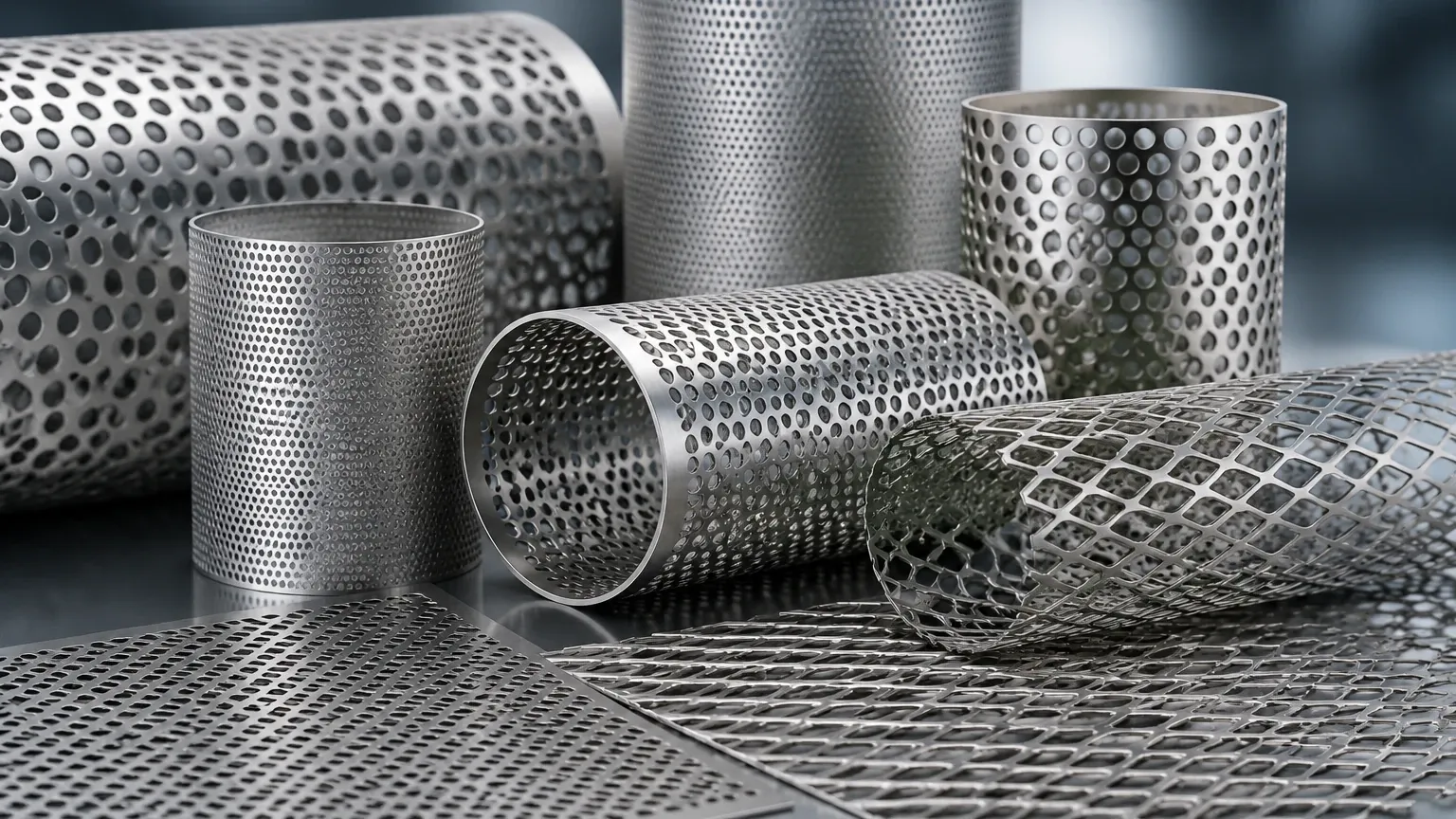
Ornamental perforated metal is a sheet or coil product that has been mechanically punched or laser-cut to create a pattern of holes, slots, or decorative shapes. Unlike standard industrial perforations, which typically focus on simple round or square patterns for maximum efficiency, ornamental patterns may include hexagonal, cloverleaf, Grecian, or custom geometric designs.
In a B2B context, "ornamental" does not imply a lack of function. Instead, it refers to the deliberate selection of hole geometries that provide a specific visual profile while maintaining the necessary physical characteristics for applications such as acoustic damping, protective screening, or fluid dispersion. These materials are frequently utilized in architectural facades, HVAC grilles, high-end filtration housings, and electronic enclosures where the component is visible to the end-user or integrated into a larger design scheme.
Material Selection and Metallurgical Properties
The performance of ornamental perforated metal is fundamentally dictated by the base material. Because these components are often used in visible or exposed locations, resistance to environmental degradation is a primary concern.
Stainless Steel (304 and 316 Grades)
Stainless steel is the preferred choice for most industrial and high-end ornamental applications. Grade 304 offers excellent corrosion resistance and formability, making it suitable for indoor and mildly corrosive outdoor environments. Grade 316, which contains molybdenum, provides superior resistance to chlorides and marine environments. For filtration applications where the ornamental layer also serves as a support structure, the high strength-to-weight ratio of stainless steel ensures long-term durability.
Aluminum Alloys
Aluminum is selected when weight reduction is a critical project requirement. It offers natural corrosion resistance through the formation of an oxide layer and is highly receptive to secondary finishes like anodizing. However, engineers must account for its lower tensile strength compared to stainless steel when calculating load-bearing capacities for decorative panels.
Carbon Steel and Galvanized Steel
For cost-sensitive projects where the environment is controlled, carbon steel may be used. To prevent oxidation, these materials are typically galvanized or powder-coated. While functional, the additional coating thickness must be factored into the final hole dimensions and open area calculations.
Technical Design: Hole Patterns and Open Area Calculations
The "open area" is the percentage of the sheet that is occupied by the perforations. This is the most critical technical metric for engineers, as it determines the flow rate of air or liquids, the degree of light transmission, and the effectiveness of sound attenuation.
Calculating Open Area for Ornamental Patterns
For standard round holes in a 60-degree staggered pattern, the calculation is straightforward. However, for ornamental perforated metal featuring complex shapes like diamonds or custom lattices, the calculation becomes more complex.
* Formula for Straight Row Patterns: (Area of one hole / (Center-to-center distance x Center-to-center distance)) x 100.
* Impact on Performance: A higher open area reduces the structural rigidity of the sheet and increases the pressure drop across the surface in filtration or ventilation applications. Conversely, a low open area may restrict flow to unacceptable levels.
Pattern Geometry and Orientation
The orientation of the pattern (straight row vs. staggered) affects the "bar" width—the distance between the holes. In ornamental designs, maintaining a consistent bar width is essential to prevent material warping during the punching process and to ensure the panel can withstand mechanical stress without tearing.
Structural Integrity and Load Considerations
One common misconception is that ornamental perforated metal is purely decorative and cannot support weight. In reality, these materials are often integrated into structural assemblies. Engineers must evaluate the following:
1. Yield Strength: The punching process introduces internal stresses into the metal. The remaining material (the bars) must have sufficient yield strength to support the weight of the panel itself plus any environmental loads (e.g., wind load on an exterior screen).
2. Flatness and Bowing: Large sheets with high open areas are prone to "oil-canning" or bowing. Specifying tension leveling after the perforation process is often necessary to ensure the final product meets flatness tolerances for precision installation.
3. Edge Margins: Unfinished edges (margins) are the solid areas around the perimeter of the perforated pattern. Proper margin specification is vital for welding or mechanical fastening into frames. In ornamental applications, "safe side" margins are often required to ensure no partial holes are visible at the edges.
Manufacturing Processes: Perforating vs. Expanding
When sourcing Perforated & Expanded Metal, it is important to distinguish between the two manufacturing methods, as they yield different physical properties.
The Perforating Process
Ornamental perforated metal is typically produced using CNC punching presses or laser cutting. CNC punching is highly efficient for high-volume production of repetitive patterns. For highly intricate or low-volume custom designs, laser cutting offers the precision needed for complex geometries without the cost of custom tooling. Both methods remove material from the sheet, which allows for precise control over the open area and hole placement.
The Expanding Process
Expanded metal is created by slitting and stretching the metal sheet simultaneously. This process creates diamond-shaped openings without any material waste. While expanded metal can be used ornamentally, it has a 3D texture that differs significantly from the flat profile of perforated metal. Expanded metal is often stiffer than perforated metal of the same weight, but it offers less flexibility in terms of pattern variety.
Industrial and Functional Applications
Ornamental perforated metal serves several critical functions across various B2B sectors:
* Filtration and Separation: In the food and beverage or pharmaceutical industries, perforated metal is used as a protective outer wrap for filter cartridges. The ornamental pattern provides a professional appearance for equipment that may be subject to client inspections while protecting the delicate internal filter media.
* Acoustic Control: Perforated panels are used in industrial machinery enclosures to house sound-absorbing materials. The hole pattern allows sound waves to pass through into the insulation, reducing noise pollution in manufacturing facilities.
* Heat Dissipation: In electronics and power generation, ornamental grilles allow for passive or forced-air cooling. The choice of pattern can help direct airflow while preventing ingress of debris or accidental contact with internal components.
* Architectural and Safety Screening: Used in stair infill panels, balcony railings, and security screens, where the material must meet building codes for safety while adhering to the aesthetic requirements of the facility design.
Evaluation Criteria for Procurement and OEM Integration
When integrating ornamental perforated metal into a project, procurement teams should confirm several technical details with the manufacturer to avoid costly errors:
* Tolerances: Standard industrial tolerances may not be sufficient for ornamental components that must fit into precision-machined frames. Specify tolerances for hole diameter, pitch, and overall sheet dimensions.
* Surface Finish: Determine if the material requires post-perforation finishing. Options include electropolishing for stainless steel (to remove burrs and improve corrosion resistance), powder coating for color, or anodizing for aluminum.
* Burr Direction: Punching naturally creates a "burr side" and a "smooth side." For components that will be handled by operators or end-users, specifying the burr direction or requiring a de-burring process is essential for safety.
* Material Certification: Ensure the manufacturer provides Mill Test Reports (MTRs) to verify the chemical composition and mechanical properties of the alloy, particularly for applications in regulated industries like chemical processing or food production.
Risk Mitigation and Quality Control in Manufacturing
The primary risk in ornamental perforation is pattern distortion. If the bars between holes are too thin, the heat or mechanical pressure from the punching process can cause the metal to stretch unevenly. This results in a "camber" (a curve in the sheet) or a failure to align with mating parts.
To mitigate these risks, reputable manufacturers like Kaifil utilize advanced CNC equipment and perform rigorous quality checks throughout the production cycle. This includes verifying the hole alignment, measuring the open area against the design specifications, and ensuring that the secondary leveling processes have restored the sheet's flatness.
Conclusion: Technical Confirmation for Selection
Selecting ornamental perforated metal is a balance of engineering necessity and design intent. By focusing on the material grade, the precision of the open area calculation, and the specific requirements of the application environment, engineers can ensure they receive a component that performs reliably over its lifecycle.
Before finalizing a purchase, it is recommended to review a physical sample or a detailed technical drawing that specifies the hole size, centers, and margins. This confirmation step ensures that the Perforated & Expanded Metal solution meets both the functional and aesthetic demands of the industrial project. For complex OEM requirements, collaborating with a manufacturer that understands the nuances of stainless steel fabrication and precision filtration is the most effective way to achieve optimized performance and total cost efficiency.
