


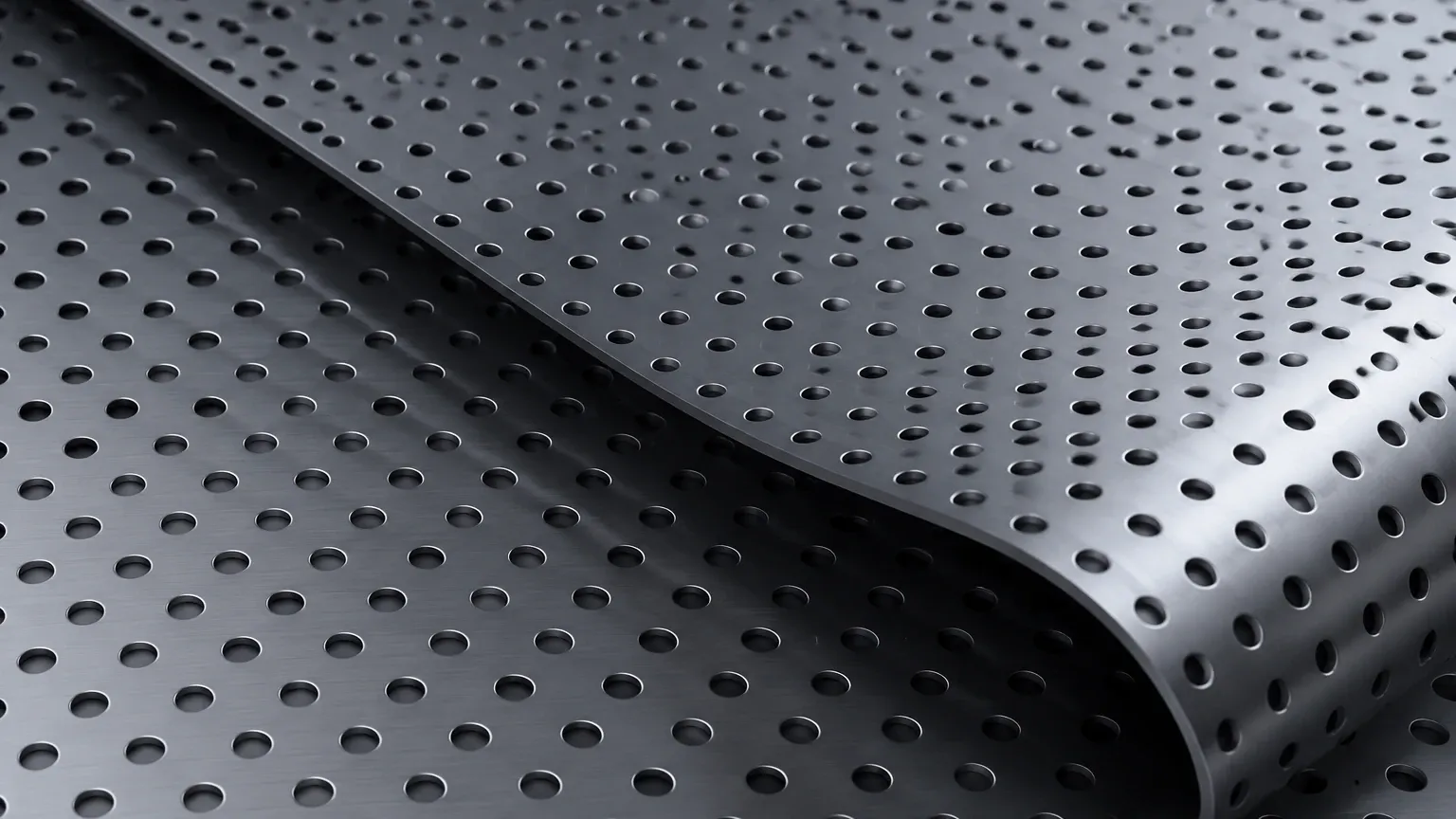
Offset Holes Perforated Metal Texture
In industrial filtration and structural engineering, the term "texture" refers to more than just the visual appearance of a surface. When discussing an offset holes perforated metal texture, engineers and procurement professionals are evaluating a complex set of geometric variables that dictate fluid dynamics, structural load-bearing capacity, and filtration efficiency. The staggered or offset hole arrangement is the industry standard for high-performance applications, offering a superior balance of open area and material strength compared to straight-line patterns.
Selecting the right Perforated & Expanded Metal requires a deep understanding of how these patterns interact with the media being filtered and the environment in which they operate. This guide examines the technical specifications, engineering considerations, and selection criteria for offset hole perforated metal to assist in informed decision-making.
Understanding the Geometry of Offset Hole Patterns
The most common configuration for an offset holes perforated metal texture is the 60-degree staggered pattern. In this arrangement, the holes in one row are positioned halfway between the holes in the adjacent rows, forming equilateral triangles between the centers of any three adjacent holes.
60-Degree Staggered vs. 45-Degree Staggered
While the 60-degree stagger is the most prevalent due to its high open area and structural uniformity, a 45-degree stagger is also utilized in specific applications.
* 60-Degree Stagger: Provides the highest possible open area (up to 60-70% depending on hole size and pitch) while maintaining the greatest structural integrity. It ensures that the "bridges" of metal between the holes are of uniform width, which prevents stress concentrations.
* 45-Degree Stagger: Often used for aesthetic purposes or specific directional flow requirements. It generally offers less open area than the 60-degree version but can be useful in specialized mechanical screening where a specific path of travel is required for the material.
The Concept of "Texture" in Filtration
In the context of industrial filtration, the "texture" created by offset holes influences the boundary layer of fluid as it passes through the metal. A staggered pattern breaks up the flow more effectively than a straight-line pattern, which can help in trapping particulates more uniformly across the surface of the filter cartridge or screen.
Engineering Considerations: Strength and Open Area
One of the primary reasons engineers specify an offset holes perforated metal texture is the relationship between the open area and the mechanical strength of the sheet. In a straight-line pattern, the metal bridges between holes form continuous lines of weakness. Under pressure, these lines are susceptible to bending or shearing.
Calculating Open Area
For a 60-degree staggered pattern, the percentage of open area is calculated using the following formula:
Open Area % = (D² × 90.69) / C²
* D = Hole Diameter
* C = Center-to-Center Distance (Pitch)
This high ratio of open area to solid material allows for high flow rates with minimal pressure drop, which is critical in hydraulic systems and chemical processing. Because the metal remains continuous in a zigzag path around the holes, the sheet maintains high tensile strength and resistance to deformation, even when a significant portion of the material has been removed.
Material Selection for Industrial Performance
The durability of the offset holes perforated metal texture is heavily dependent on the alloy selected. Kaifil specializes in stainless steel solutions, as these materials provide the necessary corrosion resistance and mechanical properties for demanding B2B environments.
Stainless Steel Grade 304
Grade 304 is the standard "18/8" stainless steel. It is suitable for most general industrial applications, including food and beverage processing and architectural components. It offers good corrosion resistance to many chemical corrodents and industrial atmospheres.
Stainless Steel Grade 316L
For more aggressive environments, such as pharmaceutical manufacturing, marine applications, or high-acid chemical processing, Grade 316L is preferred. The addition of molybdenum and a lower carbon content provides superior resistance to pitting and crevice corrosion, particularly in chloride-rich environments. When the offset holes perforated metal texture is used in a submerged filter, 316L ensures a longer service life and reduced risk of contamination.
Specialized Alloys
In high-temperature or extreme pressure environments, specialized alloys like Inconel or Monel may be used. These materials maintain their structural integrity and the precision of the offset hole pattern even under thermal cycling.
Impact on Filtration and Fluid Dynamics
The offset holes perforated metal texture plays a vital role in the performance of filter cartridges and support tubes.
Support for Fine Mesh
In many filtration systems, perforated metal serves as the structural support for a finer wire mesh layer. The offset pattern provides a consistent surface that prevents the mesh from sagging or migrating under high pressure. Because the holes are staggered, there are no long, unsupported spans of mesh, which significantly increases the burst pressure of the filter assembly.
Turbulence and Flow Distribution
When fluid hits a perforated plate with offset holes, the staggered arrangement forces the fluid to redistribute as it passes through. This can help prevent "channeling," where fluid takes the path of least resistance through a small section of the filter. By promoting more uniform flow across the entire surface area, the offset pattern ensures that the entire filter media is utilized, extending the time between cleaning or replacement cycles.
Quality Control and Manufacturing Precision
Achieving a high-quality offset holes perforated metal texture requires precision in the punching process. Variations in hole diameter or pitch can lead to uneven flow and structural weak points.
Burr Management
During the perforation process, the exit side of the hole can develop burrs—small, sharp edges of displaced metal. In high-purity industries like food and pharmaceuticals, these burrs must be removed through electropolishing or mechanical deburring to prevent particulate shedding and to ensure the surface is easy to clean (CIP – Clean In Place).
Flatness and Stress Relief
Perforating a metal sheet introduces internal stresses that can cause the material to curl or bow. High-quality manufacturers use leveling rollers to ensure the finished product is flat. This is particularly important when the perforated metal is to be rolled into a cylinder for a filter cartridge; any lack of flatness can result in an out-of-round component that is difficult to seal within a housing.
Selection Criteria for Purchasing Teams
When specifying an offset holes perforated metal texture for a project, purchasing teams should confirm several key parameters with their supplier to ensure the component meets the application requirements:
1. Hole Diameter and Pitch: These define the filtration rating (if used as a primary screen) and the open area percentage.
2. Sheet Thickness: Thicker material provides more strength but may limit the minimum hole size achievable (generally, the hole diameter should not be smaller than the material thickness).
3. Margin Requirements: Specify if the sheet needs "plain margins" (unperforated edges) for welding or mounting purposes.
4. Surface Finish: Determine if the application requires a mill finish, 2B finish, or specialized treatments like passivation or electropolishing.
5. Tolerances: Confirm the acceptable variance in hole size and spacing, especially for high-precision mechanical assemblies.
Total Cost of Ownership and Maintenance
While the initial cost of stainless steel perforated metal with an offset hole pattern may be higher than carbon steel or plastic alternatives, the total cost of ownership is often lower. The durability of the offset holes perforated metal texture allows for repeated cleaning cycles, reducing the frequency of replacements.
In hydraulic and high-pressure water treatment systems, the structural stability of the staggered pattern prevents premature failure due to fatigue. By resisting deformation, the metal maintains the integrity of the filtration system, protecting downstream equipment like pumps and valves from damage caused by bypass or structural collapse.
Conclusion
The offset holes perforated metal texture is a critical engineering choice for industrial filtration and structural applications. Its ability to maximize open area while maintaining high mechanical strength makes it the preferred pattern for demanding environments in the chemical, pharmaceutical, and food industries. By understanding the geometric principles and material properties involved, engineers can optimize their filtration systems for efficiency, durability, and long-term cost-effectiveness.
For custom requirements involving specific hole sizes, materials, or complex geometries, working with a specialized manufacturer like Kaifil ensures that the final product meets the rigorous standards required for industrial performance. Whether used as a primary filter or a structural support core, the precision of the offset hole pattern remains a cornerstone of reliable industrial design.
