


Perforated Strips of Metal
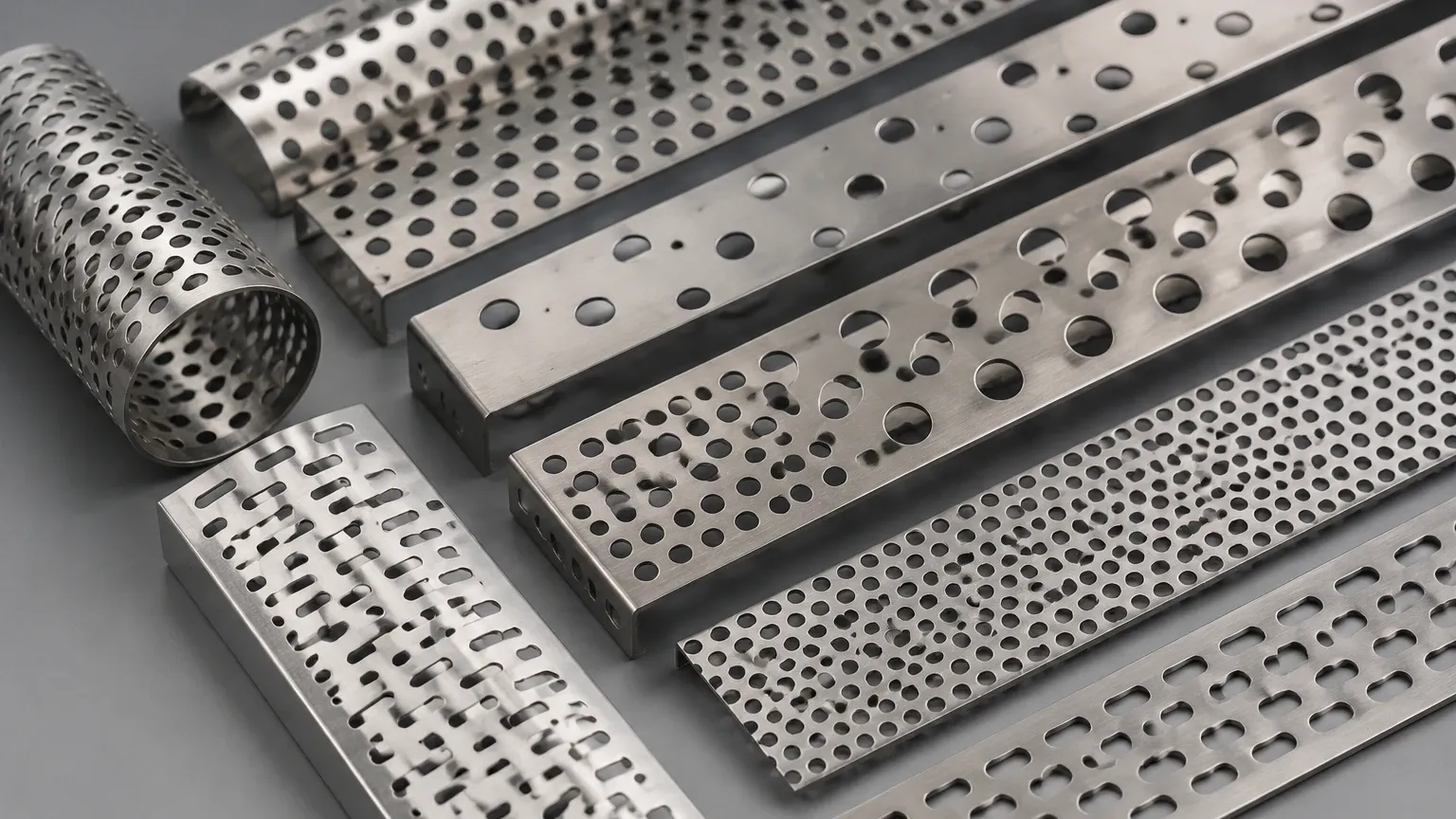
In industrial filtration and structural engineering, perforated strips of metal serve as foundational components for a wide array of high-performance systems. These specialized components are characterized by a series of punched or laser-cut holes arranged in specific patterns, designed to provide a balance between mechanical strength and fluid permeability. For engineers and procurement specialists, selecting the correct perforated strip involves more than just choosing a material; it requires a deep understanding of metallurgy, open area calculations, and the specific demands of the operating environment.
As a critical element in the production of filter cores, support cages, and decorative architectural panels, Perforated & Expanded Metal solutions must meet stringent dimensional tolerances. This article examines the technical specifications, manufacturing nuances, and application-specific considerations for perforated strips of metal, providing a comprehensive resource for industrial decision-makers.
Engineering Fundamentals of Perforated Strips
The performance of perforated strips is dictated by three primary factors: material composition, hole geometry, and the arrangement of the perforations. Each of these factors influences the strip’s ability to withstand pressure, resist corrosion, and facilitate flow.
Material Selection and Metallurgical Properties
In industrial filtration, stainless steel is the gold standard due to its inherent resistance to oxidation and chemical degradation. The most common grades utilized for perforated strips include:
* Type 304 Stainless Steel: Suitable for general-purpose applications where moderate corrosion resistance and high strength are required. It is frequently used in food processing and industrial machinery.
* Type 316/316L Stainless Steel: Enhanced with molybdenum, these grades offer superior resistance to chlorides and acidic environments. 316L (low carbon) is preferred for components requiring extensive welding to prevent carbide precipitation.
* Specialty Alloys: For extreme environments, materials such as Monel, Inconel, or Duplex stainless steel may be used to handle high temperatures or highly aggressive chemical media.
Hole Patterns and Open Area Calculations
The "open area" is the percentage of the strip that is comprised of holes. This figure is critical for calculating flow rates and pressure drops across a filter element. Common patterns include:
1. Staggered Round Holes: The most popular configuration, offering high strength and a wide range of open area percentages (typically 10% to 60%). The 60-degree staggered pattern is the industry standard for uniform stress distribution.
2. Straight Row Round Holes: Used when specific alignment is required for secondary processes, though generally weaker than staggered patterns.
3. Square and Slotted Holes: Often selected for specific aesthetic requirements or when filtering elongated particles.
Engineers must calculate the open area using formulas specific to the pattern. For a 60-degree staggered round hole pattern, the formula is:
`Percent Open Area = (D² × 90.69) / R²`
*Where D is the hole diameter and R is the center-to-center pitch.*
Manufacturing Processes for Perforated Strips of Metal
Producing high-quality perforated strips of metal requires precision machinery and controlled processing to ensure the final product remains flat and within tolerance. Unlike large sheets, strips are often produced in continuous coils or narrow cut-to-length sections, necessitating specialized handling.
High-Speed Punching and Stamping
The most cost-effective method for large-scale production is high-speed CNC punching. Multiple pins strike the metal strip simultaneously as it feeds through the press. This process requires precise tool and die maintenance to prevent excessive burr formation on the exit side of the hole. For thin-gauge strips used in precision filtration, even minor burrs can disrupt flow or damage delicate filter media, such as fine wire mesh, that may be layered over the strip.
Slitting and Edge Treatment
Often, a wider perforated sheet is produced and then slit into narrower strips. This "slit-to-width" process must be managed carefully to avoid warping or "camber" (a lateral curve in the strip). For applications where the strip will be handled manually or integrated into high-speed assembly lines, edge treatments such as deburring or the inclusion of solid (unperforated) margins are essential. Solid margins provide a clean surface for welding and enhance the longitudinal strength of the strip.
Leveling and Degreasing
Perforation introduces internal stresses into the metal, which can cause the strip to curl or bow. Precision leveling—passing the strip through a series of rollers—is necessary to restore flatness. Additionally, industrial lubricants used during punching must be removed through aqueous or solvent degreasing, especially for strips destined for the pharmaceutical or food and beverage industries, where contaminant-free surfaces are mandatory.
Applications in Industrial Filtration and Support
Perforated strips are rarely used in isolation; they are typically integrated into complex assemblies where they provide the structural skeleton for filtration media.
Filter Core Tubes
In hydraulic and chemical filtration, perforated strips are rolled and welded into cylindrical tubes. These tubes serve as the internal core of a filter cartridge, preventing the fine filter media (like pleated paper or wire mesh) from collapsing under high differential pressure. The precision of the perforation ensures that the core does not restrict flow while providing maximum support.
Outer Protection Sleeves
Conversely, perforated strips can be formed into outer sleeves. These protect the delicate inner filtration layers from mechanical damage during installation or from high-velocity fluid intake. In this role, the strip acts as a primary coarse filter, capturing large debris before it reaches the precision stages.
Support Grids and Trays
In large-scale water treatment or chemical reactors, perforated strips are used to create support grids for catalyst beds or ion-exchange resins. The strips must be engineered to support the weight of the media while maintaining a uniform flow distribution to prevent "channeling," where fluid bypasses parts of the treatment bed.
Technical Selection Criteria for Engineers
When specifying perforated strips of metal, engineers should evaluate several technical parameters to ensure long-term reliability and cost-efficiency.
Mechanical Strength vs. Transparency
There is an inherent trade-off between the open area (transparency) and the mechanical strength of the strip. A higher open area reduces the pressure drop but also reduces the strip’s ability to withstand hoop stress or axial loads. In high-pressure hydraulic systems, engineers often opt for a thicker gauge material with a moderate open area to ensure the filter core does not deform.
Corrosion and Erosion Resistance
In applications involving abrasive slurries or high-velocity gas flows, the edges of the perforations can be subject to erosion. Selecting a harder alloy or applying surface treatments can extend the service life. Furthermore, in chemical processing, the "crevice corrosion" potential within the holes must be considered, making the choice of 316L or higher alloys critical.
Tolerance and Fit
For automated manufacturing, the pitch tolerance (the distance between holes) and the width tolerance of the strip are paramount. Variations in these dimensions can lead to misalignments during welding or assembly, resulting in higher scrap rates and increased production costs.
Customization and OEM Capabilities
One of the primary advantages of working with a specialized manufacturer like Kaifil is the ability to customize perforated strips to meet exact application requirements. Generic off-the-shelf components often fail to meet the specific needs of advanced industrial systems.
Tailored Dimensions and Patterns
Customization allows for the optimization of hole sizes and patterns that are not standard in the industry. For instance, micro-perforations (holes smaller than the material thickness) can be achieved through specialized drilling or high-precision punching, providing unique filtration characteristics.
Finishing and Secondary Operations
Beyond the perforation itself, strips can be supplied with various finishes:
* Electropolishing: Removes a microscopic layer of material, resulting in a smooth, mirror-like finish that is highly resistant to bacterial growth—ideal for pharmaceutical applications.
* Annealing: Relieves internal stresses, making the strip easier to form or weld into complex shapes.
* Coating: Specialized coatings can be applied for additional chemical resistance or to provide electrical insulation.
Quality Control and Performance Evaluation
To ensure that perforated strips perform reliably in demanding environments, rigorous quality control protocols must be implemented. This includes both dimensional inspections and material verification.
1. Visual Inspection: Checking for missing holes, irregular patterns, or surface defects.
2. Dimensional Verification: Using calipers and automated optical inspection (AOI) to confirm hole diameters, pitch, and strip width.
3. Material Certification: Providing Mill Test Reports (MTRs) to verify the chemical composition and mechanical properties of the stainless steel.
4. Burr Height Measurement: Ensuring that burrs do not exceed specified limits (often less than 10% of the material thickness) to prevent damage to secondary filter layers.
Conclusion: Selecting the Right Filtration Partner
Perforated strips of metal are more than simple hardware; they are engineered components that define the efficiency and durability of industrial filtration systems. From the initial material selection to the final finishing processes, every step in the manufacturing chain impacts the total cost of ownership and the operational success of the end-user.
For engineers and purchasing teams, partnering with a manufacturer that understands the nuances of Perforated & Expanded Metal is essential. By focusing on technical precision, material integrity, and customized design, Kaifil provides the reliable filtration components necessary for the most demanding industrial environments. Whether the application involves chemical processing, food production, or hydraulic systems, the right perforated strip ensures that filtration performance is never compromised.
