


Pagar Perforated Metal
In industrial and architectural engineering, the selection of barrier materials requires a precise balance between structural integrity, environmental resistance, and functional transparency. Pagar perforated metal—where "pagar" refers to fencing or enclosure systems—represents a sophisticated solution for these requirements. Unlike standard chain-link or solid paneling, perforated metal sheets offer engineered performance characteristics that allow for controlled airflow, light diffusion, and security without sacrificing the aesthetic or structural requirements of a facility.
For engineers and procurement specialists, understanding the technical nuances of perforated and expanded metal is essential for ensuring long-term performance in demanding environments. Whether the application is a safety perimeter for chemical processing equipment or a decorative yet functional facade for a commercial building, the specifications of the metal sheet dictate the success of the installation.
Understanding the Technical Utility of Perforated Metal in Fencing
The primary advantage of using perforated metal for fencing and enclosures lies in its versatility. By punching a series of holes into a solid metal sheet, manufacturers can create a material that retains much of the strength of the original plate while gaining new functional properties. In the context of pagar perforated metal, these properties are critical for several reasons:
1. Airflow and Ventilation: In industrial settings, enclosures often surround machinery that generates heat. A solid barrier would cause thermal buildup, leading to equipment failure. Perforated metal allows for natural or forced convection, maintaining a safe operating temperature.
2. Visibility and Security: Security personnel must be able to monitor restricted areas. Perforated sheets provide a "see-through" quality that varies based on the open area percentage, allowing for surveillance while physically preventing unauthorized access.
3. Acoustic Control: Perforated metal is frequently used in sound-dampening applications. When used as a fence or barrier near noisy industrial zones, it can help diffuse sound waves, especially when combined with acoustic insulation materials.
4. Weight Reduction: For large-scale fencing projects, the weight of the material impacts the design of the support structure. Perforated metal significantly reduces the dead load on frames and foundations compared to solid steel plates.
Material Selection: Balancing Durability and Environmental Resistance
The longevity of a pagar perforated metal system is almost entirely dependent on the material grade and its compatibility with the surrounding environment. At Kaifil, we emphasize the use of high-quality alloys to prevent premature oxidation and structural fatigue.
Stainless Steel (Grades 304 and 316)
Stainless steel is the gold standard for industrial filtration and fencing components. Grade 304 offers excellent corrosion resistance for most general-purpose applications. However, in coastal environments or facilities handling corrosive chemicals, Grade 316 is preferred due to its molybdenum content, which provides superior resistance to pitting and chloride-induced corrosion.
Carbon Steel and Galvanized Options
For projects where budget constraints are tighter and the environment is less aggressive, carbon steel is a viable option. To prevent rust, these sheets are typically hot-dip galvanized or powder-coated. Galvanization provides a sacrificial zinc layer that protects the underlying steel, making it suitable for outdoor infrastructure.
Aluminum
Aluminum perforated metal is chosen for its exceptional strength-to-weight ratio and natural resistance to corrosion. It is an ideal choice for architectural pagar systems where ease of installation and a modern aesthetic are prioritized.
Design Parameters: Hole Patterns, Pitch, and Open Area
When specifying pagar perforated metal, engineers must define several geometric parameters that influence both the appearance and the performance of the barrier. These parameters are not merely aesthetic; they determine the "open area," which is the ratio of the holes to the total area of the sheet.
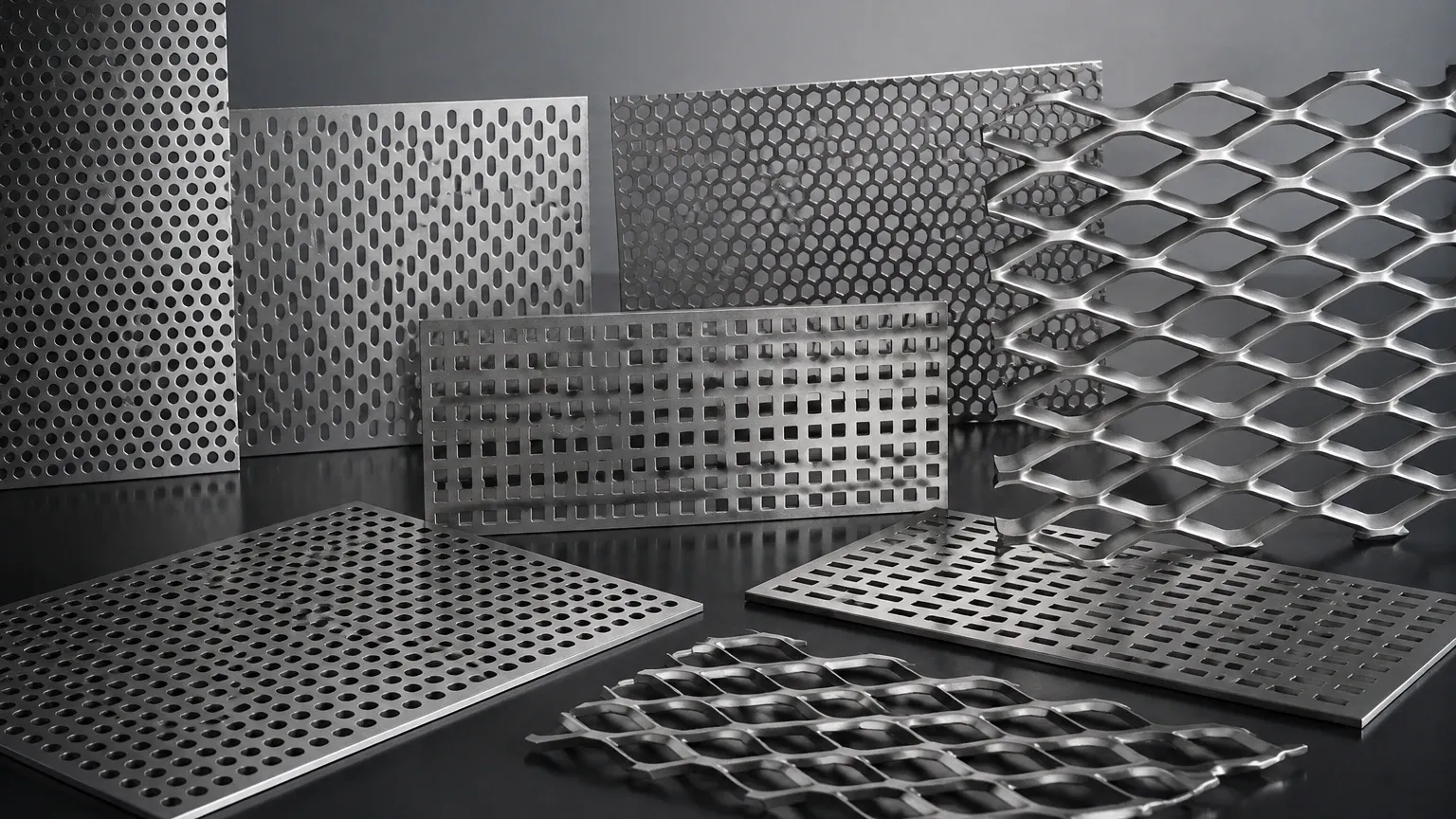
* Hole Shapes: Round holes are the most common and cost-effective to produce. They offer high structural strength and are available in a wide range of diameters. Square holes provide a higher open area for better visibility and airflow but may have slightly lower structural rigidity. Slotted holes are often used for specific filtration or drainage requirements within a fencing system.
* Pattern Arrangement: Holes can be arranged in a staggered pattern (60-degree or 45-degree) or a straight-row pattern. Staggered patterns are generally preferred for fencing because they offer higher strength and a more uniform distribution of stress across the sheet.
* Pitch and Center Distance: The distance between the centers of adjacent holes (pitch) determines the density of the perforations. A smaller pitch results in a higher open area, whereas a larger pitch maintains more of the solid metal's original strength.
Calculating the open area is a critical step in the design process. For example, a 60-degree staggered round hole pattern uses the formula: `(D² x 90.69) / P²`, where D is the hole diameter and P is the pitch. Ensuring this calculation aligns with the airflow requirements of the project is a standard engineering necessity.
Comparing Perforated and Expanded Metal for Industrial Enclosures
While both materials are used in pagar applications, they are manufactured differently and offer distinct advantages. Choosing between Perforated & Expanded Metal depends on the specific needs of the enclosure.
Perforated Metal
Perforated metal is created by punching holes into a sheet. This process allows for extreme precision in hole size and placement. It also allows for "margins"—solid borders around the edges of the sheet—which make welding and framing significantly easier. Perforated metal is generally flatter and more dimensionally stable than expanded metal.
Expanded Metal
Expanded metal is produced by simultaneously slitting and stretching a sheet. This process creates diamond-shaped openings. Because no material is lost during production (unlike the "slugs" produced in perforating), it is often more cost-effective. Expanded metal has a natural texture that provides excellent grip (if used for flooring) and a unique aesthetic for fencing. However, it lacks the precision and smooth finish of perforated sheets.
For high-end industrial applications where filtration, precise airflow, and ease of cleaning are required, perforated metal is typically the superior choice. Expanded metal is often relegated to heavy-duty security fencing where cost-per-square-foot is the primary driver.
Manufacturing Considerations and Customization Options
Customization is at the core of effective industrial filtration and barrier solutions. A standard off-the-shelf sheet rarely meets the exact requirements of a complex engineering project. When ordering pagar perforated metal, several customization factors should be discussed with the manufacturer:
1. Sheet Thickness (Gauge): The thickness of the metal must be sufficient to withstand wind loads, impact, and the weight of the panel itself. Common thicknesses range from 0.5mm for light decorative screens to 10mm or more for heavy-duty industrial guards.
2. Margins and Blank Areas: Manufacturers can leave specific areas of the sheet unperforated. This is essential for mounting holes, branding, or structural reinforcement points. Providing a detailed CAD drawing ensures that the margins align perfectly with the support frame.
3. Secondary Processing: Beyond the perforation itself, sheets may require leveling (to ensure flatness), shearing to size, bending, or welding into specific shapes. For filtration-focused pagar systems, the sheets might be rolled into cylinders or formed into cartridges.
4. Surface Finishes: To enhance durability and appearance, options such as electropolishing (for stainless steel), anodizing (for aluminum), or specialized industrial coatings can be applied. These finishes are particularly important in the food and beverage or pharmaceutical industries, where hygiene and cleanability are paramount.
Procurement and Quality Control Guidelines
For purchasing teams, evaluating a supplier for pagar perforated metal involves more than just comparing prices. The total cost of ownership is influenced by the quality of the manufacturing and the accuracy of the specifications.
Verification of Tolerances
In precision engineering, even a small deviation in hole diameter or pitch can affect the performance of a system. Buyers should confirm that the manufacturer adheres to standard industry tolerances for flatness, squareness, and hole dimensions. At Kaifil, our manufacturing processes are designed to maintain tight tolerances, ensuring that every panel fits perfectly into the intended assembly.
Material Certification
Always request Mill Test Reports (MTRs) to verify the chemical composition and mechanical properties of the metal. This ensures that the "316 Stainless Steel" ordered is actually 316 grade, providing the expected corrosion resistance.
Burrs and Surface Quality
The perforating process can leave sharp edges or "burrs" on the exit side of the hole. For fencing and enclosures, these burrs can be a safety hazard and can also trap contaminants. High-quality manufacturers use de-burring processes to ensure a smooth, safe finish on both sides of the sheet.
Flatness and Leveling
Large perforated sheets have a tendency to curl or warp due to the internal stresses created during the punching process. Professional leveling equipment is required to restore the sheet to a commercial flatness standard, which is vital for easy installation in pagar frames.
Conclusion
Pagar perforated metal is a critical component in modern industrial design, offering a unique combination of protection, ventilation, and structural efficiency. By carefully considering material grades, hole patterns, and manufacturing tolerances, engineers can develop enclosure systems that perform reliably in the most demanding environments.
Whether you are designing a protective barrier for a chemical plant or a ventilated enclosure for electronic infrastructure, selecting the right perforation specification is the first step toward a successful installation. For more detailed technical specifications and to explore custom manufacturing options, engineers and purchasing professionals are encouraged to Review product options and application support to ensure their project meets all performance and safety standards.
