


Perforated Metal Sheet Price
In industrial procurement and engineering design, understanding the components that drive the perforated metal sheet price is essential for optimizing both performance and budget. Perforated metal is a versatile material used extensively in filtration, acoustic dampening, structural support, and architectural applications. However, for technical professionals in the chemical, pharmaceutical, and food processing sectors, the cost is rarely a flat rate. It is a variable influenced by material science, mechanical tolerances, and manufacturing complexity.
At Kaifil, we specialize in high-precision Perforated & Expanded Metal solutions. This guide provides a technical breakdown of the factors that determine the perforated metal sheet price, helping engineers and purchasing teams make informed decisions based on total cost of ownership and application-specific requirements.
Understanding the Variables of Perforated Metal Sheet Pricing
When requesting a quote for perforated metal, the final price is the result of several intersecting technical specifications. Unlike standard sheet metal, perforated products involve significant mechanical processing that consumes energy, causes tool wear, and generates scrap material.
To accurately estimate the perforated metal sheet price, one must look beyond the surface area. The primary cost drivers include material selection, the geometry of the perforations, the thickness of the substrate, and the volume of the order. Each of these factors influences the production time and the complexity of the machinery required, whether it is a high-speed all-across press or a precision CNC punching machine.
Material Grade and Alloy Composition
The most significant contributor to the perforated metal sheet price is the raw material. In industrial filtration and processing environments, stainless steel is the standard due to its corrosion resistance and mechanical strength. However, the specific grade chosen has a direct impact on the cost.
Stainless Steel 304 vs. 316L
Grade 304 stainless steel is the most common choice for general industrial applications. It offers good corrosion resistance and is relatively cost-effective. However, in environments involving chlorides or high acidity—common in chemical processing and marine applications—Grade 316 or 316L is required. The addition of molybdenum in 316L increases the material cost by approximately 30% to 50% compared to 304, depending on global nickel and molybdenum market fluctuations.
Specialty Alloys
For extreme environments, such as high-temperature aerospace components or highly corrosive pharmaceutical filtration, specialty alloys like Duplex stainless steel, Monel, or Inconel may be specified. These materials significantly increase the perforated metal sheet price due to both the raw material cost and the difficulty of machining and punching harder alloys.
Geometric Complexity and Perforation Patterns
The pattern, size, and spacing of the holes are not just functional requirements; they are major cost determinants. Engineers must balance the required open area for flow rates with the structural integrity of the sheet.
Hole Size and Pitch
Generally, the smaller the hole relative to the thickness of the metal, the more difficult it is to punch. A common engineering rule of thumb is that the hole diameter should not be less than the material thickness. Attempting to punch holes smaller than the thickness increases the risk of pin breakage and machine downtime, which is reflected in a higher perforated metal sheet price.
Open Area Percentage
The open area is the ratio of the total area of the holes to the total area of the sheet. While a high open area is often desirable for filtration efficiency, it reduces the structural rigidity of the sheet. If the open area is extremely high (e.g., over 60%), the material may warp during the punching process, requiring additional leveling operations that add to the cost.
Pattern Type
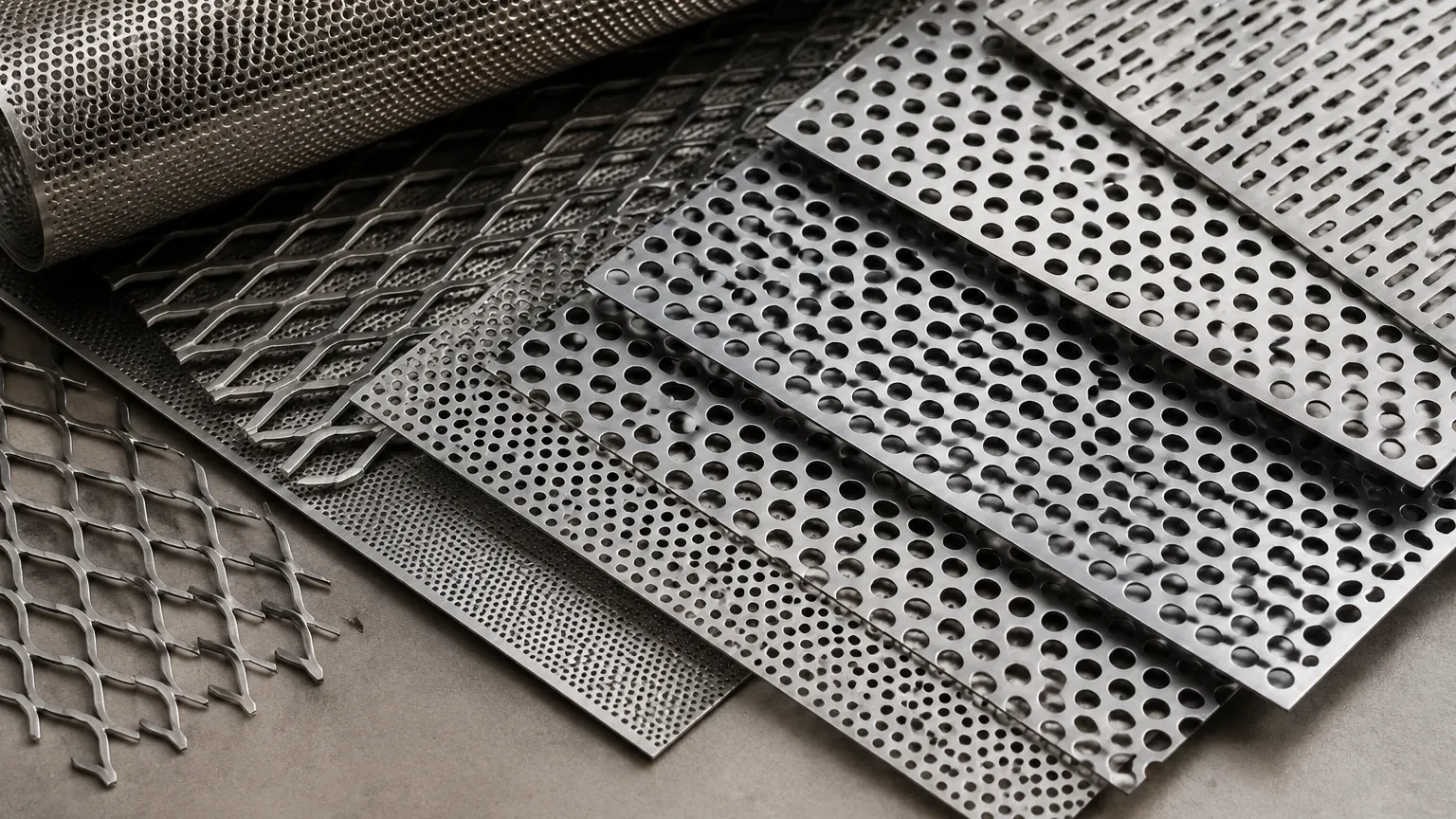
Standard patterns, such as 60-degree staggered round holes, are the most economical because they utilize standard tooling and maximize the efficiency of the punching press. Custom patterns, square holes, or decorative slots often require custom tool sets. The cost of manufacturing or modifying these tools is usually amortized over the production run, significantly increasing the unit price for small or medium-sized orders.
Production Volume and Manufacturing Efficiency
In the B2B manufacturing sector, the economy of scale is a critical factor in determining the perforated metal sheet price. The setup time for a perforating press—including tool installation, alignment, and test runs—can take several hours.
Prototype vs. Mass Production
For small batches or prototypes, the setup cost represents a large percentage of the total invoice. For high-volume orders, these fixed costs are spread across thousands of sheets, leading to a much lower price per unit. When sourcing Perforated & Expanded Metal, it is often more cost-effective to order larger quantities or establish a long-term supply agreement to mitigate the impact of setup charges.
Sheet Dimensions and Scrap Rates
Standard sheet sizes (e.g., 4'x8' or 1m x 2m) are typically the most affordable. Requesting custom dimensions may result in higher scrap rates if the desired size does not align with the master coil width. Since the customer effectively pays for the raw material used, minimizing scrap through optimized nesting and standard sizing is a practical way to reduce the perforated metal sheet price.
Post-Processing and Quality Control Requirements
Industrial filters and precision components often require secondary operations after the initial perforation process. These steps ensure the material meets the stringent standards of industries like food processing or hydraulics.
Leveling and Deburring
The punching process naturally introduces internal stresses into the metal, which can cause the sheet to curl or bow. Precision leveling is required to return the sheet to a flat state. Additionally, punching creates burrs on the exit side of the hole. For filtration applications, these burrs must be removed through mechanical deburring or electropolishing to prevent fluid turbulence or contamination. Each of these steps adds labor and machine time to the perforated metal sheet price.
Surface Treatments and Coatings
Depending on the application, sheets may require passivation (to restore the chromium oxide layer in stainless steel), galvanizing (for carbon steel), or powder coating. While these treatments enhance durability and corrosion resistance, they are additional line items in the cost structure.
Fabrication and Forming
If the perforated metal needs to be rolled into a cylinder for a filter cartridge, welded, or fitted with end caps, the complexity of the project increases. Kaifil provides comprehensive OEM services that include these fabrication steps. While a finished component has a higher price than a flat sheet, it often reduces the total assembly cost for the end-user by eliminating the need for third-party fabricators.
Total Cost of Ownership in Industrial Filtration
When evaluating the perforated metal sheet price, savvy procurement professionals look at the Total Cost of Ownership (TCO). A lower-priced sheet that uses inferior alloys or has inconsistent hole tolerances may fail prematurely in a high-pressure hydraulic system or a corrosive chemical reactor.
Durability and Maintenance
Investing in a higher-grade material or a more precise perforation pattern can extend the service life of the component. In filtration, a well-engineered perforated sheet serves as a robust support for finer wire mesh layers. If the perforated support fails, it can lead to the collapse of the entire filter element, resulting in costly unscheduled downtime and potential damage to downstream equipment.
Performance Efficiency
The precision of the open area and hole distribution directly impacts pressure drop and flow rates. A sheet with poor tolerances may cause uneven flow distribution, leading to localized clogging and more frequent cleaning cycles. By selecting a high-quality manufacturer, companies ensure that the perforated metal sheet price reflects a product that will optimize the efficiency of their industrial processes.
Conclusion: Navigating the Procurement Process
To obtain the most accurate perforated metal sheet price, engineers should provide detailed specifications during the quoting stage. This includes the material grade, thickness, hole diameter, pitch, pattern, and any required secondary operations. Understanding the relationship between these technical factors and the final cost allows for better design-to-cost optimization.
At Kaifil, we combine manufacturing expertise with deep engineering knowledge to provide customized filtration solutions. Whether you require standard sheets or complex fabricated components, our focus is on delivering reliability and precision. For detailed technical support or to discuss your specific application needs, we invite you to explore our range of Perforated & Expanded Metal and consult with our technical team to find the most cost-effective solution for your project.
