


Perforated Metal Curtain
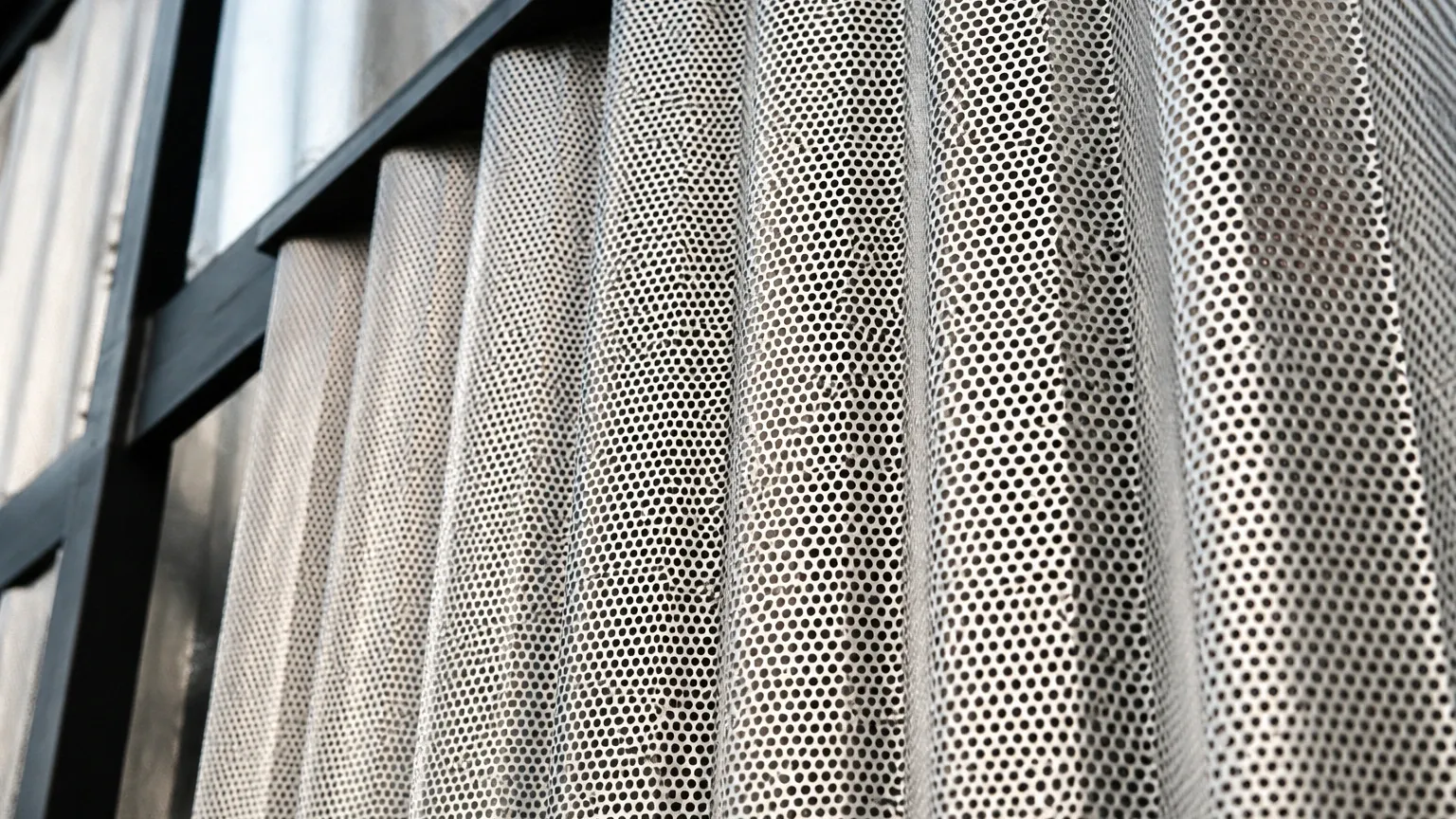
In industrial and architectural engineering, the term "perforated metal curtain" refers to a versatile shielding and filtration component manufactured by punching or laser-cutting precise patterns into metal sheets. While often associated with aesthetic architectural facades, these components serve critical functional roles in industrial environments, including debris protection, airflow management, acoustic damping, and coarse filtration. For engineers and purchasing teams, selecting the right Perforated & Expanded Metal solution requires a deep understanding of material science, fluid dynamics, and structural integrity.
At Kaifil, we specialize in custom stainless steel filtration and separation solutions. This guide examines the technical parameters of perforated metal curtains, their industrial applications, and the engineering considerations necessary to ensure long-term performance in demanding environments.
Technical Fundamentals of Perforated Metal Curtains
A perforated metal curtain is essentially a functional barrier. Unlike woven wire mesh, which is created by interlacing wires, perforated metal is a monolithic sheet that has been mechanically altered. This provides a high degree of structural rigidity and allows for precise control over the open area percentage, which is a critical factor in both filtration and ventilation applications.
Material Selection and Durability
The performance of a perforated metal curtain is fundamentally tied to its base material. In industrial settings, stainless steel is the standard due to its mechanical strength and resistance to environmental degradation.
* Stainless Steel 304: The most common grade, offering excellent corrosion resistance for general industrial use. It is suitable for most indoor applications and outdoor environments where exposure to high chlorides or acids is limited.
* Stainless Steel 316/316L: Contains molybdenum, which provides superior resistance to pitting and crevice corrosion. This is the preferred choice for chemical processing plants, marine environments, and pharmaceutical facilities where aggressive cleaning agents are used.
* Specialty Alloys: For high-temperature applications or highly corrosive chemical environments, alloys like Duplex stainless steel or Monel may be utilized to ensure the curtain maintains its structural integrity over a multi-year lifecycle.
Hole Patterns and Geometry
The geometry of the perforations determines how the curtain interacts with fluids, light, and physical particles. Common patterns include:
1. Round Holes: The most popular choice due to manufacturing efficiency and uniform stress distribution. They are typically arranged in a 60-degree staggered pattern, which maximizes open area and structural strength.
2. Square Holes: Often used when a higher open area is required. However, square corners can act as stress concentrators, potentially leading to fatigue over time in high-vibration environments.
3. Slotted Holes: Ideal for separation processes where the aspect ratio of the particles matters, such as in grain processing or specific liquid filtration stages.
Engineering Calculations: Open Area and Flow Rates
For engineers, the most critical specification for a perforated metal curtain is the "Open Area." This is the percentage of the sheet that is comprised of holes. It directly impacts the pressure drop across the curtain and the velocity of the fluid (air or liquid) passing through it.
For a standard 60-degree staggered round hole pattern, the open area percentage (R) is calculated using the following formula:
R = (D² × 90.69) / C²
Where:
* D = Hole Diameter
* C = Center-to-Center Distance (Pitch)
An accurate calculation of the open area is essential to prevent system overheating in ventilation applications or to ensure that a filtration system does not experience an excessive pressure differential that could lead to pump failure or curtain deformation.
Industrial Applications of Perforated Metal Curtains
Beyond their use as decorative elements, perforated metal curtains are integrated into complex industrial systems to solve specific engineering challenges.
1. Machine Guarding and Safety
In manufacturing facilities, perforated curtains serve as safety barriers around high-speed machinery. They provide a physical shield against flying debris while allowing operators to maintain visual contact with the equipment. The choice of hole size is critical here; it must be small enough to prevent finger ingress or the passage of specific waste materials while maintaining enough airflow to cool the machinery.
2. Acoustic Damping and Sound Control
In power plants and heavy industrial zones, noise pollution is a significant concern. Perforated metal curtains, when used in conjunction with sound-absorbing materials, act as an acoustic transparent layer. The perforations allow sound waves to pass through the metal into an insulation medium (like mineral wool) where the energy is dissipated. This is common in turbine enclosures and compressor rooms.
3. Debris Screening and Coarse Filtration
In water treatment and chemical processing, a perforated metal curtain often serves as the first line of defense. It acts as a coarse filter to remove large particulates before the fluid reaches finer Perforated & Expanded Metal cartridges or wire mesh filters. This protects downstream equipment from damage and extends the service life of more expensive fine-filtration components.
4. Airflow and Thermal Management
In data centers and electronic enclosures, perforated curtains are used to manage "hot aisle/cold aisle" containment. By precisely controlling the open area, engineers can direct airflow to specific heat-generating components, ensuring efficient thermal management and reducing energy consumption.
Perforated vs. Expanded Metal Curtains
When specifying a metal curtain, engineers must decide between perforated and expanded metal. Both fall under the broader category of industrial metal screens, but they offer different performance characteristics.
* Perforated Metal: Offers higher precision in hole size and placement. It is easier to clean and provides a smoother surface finish, which is essential in food-grade or pharmaceutical applications. However, the punching process creates scrap material (the "slugs"), which can increase the cost of high-value alloys.
* Expanded Metal: Created by slitting and stretching a single sheet of metal. This process produces no waste and creates a three-dimensional, truss-like structure. Expanded metal curtains are often more rigid and offer a higher strength-to-weight ratio. They are excellent for heavy-duty safety guards and anti-climb fencing, though they are more difficult to clean and have less precise filtration ratings than perforated options.
Customization and OEM Considerations
Standard off-the-shelf perforated sheets rarely meet the specific requirements of complex industrial projects. Customization is often necessary to ensure the perforated metal curtain integrates seamlessly into the existing infrastructure.
Dimensional Tolerances
In industrial filtration and machine guarding, tolerances are tight. Engineers must specify the allowable variance in sheet thickness, hole diameter, and margin width (the unperforated area around the edges). At Kaifil, we utilize advanced CNC punching and laser cutting to maintain high precision, ensuring that custom curtains fit perfectly into frames or housings without the need for on-site modification.
Surface Treatments and Finishes
Depending on the environment, the stainless steel may require additional processing:
* Electropolishing: Removes surface impurities and creates a microscopically smooth finish. This is vital for the food and beverage industry to prevent bacterial growth and facilitate easy cleaning.
* Passivation: Enhances the natural chromium oxide layer of the stainless steel, providing maximum corrosion resistance.
* Powder Coating: Used primarily for architectural or identification purposes, providing an extra layer of protection and color-coding for safety barriers.
Evaluating Total Cost of Ownership (TCO)
When purchasing a perforated metal curtain, the initial procurement price is only one component of the total cost. Technical professionals should evaluate the following factors to determine the long-term value:
1. Durability and Replacement Cycles: A cheaper, lower-grade material may save costs upfront but fail prematurely due to corrosion or fatigue. Choosing SS316 for a corrosive environment, while more expensive initially, often results in a lower TCO by extending the replacement cycle from months to years.
2. Maintenance Requirements: Screens that are prone to clogging or are difficult to clean increase labor costs. Specifying the correct hole geometry and surface finish can significantly reduce downtime for cleaning.
3. Energy Efficiency: In ventilation applications, a curtain with an optimized open area reduces the load on fans and blowers, leading to measurable energy savings over the life of the installation.
Common Risks and Mitigation Strategies
Specifying a perforated metal curtain involves navigating several technical risks:
* Vibration and Fatigue: In high-flow environments, the metal curtain may vibrate. If the frequency matches the natural frequency of the material, it can lead to stress cracking. Engineers should consider the thickness of the sheet and the support structure to mitigate this risk.
* Galvanic Corrosion: If a stainless steel curtain is mounted in a carbon steel frame without proper insulation, galvanic corrosion will occur. Always ensure compatibility between the curtain and its mounting hardware.
* Blinding/Clogging: If the hole size is too close to the size of the particulates being filtered, the curtain may "blind," rapidly increasing pressure drop. Selecting a staggered pattern or a specific hole shape can help alleviate this issue.
Conclusion: Selecting the Right Partner
Choosing a perforated metal curtain is a technical decision that impacts the safety, efficiency, and longevity of industrial systems. Whether the goal is to protect sensitive machinery, manage airflow in a cleanroom, or provide coarse filtration in a chemical plant, the specifications must be grounded in factual engineering data.
Kaifil provides high-performance Perforated & Expanded Metal solutions tailored to specific industrial needs. By focusing on material purity, manufacturing precision, and application-specific design, we help engineers achieve reliable results in the most demanding environments. Before finalizing a specification, confirm the environmental conditions, required flow rates, and structural load requirements to ensure the selected curtain performs as intended throughout its service life.
