


Perforated Metal Railing
In industrial and commercial environments, the selection of infill panels for safety barriers and walkways is a critical engineering decision. A perforated metal railing system provides a unique balance of structural integrity, visibility, and airflow that solid panels or traditional pickets cannot match. As a specialized manufacturer of stainless steel filtration and metal components, Kaifil provides high-precision Perforated & Expanded Metal solutions designed to meet the rigorous demands of industrial infrastructure.
This guide examines the technical specifications, material considerations, and engineering requirements for implementing perforated metal railing systems in industrial settings, focusing on performance, safety compliance, and long-term durability.
Understanding Perforated & Expanded Metal in Railing Systems
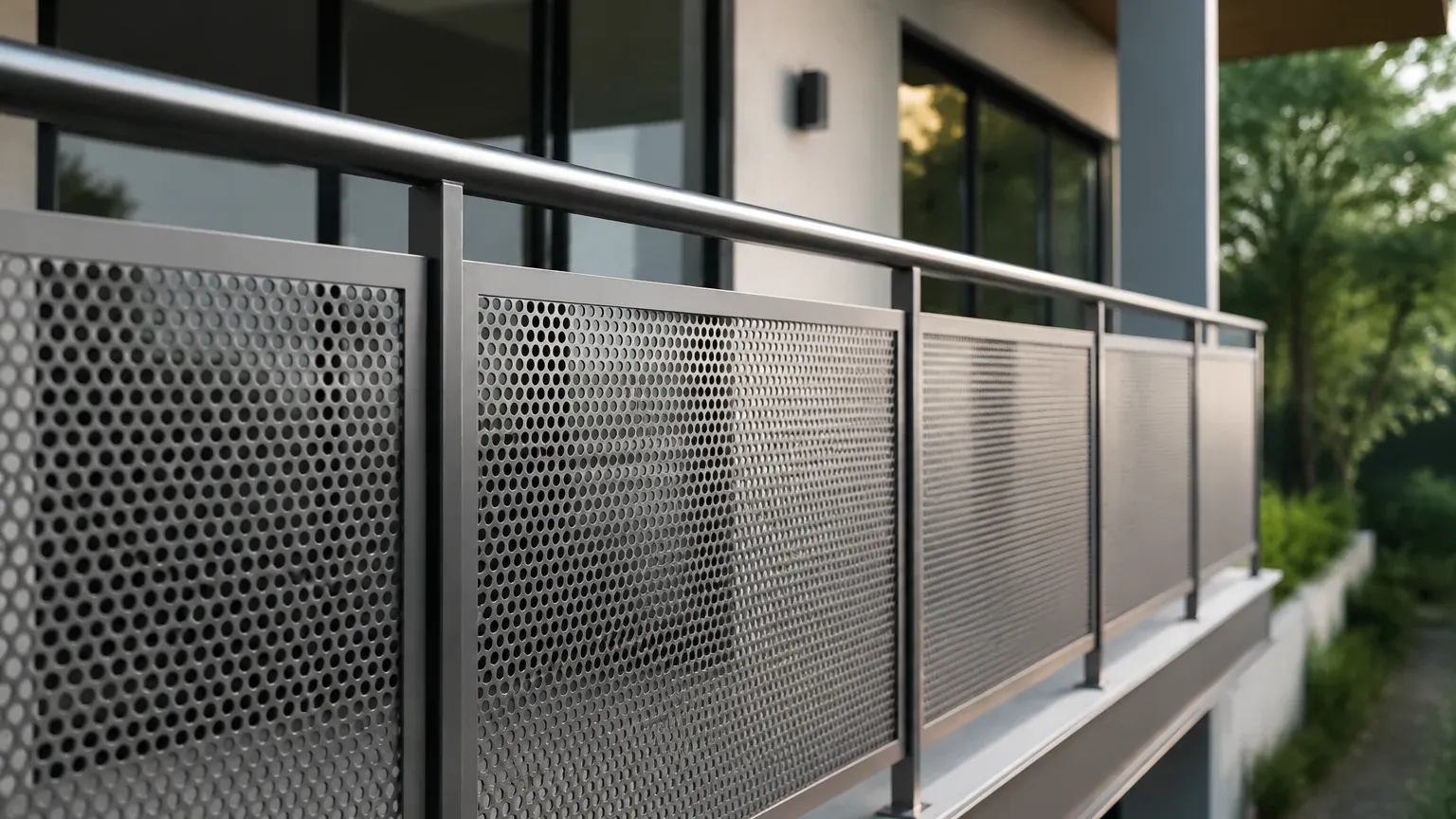
Perforated metal is produced by mechanically punching or laser-cutting a series of holes into a solid metal sheet. This process allows for precise control over the "open area" percentage, which dictates how much light, air, and fluid can pass through the panel. In the context of a perforated metal railing, these panels serve as the infill between structural posts, providing a continuous protective barrier.
Expanded metal, while often grouped with perforated options, is manufactured by simultaneously slitting and stretching the material to create a diamond-shaped mesh. Both materials offer distinct advantages:
* Perforated Panels: Offer greater design flexibility with round, square, or slotted holes. They provide a smoother surface and are easier to clean, making them ideal for food processing or pharmaceutical environments.
* Expanded Metal Panels: Known for their high strength-to-weight ratio and anti-slip properties. The three-dimensional nature of expanded metal provides excellent grip and is often used in heavy-duty industrial catwalks.
For most high-specification industrial projects, perforated stainless steel is the preferred choice due to its predictable structural behavior and superior corrosion resistance.
Material Selection: The Importance of Stainless Steel
The environment in which a perforated metal railing is installed dictates the necessary material grade. Because these systems are often exposed to harsh chemicals, high humidity, or outdoor elements, material selection is the first line of defense against structural failure.
Grade 304 Stainless Steel
Grade 304 is the standard "18/8" stainless steel. It offers excellent corrosion resistance for most indoor industrial applications and mild outdoor environments. It is a cost-effective choice for railings in warehouses, standard manufacturing plants, and commercial facilities where chemical exposure is limited.
Grade 316 Stainless Steel
For more demanding environments, such as chemical processing plants, marine applications, or wastewater treatment facilities, Grade 316 is required. The addition of molybdenum enhances resistance to pitting and crevice corrosion, particularly in chloride-rich environments. In industrial filtration and safety applications, 316 stainless steel ensures that the perforated panels maintain their structural integrity over decades of service.
Specialty Alloys
In extreme cases involving high-temperature filtration or highly acidic environments, specialty alloys like 316L (low carbon) or Duplex stainless steels may be specified to prevent intergranular corrosion and provide higher yield strength.
Technical Specifications and Hole Patterns
When specifying a perforated metal railing, engineers must define the hole pattern, hole size, and pitch (the distance between the centers of adjacent holes). These factors directly influence the panel's weight, transparency, and wind load resistance.
Round Hole Patterns
Round holes are the most common and efficient pattern for industrial railings. They offer the best structural stability and are the easiest to manufacture with high precision. A 60-degree staggered pattern is the most popular arrangement, providing maximum strength and a uniform appearance.
Square and Slotted Holes
Square holes provide a higher open area percentage, which is beneficial for maximum ventilation. Slotted holes are often used when specific directional airflow or drainage is required. However, square and slotted patterns can introduce higher stress concentrations at the corners, which must be accounted for in the structural calculations of the railing system.
Open Area Calculations
The open area percentage is a critical metric for both safety and performance. For example, a railing installed in an outdoor stairwell must account for wind loads; a panel with a 40% open area will experience significantly less wind pressure than a solid panel. Conversely, in safety guarding applications, the hole size must be small enough to prevent fingers or tools from passing through, adhering to OSHA or local safety standards.
Engineering Considerations for Industrial Safety
A perforated metal railing is more than an aesthetic choice; it is a safety component that must withstand specific loads. Engineering teams must evaluate the following criteria during the design phase:
Load Requirements
Most building codes (such as the IBC in the United States or Eurocodes in Europe) require railing infill panels to withstand a concentrated load (often 50 lbs per square foot) applied over a specific area. Because perforation reduces the cross-sectional area of the metal, the base sheet thickness must be calculated to ensure the remaining "ligaments" between the holes can support these loads without permanent deformation.
Attachment Methods and Framing
Perforated panels are rarely installed "raw." They are typically secured using one of several methods:
1. U-Edging: A metal channel is welded around the perimeter of the perforated sheet to provide a smooth edge and additional stiffness.
2. Angle Iron Frames: The panel is bolted or welded into a robust frame, which is then attached to the railing posts.
3. Direct Bolting: Panels are manufactured with "solid margins" (unperforated edges) that allow for direct bolting to the structural framework.
Vibration and Resonance
In industrial plants with heavy machinery, constant vibration can lead to fatigue failure in metal components. Perforated panels, if not properly tensioned or framed, can also generate noise (whistling) when high-velocity air passes through the holes. Selecting the correct thickness and hole geometry can mitigate these acoustic and structural risks.
Manufacturing Precision and Customization
At Kaifil, we understand that industrial applications require exact tolerances. Our manufacturing process for Perforated & Expanded Metal components involves advanced CNC punching and laser cutting technology to ensure consistency across large production runs.
Customization Options
* Variable Margins: We can produce panels with specific solid borders to facilitate easy installation and welding, eliminating the need for additional trimming on-site.
* Precision Leveling: The perforating process can introduce internal stresses that cause the metal to curl. We utilize precision leveling equipment to ensure every panel is perfectly flat before it reaches the customer.
* Surface Finishing: Depending on the application, we offer finishes ranging from industrial 2B (mill finish) to electropolishing. Electropolishing is particularly valuable for stainless steel railings in the pharmaceutical and food industries, as it removes surface impurities and enhances corrosion resistance.
The Role of Perforated Railings in Filtration and Ventilation
In many industrial settings, the railing system serves a dual purpose. For example, in a mezzanine housing filtration equipment, a perforated metal railing allows for the free flow of air, preventing the buildup of heat or hazardous fumes.
In some specialized chemical processing environments, the railing infill panels act as a primary debris screen, preventing large contaminants from falling into lower-level processing vats while maintaining visibility for operators. By integrating filtration principles into architectural safety components, facilities can optimize both safety and operational efficiency.
Selection Guide: Questions for Engineers and Purchasing Teams
Before finalizing a purchase order for perforated metal railing panels, technical teams should confirm the following details to ensure the product is fit for purpose:
1. What is the primary environment? (Indoor, outdoor, coastal, or chemical exposure?)
2. What are the local safety code requirements for hole size? (e.g., the "4-inch sphere rule" for child safety or specific OSHA finger-guard standards.)
3. What is the required thickness (gauge)? (Common industrial gauges range from 11ga to 16ga depending on the span between supports.)
4. Are solid margins required for mounting? (Specify the width of the unperforated edge on all four sides.)
5. What is the required open area? (Balance the need for visibility and airflow against structural strength.)
Maintenance and Long-Term Durability
One of the primary advantages of stainless steel perforated metal railing is its low maintenance requirement. However, in industrial settings, regular inspections are necessary to ensure continued safety.
* Cleaning: In food and beverage or pharmaceutical plants, the holes should be inspected for particulate buildup. High-pressure washing or steam cleaning is usually sufficient for stainless steel panels.
* Inspection of Attachments: Over time, industrial vibrations can loosen bolts or stress welds. Annual inspections should focus on the points where the perforated panel meets the structural frame.
* Corrosion Monitoring: Even 316 stainless steel can show signs of "tea staining" if exposed to heavy salts or chemicals without occasional rinsing. Early detection allows for simple cleaning before structural pitting occurs.
Conclusion
Perforated metal railing systems offer a sophisticated, durable, and highly functional solution for industrial safety and infrastructure. By carefully selecting the appropriate material grade, hole pattern, and framing method, engineers can create a barrier that meets both safety regulations and operational requirements.
As a dedicated manufacturer of precision metal components, Kaifil provides the technical expertise and manufacturing capabilities needed to deliver high-performance filtration and safety solutions. Whether your project requires standard stainless steel panels or custom-engineered infills for complex industrial environments, our focus on quality and precision ensures that your railing system will perform reliably for years to come.
