


Perforated Metal Riser
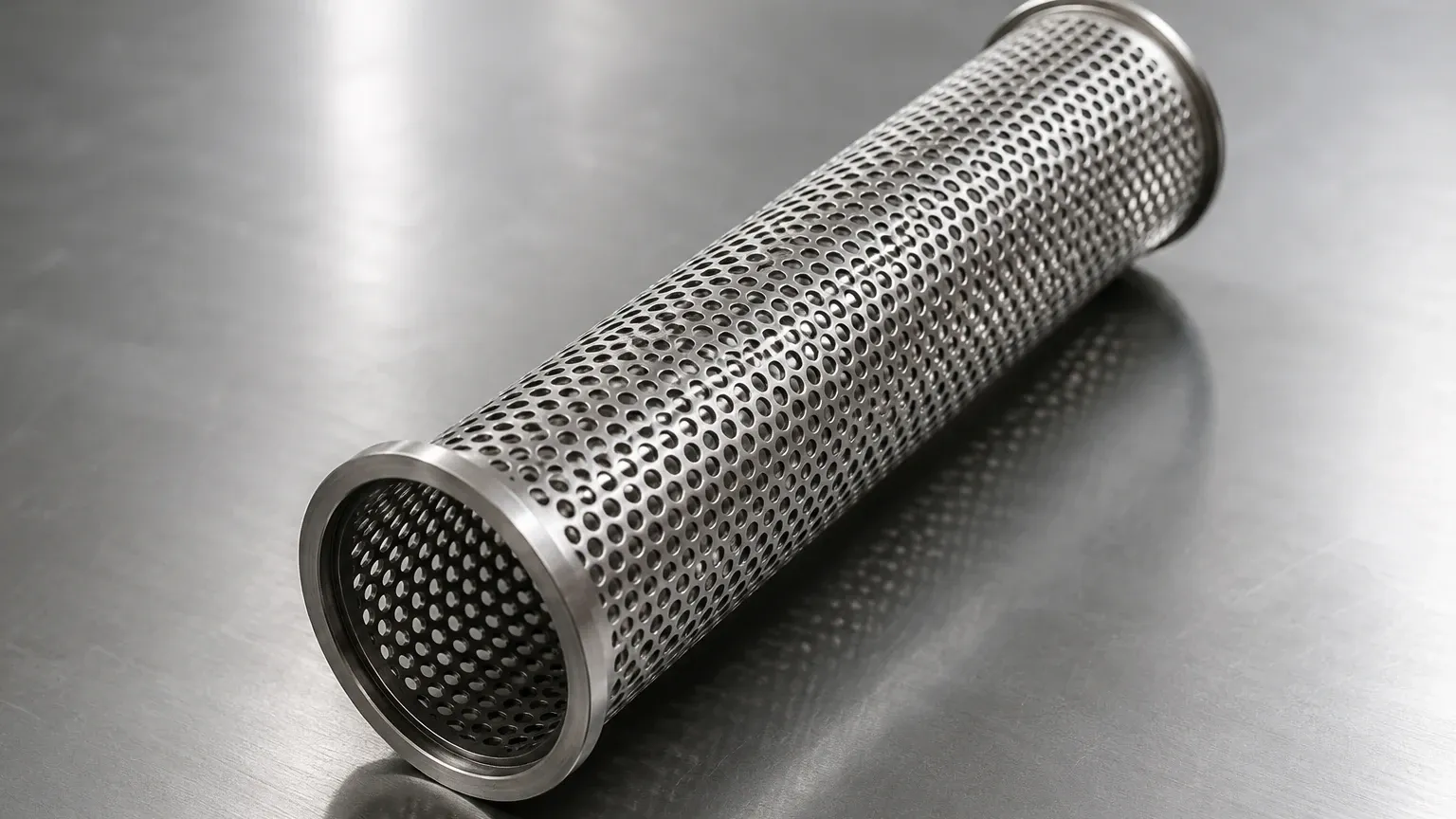
In industrial filtration and fluid processing, the structural integrity of internal components is as critical as the filtration media itself. A perforated metal riser serves as a fundamental architectural element in pressure vessels, water treatment systems, and chemical reactors. These components are engineered to provide a high-strength conduit for fluid flow while maintaining specific open area requirements to facilitate efficient processing. As a specialized manufacturer, Kaifil provides precision-engineered Perforated & Expanded Metal solutions designed to meet the rigorous demands of heavy industrial applications.
Selecting the correct perforated metal riser involves more than choosing a pipe with holes. It requires a comprehensive understanding of fluid dynamics, material science, and mechanical engineering to ensure the component can withstand operational pressures, corrosive environments, and long-term fatigue.
Engineering Fundamentals of Perforated Metal Risers
The primary function of a perforated metal riser is to act as a central collection or distribution pipe within a larger system. Unlike standard piping, the riser must allow fluid to pass through its walls at controlled rates. This is achieved through precision perforation patterns that are calculated based on the required flow rate and the viscosity of the medium.
Hole Patterns and Geometry
Engineers typically choose between three primary hole configurations for risers:
1. Staggered Centers: This is the most common pattern, offering the highest open area and structural uniformity. The 60-degree staggered pattern provides excellent strength-to-weight ratios, making it ideal for high-pressure environments.
2. Straight Centers: Used when specific alignment with internal media or secondary mesh layers is required. While easier to align, straight patterns generally offer lower structural rigidity than staggered versions.
3. Slotted Perforations: Often utilized in applications involving fibrous materials or specific flow directions, slotted holes can prevent clogging where round holes might fail.
Open Area Calculations
The "Open Area" percentage is a critical metric. It determines the flow capacity and the pressure drop across the riser. A perforated metal riser with a low open area may cause excessive backpressure, leading to system inefficiency or pump strain. Conversely, an excessively high open area may compromise the mechanical strength of the riser, leading to buckling or collapse under external pressure (differential pressure).
Material Selection for Demanding Industrial Environments
Industrial filtration often occurs in environments where carbon steel would fail within weeks. Therefore, material selection is the most significant factor in determining the total cost of ownership for a perforated metal riser.
Stainless Steel 304/304L
Grade 304 is the standard for most industrial applications. It offers excellent formability and welding characteristics. For risers that require extensive welding, the low-carbon version (304L) is preferred to prevent carbide precipitation and ensure the integrity of the weld seams in corrosive environments.
Stainless Steel 316/316L
In chemical processing, pharmaceutical production, and marine environments, Grade 316L is the industry standard. The addition of molybdenum provides superior resistance to chlorides and pitting corrosion. When a perforated metal riser is used in water treatment plants or desalination units, 316L is essential for longevity.
Specialty Alloys
For extreme environments involving high temperatures or highly acidic/alkaline solutions, Kaifil can manufacture risers using Duplex stainless steel or nickel-based alloys. These materials are selected when the standard 300-series stainless steels cannot meet the service life requirements of the project.
Applications in Filtration and Fluid Management
The versatility of the perforated metal riser allows it to be integrated into various complex systems. Its role changes depending on the direction of flow and the nature of the media being processed.
Underdrain Systems in Water Treatment
In gravity filters or pressure sand filters, the riser (often part of a lateral system) collects filtered water from the bottom of the tank. The perforations must be sized to support the weight of the gravel or sand bed while allowing the treated water to exit the vessel. In these applications, the riser must also withstand the upward force during backwashing cycles.
Core Support for Filter Cartridges
In high-pressure hydraulic or chemical filtration, the perforated metal riser acts as the internal core for pleated or depth-filter media. The riser provides the mechanical backbone that prevents the filter media from collapsing inward as the pressure differential increases due to contaminant loading.
Distillation and Chemical Reactors
Within distillation columns, perforated risers can be used as part of the tray assembly or as distribution pipes for gas and liquid phases. The precision of the hole size and spacing is vital here to ensure even distribution, which directly impacts the efficiency of the chemical separation process.
Structural Integrity and Performance Metrics
When specifying a perforated metal riser, engineers must perform a structural analysis that accounts for both static and dynamic loads. A failure in the riser often leads to a catastrophic failure of the entire filtration system, potentially allowing unfiltered media to bypass the system and damage downstream equipment.
Collapse Pressure vs. Burst Pressure
Most risers in filtration are subject to external pressure (outside-in flow). The "collapse pressure" is the limit at which the cylindrical shape of the riser deforms. This is influenced by the wall thickness, the diameter of the riser, and the percentage of open area. Increasing the wall thickness or decreasing the hole size can improve collapse resistance.
Seam Integrity
The method of joining the perforated sheet into a tube is a critical quality point. At Kaifil, we utilize advanced welding techniques, such as TIG (Tungsten Inert Gas) or plasma welding, to create a continuous, high-strength longitudinal seam. A properly welded seam should be as strong as the base material and free from burrs or protrusions that could damage secondary filter layers.
Surface Finishing
For pharmaceutical and food-grade applications, the perforated metal riser must undergo specialized finishing. This includes:
* Pickling and Passivation: Removing free iron from the surface to enhance the protective oxide layer.
* Electropolishing: Achieving a mirror-like finish that reduces surface roughness (Ra), making the component easier to clean and resistant to bacterial growth.
Customization and Manufacturing Precision
No two industrial filtration systems are identical, which is why customization is a core requirement for procurement teams. A standard off-the-shelf pipe rarely meets the specific needs of a custom-engineered pressure vessel.
Dimensional Accuracy
Kaifil manufactures perforated metal risers to exact tolerances. This includes specific outer diameters (OD) to fit within existing housings and precise lengths to ensure proper sealing at the top and bottom of the vessel. We can provide risers with "blank" (non-perforated) areas at the ends to facilitate easier welding to flanges or end caps.
Integration of End Fittings
A perforated metal riser often requires specific end treatments to be functional. We offer a variety of options, including:
* Threaded Ends: For easy installation and replacement.
* Flanged Ends: For secure, bolt-on connections in large-scale industrial systems.
* Machined End Caps: To provide a liquid-tight seal at one end of the riser.
Selection Criteria for Procurement and Engineering Teams
To ensure the successful procurement of a perforated metal riser, technical teams should confirm the following parameters before proceeding with production:
1. Media Compatibility: Is the selected alloy resistant to the chemicals and temperatures of the process fluid?
2. Micron Rating vs. Hole Size: Is the perforated metal riser intended to be the primary filter, or is it a support for a finer mesh? If it is a support, the hole size must be small enough to prevent the mesh from migrating into the holes under pressure (the "wire mesh dimpling" effect).
3. Flow Direction: Is the system designed for inside-out or outside-in flow? This determines where the structural reinforcement is needed.
4. Cleaning Protocols: Will the riser be cleaned via backpulsing, ultrasonic cleaning, or chemical CIP (Clean-in-Place)? The design must accommodate these stresses.
5. Regulatory Compliance: Does the material and manufacturing process meet industry-specific standards such as ASME, FDA, or 3-A Sanitary Standards?
Conclusion: The Value of Precision Engineering
The perforated metal riser is a critical component that bridges the gap between structural support and fluid processing. By selecting high-quality Perforated & Expanded Metal from a manufacturer with deep technical expertise, companies can significantly reduce downtime and maintenance costs.
Kaifil’s commitment to precision manufacturing ensures that every riser we produce meets the exact mechanical and chemical requirements of your application. Whether you are designing a new water treatment facility or retrofitting an existing chemical reactor, our engineering team provides the guidance and manufacturing capabilities necessary to deliver reliable, long-lasting filtration components. By focusing on material integrity, weld quality, and precise perforation patterns, we help our partners achieve optimal filtration performance in the most demanding industrial environments.
