


Revit Perforated Metal Panel
In modern industrial engineering and architectural design, the integration of Building Information Modeling (BIM) has revolutionized how components are specified, visualized, and manufactured. For engineers and procurement specialists, the use of a revit perforated metal panel model serves as more than just a visual placeholder; it is a critical data point that bridges the gap between conceptual design and the physical realities of industrial filtration and structural support.
When specifying Perforated & Expanded Metal for demanding environments—such as chemical processing plants, food production lines, or hydraulic systems—understanding the technical parameters within Revit is essential. This guide explores the engineering considerations, material selections, and manufacturing constraints that must be accounted for when moving from a digital model to a high-performance filtration or structural component.
The Role of Revit Perforated Metal Panels in Industrial Specification
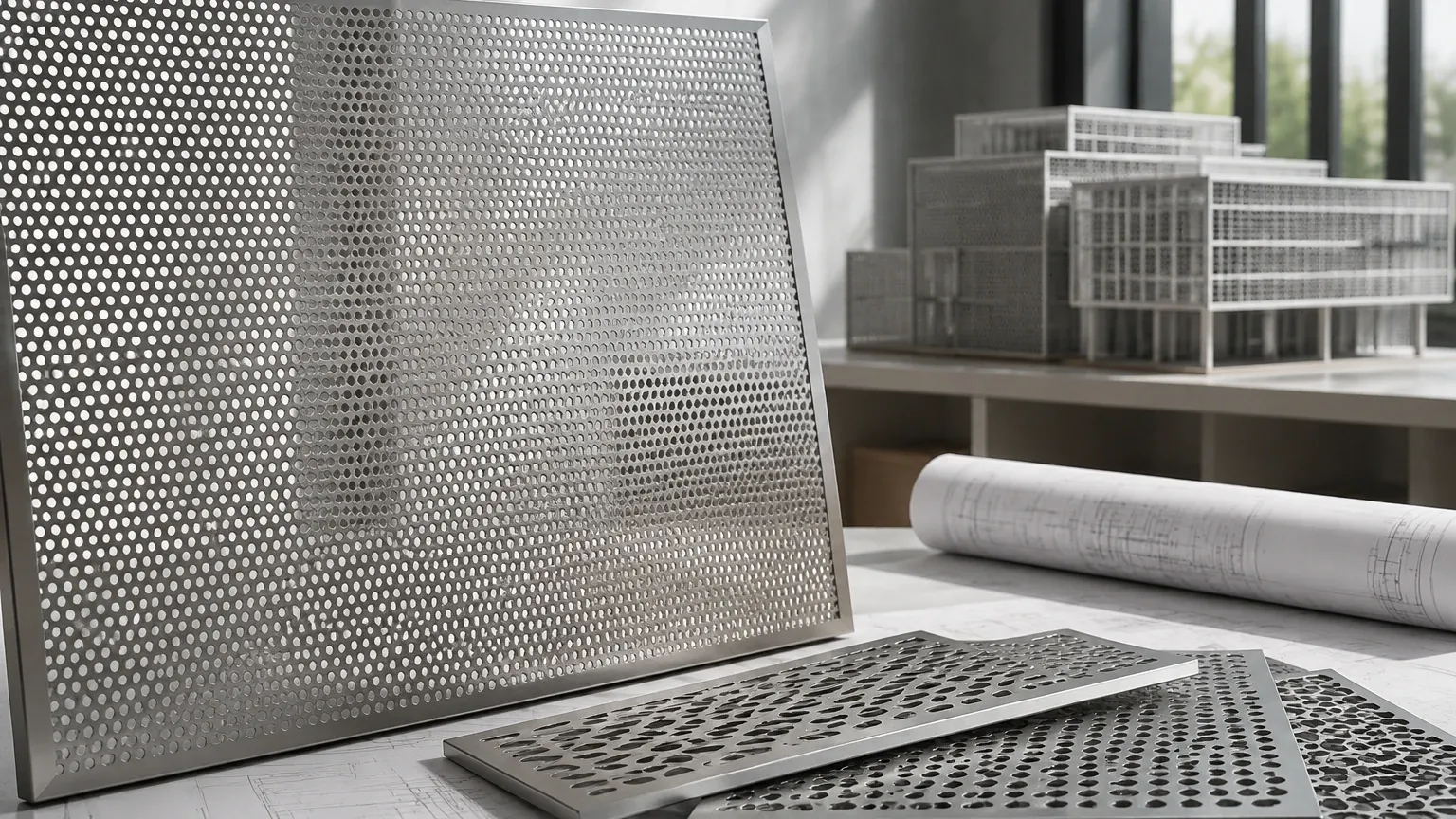
A Revit perforated metal panel is a digital representation used within Autodesk Revit to simulate the appearance and physical properties of perforated sheets. In an industrial B2B context, these models are utilized to determine how a panel will interact with other system components, such as HVAC ducting, filtration housings, or structural frames.
From a technical perspective, there are two primary ways to handle these panels in a BIM environment:
1. Geometric Modeling: Creating actual holes in the 3D geometry. While accurate, this is computationally expensive and can slow down large-scale industrial project models.
2. Material Mapping (Procedural Textures): Using high-resolution maps to simulate the perforation. This is preferred for visualization but requires a separate technical data sheet to ensure the physical product meets the required filtration or airflow specifications.
For engineers, the priority is ensuring that the digital specification aligns with the mechanical requirements of the application, such as open area percentage, load-bearing capacity, and corrosion resistance.
Technical Parameters for Industrial Perforated Metal
When transitioning from a revit perforated metal panel design to a manufacturing order, several technical parameters must be defined with precision. These factors directly influence the performance of the component in industrial applications.
Hole Patterns and Geometry
The geometry of the perforation affects both the structural integrity and the filtration efficiency of the panel. Common patterns include:
* Round Holes: The most versatile and cost-effective pattern, often used in filtration and acoustic damping. They can be arranged in 60-degree staggered, 45-degree staggered, or straight-line patterns.
* Square Holes: Provide a high open area and are frequently used in applications requiring high visibility or maximum airflow.
* Slotted Holes: Ideal for sorting and grading applications in the food and beverage or agricultural industries.
Open Area Calculations
The "open area" is the total area of the holes divided by the total area of the sheet, expressed as a percentage. This is a critical metric for engineers calculating pressure drops in filtration systems or airflow in cooling applications. In Revit, this must be calculated manually or via specialized families to ensure the model reflects the physical reality of the Perforated & Expanded Metal being sourced.
Material Selection and Environmental Resistance
The durability of a perforated metal panel is largely determined by its material composition. In industrial sectors, stainless steel is the standard due to its longevity and resistance to harsh environments.
Stainless Steel Grades
* Grade 304: The most common stainless steel, offering excellent corrosion resistance in standard industrial environments. It is widely used in food processing and general filtration.
* Grade 316: Contains molybdenum, which provides superior resistance to chlorides and acids. This grade is essential for marine environments, chemical processing, and pharmaceutical applications where hygiene and chemical stability are paramount.
Surface Finishes
Beyond the material itself, the finish can impact performance. Electropolishing is often used for stainless steel filtration components to remove surface impurities and create a microscopically smooth finish, which reduces the risk of bacterial growth and makes the panels easier to clean in food and beverage applications.
Engineering Considerations: From BIM to Fabrication
One of the most common challenges in industrial procurement is the discrepancy between a revit perforated metal panel model and the actual fabrication limits. Engineers must consider the following manufacturing constraints during the design phase:
The "Hole Size vs. Thickness" Rule
A fundamental rule in metal perforation is that the hole diameter should generally not be smaller than the thickness of the material. For example, if you are specifying a 2mm thick stainless steel plate, the hole diameter should ideally be 2mm or larger. Attempting to punch holes smaller than the material thickness increases the risk of tool breakage and can lead to structural deformities in the panel.
Margins and Unperforated Borders
In a Revit model, it is easy to draw perforations that extend to the very edge of a sheet. However, in physical production, "margins" are required. These are the unperforated areas along the edges of the sheet that provide stability for welding or mounting. Standard margins are typically 10-20mm, but custom margins can be engineered to meet specific assembly requirements.
Flatness and Stress
The process of perforating metal introduces internal stresses into the material, which can cause the sheet to curl or bow. High-quality manufacturers utilize leveling rollers to ensure the finished panel meets strict flatness tolerances, which is vital for precise installation in industrial housings.
Filtration Performance and Fluid Dynamics
For many of Kaifil’s clients, perforated metal serves as the primary support or the initial stage in a complex filtration system. When designing a revit perforated metal panel for filtration, fluid dynamics must be considered.
* Pressure Drop: A panel with a low open area will cause a significant pressure drop, potentially straining pumps and reducing system efficiency. Engineers must balance the need for structural strength (smaller open area) with the need for flow efficiency (larger open area).
* Particle Retention: The hole size determines the largest particle that can pass through the media. In multi-stage filtration, perforated metal often acts as a "pre-filter" or a support cage for finer wire mesh layers.
By selecting the appropriate Perforated & Expanded Metal specifications, engineers can optimize the lifespan of the entire filtration assembly and reduce the frequency of maintenance cycles.
Common Risks in Specifying Perforated Panels
Failure to account for industrial realities in a Revit model can lead to several risks during the procurement and installation phases:
1. Incompatible Tolerances: If the Revit model assumes zero-tolerance fitment, the physical panels may not fit into their designated frames due to thermal expansion or standard manufacturing variances.
2. Corrosion Under-Specification: Choosing a lower-grade material to save on initial costs can lead to premature failure in corrosive environments, resulting in high replacement costs and unplanned downtime.
3. Over-Modeling: Creating overly complex perforation patterns in Revit that are not compatible with standard CNC punching tools can lead to significantly higher manufacturing costs or the need for expensive laser cutting.
Information to Confirm Before Procurement
Before moving from a revit perforated metal panel design to the purchasing stage, technical teams should confirm the following data points with their manufacturer:
* Exact Alloy: Confirm whether 304, 316, or a specialty alloy is required based on the chemical exposure of the application.
* Hole Arrangement: Specify if the pattern is staggered (stronger) or straight (easier for certain alignment tasks).
* End Pattern: Ensure the perforations are "finished" or "unfinished" at the edges to avoid sharp points or irregular margins.
* Quantity and Dimensions: Standard sheet sizes are often more cost-effective, but custom-cut-to-size panels reduce on-site labor and waste.
Conclusion: Optimizing Your Industrial Filtration Solutions
Integrating a revit perforated metal panel into your project workflow is an excellent way to ensure spatial accuracy and design intent. However, the success of the final installation depends on a deep understanding of material science and manufacturing capabilities. By focusing on technical parameters such as open area, material grade, and fabrication margins, engineers can ensure that their Perforated & Expanded Metal components provide reliable, long-term service in even the most demanding industrial environments.
Kaifil specializes in bridging this gap, providing custom stainless steel filtration solutions and precision metal components tailored to specific engineering requirements. Whether you are designing a new chemical processing line or upgrading a hydraulic filtration system, selecting the right perforated media is a critical step toward operational efficiency and cost-effective performance.
