


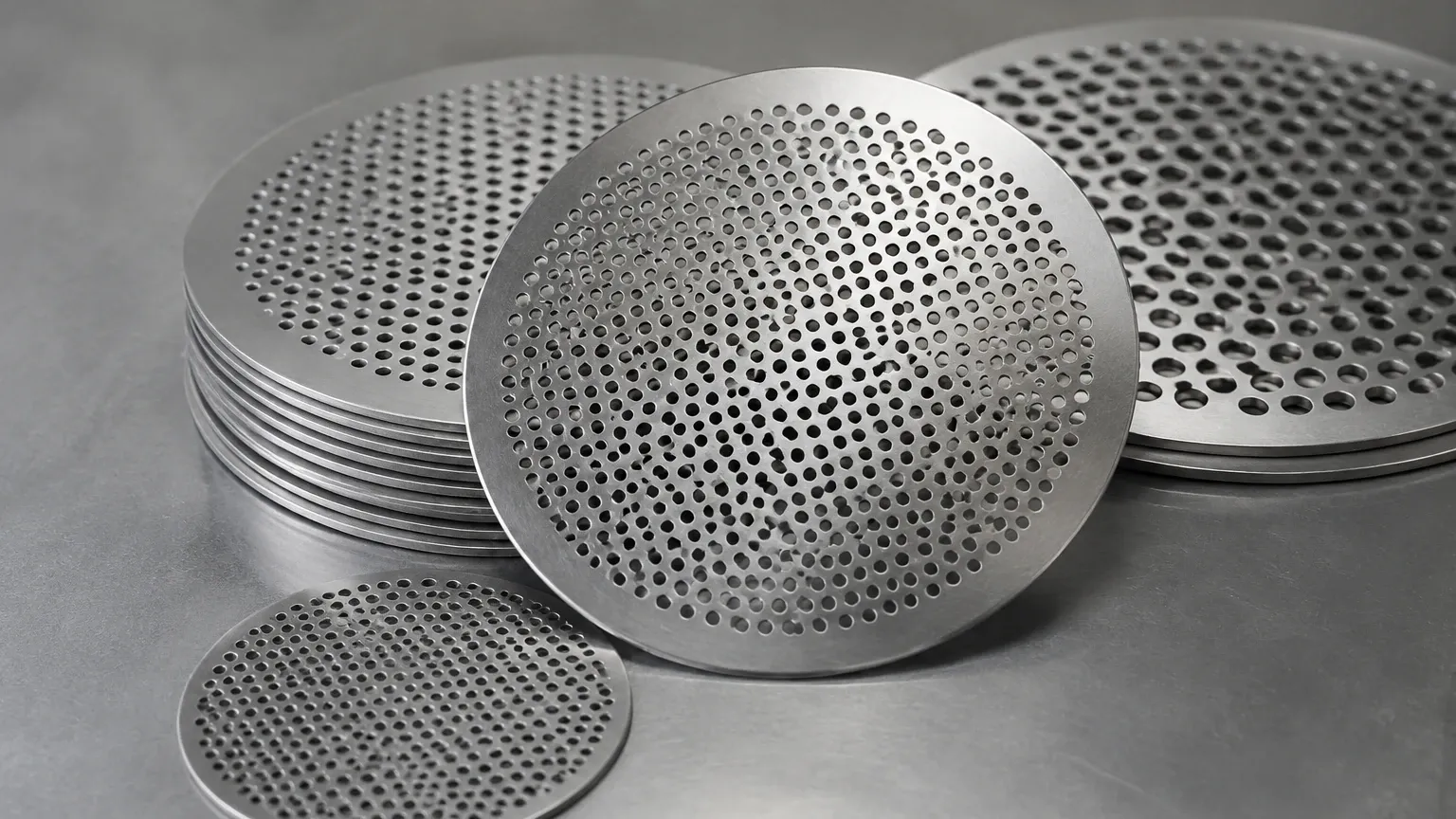
Round Perforated Metal Sheet
In the landscape of industrial filtration and structural engineering, the round perforated metal sheet stands as one of the most versatile and widely utilized components. Characterized by a systematic pattern of punched holes, these sheets provide a critical balance of open area, structural integrity, and mechanical durability. For engineers and procurement specialists, selecting the correct specification involves a deep understanding of hole geometry, material properties, and the specific fluid dynamics of the application.
As a core component in the production of Perforated & Expanded Metal, round hole patterns are favored for their inherent strength and the ease with which they can be manufactured to precise tolerances. Whether used as a standalone coarse filter, a support structure for fine wire mesh, or a protective guard, the technical configuration of the sheet determines the efficiency and lifespan of the entire filtration system.
Engineering Fundamentals: Hole Patterns and Alignment
The performance of a round perforated metal sheet is primarily dictated by its hole arrangement. There are three standard configurations used in industrial manufacturing, each offering different mechanical advantages:
60-Degree Staggered Pattern
This is the most common and efficient arrangement. The holes are offset so that each hole center forms an equilateral triangle with the neighboring centers. This configuration provides the highest percentage of open area and ensures uniform stress distribution across the sheet. From an engineering perspective, it offers the best strength-to-weight ratio, making it the default choice for high-pressure filtration supports.
45-Degree Staggered Pattern
In this arrangement, the holes are offset at a 45-degree angle. While less common than the 60-degree pattern, it is utilized in specific aesthetic or structural applications where a particular directional flow or visual symmetry is required. It generally offers lower open area than the 60-degree stagger but provides different load-bearing characteristics.
Straight Line Pattern
In a straight-line configuration, the holes are aligned in both the longitudinal and transverse directions. This pattern is typically weaker than staggered patterns because it creates continuous "bar" sections that are more susceptible to bending or shearing under load. It is primarily used for sorting, sifting, or decorative applications where structural rigidity is not the primary concern.
Material Selection for Industrial Environments
The choice of material for a round perforated metal sheet is governed by the chemical, thermal, and mechanical demands of the operating environment. At Kaifil, the focus remains on high-performance alloys that can withstand the rigors of industrial processing.
1. Stainless Steel 304: The standard grade for general industrial use. It offers excellent corrosion resistance and formability, making it suitable for food processing, architectural elements, and general water treatment.
2. Stainless Steel 316/316L: Containing molybdenum, these grades offer superior resistance to chlorides and pitting. They are essential for pharmaceutical, marine, and chemical processing applications where the sheet is exposed to aggressive solvents or saline environments.
3. Carbon Steel: Often used in hydraulic systems or dry filtration where corrosion is not a primary risk. These sheets are usually galvanized or coated to extend their service life.
4. Specialty Alloys: For high-temperature or extremely corrosive environments, materials like Monel, Inconel, or Hastelloy may be specified to ensure the integrity of the filtration component.
Calculating Open Area and Flow Dynamics
For engineers, the "Open Area" is the most critical metric. It represents the percentage of the sheet that is comprised of holes versus solid metal. This percentage directly influences the flow rate, pressure drop (differential pressure), and the velocity of the fluid passing through the media.
For a standard 60-degree staggered pattern, the formula for calculating the percentage of open area is:
Open Area % = (D² × 90.69) / P²
Where:
* D = Hole Diameter
* P = Pitch (the distance from the center of one hole to the center of the adjacent hole)
A higher open area reduces the pressure drop across the filter but may decrease the structural strength of the sheet. Conversely, a lower open area increases the "bar" width (the metal between holes), providing greater resistance to mechanical deformation at the cost of restricted flow. Finding the equilibrium between these two factors is essential for optimizing system performance.
The Role of Perforated Sheets in Multi-Layer Filtration
While a round perforated metal sheet can act as a primary filter for large particulates, its most technical application is often as a support core or outer cage in multi-layer filter cartridges. In these configurations, the perforated metal provides the rigid "skeleton" that protects more delicate filtration media, such as fine stainless steel wire mesh or non-woven fibers.
In high-pressure hydraulic or oil filtration, the inner core of the cartridge must withstand significant collapse pressure. A precision-punched perforated sheet ensures that the filter media does not deform or migrate under flow surges. Furthermore, the smooth surface of a high-quality perforated sheet prevents the abrasion of the secondary mesh layers, which is a common cause of premature filter failure in lower-quality components.
Manufacturing Tolerances and Quality Standards
Precision in manufacturing is what separates industrial-grade perforated sheets from general-purpose metalwork. When specifying a round perforated metal sheet for an OEM application, several technical tolerances must be confirmed:
* Hole Diameter Tolerance: Precise hole sizing is required to ensure consistent filtration ratings and flow characteristics.
* Pitch Accuracy: Variations in pitch can lead to uneven stress distribution and potential failure points under pressure.
* Margins: The "margins" are the unperforated areas along the edges of the sheet. Engineers must specify these clearly to ensure the sheet can be welded into cylinders or bolted into frames without compromising the hole pattern.
* Flatness and Leveling: The punching process naturally introduces internal stresses that can cause the metal to curl. High-quality sheets undergo a leveling process to ensure they are perfectly flat, which is critical for subsequent fabrication steps like rolling or welding.
* Deburring: Punching creates "burrs" on the exit side of the hole. For filtration applications, these must be removed via mechanical or chemical means to prevent fluid turbulence and to ensure the sheet does not trap contaminants or damage adjacent mesh layers.
Application-Specific Considerations
Food and Beverage Industry
In food-grade applications, the round perforated metal sheet must meet strict hygienic standards. This often requires a high-polish finish (such as electro-polishing) to ensure there are no microscopic pits where bacteria can colonize. The round hole shape is preferred here because it is easier to clean via CIP (Clean-in-Place) systems compared to square or slotted holes.
Chemical and Petrochemical Processing
In these sectors, the primary concern is material compatibility. The perforated sheets are often exposed to high temperatures and fluctuating pH levels. Engineers must account for the "corrosion allowance" when selecting the thickness (gauge) of the sheet to ensure the structural integrity remains intact over the intended service interval.
Water Treatment and Desalination
Large-scale water intake screens utilize perforated sheets to prevent debris from entering pumps and turbines. In these cases, the round hole size is specifically selected to protect local aquatic life while maintaining a high flow volume to satisfy plant requirements.
Customization and Procurement Guidance
When sourcing round perforated metal sheets for industrial projects, providing a comprehensive data sheet to the manufacturer is vital. To ensure the component meets the application requirements, the following parameters should be confirmed:
1. Material Grade: (e.g., SS316L)
2. Sheet Thickness: (Gauge or mm)
3. Hole Diameter: (The size of the individual punch)
4. Pitch and Pattern: (e.g., 5mm pitch, 60-degree staggered)
5. Margin Requirements: (Dimensions of the solid borders)
6. Secondary Operations: (e.g., rolling into cylinders, degreasing, or specialized coatings)
Kaifil specializes in the production of custom filtration components that leverage the strengths of Perforated & Expanded Metal to solve complex industrial challenges. By focusing on precision manufacturing and material integrity, we provide engineers with the reliable components necessary for high-performance filtration systems. Understanding the technical nuances of the round perforated metal sheet allows for better design decisions, reduced maintenance costs, and optimized process efficiency across all industrial sectors.
