


Perforated Metal Siding
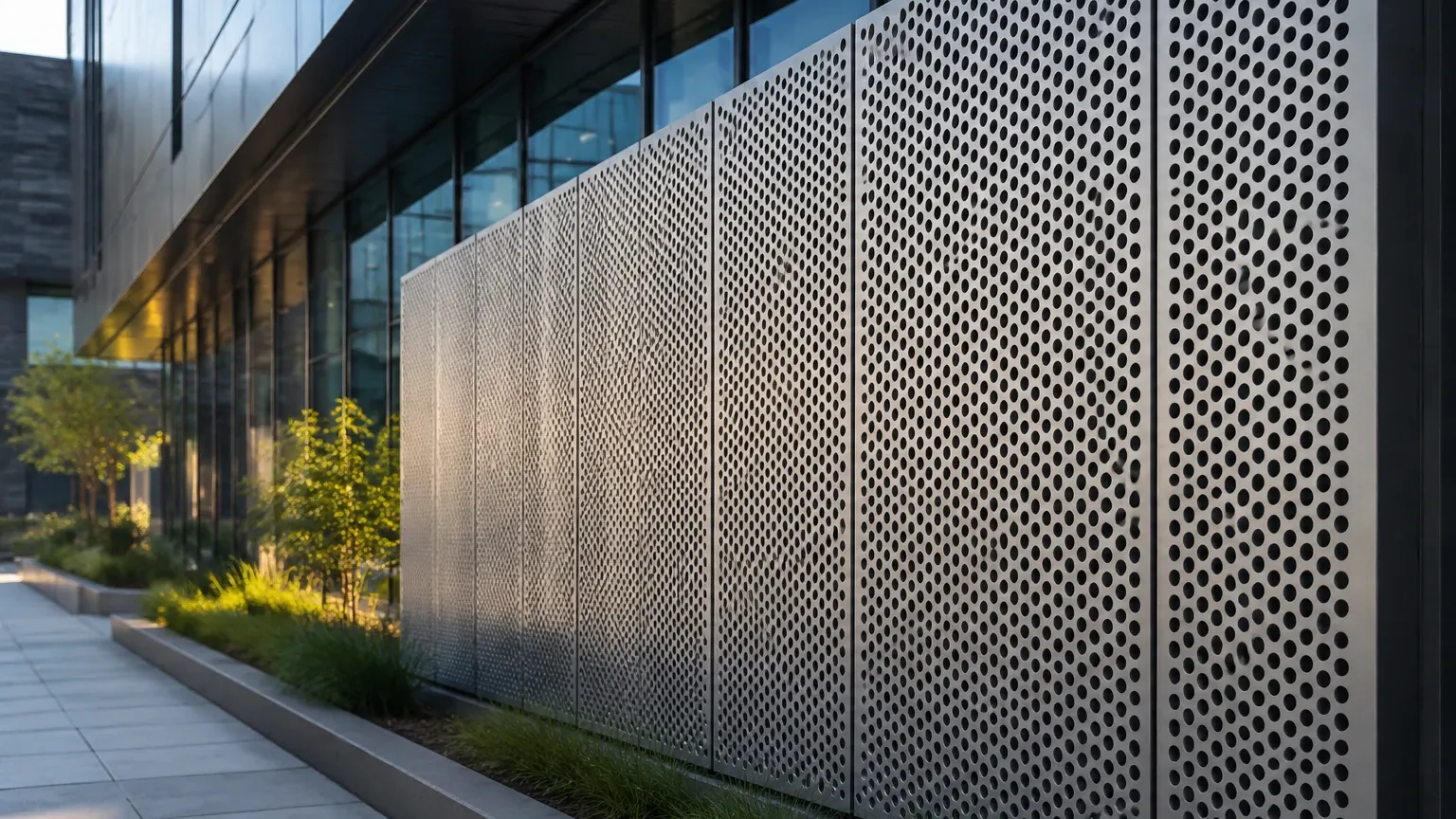
In industrial and commercial engineering, perforated metal siding serves as a critical functional component that balances structural protection with environmental permeability. Unlike solid metal cladding, perforated systems are engineered to allow for the controlled passage of air, light, and sound, making them indispensable in environments where ventilation, acoustic management, and equipment screening are paramount. As a specialized manufacturer of Perforated & Expanded Metal solutions, Kaifil provides the technical expertise required to navigate the complexities of material selection, open area calculations, and precision fabrication for these demanding applications.
Selecting the appropriate perforated metal siding requires a deep understanding of the interplay between hole geometry, material properties, and the specific stressors of the installation environment. This guide examines the technical parameters that engineers and purchasing teams must evaluate to ensure long-term performance and cost-efficiency.
Technical Fundamentals of Perforated Metal Siding
Perforated metal siding is produced through a high-speed punching process where a series of holes are mechanically pressed into metal sheets or coils. The resulting product retains the inherent strength of the base metal while gaining unique functional characteristics based on the perforation pattern.
Material Selection and Corrosion Resistance
The choice of substrate is the most significant factor in determining the lifespan of the siding. For industrial applications, three primary materials dominate the market:
1. Stainless Steel (304 and 316 Grades): Stainless steel is the preferred choice for environments exposed to corrosive chemicals, high humidity, or coastal salt air. Grade 304 offers excellent corrosion resistance for most general industrial uses, while Grade 316, containing molybdenum, provides superior resistance to chlorides and pitting. Kaifil specializes in these high-performance alloys to ensure durability in harsh processing environments.
2. Aluminum: Valued for its high strength-to-weight ratio and natural oxide layer that resists corrosion, aluminum is often used in large-scale architectural and industrial facades where reducing the structural load on the building frame is a priority.
3. Galvanized and Carbon Steel: While more cost-effective, these materials typically require secondary coatings, such as powder coating or PVDF finishes, to prevent oxidation. They are suitable for interior partitions or controlled outdoor environments.
Understanding Open Area and Airflow
The "open area" is the percentage of the sheet that is occupied by holes. This is the most critical metric for engineers designing HVAC enclosures, generator rooms, or drying facilities. The calculation depends on the hole diameter ($d$) and the center-to-center spacing or pitch ($p$).
For a standard 60-degree staggered round hole pattern, the formula for open area ($OA$) is:
$$OA = \frac{d^2 \times 90.69}{p^2}$$
Achieving the correct balance is vital. Too little open area can lead to excessive pressure drops in ventilation systems, while too much open area can compromise the structural integrity of the panel or fail to provide adequate screening for internal components.
Engineering Considerations for Industrial Applications
When specifying perforated metal siding, engineers must look beyond the surface aesthetics to address specific mechanical and environmental requirements.
Acoustic Performance and Noise Dampening
In industrial settings, noise pollution from heavy machinery, pumps, and compressors is a significant safety and regulatory concern. Perforated metal siding can act as a component of an acoustic attenuation system. When used in conjunction with sound-absorbing insulation, the perforations allow sound waves to pass through the metal surface and be trapped by the backing material, significantly reducing decibel levels within a facility or preventing noise from escaping to the surrounding environment.
Structural Integrity and Wind Loading
Unlike solid panels, perforated siding behaves differently under wind loads. The holes allow a portion of the wind to pass through, which can reduce the total wind pressure on the structure. However, the perforations also create stress concentrations around the hole edges. Engineers must calculate the "equivalent solid thickness" to ensure the panels can withstand local wind speed requirements without buckling or vibrating (aeolian vibration), which can lead to fatigue failure over time.
Thermal Management and Solar Shading
In large industrial warehouses or processing plants, perforated siding is frequently used as a secondary skin. This "rainscreen" or shading system reduces solar heat gain by blocking direct sunlight while allowing natural convection currents to dissipate heat from the building's primary envelope. This can lead to substantial energy savings in climate-controlled facilities.
Customization and Manufacturing Precision
Standard off-the-shelf perforated sheets rarely meet the specific needs of complex industrial projects. Customization is essential for ensuring seamless integration with existing structural frames and equipment.
Hole Patterns and Geometry
While round holes are the most common due to their manufacturing efficiency and structural stability, other geometries offer specific advantages:
* Square Holes: Provide a higher open area for maximum airflow but may have lower structural rigidity compared to round holes.
* Slotted Holes: Ideal for filtration or sorting applications where directional flow or specific particle exclusion is required.
* Decorative/Hexagonal Patterns: Often used when a specific visual identity is required alongside functional performance.
Margins and Blank Areas
A critical detail often overlooked by purchasing teams is the requirement for "margins." Margins are the solid areas around the edges of the perforated sheet. Providing unperforated borders simplifies the welding or bolting process and increases the overall stiffness of the panel. Kaifil’s manufacturing process allows for precise control over these blank areas, ensuring that the siding fits perfectly into the specified mounting system without the need for excessive field trimming.
Installation and Maintenance Protocols
The longevity of perforated metal siding is as much a result of proper installation as it is of material quality. Industrial environments require robust attachment methods to handle vibration and thermal expansion.
Mounting Systems
Perforated panels are typically installed using one of three methods:
1. Framed Panels: The perforated sheet is welded or mechanically fastened into a structural angle or tube frame. This provides the highest level of rigidity and is recommended for high-vibration areas.
2. Standoff Brackets: Used primarily for solar shading or rainscreen applications, where the panels are offset from the main wall to allow for airflow.
3. Direct Fastening: The panels are bolted directly to the building's sub-girts. In this scenario, using EPDM washers is essential to prevent galvanic corrosion if dissimilar metals are used and to provide a weather-tight seal.
Maintenance for Longevity
In chemical or food processing plants, dust and particulate matter can accumulate within the perforations. If left uncleaned, this can lead to crevice corrosion, even in stainless steel. Regular pressure washing or steam cleaning is recommended to maintain both the airflow efficiency and the integrity of the metal's protective oxide layer. For stainless steel siding, periodic passivation treatments may be necessary if the panels are exposed to aggressive chemical vapors.
Procurement Checklist: What Engineers Should Confirm
Before finalizing an order for Perforated & Expanded Metal siding, technical professionals should verify the following parameters with their manufacturer:
* Material Certification: Ensure the supplier provides Mill Test Reports (MTRs) to verify the chemical composition of the alloy (e.g., confirming the molybdenum content in Grade 316 stainless steel).
* Tolerances: Define acceptable variances in sheet flatness, hole diameter, and pitch. Industrial siding often requires tighter tolerances than architectural mesh to ensure alignment with mechanical fasteners.
* Edge Conditions: Specify whether the edges should be "safe" (no partial holes) or if the pattern should run off the edge (finished vs. unfinished ends).
* Secondary Processing: Determine if the panels require degreasing, deburring, or specific surface finishes like electropolishing to meet hygiene standards in pharmaceutical or food-grade applications.
The Kaifil Advantage in Perforated Solutions
At Kaifil, we understand that perforated metal siding is a precision-engineered component that must perform under pressure. Our focus on custom stainless steel fabrication allows us to support engineers in developing solutions that meet exact filtration, ventilation, and structural requirements. By combining advanced CNC punching capabilities with deep metallurgical knowledge, we deliver components that optimize the total cost of ownership through reduced maintenance and extended service life.
Whether you are designing a protective enclosure for a chemical processing unit or a high-performance acoustic screen for an industrial HVAC system, selecting the right partner for your perforated and expanded metal needs is essential. For more detailed technical specifications or to discuss custom fabrication requirements, engineers are encouraged to consult with our technical team to ensure the selected siding profile aligns with the project's operational goals.
