


Square Perforated Metal Sheet
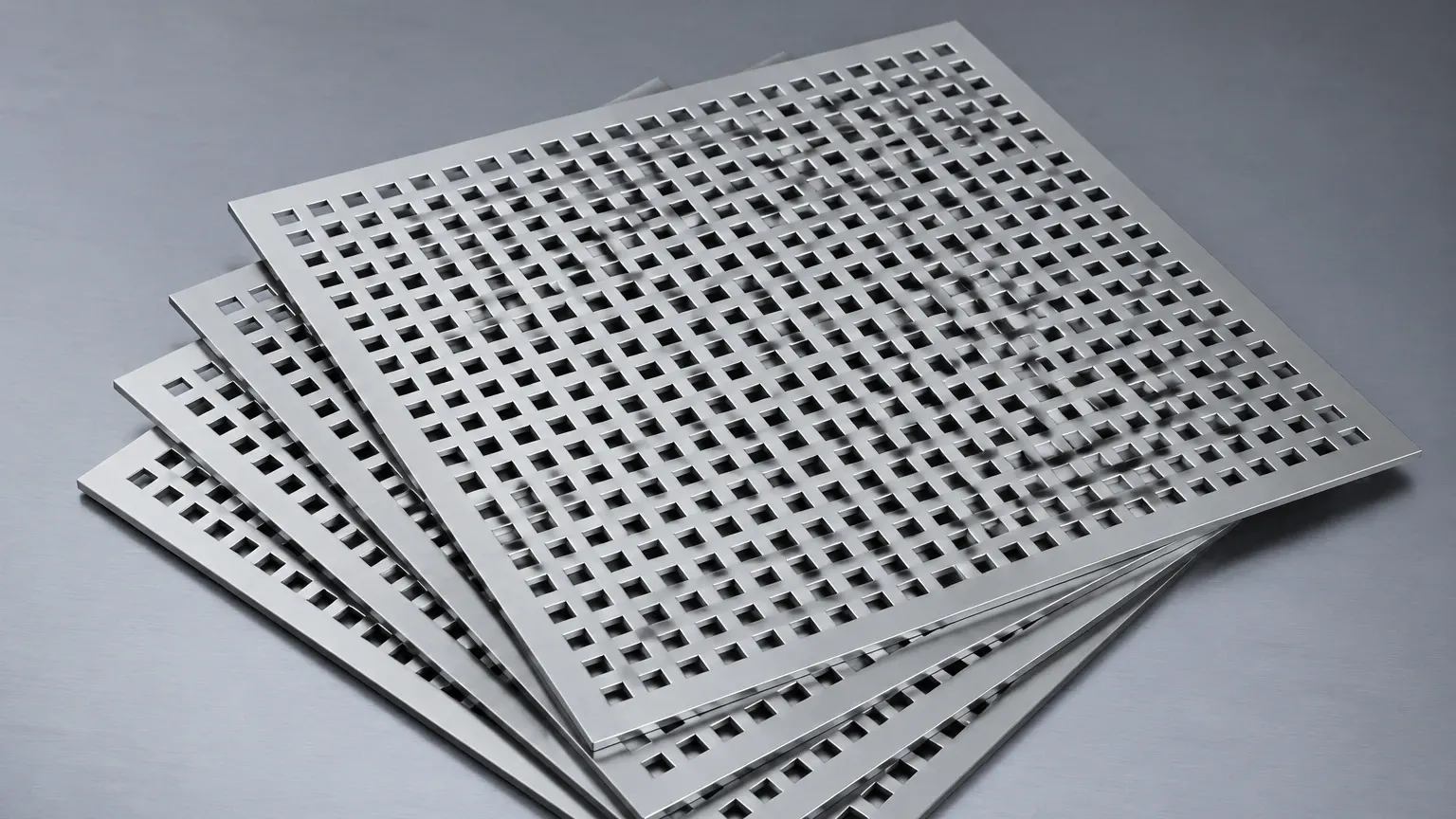
In the landscape of industrial filtration and structural engineering, the square perforated metal sheet serves as a versatile and high-performance component. While round-hole patterns are often the default choice for general-purpose screening, square perforations are engineered for specific technical advantages, particularly regarding open area and flow efficiency. For engineers and procurement specialists, selecting the correct square perforated metal sheet requires a deep understanding of material properties, geometric configurations, and the mechanical stresses inherent in industrial environments.
As a manufacturer specializing in custom stainless steel filtration solutions, Kaifil provides precision-engineered Perforated & Expanded Metal components designed to meet the rigorous demands of chemical processing, food and beverage production, and hydraulic systems. This guide examines the technical specifications, application logic, and evaluation criteria essential for integrating square perforated sheets into industrial systems.
Understanding the Engineering Value of Square Perforated Metal
The primary distinction of a square perforated metal sheet is its high open area percentage. In filtration and separation tasks, the open area directly correlates with throughput and pressure drop. Because square holes can be positioned closer together while maintaining structural ribs (the metal between the holes), they often provide a greater passage area than round holes of the same diameter.
In industrial filtration, these sheets are frequently used as the primary structural support for finer filter media, such as stainless steel wire mesh. The square geometry provides a flat, stable surface that minimizes the risk of the mesh sagging or tearing under high differential pressure. Furthermore, square holes are often preferred in sorting and grading applications where the material being processed—such as specific grains or industrial pellets—has a cubic or angular geometry that would clog a round aperture.
Technical Specifications and Geometry
When specifying a square perforated metal sheet, engineers must define several critical geometric parameters that influence both the mechanical strength and the hydraulic performance of the component.
Hole Pattern: Straight vs. Staggered
Square perforations are typically produced in two primary patterns:
1. Straight Rows: Holes are aligned both horizontally and vertically. This pattern is often chosen for aesthetic purposes or for specific sorting applications where linear alignment is required. However, it generally offers lower structural integrity compared to staggered patterns.
2. Staggered Rows: Each row is offset from the previous one. This configuration provides better resistance to mechanical stress and is often preferred in high-pressure filtration housings or as internal support cores for filter cartridges.
Pitch and Open Area Calculations
The "pitch" refers to the distance from the center of one hole to the center of the adjacent hole. For a square perforated metal sheet with a straight pattern, the open area percentage is calculated using the formula:
Open Area % = (Hole Size² / Pitch²) × 100
For example, a sheet with 10mm square holes and a 12mm pitch provides an open area of approximately 69.4%. Achieving this level of transparency with round holes would require significantly thinner bridges, potentially compromising the sheet's ability to withstand hydraulic loads.
Material Selection for Industrial Environments
Material choice is the most significant factor in determining the longevity and chemical compatibility of a square perforated metal sheet. In the industries Kaifil serves, stainless steel is the standard due to its corrosion resistance and mechanical durability.
* Stainless Steel 304: The most common grade, offering excellent formability and resistance to atmospheric corrosion. It is suitable for most food and beverage applications and general industrial filtration.
* Stainless Steel 316/316L: Contains molybdenum, which provides superior resistance to chlorides and pitting. This is the preferred material for chemical processing, pharmaceutical manufacturing, and marine environments.
* Specialty Alloys: For high-temperature or highly acidic environments, alloys such as Duplex stainless steel or Monel may be required to prevent stress corrosion cracking and material degradation.
Beyond chemical compatibility, the "temper" or hardness of the metal must be considered. Perforating hard materials can introduce internal stresses, leading to warping or "oil canning" (a bulging effect in the center of the sheet). Precision manufacturing processes are required to ensure the final product remains flat and dimensionally accurate.
Applications in Industrial Filtration and Support
Square perforated metal sheets are rarely used in isolation; they are typically integrated into larger mechanical assemblies. Their role varies depending on the specific filtration stage:
1. Support Cores for Filter Cartridges
In high-pressure hydraulic and liquid filtration, fine wire mesh layers are wrapped around a perforated core. The square holes allow for maximum fluid flow into the filter media while the robust metal structure prevents the mesh from collapsing under the force of the fluid. The flat edges of square holes can provide more contact surface for the mesh compared to the curved edges of round holes, reducing localized stress points.
2. Outer Protective Guards
For pleated filters or delicate mesh components, an outer square perforated metal sheet acts as a protective cage. This prevents mechanical damage during installation and maintenance while ensuring that the flow of the process fluid is not unnecessarily restricted.
3. Coarse Pre-Filtration and Trash Racks
In water treatment and intake systems, square perforated sheets serve as the first line of defense against large debris. The high open area ensures that the intake velocity remains low, preventing the entrainment of unwanted particles while minimizing energy consumption by the pumps.
4. Vibratory Screens and Sorting
In the processing of bulk solids, square apertures are essential for accurate sizing. The straight edges of a square perforated metal sheet provide a more consistent "go/no-go" gauge for angular particles than round holes, which can lead to "blinding" (clogging) if the particle size is near the hole diameter.
Quality Evaluation and Risk Mitigation
Specifying a square perforated metal sheet involves more than just selecting dimensions. Engineers must account for manufacturing artifacts that can impact the performance of the final assembly.
Burrs and Surface Finish
The punching process naturally creates a "die side" and a "punch side." The punch side typically has slightly rounded edges, while the die side may have small burrs. In filtration applications where the perforated sheet is in direct contact with fine mesh, these burrs must be removed through deburring or electropolishing to prevent the mesh from being punctured.
Flatness and Camber
Perforating a large number of holes into a metal sheet releases internal stresses, which can cause the sheet to curl or twist (camber). For B2B applications where the sheet must be welded into a cylindrical cartridge or a flat frame, maintaining strict flatness tolerances is critical. Advanced leveling equipment is often required post-perforation to ensure the sheet meets industrial standards.
Margin Requirements
"Margins" are the unperforated areas along the edges of the sheet. Proper margin specification is vital for welding and mounting. A square perforated metal sheet with "finished ends" (where the pattern stops cleanly before the edge) is easier to weld into a seam than a sheet where the holes are cut off at the edge, which can lead to weak weld points and potential leak paths.
Customization and Procurement Considerations
When partnering with a manufacturer like Kaifil, the ability to customize the square perforated metal sheet to the specific needs of an application is a significant advantage. Standard off-the-shelf sheets often fail to meet the exact requirements for hole size-to-thickness ratios, which can lead to premature failure in demanding environments.
Engineering Consultation
Before finalizing a purchase, engineers should confirm the following with their supplier:
* Hole Size to Thickness Ratio: Generally, the hole size should not be smaller than the material thickness to avoid tool breakage and excessive internal stress.
* Total Cost of Ownership: While stainless steel 316L has a higher upfront cost than 304, its extended service life in corrosive environments often results in a lower total cost due to reduced replacement frequency.
* Compliance and Certification: In the pharmaceutical and food industries, material traceability (MTRs) and compliance with FDA or 3A standards are non-negotiable.
The Role of OEM Manufacturing
For manufacturers of industrial equipment, sourcing custom-designed Perforated & Expanded Metal components allows for better integration into proprietary systems. Custom hole sizes, unique margin configurations, and specialized surface treatments can optimize the performance of a filtration system, providing a competitive edge in efficiency and durability.
Conclusion
The square perforated metal sheet is a fundamental component that balances the need for high flow rates with structural stability. By carefully selecting the material grade, hole pattern, and manufacturing tolerances, engineers can ensure that their filtration and support systems operate reliably under the most demanding industrial conditions. Whether used as a support core in a high-pressure hydraulic filter or as a sorting screen in a food processing plant, the technical precision of the perforation process is the key to long-term performance. Working with an experienced manufacturer like Kaifil ensures that these components are not only produced to exact specifications but are also optimized for the specific mechanical and chemical challenges of the application.
