


Perforated Metal Texture Seamless Png
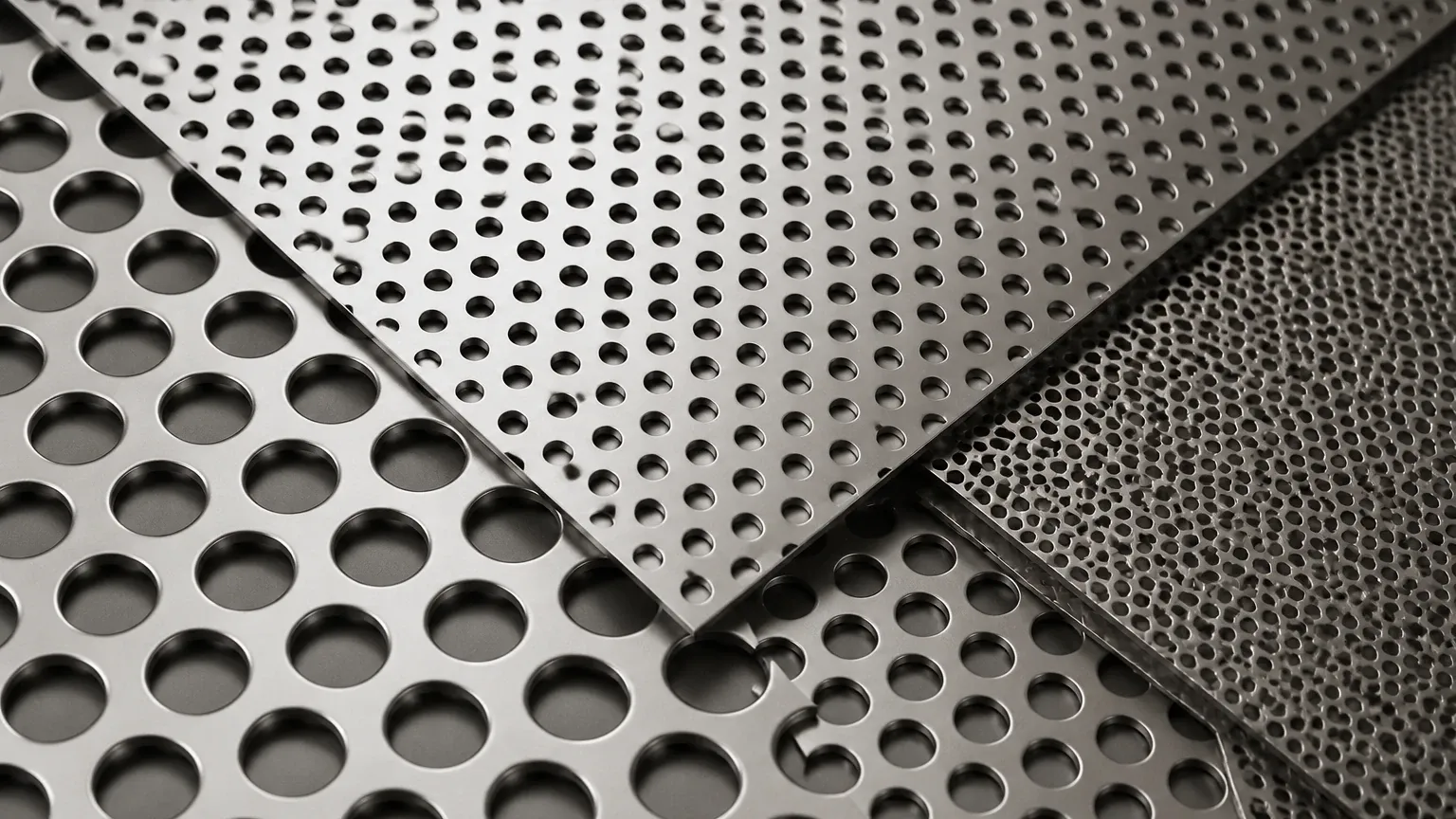
In the realms of industrial design, architectural visualization, and mechanical engineering, the use of a perforated metal texture seamless png serves as a vital digital placeholder. These assets allow designers to simulate the visual impact of metal screens, filters, and enclosures within 3D models or CAD environments. However, moving from a digital representation to a physical application requires a deep understanding of the engineering specifications that define Perforated & Expanded Metal.
While a seamless texture provides a visual pattern, the actual performance of a metal component is dictated by material thickness, hole geometry, open area percentages, and structural integrity. For engineers and procurement teams, selecting the right material involves balancing aesthetic requirements with functional demands such as filtration efficiency, airflow, and load-bearing capacity.
The Technical Transition from Digital Texture to Physical Specification
A perforated metal texture seamless png is often used in BIM (Building Information Modeling) or rendering software to represent a surface without the computational overhead of modeling thousands of individual holes. While this is efficient for visualization, it can lead to a disconnect between the "look" and the "manufacturability" of the component.
When specifying physical perforated or expanded metal, engineers must translate the visual scale of a digital texture into precise measurements. This includes defining the gauge of the metal, the diameter of the perforations, and the "pitch" (the distance between the centers of adjacent holes). Unlike a digital image that can be scaled infinitely, physical metal has limits. For instance, a common rule in perforation is that the hole diameter should generally not be smaller than the material thickness to prevent tool breakage and ensure clean edges.
Understanding Perforated Metal Geometry and Patterns
Perforated metal is created through a punching process where a series of holes are removed from a solid sheet. The arrangement of these holes significantly impacts both the visual texture and the mechanical properties of the sheet.
Round Hole Patterns
Round holes are the most common and versatile. They offer a high strength-to-weight ratio and are available in two primary configurations:
* 60-Degree Staggered: This is the industry standard. It provides the highest open area and maximum structural uniformity. In a digital perforated metal texture seamless png, this is the pattern most frequently depicted because of its balanced appearance.
* Straight Row: Holes are aligned vertically and horizontally. This is typically used for aesthetic purposes or specific sorting applications but offers less structural stability than staggered patterns.
Square and Slotted Holes
Square holes provide a higher open area than round holes, which is beneficial for maximum airflow or visibility. Slotted holes are often utilized in filtration and sorting processes where the orientation of the material being filtered is critical. From a manufacturing perspective, square and slotted patterns require specific die sets and may influence the flatness of the final sheet due to the stresses of the punching process.
Expanded Metal: A Different Structural Logic
While often grouped with perforated metal, expanded metal is manufactured through a completely different process: slitting and stretching. This creates a diamond-shaped mesh that remains a single piece of metal without any joins or welds.
Raised vs. Flattened Expanded Metal
* Raised Expanded Metal: The strands and bonds are set at a uniform angle to the plane of the sheet. This creates a 3D texture that provides excellent grip and directional airflow control. A seamless texture of raised expanded metal is difficult to represent accurately in 2D because of its depth.
* Flattened Expanded Metal: The raised sheet is passed through a cold rolling reducing mill, resulting in a smooth, flat surface. This is often preferred for guards, partitions, and filtration supports where a flush surface is required to prevent snagging or to facilitate easy cleaning.
Expanded metal is highly cost-effective because the process involves no scrap or waste material. The "texture" is a result of the expansion ratio, which can be adjusted to create varying degrees of transparency and strength.
Material Selection and Corrosion Resistance
The choice of material is the most critical factor in determining the lifespan of the component in industrial environments. While a perforated metal texture seamless png might look the same regardless of the metal it represents, the physical performance varies drastically between alloys.
Stainless Steel (304 and 316)
For filtration and chemical processing, stainless steel is the gold standard.
* Grade 304: Offers excellent corrosion resistance and is suitable for most indoor and mild outdoor applications. It is commonly used in food processing equipment and decorative architectural panels.
* Grade 316: Contains molybdenum, which provides superior resistance to chlorides and marine environments. This is the preferred choice for pharmaceutical filtration, chemical handling, and coastal architectural projects.
Aluminum and Carbon Steel
Aluminum is selected for its lightweight properties and natural resistance to atmospheric corrosion, making it ideal for HVAC grilles and facade cladding. Carbon steel is used for heavy-duty industrial applications where high strength is required and the environment is controlled, or where the metal will be coated (powder-coated or galvanized) for protection.
Engineering Considerations for Filtration and Airflow
In B2B applications, Perforated & Expanded Metal is rarely just a decorative element; it is a functional component of a larger system. Engineers must calculate the "Open Area Percentage" to ensure the material meets the requirements for fluid or air dynamics.
Calculating Open Area
The open area is the total area of the holes divided by the total area of the sheet, expressed as a percentage. For a staggered round hole pattern, the formula is:
Open Area % = (D² × 90.69) / P²
*(Where D = Hole Diameter and P = Pitch)*
In filtration applications, the open area determines the pressure drop across the filter. If the open area is too low, the system will experience high resistance, leading to increased energy consumption and potential pump or fan failure. Conversely, if the open area is too high, the structural integrity of the filter cartridge may be compromised under high-pressure conditions.
Filtration Accuracy
For custom filtration solutions, the hole size must be precisely matched to the particle size that needs to be retained. Kaifil specializes in manufacturing precision metal filter components where the tolerance of the perforation is critical to the process's success. This is particularly important in the food and beverage and pharmaceutical industries, where even minor deviations in filtration accuracy can impact product quality.
Customization and OEM Capabilities
Standard off-the-shelf perforated sheets often do not meet the specific needs of complex industrial equipment. Customization allows engineers to optimize the component for its specific role.
Custom Margins and Unperforated Zones
Unlike a perforated metal texture seamless png that covers an area uniformly, physical sheets often require "margins"—solid metal borders along the edges. These margins facilitate welding, bolting, or mounting the sheet into a frame. Custom unperforated zones can also be designed within the sheet to provide mounting points for sensors, handles, or secondary components.
Secondary Fabrication
Industrial filters and guards often require more than just a flat sheet. OEM manufacturers like Kaifil provide secondary services such as:
* Rolling and Forming: Shaping perforated sheets into cylinders for filter cartridges.
* Welding: Utilizing TIG, MIG, or spot welding to create robust assemblies.
* Degreasing and Polishing: Essential for pharmaceutical and food-grade applications to ensure the surface is free of manufacturing oils and burrs.
Procurement and Quality Evaluation
When transitioning from a design phase to procurement, technical professionals should evaluate potential suppliers based on their ability to maintain tight tolerances and provide material certifications.
Key questions to ask before finalizing an order include:
1. What is the burr tolerance? In high-speed airflow or filtration, burrs can cause turbulence or trap contaminants.
2. How is flatness maintained? The punching process can cause the metal to curl; reputable manufacturers use leveling rollers to ensure the final product is flat.
3. Can you provide a 1:1 ratio? If your design requires a hole diameter smaller than the material thickness, specialized equipment and expertise are required to avoid high scrap rates.
By focusing on these technical parameters rather than just the visual pattern of a perforated metal texture seamless png, engineers can ensure that their final product is not only aesthetically pleasing but also durable, efficient, and fit for purpose in demanding industrial environments.
