


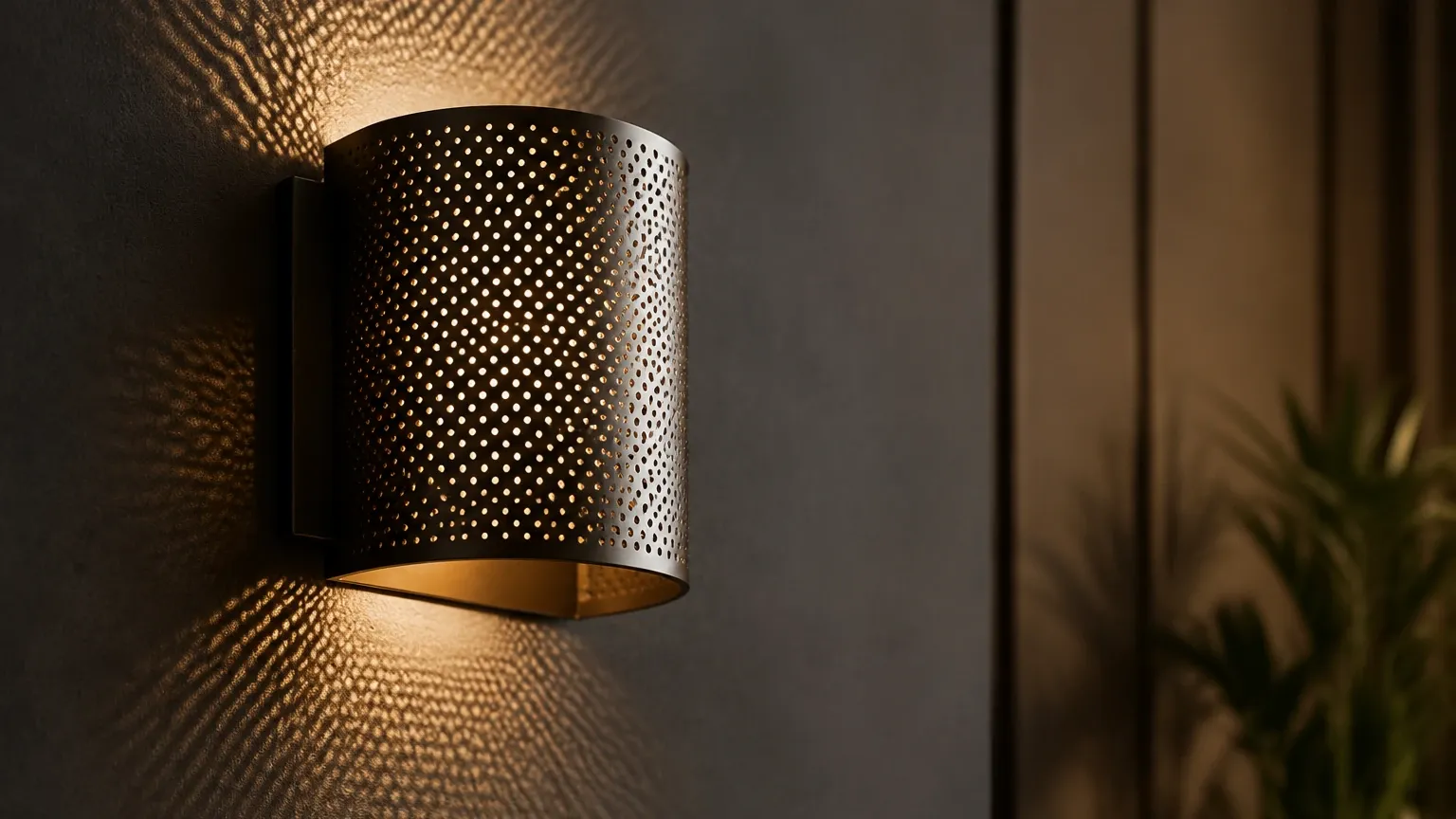
Perforated Metal Wall Sconce
In the realm of industrial and commercial lighting, the selection of materials for luminaire housings is a critical engineering decision that impacts performance, safety, and longevity. A perforated metal wall sconce represents a sophisticated intersection of material science and functional design. Unlike standard residential lighting, industrial-grade sconces must meet rigorous standards for heat dissipation, structural integrity, and environmental resistance. This guide examines the technical considerations, material properties, and engineering parameters essential for specifying and procuring high-quality metal filtration and shielding components used in these fixtures.
The Role of Perforated & Expanded Metal in Lighting Design
The primary function of a Perforated & Expanded Metal component within a wall sconce is the controlled diffusion of light. By utilizing precision-engineered apertures, manufacturers can manipulate the direction, intensity, and pattern of light output. This is not merely an aesthetic choice; in industrial environments, controlled lighting is necessary to reduce glare and improve visibility in workspaces.
Perforated metal is created by punching a series of holes into a solid metal sheet. The resulting pattern—whether round, square, or slotted—determines the "open area" percentage, which is a fundamental metric for engineers. Expanded metal, on the other hand, is produced by simultaneously slitting and stretching the material, creating a diamond-shaped mesh without any waste. The three-dimensional nature of expanded metal provides unique light-scattering properties that differ significantly from the flat profile of perforated sheets. When specifying a perforated metal wall sconce for a project, the choice between perforated and expanded metal depends on the desired balance between mechanical strength and light transparency.
Material Selection: Balancing Durability and Aesthetics
The environment in which a wall sconce will be installed dictates the material requirements. For B2B applications in chemical processing plants, coastal facilities, or sterile pharmaceutical environments, material grade is the most significant factor in preventing premature failure due to corrosion.
Stainless Steel (Grades 304 and 316)
Stainless steel is the gold standard for industrial perforated metal wall sconce applications. Grade 304 offers excellent corrosion resistance and is suitable for most indoor and mild outdoor environments. However, for applications exposed to chlorides or harsh chemicals, Grade 316 is preferred. The addition of molybdenum in 316 stainless steel enhances its resistance to pitting and crevice corrosion, ensuring the sconce maintains its structural integrity and finish over decades of service.
Aluminum Alloys
Aluminum is frequently specified for its high strength-to-weight ratio and natural resistance to atmospheric corrosion. It is an ideal choice for large-scale installations where reducing the load on wall structures is a priority. Additionally, aluminum’s high thermal conductivity makes it an excellent material for heat sinks in high-output LED sconces.
Carbon Steel and Specialty Alloys
While carbon steel is cost-effective, it requires secondary finishes such as powder coating or galvanization to prevent oxidation. For specialized industrial applications, alloys like Monel or Inconel may be used if the sconce is subjected to extreme temperatures or highly acidic atmospheres, though these are typically reserved for niche filtration and shielding roles.
Engineering Light Diffusion and Open Area Ratios
The performance of a perforated metal wall sconce is defined by its open area ratio. This is the percentage of the sheet that is occupied by holes versus solid metal. Engineers must calculate this ratio to ensure the fixture provides adequate illumination while shielding the internal components and preventing direct eye contact with high-intensity light sources.
* Round Hole Patterns: These are the most common due to their structural stability and ease of manufacturing. A 60-degree staggered pattern is often used to maximize open area while maintaining the strength of the metal bridge between holes.
* Square and Slotted Holes: These offer a more modern industrial look and can provide higher open area percentages, though they may slightly reduce the overall rigidity of the sheet compared to round holes.
* Pitch and Gauge: The pitch (the distance from the center of one hole to the center of the next) and the gauge (thickness) of the metal are critical for determining the sconce's resistance to impact and vibration. In high-traffic commercial corridors, a thicker gauge is necessary to prevent denting.
Thermal Management and Heat Dissipation
One of the most overlooked technical benefits of using perforated metal in wall sconces is thermal management. Modern LED light engines generate significant heat, which, if not dissipated, can lead to lumen depreciation and shortened component life.
A perforated metal wall sconce acts as a passive cooling system. The apertures allow for natural convection, drawing cool air in through the bottom and venting hot air through the top or sides. This airflow is essential for maintaining the junction temperature of LEDs within safe operating limits. When designing custom filtration or shielding components for lighting, engineers at Kaifil analyze the airflow requirements to ensure the perforation pattern facilitates maximum heat transfer without compromising the fixture's IP (Ingress Protection) rating requirements.
Customization and Precision Fabrication for OEM Projects
For B2B procurement, off-the-shelf solutions rarely meet the specific requirements of complex architectural or industrial projects. Customization is where technical expertise becomes invaluable. A reliable manufacturer must be able to provide precision fabrication services that go beyond simple punching.
Precision Bending and Forming
Wall sconces often require complex geometries, such as cylindrical, conical, or multi-faceted shapes. Achieving these shapes with perforated metal requires specialized tooling to ensure that the holes do not deform or "stretch" at the bend lines. Maintaining the uniformity of the pattern across curved surfaces is a hallmark of high-quality manufacturing.
Welding and Assembly
In industrial applications, the method of joining metal components is critical. TIG (Tungsten Inert Gas) welding is preferred for stainless steel sconces as it produces clean, strong welds that do not require extensive post-processing. For expanded metal, spot welding or specialized framing techniques are used to secure the mesh without creating sharp edges or weak points.
Surface Finishing
Secondary finishes serve both functional and aesthetic purposes.
* Electropolishing: Common for stainless steel, this process removes a thin layer of material, eliminating burrs and creating a mirror-like, ultra-clean surface that is highly resistant to bacteria and contaminants.
* Powder Coating: Provides a durable, UV-resistant finish in a wide range of colors, which is essential for branding and architectural integration.
* Anodizing: Specifically for aluminum, this electrochemical process hardens the surface and can add integral color that will not chip or peel.
Evaluation Criteria for Industrial and Commercial Procurement
When evaluating a supplier for perforated metal wall sconce components, purchasing teams and engineers should confirm several key technical factors to mitigate risk and ensure total cost of ownership is optimized.
1. Tolerance Standards: Confirm that the manufacturer adheres to industry-standard tolerances for hole diameter, pitch, and sheet flatness. Variations in these dimensions can lead to assembly issues and inconsistent light patterns.
2. Burr-Free Edges: In perforated metal, the punching process can leave sharp burrs on the "exit" side of the hole. For lighting fixtures that may be handled during maintenance or installation, ensuring a burr-free finish is a safety requirement.
3. Material Certification: Request Mill Test Reports (MTRs) to verify the chemical composition and mechanical properties of the metal. This is especially important for 316 stainless steel to ensure it meets the required molybdenum content for corrosion resistance.
4. Structural Integrity vs. Weight: For wall-mounted fixtures, the weight of the metal must be balanced against the strength of the mounting brackets. Engineers should request calculations on the weight-bearing capacity of the perforated design.
5. Acoustic Properties: In large commercial spaces like transit hubs or auditoriums, a perforated metal wall sconce can also serve an acoustic function. By backing the perforated metal with acoustic-absorbent material, the fixture can help reduce ambient noise levels while providing light.
Conclusion: Selecting the Right Technical Partner
The specification of a perforated metal wall sconce involves more than selecting a pattern; it requires a deep understanding of material behavior, thermal dynamics, and precision manufacturing. Whether the application is a high-traffic public space requiring extreme durability or a controlled industrial environment needing efficient heat dissipation, the quality of the perforated or expanded metal component is paramount.
Kaifil specializes in providing these custom metal solutions, leveraging advanced manufacturing capabilities to deliver components that meet the exact specifications of global engineering teams. By focusing on technical accuracy—from material selection to final surface treatment—Kaifil ensures that every filtration and shielding product contributes to the long-term success of the lighting system. When planning your next project, confirming these technical boundaries with your manufacturer will ensure a reliable, high-performance outcome that stands up to the demands of the modern industrial landscape.
