


Perforated Metal Wall Shelf
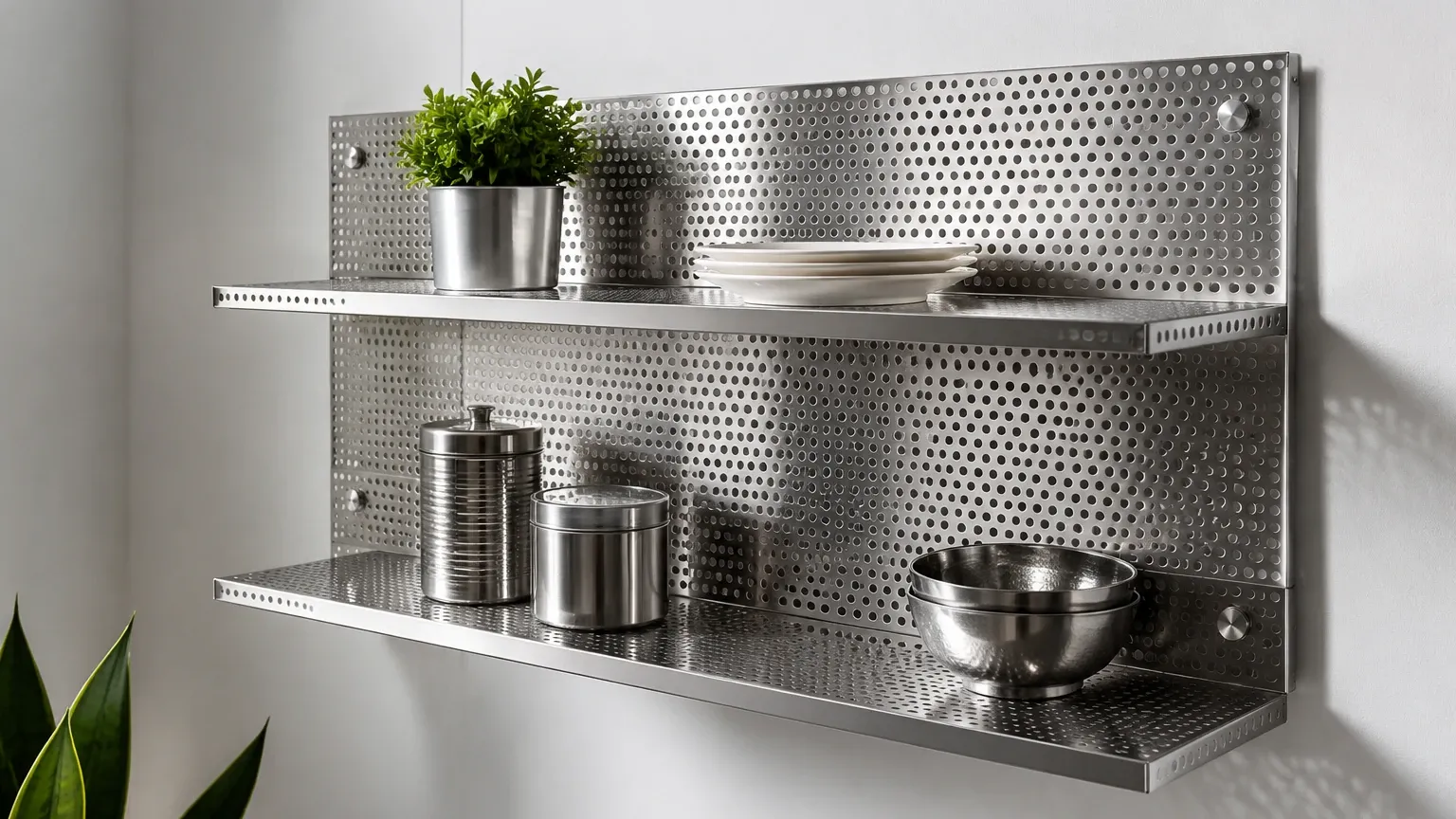
In industrial and commercial environments, storage solutions must transcend basic utility to meet rigorous standards of hygiene, structural integrity, and environmental compatibility. A perforated metal wall shelf represents a specialized engineering solution designed to address these specific needs. Unlike solid shelving, which can trap moisture, dust, and heat, perforated designs leverage the inherent properties of Perforated & Expanded Metal to provide a balance of strength, ventilation, and drainage.
For engineers and facility managers in the chemical processing, pharmaceutical, and food and beverage sectors, selecting the right shelving involves understanding the technical specifications of the metal substrate, the precision of the perforation pattern, and the long-term performance expectations under heavy loads or corrosive conditions. This guide examines the technical facets of perforated metal shelving and the critical role of material science in industrial storage.
The Engineering Logic of Perforated & Expanded Metal
The choice between perforated and expanded metal for wall-mounted shelving is dictated by the application’s specific requirements for weight, airflow, and aesthetics.
Perforated metal is created through a punching process where a specific pattern of holes is removed from a solid metal sheet. This process allows for high precision in hole size and spacing (pitch), which is essential for applications requiring specific airflow percentages or standardized drainage rates. In a perforated metal wall shelf, this precision ensures that the structural integrity of the shelf remains predictable under calculated loads.
Expanded metal, conversely, is produced by simultaneously slitting and stretching the metal sheet. This creates a diamond-shaped mesh without any material waste. While expanded metal offers an excellent strength-to-weight ratio and a slip-resistant surface, perforated metal is often preferred for wall shelves in sterile or high-hygiene environments because the flat surface is easier to clean and lacks the sharp edges sometimes associated with expanded mesh.
Material Selection: Stainless Steel and Beyond
Material selection is the most critical factor in determining the lifespan and safety of an industrial perforated metal wall shelf. Because these components are often installed in demanding environments, the alloy must be matched to the atmospheric conditions.
Stainless Steel 304 vs. 316
Stainless steel is the industry standard for most B2B applications due to its corrosion resistance and mechanical strength.
- Grade 304: This is the most common grade used for general industrial shelving. It provides excellent resistance to oxidation and is suitable for most food processing and dry storage applications.
- Grade 316: For environments involving high salinity, heavy chemical exposure, or pharmaceutical manufacturing, Grade 316 is the preferred choice. The addition of molybdenum enhances its resistance to pitting and crevice corrosion, particularly in chloride-rich environments.
Surface Finishes and Hygiene
In the pharmaceutical and food sectors, the surface finish of a perforated metal wall shelf is as important as the material itself. Options include:
- 2B Mill Finish: A smooth, moderately reflective cold-rolled finish suitable for general industrial use.
- Electropolishing: A chemical process that removes a microscopic layer of the metal, resulting in a mirror-like finish that is exceptionally easy to sterilize. This process removes burrs and smooths the edges of the perforations, preventing the accumulation of bacteria or contaminants.
- Powder Coating: Used primarily in commercial or less corrosive industrial settings to provide color coding or additional surface protection.
Technical Specifications: Hole Patterns and Open Area
The performance of a perforated metal wall shelf is largely defined by its "open area" percentage. This is the ratio of the area of the holes to the total area of the sheet. For shelving, engineers must balance the need for airflow with the requirement for structural rigidity.
Common Hole Patterns
1. Round Holes: The most popular choice for shelving due to their versatility and structural stability. Round holes can be arranged in a 60-degree staggered pattern, which provides the highest strength and most uniform airflow.
2. Square Holes: These offer a higher open area percentage, which is beneficial for applications requiring maximum ventilation or visibility of items stored on high shelves.
3. Slotted Holes: Often used for drainage or when storing items that require a specific orientation.
Calculating Load Capacity
When specifying a perforated metal wall shelf, the gauge (thickness) of the metal must be calculated based on the intended load and the span between wall brackets. Perforations naturally reduce the overall stiffness of the sheet. To compensate, manufacturers often incorporate "margins" (unperforated borders) or formed edges (flanges) to increase the moment of inertia and prevent sagging. A common specification for heavy-duty industrial shelving is 16-gauge or 14-gauge stainless steel with a 40% to 50% open area.
Industrial Applications and Benefits
Perforated metal wall shelves are utilized in sectors where solid surfaces are impractical or non-compliant with safety regulations.
Cleanrooms and Laboratories
In ISO-rated cleanrooms, laminar airflow is essential to maintain sterility. Solid shelves create turbulence and "dead zones" where particles can settle. A perforated metal wall shelf allows air to pass through freely, maintaining the integrity of the cleanroom’s filtration system. Furthermore, stainless steel construction ensures that the shelving does not outgas or shed particles.
Food and Beverage Processing
Hygiene is the primary concern in food production. Perforated shelves prevent the pooling of liquids, which reduces the risk of microbial growth. They are also easier to wash down with high-pressure systems, as the water can pass through the perforations to reach all surfaces of the shelf and the wall behind it.
Chemical and Cold Storage
In chemical storage, ventilation is required to prevent the buildup of fumes. In cold storage or walk-in freezers, perforated shelving allows for rapid temperature equalization by permitting cold air to circulate around the stored products. This improves energy efficiency and ensures consistent product temperatures.
Customization and OEM Considerations
For many B2B projects, standard off-the-shelf shelving does not meet specific spatial or functional requirements. Customization is often necessary to integrate shelving into existing equipment or specialized architectural layouts. Key customization options include:
- Dimensional Tailoring: Custom lengths, widths, and flange heights to fit specific wall configurations.
- Mounting Integration: Pre-drilled holes or integrated brackets designed to align with specific wall stud spacing or masonry anchors.
- Variable Perforation Zones: Designing shelves with solid sections for high-stress areas and perforated sections for ventilation where needed.
- Heavy-Duty Reinforcement: Adding welded hat channels or support ribs to the underside of the shelf for extreme weight requirements.
As a manufacturer specializing in Perforated & Expanded Metal, Kaifil provides the technical expertise required to develop these customized solutions. From selecting the appropriate hole pitch to ensuring burr-free finishes, the manufacturing process is geared toward producing components that meet the exact tolerances required by industrial engineers.
Risk Mitigation and Quality Assurance
When purchasing industrial shelving, several risks must be mitigated through careful supplier selection and specification confirmation.
Structural Failure
The most significant risk is overloading. Engineers should always request the load-bearing specifications for a perforated metal wall shelf, specifically the "uniform distributed load" (UDL) rating. It is also vital to confirm that the wall mounting hardware and the wall itself can support the intended weight.
Corrosion and Material Integrity
Inaccurate material grading can lead to premature failure. In highly corrosive environments, using a lower grade of stainless steel (like 201 or 304 instead of 316) can result in rust and structural degradation within months. Ensuring that the supplier provides material mill certificates is a standard practice for quality assurance.
Safety Hazards
Poorly manufactured perforated metal can have sharp edges or burrs at the hole sites. In a B2B environment, this poses a risk to workers and can damage sensitive packaging. High-quality perforated shelving undergoes deburring and smoothing processes to ensure safety and ease of handling.
Maintenance and Long-Term Performance
Maintaining a perforated metal wall shelf is relatively straightforward, provided the material was correctly specified for the environment. Regular cleaning with appropriate detergents is necessary to prevent the buildup of contaminants. For stainless steel, it is important to avoid cleaners containing chlorides, as these can damage the protective chromium oxide layer and lead to corrosion.
Periodic inspections should focus on:
- Mounting Points: Checking for any loosening of wall anchors or brackets due to vibration or heavy loading.
- Deflection: Monitoring for any permanent deformation or sagging in the center of the shelf.
- Surface Integrity: Looking for signs of pitting or staining, which may indicate chemical exposure beyond the material’s resistance limits.
Conclusion: Selecting the Right Solution
The implementation of a perforated metal wall shelf in an industrial setting is an engineering decision that impacts safety, hygiene, and operational efficiency. By prioritizing high-quality Perforated & Expanded Metal and adhering to strict material and design specifications, facility managers can ensure their storage solutions contribute to a controlled and productive environment.
Whether the application is a high-tech cleanroom or a heavy-duty chemical processing plant, the technical advantages of perforated metal—airflow, drainage, and strength—make it a superior choice for wall-mounted storage. When sourcing these components, partnering with a manufacturer that understands the nuances of metal fabrication and industrial requirements is essential for achieving long-term performance and reliability.
