


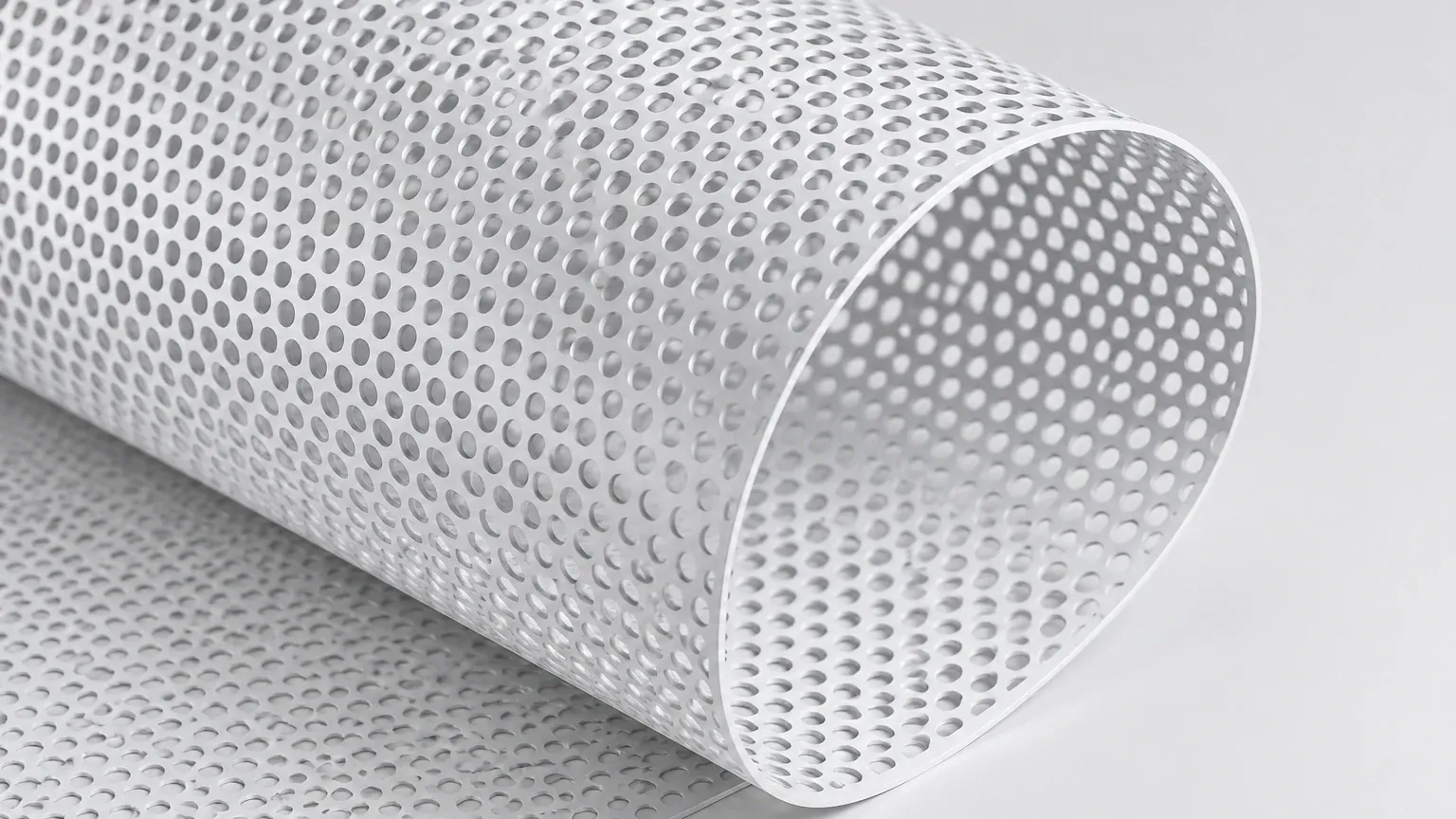
White Perforated Metal Texture
In industrial design and filtration engineering, the selection of surface finishes is as critical as the mechanical properties of the substrate. The term "white perforated metal texture" refers to a specific category of finished components where the functional utility of Perforated & Expanded Metal is combined with advanced surface coatings. This combination is frequently utilized in environments requiring high visibility, cleanliness, and corrosion resistance, such as food processing, pharmaceutical manufacturing, and laboratory equipment.
Understanding the technical nuances of how a white texture is applied to perforated metal is essential for engineers and procurement teams. It is not merely an aesthetic choice; the texture affects airflow, fluid dynamics, cleaning efficiency, and the long-term durability of the filtration or ventilation system.
Understanding the Technical Basis of Perforated Metal
Before addressing the surface finish, it is necessary to define the underlying structure. Perforated metal is produced by mechanically punching or laser-cutting a series of holes into a metal sheet. The most common materials include stainless steel (304 or 316 grade), carbon steel, and aluminum.
The geometry of the perforation—including the hole shape (round, square, or slotted), the hole size, and the pitch (the distance between the centers of adjacent holes)—determines the "open area" percentage. This percentage is the primary metric for calculating throughput in filtration and ventilation applications. When a white perforated metal texture is applied via powder coating or specialized painting, the thickness of the coating must be factored into these calculations. A heavy coating can reduce the effective diameter of the holes, potentially altering the pressure drop across the panel.
Surface Finishing: Achieving the White Perforated Metal Texture
The "texture" of white perforated metal is typically achieved through one of two primary methods: powder coating or PVDF (Polyvinylidene Fluoride) coating. Each method offers different tactile and performance characteristics.
Powder Coating
Powder coating is the most common method for achieving a durable white finish. It involves applying a dry powder—typically a thermoplastic or a thermoset polymer—electrostatically and then curing it under heat. The resulting texture can range from a high-gloss smooth finish to a matte or "sand-grain" texture. In industrial settings, a slightly textured matte finish is often preferred to reduce glare and hide minor surface abrasions that occur during maintenance.
PVDF Coatings
For environments exposed to high UV radiation or aggressive chemical cleaning agents, PVDF coatings are utilized. These provide a thinner, more uniform white perforated metal texture that is highly resistant to chalking and fading. This is particularly relevant for exterior filtration housings or architectural elements that serve a dual purpose of ventilation and aesthetic cladding.
Engineering Considerations for Coated Filtration Components
When specifying a white perforated metal texture for industrial use, engineers must consider the "tolerance stack-up." Because the coating adds a layer of material (typically between 60 to 120 microns), the nominal hole size of the raw perforated sheet will decrease.
Dimensional Accuracy
If a filtration system requires a precise 2.0mm aperture, the base metal should be perforated with a slightly larger hole to account for the coating thickness. Failure to account for this can lead to restricted flow rates and increased energy consumption in pump or fan systems.
Edge Conditions and Coating Adhesion
One of the primary risks in coated Perforated & Expanded Metal is "edge pull-back." During the curing process, the coating may pull away from the sharp edges of the perforations, leaving the base metal exposed to corrosion. To mitigate this, high-quality manufacturers employ specialized pre-treatment processes, such as zinc phosphating or chromating, and may utilize "edge-rounded" perforating techniques to ensure the white texture remains continuous across all surfaces.
Performance Metrics: Open Area and Airflow Resistance
The performance of a perforated panel is governed by its open area. For example, a 60-degree staggered pattern of round holes provides the highest degree of structural integrity relative to the open area. When evaluating a white perforated metal texture, it is vital to perform a secondary calculation of the effective open area after coating.
| Feature | Impact of Coating | Engineering Adjustment |
| :— | :— | :— |
| Hole Diameter | Decreases by 2x coating thickness | Specify larger punch size |
| Open Area % | Decreases | Recalculate flow velocity |
| Surface Friction | Changes based on texture (Smooth vs. Matte) | Factor into fluid drag coefficients |
| Cleaning | Smooth textures facilitate easier CIP (Clean-in-Place) | Select high-gloss for hygiene-critical zones |
In high-velocity airflow applications, a textured surface can induce micro-turbulence. While this might be negligible in architectural panels, in precision filtration, it can impact the laminar flow required for certain cleanroom environments.
Industrial Applications for White Perforated Metal
The application of a white perforated metal texture is prevalent in several specialized B2B sectors. Its utility extends beyond simple aesthetics, providing functional benefits in specific operational contexts.
Food and Beverage Processing
In food production, white finishes are utilized to enhance the detectability of contaminants. A white perforated screen in a drying or sorting machine makes it easier for operators and automated optical sensors to identify organic buildup or foreign objects. The coating must be FDA-compliant and resistant to the high-pressure washdowns and caustic chemicals used in sanitation.
Pharmaceutical and Laboratory Equipment
Cleanrooms often utilize white perforated panels for ceiling HEPA filter grilles and equipment housings. The white color contributes to a high-albedo environment, reducing the need for excessive artificial lighting, while the perforation allows for controlled air distribution. The texture must be non-shedding and resistant to microbial growth.
HVAC and Acoustic Damping
In commercial and industrial HVAC systems, white perforated metal is used for diffusers and sound-attenuating panels. The texture of the coating can help diffuse sound waves more effectively than a bare metal surface, especially when backed by acoustic insulation materials.
Procurement and Quality Assurance Checklist
When sourcing Perforated & Expanded Metal with a specific white texture, procurement teams should confirm several technical details with the manufacturer to ensure the product meets the intended application's demands.
1. Base Material Verification: Ensure the substrate is compatible with the environment (e.g., 316L stainless steel for marine or highly corrosive chemical environments) before the coating is applied.
2. Coating Thickness Specification: Request a minimum and maximum dry film thickness (DFT) to ensure consistent airflow performance across all panels.
3. Adhesion Testing: Confirm that the manufacturer performs ASTM D3359 (Cross-Hatch Tape Test) to ensure the white perforated metal texture will not peel or flake under mechanical stress.
4. Color Consistency: For large-scale projects, specify a RAL color code (e.g., RAL 9003 or RAL 9010) and request batch-to-batch consistency reports.
5. Margin and Border Requirements: Define the "safe zones" or unperforated margins required for welding or mounting. Coated margins are easier to handle and provide a cleaner interface for gaskets and seals.
Maintenance and Longevity of Coated Perforated Metal
The longevity of a white perforated metal texture depends heavily on the maintenance protocol. Unlike bare stainless steel, which can be aggressively scrubbed, coated surfaces require non-abrasive cleaning to maintain their integrity. In industrial filtration, this often means using pH-neutral detergents.
If the coating is compromised, localized corrosion can occur, particularly in carbon steel substrates. For this reason, many engineers specify a stainless steel base even when a white coating is applied, providing a "double layer" of protection. This is a critical consideration for total cost of ownership (TCO), as it extends the replacement cycle of the filtration components in demanding environments.
Conclusion
The selection of a white perforated metal texture is a decision that balances functional performance with environmental requirements. By understanding the impact of coating thickness on open area, the importance of edge protection, and the specific needs of the application—whether it be food safety or acoustic control—engineers can optimize their filtration and ventilation systems. Working with a professional manufacturer like Kaifil ensures that these technical variables are managed precisely, resulting in durable, high-performance metal components that meet the rigorous standards of modern industry.
