


What Is Perforated Metal Screen
In the landscape of industrial filtration and material separation, understanding the fundamental components is essential for engineering efficiency and system longevity. One of the most versatile and widely utilized components is the perforated metal screen. Often serving as the backbone of complex filtration systems or acting as a primary stage for coarse separation, these screens are engineered to meet precise mechanical and chemical requirements.
For procurement teams and engineers, the question of what is perforated metal screen goes beyond a simple definition of "metal with holes." It involves a deep dive into material science, manufacturing tolerances, and fluid dynamics. This article provides a technical overview of perforated metal screens, their relationship with expanded metal, and the critical factors that influence their performance in industrial environments.
Defining the Perforated Metal Screen
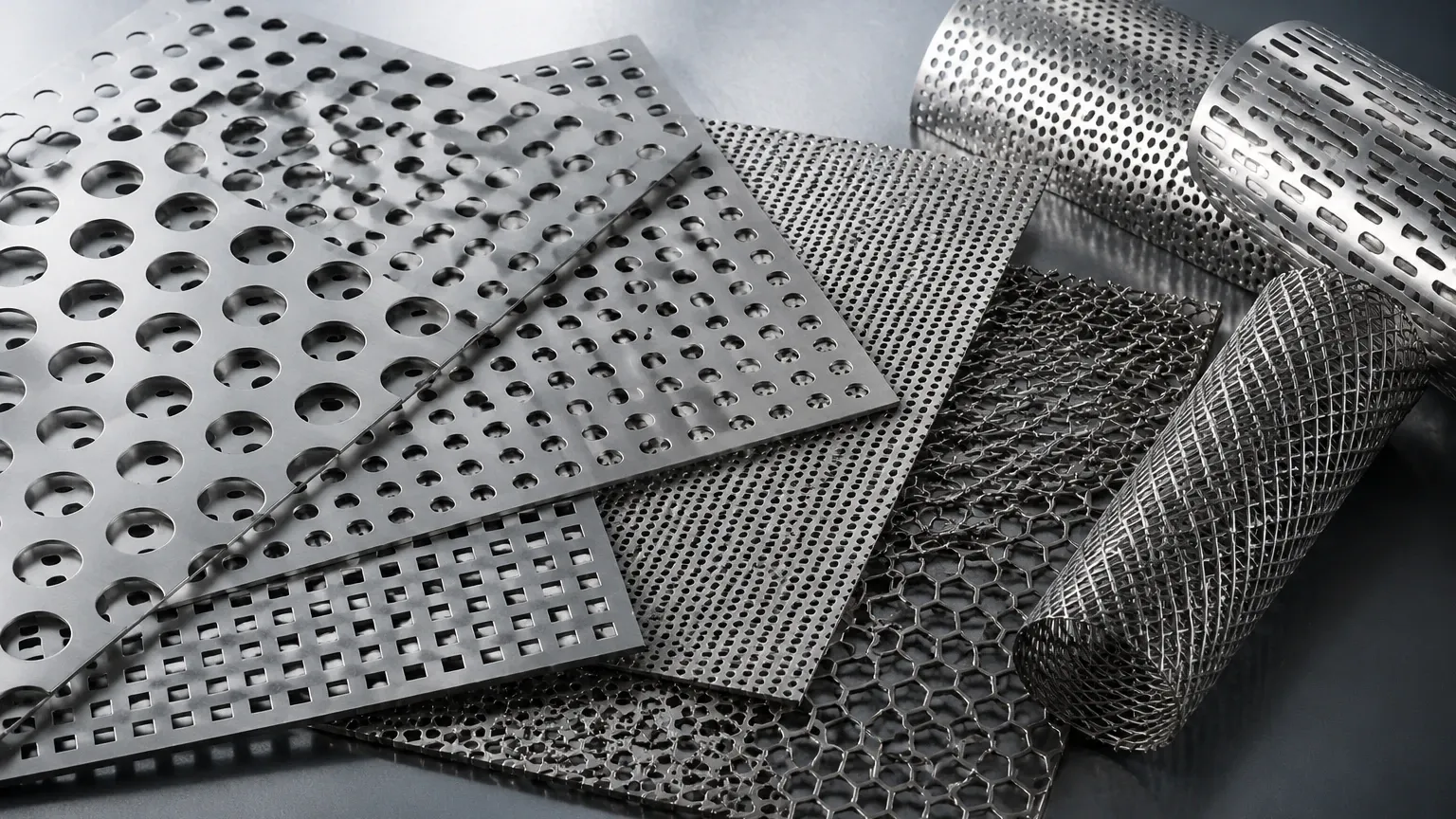
A perforated metal screen is a sheet or coil of metal that has been mechanically stamped, punched, or laser-cut to create a specific pattern of holes, slots, or decorative shapes. Unlike woven wire mesh, which is created by interlacing wires, perforated metal is a monolithic structure. This inherent rigidity makes it an ideal choice for applications requiring high structural integrity and resistance to mechanical stress.
In the context of industrial filtration, these screens are typically manufactured from stainless steel, carbon steel, or aluminum. However, for the demanding environments found in chemical processing or food and beverage production, stainless steel (specifically grades 304 and 316L) is the industry standard due to its corrosion resistance and ease of sterilization.
While the term "screen" often implies a filtration function, these components are also used for acoustic damping, ventilation, and structural support. In filtration, they often serve as the "support cage" or outer protection for finer filter media, such as sintered wire mesh or filter cloth, ensuring the delicate media does not collapse under high-pressure differentials.
Perforated & Expanded Metal: Understanding the Differences
When evaluating Perforated & Expanded Metal for a project, it is vital to distinguish between the two manufacturing processes, as they result in different mechanical properties and flow characteristics.
Perforated Metal
Perforated metal is produced through a punching process where material is physically removed from the sheet to create holes. This allows for extreme precision in hole diameter and spacing (pitch). Engineers can specify exact open area percentages, which is critical for calculating pressure drops across a filtration system. Because the material is punched, the resulting screen remains flat and maintains a consistent thickness across its surface.
Expanded Metal
Expanded metal is manufactured by simultaneously slitting and stretching a metal sheet. This process creates diamond-shaped openings without any material waste. While expanded metal is often more cost-effective and provides a high strength-to-weight ratio, it lacks the precision of perforated metal in terms of specific hole sizing. It also results in a three-dimensional, textured surface unless it is subsequently "flattened" through a cold-rolling process. In filtration, expanded metal is frequently used as a secondary support layer or in applications where high airflow is required with less emphasis on precise particle retention.
Key Technical Specifications and Parameters
To specify a perforated metal screen accurately, engineers must define several key parameters that dictate how the screen will behave under operational loads and flow conditions.
1. Hole Pattern and Shape
The most common pattern is the 60-degree staggered round hole. This configuration provides the highest open area and structural strength because the holes are nested closely together. Other patterns include:
* Straight Line: Holes aligned in both horizontal and vertical rows. This is easier to manufacture but offers less structural stability than staggered patterns.
* Slotted Holes: Elongated openings used primarily for sifting and sorting applications where the shape of the particle matters (e.g., grain processing).
* Square Holes: Often used for high visibility or specific aesthetic requirements, though they can be prone to stress concentrations at the corners.
2. The "Open Area" Percentage
The open area is the ratio of the total area of the holes to the total area of the sheet, expressed as a percentage. This is perhaps the most critical metric for filtration. A higher open area reduces the pressure drop and allows for higher flow rates but decreases the mechanical strength of the screen.
For example, a 40% open area is a common balance for industrial strainers, providing enough flow while maintaining the rigidity necessary to withstand hydraulic shocks. The formula for a 60-degree staggered round hole pattern is:
* Percent Open Area = (D² × 90.69) / R²
* *D = Hole Diameter*
* *R = Center-to-Center Distance (Pitch)*
3. Material Thickness vs. Hole Diameter
A fundamental engineering constraint in perforation is the relationship between the thickness of the metal and the size of the hole. As a general rule, the hole diameter should not be smaller than the material thickness. Attempting to punch holes smaller than the gauge of the metal can lead to tool breakage and excessive internal stress in the material, which may cause warping or premature failure in the field.
Material Selection for Industrial Environments
The longevity of a perforated metal screen is largely determined by its material composition. Since these screens are often exposed to aggressive fluids, high temperatures, and abrasive particles, selecting the correct alloy is paramount.
* Stainless Steel 304: The most common grade for general industrial use. It offers good corrosion resistance and is suitable for most water treatment and food processing applications.
* Stainless Steel 316L: Contains molybdenum, which provides superior resistance to chlorides and pitting. This is the preferred choice for marine environments, pharmaceutical production, and chemical processing where aggressive solvents are present.
* Specialty Alloys: For extreme conditions involving high heat or highly acidic environments, materials like Monel, Inconel, or Hastelloy may be used, though these significantly increase the total cost of the component.
The Role of Perforated Screens in Filtration Systems
In many industrial setups, a perforated metal screen does not act alone. It is often part of a multi-stage filtration strategy. Understanding its role helps in selecting the right specifications.
Primary Filtration (Coarse Strainers)
In systems where large debris (such as pipe scale, stones, or large organic matter) must be removed to protect downstream equipment like pumps and valves, a perforated screen acts as the primary filter. In these cases, the hole size is chosen based on the largest allowable particle that can pass through the system without causing damage.
Support for Fine Media
Fine wire mesh or non-woven filter media lack the structural strength to withstand high-pressure differentials. In these applications, a perforated metal cylinder or plate acts as a "backup" or support structure. The perforated screen provides the mechanical strength, while the finer media provides the actual filtration accuracy (micron rating). This combination is common in hydraulic filters and high-pressure gas filtration.
Flow Distribution
Perforated screens are also used to normalize flow. In large tanks or reactors, a perforated plate can be used to ensure that the incoming fluid is distributed evenly across the entire surface of a catalyst bed or a secondary filter element, preventing "channeling" and ensuring maximum efficiency of the process.
Engineering Considerations for Customization
When sourcing perforated metal screens, off-the-shelf solutions rarely meet the specific needs of complex industrial processes. Customization is often required to ensure the component integrates perfectly into existing housing or meets specific performance benchmarks.
Margin Requirements
Standard perforated sheets often have "random" margins where the pattern is cut off at the edges. For industrial filters, "finished" or "safe" margins are usually required. This means the perforation stops a specific distance from the edge, leaving a solid metal border. This border is essential for welding the screen into a cylinder or bolting it into a flange without compromising the integrity of the hole pattern.
Surface Treatments
Depending on the application, the screen may undergo post-manufacturing treatments:
* Degreasing: Essential for oxygen service or food-grade applications to remove residual lubricants from the punching process.
* Pickling and Passivation: A chemical treatment for stainless steel that removes surface contaminants and restores the protective chromium oxide layer, enhancing corrosion resistance.
* Electropolishing: Provides a mirror-like finish and removes microscopic burrs, which is critical in pharmaceutical applications to prevent bacterial growth.
Evaluating Total Cost and Replacement Cycles
While the initial purchase price of a perforated metal screen is an important factor, technical buyers should focus on the total cost of ownership. A screen that is too thin may be cheaper initially but will likely fail under pressure, leading to costly downtime and potential damage to downstream equipment.
Factors that influence the replacement cycle include:
* Abrasive Wear: In mining or slurry applications, the constant impact of hard particles will eventually thin the metal, enlarging the holes and reducing filtration accuracy.
* Pressure Spikes: Frequent hydraulic shocks can cause metal fatigue, leading to cracking around the holes.
* Cleaning Procedures: If the screen is cleaned using high-pressure backwashing or aggressive chemicals, the material must be robust enough to withstand these cycles without deforming.
By working with a manufacturer that understands these variables, engineers can specify a screen that balances performance with durability, ultimately reducing the frequency of replacements.
Conclusion
Identifying what is perforated metal screen is the first step in optimizing an industrial filtration or separation process. These components are engineering marvels that provide a unique combination of precision, strength, and versatility. Whether used as a simple strainer or a complex support structure in a pharmaceutical reactor, the performance of the perforated screen depends on meticulous attention to hole patterns, open area calculations, and material selection.
For those seeking reliable, high-performance filtration components, choosing a partner with deep manufacturing expertise is essential. Custom solutions tailored to specific industrial demands ensure that the filtration system operates at peak efficiency while minimizing maintenance costs. When precision and durability are non-negotiable, perforated metal remains a cornerstone of modern industrial engineering.
