


Perforated Z Closure
In industrial fabrication and structural engineering, the perforated z closure serves as a critical interface component that balances structural support with the necessity for ventilation, drainage, or fluid passage. Often utilized in architectural systems, HVAC assemblies, and industrial filtration housings, these precision-bent components are essential for securing panels while maintaining the functional properties of the overall system. For engineers and procurement specialists, understanding the technical nuances of a perforated z closure—from material selection to open area calculations—is vital for ensuring long-term performance in demanding environments.
A perforated z closure is defined by its specific Z-shaped profile, consisting of two parallel flanges extending in opposite directions from a central web. When this profile is manufactured using Perforated & Expanded Metal, it transforms from a simple structural trim into a functional filtration or ventilation element. This article examines the engineering considerations, material specifications, and application-specific requirements for selecting and implementing these components in industrial settings.
Technical Geometry and the Z-Profile
The "Z" geometry is chosen for its unique ability to bridge gaps between offset surfaces. In a typical installation, one flange is fastened to a support structure, while the other provides a mounting surface or a stop for a secondary panel or filter media. The central web determines the depth of the closure, which must be precisely calculated to accommodate the thickness of the materials being joined.
When a z-closure is perforated, the integrity of the bends becomes a primary engineering concern. The bending process must account for the hole pattern to avoid fracturing the metal or distorting the perforations along the radius of the bend. High-quality manufacturing requires CNC hydraulic press brakes and precision tooling to ensure that the angles remain consistent across the entire length of the component, which can often exceed several meters in industrial applications.
Material Selection for Industrial Environments
The choice of material for a perforated z closure is dictated by the environment in which it will operate. Because these components are often exposed to moisture, chemicals, or extreme temperatures, stainless steel is the industry standard for high-performance applications.
Stainless Steel 304 vs. 316
* Grade 304: This is the most common grade used for general industrial applications. It offers excellent corrosion resistance and formability, making it suitable for HVAC systems and standard industrial enclosures.
* Grade 316: For environments involving chemical processing, marine exposure, or high-salinity conditions, Grade 316 is preferred. The addition of molybdenum enhances resistance to pitting and crevice corrosion, which is particularly important in the small apertures of a perforated component.
Beyond stainless steel, other materials such as aluminum or galvanized steel may be used for weight-sensitive or cost-constrained projects. However, in the context of precision filtration and heavy-duty industrial use, the durability and hygienic properties of stainless steel usually provide the lowest total cost of ownership over the product's lifecycle.
Engineering the Perforation Pattern
The performance of a perforated z closure is largely defined by its perforation pattern. This determines the "open area," which is the percentage of the metal surface that consists of holes. Engineers must balance the need for airflow or fluid passage with the required structural rigidity of the Z-profile.
Open Area Calculations
Calculating the open area is critical for applications involving airflow or pressure-sensitive filtration. A higher open area reduces resistance to flow but decreases the mechanical strength of the closure. Common patterns include:
* Staggered Round Holes: The most popular configuration for its balance of strength and open area (typically ranging from 20% to 60%).
* Square Holes: Often used when a higher open area is required, though square corners can act as stress concentrators.
* Slotted Perforations: Ideal for applications requiring directional flow or as a screen for specific particle shapes.
When integrating these patterns into a Perforated & Expanded Metal assembly, the hole size must be smaller than the debris or media being contained, yet large enough to prevent premature clogging or excessive pressure drops.
Applications in Industrial Filtration and Ventilation
While often seen as a secondary component, the perforated z closure plays a primary role in several key industrial sectors. Its versatility allows it to function as both a mechanical fastener and a functional screen.
1. Filtration Housing and Media Support
In large-scale industrial filters, z-closures are used to secure filter mesh or pleated media within a metal frame. The perforations allow the process fluid to reach the edges of the media, ensuring that the entire surface area is utilized for filtration. This prevents "dead zones" where fluid might otherwise bypass the filter or stagnate.
2. HVAC and Cleanroom Systems
In cleanroom environments and high-capacity HVAC systems, perforated z closures act as diffusers and edge seals. They provide a secure mounting point for HEPA filters while allowing controlled airflow to pass through the perimeter, maintaining the laminar flow necessary for contamination control.
3. Acoustic Dampening and Enclosures
For industrial machinery enclosures, perforated metal is often used to house acoustic insulation. The Z-profile allows the panels to be overlapped and secured tightly, while the perforations allow sound waves to enter the insulation material, effectively reducing noise pollution in the workspace.
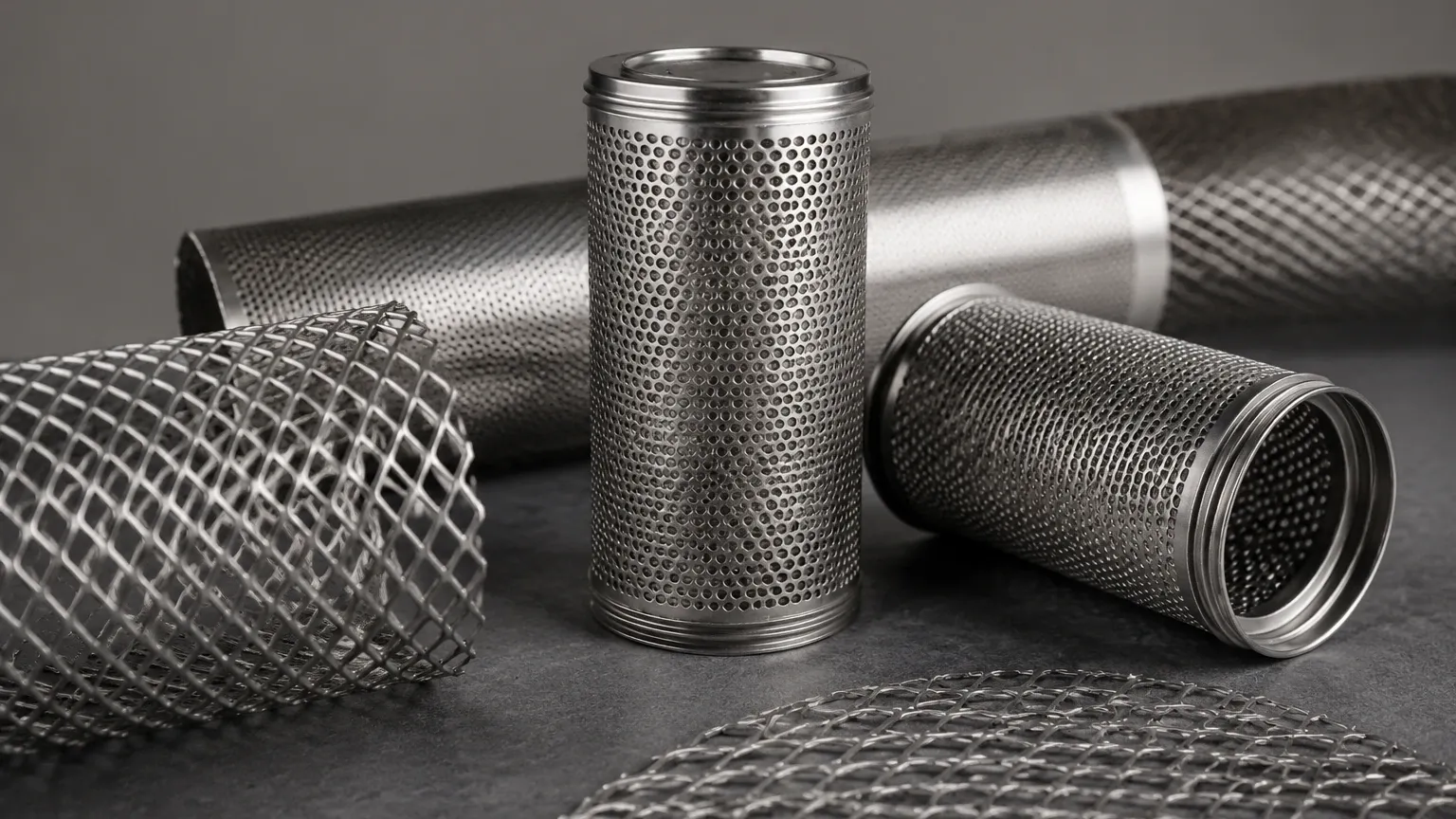
Manufacturing Precision and OEM Customization
Standard off-the-shelf closures rarely meet the exacting tolerances required for specialized industrial equipment. Custom OEM manufacturing is often necessary to ensure that the perforated z closure fits the specific dimensions of the project. Key customization factors include:
* Variable Flange Lengths: The top and bottom flanges do not need to be equal. Customizing these lengths allows for unique mounting configurations.
* Edge Margins: Specifying "blank" or unperforated margins along the edges of the Z-profile is essential for welding or mechanical fastening. This ensures that the structural integrity of the mounting point is not compromised by the hole pattern.
* Precision Bending Angles: While 90-degree bends are standard, some applications require acute or obtuse angles to match the pitch of a roof or the contour of a circular tank.
Kaifil’s expertise in stainless steel fabrication allows for the production of these components with high repeatability, ensuring that every closure in a large-scale project aligns perfectly with the adjacent Perforated & Expanded Metal components.
Installation and Maintenance Considerations
Proper installation is paramount to the longevity of a perforated z closure. Because these components are often used to bridge gaps, they are subject to thermal expansion and contraction. If the closure is fastened too rigidly over a long span, it may buckle or cause the fasteners to shear.
Fastening Methods
* Mechanical Fasteners: Using stainless steel bolts or rivets is common. It is important to use fasteners of the same material grade as the closure to prevent galvanic corrosion.
* Welding: Spot welding or TIG welding can be used for a permanent bond. However, the heat-affected zone (HAZ) around the weld can be a site for future corrosion if not properly cleaned and passivated after fabrication.
Maintenance Cycles
In filtration applications, the perforated z closure should be inspected during routine media replacements. While the closure itself is durable, the perforations can accumulate fine particulates over time. Regular cleaning—either through ultrasonic baths, high-pressure washing, or chemical cleaning—ensures that the open area remains unobstructed and the system continues to operate at peak efficiency.
Evaluating Quality and Compliance
When sourcing perforated z closures, engineers should confirm that the manufacturer adheres to international standards for metal fabrication and filtration. This includes verifying material certifications (MTRs) to ensure the chemistry of the stainless steel meets ASTM or ISO standards. Additionally, the tolerances for hole pitch, diameter, and bend radius should be clearly defined in the technical drawings to avoid assembly issues on-site.
By focusing on these technical details, procurement teams can select a perforated z closure that not only meets the immediate structural requirements of the project but also contributes to the overall efficiency and durability of the industrial system. Whether used in chemical processing, food production, or water treatment, the right closure is a small but indispensable part of a high-performance filtration solution.
