


Perforated Metal Sheet 1 4 Thick
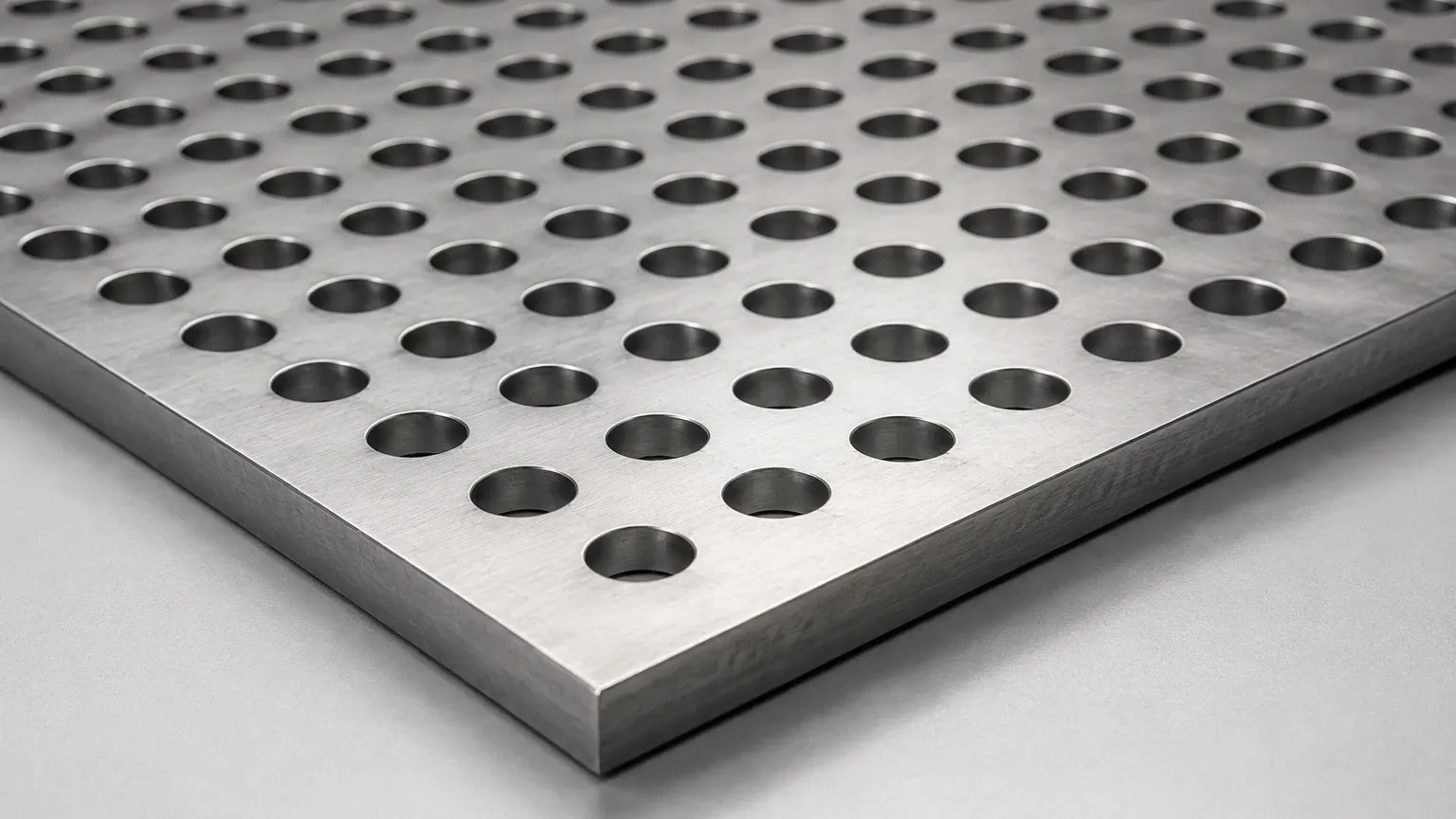
In industrial engineering and heavy-duty filtration, the selection of materials is governed by the balance between structural integrity and functional performance. A perforated metal sheet 1 4 thick (0.25 inches or approximately 6.35 mm) represents a heavy-gauge solution designed for environments where high pressure, mechanical stress, or abrasive materials are present. Unlike thinner gauges used for decorative or light shielding applications, 1/4" perforated metal serves as a critical component in primary filtration, structural support for finer media, and robust protective barriers.
Understanding the technical nuances of this specific thickness is essential for engineers and procurement teams. This guide explores the engineering considerations, material selection, and application-specific advantages of utilizing 1/4" perforated metal within the broader category of Perforated & Expanded Metal solutions.
Engineering Considerations for Heavy-Gauge Perforation
Manufacturing a perforated metal sheet 1 4 thick requires specialized equipment and a deep understanding of metallurgy. The perforation process for thick plates differs significantly from high-speed thin-sheet punching. When the material thickness reaches 1/4", the mechanical force required to shear the metal increases exponentially, necessitating heavy-duty CNC presses and high-strength tool steel dies.
The 1:1 Rule in Perforation
One of the most critical engineering constraints for thick sheets is the relationship between the hole diameter and the plate thickness. In professional filtration manufacturing, the general rule is that the hole diameter should not be smaller than the material thickness. For a 1/4" thick sheet, the hole diameter should ideally be 1/4" (6.35 mm) or larger.
Attempting to punch holes smaller than the thickness (e.g., 1/8" holes in a 1/4" plate) places immense stress on the punches, leading to frequent tool breakage and uneven hole edges. If an application requires finer filtration than a 1/4" hole can provide while maintaining the strength of a 1/4" plate, engineers often look toward laser cutting or using the perforated plate as a support structure for a finer stainless steel wire mesh.
Ligament Width and Structural Stability
The "ligament" is the distance between the edges of adjacent holes. For a perforated metal sheet 1 4 thick, maintaining a proper ligament width is vital for preventing plate deformation during the punching process and ensuring the final component can withstand operational loads. A narrow ligament in a thick plate can lead to "barrelling" or twisting of the metal strips between holes. Typically, the ligament should be at least equal to the material thickness to ensure the plate retains its flat profile and structural rigidity.
Material Selection for Industrial Environments
The performance of a perforated metal sheet 1 4 thick is largely dictated by the alloy selected. Because these sheets are often used in demanding industrial sectors like chemical processing or wastewater treatment, material durability is non-negotiable.
Stainless Steel (304 and 316L)
Stainless steel is the industry standard for high-performance filtration.
- Grade 304: Offers excellent strength and basic corrosion resistance. It is suitable for general industrial use, food processing (where high-temperature cleaning is required), and structural components.
- Grade 316L: Contains molybdenum, which provides superior resistance to chlorides and pitting. For 1/4" thick sheets used in marine environments, chemical reactors, or pharmaceutical filtration, 316L is the preferred choice to ensure a long service life and prevent contamination.
Carbon Steel and Specialty Alloys
In applications where corrosion is not the primary concern but mechanical wear is—such as in mining or aggregate screening—heavy-gauge carbon steel may be used. These sheets can be hot-dip galvanized or powder-coated after perforation to provide a protective layer. For extreme environments involving high temperatures or highly acidic fluids, specialty alloys like Monel or Inconel may be specified, though these require specialized tooling to perforate at a 1/4" thickness.
Role in Industrial Filtration Systems
While 1/4" perforated metal can be used as a standalone screen for large particulates, its most common role in precision filtration is as a "backing" or "support" component.
Support Baskets for Filter Cartridges
In high-pressure hydraulic systems or large-scale liquid filtration, the primary filter media (such as fine wire mesh or felt) lacks the structural strength to resist the differential pressure of the flow. A perforated metal sheet 1 4 thick is rolled and welded into a cylinder to act as a rigid internal or external support basket. This ensures that the finer media does not collapse or burst under the force of the fluid.
Primary Strainers and Intake Screens
For water treatment plants or industrial cooling systems, 1/4" thick perforated plates are used as primary strainers to remove large debris, rocks, or organic matter before the water reaches more sensitive downstream equipment. The thickness ensures that the screen can withstand the impact of heavy debris and the constant force of high-velocity water intake without warping.
Centrifuge Liners and Trays
In the chemical and food industries, perforated plates are subjected to high centrifugal forces. A 1/4" thickness provides the necessary mass and rigidity to remain stable at high RPMs while allowing for efficient drainage of liquids through the perforated pattern.
Calculating Open Area and Flow Rates
For engineers, the "Open Area Percentage" is the most critical metric when specifying a perforated metal sheet 1 4 thick. This percentage determines the flow rate and the pressure drop across the filter.
The most common pattern is the 60-degree staggered round hole pattern, which optimizes both open area and structural strength. The formula for calculating the open area in a staggered pattern is:
`Open Area % = (D² × 90.69) / P²`
*(Where D = Hole Diameter and P = Center-to-Center Pitch)*
When dealing with 1/4" thick material, it is important to remember that a higher open area percentage reduces the overall strength of the plate. Engineers must find the "sweet spot" where the flow requirements are met without compromising the plate's ability to act as a load-bearing component.
Manufacturing Quality and Finishing Standards
Procuring a perforated metal sheet 1 4 thick involves more than just specifying hole size and spacing. The quality of the finished product depends on several post-perforation processes.
Leveling and Flatness
The perforation process introduces significant internal stresses into the metal, often causing the plate to curl or bow. For 1/4" plates, which are quite rigid, specialized roller leveling is required to return the sheet to a precision-flat state. This is crucial if the sheet is to be subsequently welded into a filter housing or bolted into a frame.
Deburring and Surface Treatment
Punching through 1/4" metal leaves a "burr" on the exit side of the hole. In filtration applications, these burrs can trap contaminants, cause turbulence, or even break off and damage downstream components. Professional manufacturers utilize heavy-duty sanding or vibratory finishing to ensure all holes are deburred. For stainless steel, a final pickling and passivation process is recommended to remove surface iron and restore the protective chromium oxide layer, ensuring maximum corrosion resistance.
Tolerance and Margins
Industrial buyers must specify the "margins"—the unperforated areas along the edges of the sheet. For 1/4" thick plates used in OEM equipment, precise margins are necessary for welding or mounting. Standard tolerances for 1/4" plate perforation usually fall within +/- 1/32", but tighter tolerances can be achieved with CNC-controlled equipment.
Procurement Checklist for Engineers
When requesting a quote or designing a system involving a perforated metal sheet 1 4 thick, confirming the following technical details will ensure the component meets application requirements:
1. Material Grade: Is SS304 sufficient, or does the chemical environment require SS316L?
2. Hole Pattern: Round, square, or slotted? (Staggered round is standard for filtration).
3. Hole Diameter and Pitch: Does the design adhere to the 1:1 thickness-to-hole ratio?
4. Open Area Percentage: Will the flow rate be adequate for the system's pump capacity?
5. Margins: Are specific unperforated borders required for installation?
6. Post-Processing: Is the plate leveled, deburred, and passivated?
7. Quantity and Dimensions: Standard sheet sizes (e.g., 4'x8') are more cost-effective, but custom sizes reduce waste in OEM production.
Conclusion
The perforated metal sheet 1 4 thick is a cornerstone of heavy-duty industrial filtration and structural engineering. Its ability to provide high-capacity filtration while serving as a rugged mechanical component makes it indispensable in sectors ranging from petrochemical processing to large-scale water management. By adhering to engineering principles like the 1:1 rule and selecting the appropriate alloy and finish, technical professionals can ensure their filtration systems operate with maximum efficiency and minimal downtime.
For those seeking customized solutions, exploring the full range of Perforated & Expanded Metal options allows for the development of components tailored to specific pressure, flow, and environmental requirements, ensuring long-term reliability in the field.
