


Perforated Metal Sheet 1mm
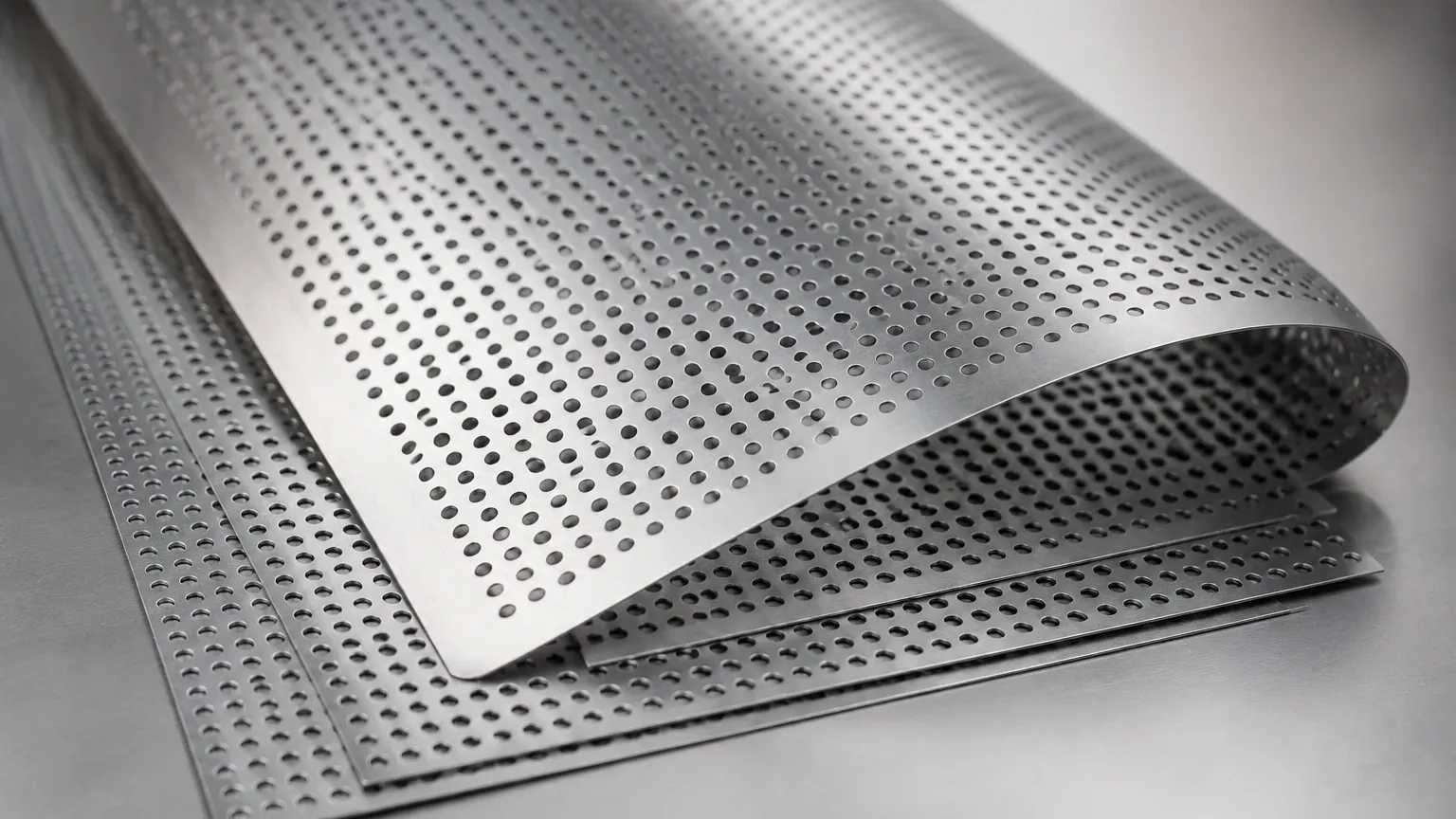
In the landscape of industrial filtration and structural engineering, the perforated metal sheet 1mm stands as a critical component that balances precision, weight, and mechanical durability. As a specialized manufacturer of stainless steel filtration solutions, Kaifil produces these components to meet the rigorous demands of chemical processing, food production, and pharmaceutical manufacturing. Selecting the correct specifications for a 1mm perforated sheet requires an understanding of material science, fluid dynamics, and manufacturing constraints.
This guide examines the technical nuances of Perforated & Expanded Metal with a specific focus on 1mm thickness, providing engineers and procurement teams with the data necessary to optimize their filtration systems.
Technical Significance of the 1mm Thickness
The choice of a 1mm gauge for a perforated metal sheet is rarely arbitrary. In industrial applications, 1mm (approximately 19 or 20 gauge depending on the standard used) offers a specific set of mechanical properties. It is thick enough to provide structural rigidity in medium-pressure environments but thin enough to be easily formed into cylindrical filter cartridges or complex conical strainers.
For engineers, the perforated metal sheet 1mm represents a "sweet spot" for weight-sensitive applications. It provides sufficient material volume to resist erosion from high-velocity fluid flows while maintaining a profile that does not excessively contribute to the total weight of the filtration assembly. This makes it an ideal substrate for multi-layered wire mesh filters, where the perforated sheet acts as the high-strength support core.
Material Selection: Beyond Basic Stainless Steel
While perforated sheets can be manufactured from various alloys, stainless steel remains the industry standard for filtration due to its corrosion resistance and thermal stability. At Kaifil, the selection process for a 1mm sheet typically involves three primary grades:
1. AISI 304 Stainless Steel: The most common grade, offering excellent formability and basic corrosion resistance. It is suitable for food and beverage applications where high acidity or chloride levels are not present.
2. AISI 316L Stainless Steel: The "L" denotes low carbon, which is essential for components that require welding. 316L contains molybdenum, significantly increasing resistance to pitting and crevice corrosion in chloride-rich environments, such as marine or chemical processing plants.
3. Specialty Alloys: For extreme environments involving high temperatures or highly aggressive chemicals, alloys like Duplex stainless steel or Monel may be used, though these are less common in standard 1mm configurations.
Engineering Specifications: Hole Patterns and Open Area
The performance of a perforated metal sheet 1mm is primarily defined by its hole pattern and the resulting open area percentage. These factors dictate the flow rate, pressure drop, and particle retention capabilities of the filter.
Round Hole Patterns
Round holes are the most common due to their structural integrity and ease of manufacturing. They are typically arranged in a 60-degree staggered pattern, which provides the highest strength-to-open-area ratio.
* Formula for Open Area (Staggered): $OA = (D^2 \times 90.69) / P^2$
* *Where D = Hole Diameter and P = Pitch (distance between hole centers).*
Square and Slotted Holes
Square holes offer a higher open area but reduced structural strength. Slotted holes are often utilized for specialized screening processes where the shape of the media (such as grains or fibers) requires a specific orientation for effective separation.
The Rule of 1:1
A critical engineering constraint for a 1mm perforated sheet is the hole diameter-to-thickness ratio. In standard precision punching, the hole diameter should ideally be equal to or greater than the material thickness (1mm). While it is possible to punch holes smaller than 1mm in a 1mm sheet using specialized tooling, it significantly increases tool wear and production costs. For filtration requiring apertures smaller than 1mm, engineers often use the 1mm perforated sheet as a support structure for a fine wire mesh.
Manufacturing Precision and Quality Control
Producing a high-quality perforated metal sheet 1mm involves more than just punching holes. The manufacturing process at Kaifil incorporates several stages to ensure the final product meets industrial tolerances:
* Precision Punching: Using CNC-controlled multi-presses to ensure uniform hole distribution and dimensional accuracy across the entire sheet.
* Leveling: The punching process introduces internal stresses that can cause the sheet to curl or warp. Industrial-grade levelers are used to restore the sheet to a high degree of flatness, which is essential for subsequent welding or forming processes.
* Deburring: Punching creates sharp edges or "burrs" on the exit side of the hole. For filtration applications, these burrs must be removed to prevent flow turbulence, minimize particle entrapment on the downstream side, and ensure safety during handling.
* Surface Finishing: Depending on the application, sheets may undergo electropolishing (for pharmaceutical use) or pickling and passivation to enhance corrosion resistance by restoring the chromium oxide layer.
Performance Evaluation in Filtration Systems
When integrating a 1mm perforated sheet into a filtration system, engineers must evaluate how the component will behave under operational stress.
Pressure Drop Considerations
The open area of the sheet directly impacts the pressure drop ($ΔP$). A higher open area reduces the resistance to flow but decreases the mechanical strength of the sheet. In high-viscosity fluid applications, a 1mm sheet must be carefully calculated to ensure it does not deform under the pressure differential caused by a clogged filter media.
Structural Support
In many industrial filter cartridges, the perforated metal sheet 1mm serves as the inner or outer support core. It must withstand the radial pressure exerted by the fluid. If the pressure exceeds the yield strength of the 1mm material, the core may collapse, leading to catastrophic system failure. Kaifil's engineering team often assists in calculating the required bridge width (the distance between holes) to ensure structural integrity is maintained without compromising flow.
Industrial Applications for 1mm Perforated Sheets
Because of its versatility, the 1mm perforated sheet is found across diverse sectors:
* Chemical Processing: Used as baskets for centrifugal separators and as support plates for catalyst beds. The 1mm thickness provides the necessary resistance to chemical erosion.
* Food and Beverage: Employed in juice extraction, grain drying, and dairy processing. The smooth, deburred surfaces of stainless steel 1mm sheets are essential for maintaining hygiene and meeting FDA/EHEDG standards.
* Water Treatment: Acting as the primary screen for intake systems to prevent large debris from entering sensitive pump assemblies.
* Pharmaceuticals: Used in fluid bed dryers and granulation equipment where precision in hole size and surface finish is paramount to prevent cross-contamination.
Procurement and Customization Guide
When sourcing a perforated metal sheet 1mm, purchasing teams should provide specific data points to ensure the product is fit for purpose. At Kaifil, we recommend confirming the following parameters:
1. Material Grade: Specify 304, 316L, or other alloys based on the chemical environment.
2. Hole Size and Shape: Define the diameter (e.g., 2mm round) and the arrangement (e.g., 60° staggered).
3. Pitch and Open Area: Clearly state the center-to-center distance or the required open area percentage.
4. Margins: Specify if the sheet requires "plain margins" (unperforated edges) for welding or mounting purposes.
5. Tolerances: Standard industrial tolerances are usually sufficient, but high-precision applications may require tighter controls on hole diameter and sheet flatness.
6. Secondary Operations: Indicate if the sheet needs to be rolled into a cylinder, welded, or coated.
Maintenance and Life Cycle Management
The longevity of a stainless steel 1mm perforated sheet depends heavily on the cleaning regime and the nature of the processed media. In filtration, "blinding" or "plugging" occurs when particles become lodged in the perforations.
For 1mm sheets, Clean-in-Place (CIP) or Steam-in-Place (SIP) systems are effective, provided the material is 316L to withstand the thermal and chemical stress of the cleaning agents. Regular inspection should focus on identifying signs of stress cracking near the hole edges or localized pitting corrosion, which can compromise the structural integrity of the component. If the sheet is used as a support for finer mesh, the bond between the mesh and the 1mm perforated plate should be checked for delamination.
Conclusion
The perforated metal sheet 1mm is a foundational element in modern industrial filtration. Its ability to provide robust support while allowing for precise flow control makes it indispensable in high-stakes environments like chemical plants and food processing facilities. By understanding the relationship between material grade, hole geometry, and manufacturing quality, engineers can select a solution that maximizes both performance and service life.
Kaifil continues to support global industries with custom-engineered Perforated & Expanded Metal solutions. Whether you require standard sheets or complex, OEM-spec filtration components, our technical expertise ensures that every 1mm perforated product meets the highest standards of industrial reliability.
