


Perforated Metal Sheets 19 Gauge
In industrial filtration and structural engineering, the selection of material thickness is a critical factor that determines the balance between mechanical strength, weight, and fluid dynamics. Perforated metal sheets 19 gauge represent a specific thickness—approximately 0.0418 inches or 1.06 mm—that is frequently utilized in applications requiring a durable yet formable substrate. As a specialized component in the Perforated & Expanded Metal category, 19-gauge sheets serve as the backbone for various filtration systems, protective guards, and acoustic panels.
For engineers and procurement professionals, understanding the technical nuances of 19-gauge perforated metal is essential for optimizing system performance and ensuring long-term reliability in demanding environments such as chemical processing, food production, and hydraulic systems.
Technical Specifications of 19 Gauge Metal
The term "gauge" refers to a standard of measurement for the thickness of sheet metal. However, it is important to note that gauge measurements can vary slightly depending on the material (e.g., stainless steel versus carbon steel). In the context of industrial filtration components manufactured by Kaifil, 19 gauge is typically standardized around 1.0 mm to 1.1 mm.
Thickness and Weight Considerations
At approximately 1.06 mm, 19-gauge metal provides sufficient rigidity to resist deformation under moderate pressure loads while remaining thin enough to be cold-formed into cylindrical filter cartridges or complex geometric shapes. This thickness is often preferred over heavier 16-gauge or 14-gauge sheets when weight reduction is a priority, or when the filter must fit within tight spatial tolerances in hydraulic manifolds or pharmaceutical processing equipment.
Material Compatibility
Selection of the base alloy is as critical as the gauge itself. Common materials for perforated metal sheets 19 gauge include:
* Stainless Steel 304/304L: The industry standard for general corrosion resistance and cost-effectiveness.
* Stainless Steel 316/316L: Specified for high-chloride environments, marine applications, and pharmaceutical processes where superior pitting resistance is required.
* Carbon Steel: Often used in oil-based hydraulic systems where corrosion is less of a concern but mechanical strength is paramount.
* Specialty Alloys: For high-temperature or highly acidic environments, alloys such as Hastelloy or Monel may be perforated to 19-gauge specifications.
Perforation Patterns and Open Area Calculations
The performance of a perforated sheet is defined by its hole pattern, hole size, and the resulting percentage of open area. These factors directly influence flow rates, pressure drop, and the size of particles retained by the filter.
Common Hole Geometries
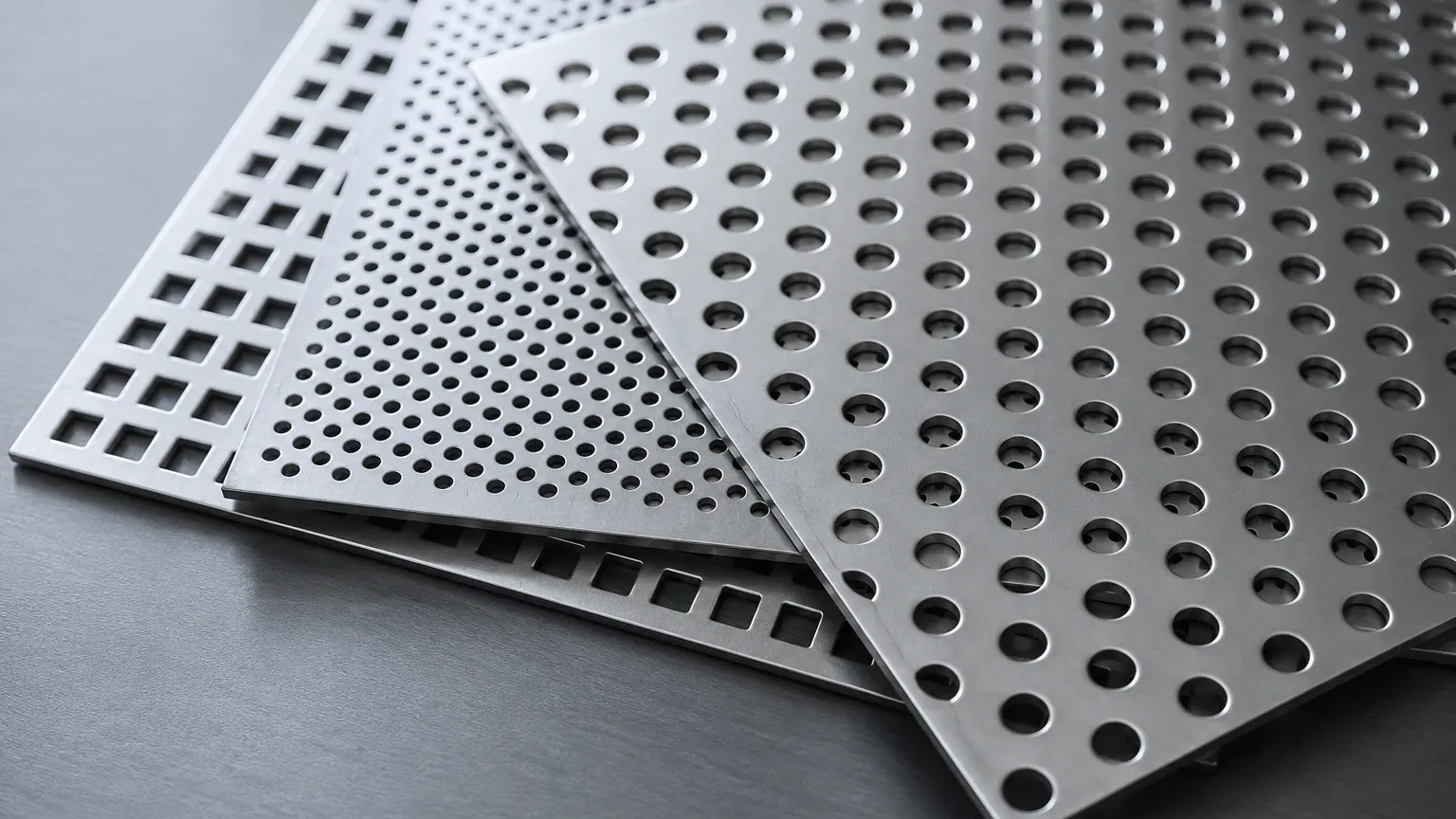
1. Round Holes: The most common and structurally stable pattern. Round holes can be arranged in a 60-degree staggered pattern, which maximizes open area and provides uniform strength in all directions.
2. Square Holes: Often used for aesthetic purposes or specific screening applications where a higher open area is required than what round holes can provide at the same structural integrity.
3. Slotted Holes: Ideal for the filtration of elongated particles or for use in vibrating screens where "blinding" (clogging) must be minimized.
The Importance of Open Area
For an engineer, the percentage of open area is a primary calculation. A 19-gauge sheet with a high open area (e.g., 50% or more) will offer low resistance to flow but may sacrifice structural rigidity. Conversely, a low open area (e.g., 20%) provides a robust support structure for finer wire mesh overlays but may lead to higher differential pressures. Accurate calculation of the open area is vital to ensure that the Perforated & Expanded Metal component does not become a bottleneck in the fluid system.
Engineering Applications for 19-Gauge Perforated Sheets
Because 19-gauge metal strikes a balance between durability and workability, it is found in a wide array of industrial applications.
Support Cores for Filter Cartridges
In multi-layer filtration systems, fine wire mesh is often too delicate to withstand high-pressure differentials on its own. Perforated metal sheets 19 gauge are frequently rolled into cylinders and welded to serve as the internal support core or the external protective shroud. The 19-gauge thickness provides the necessary hoop strength to prevent the collapse of the filter element during backpulsing or high-viscosity fluid processing.
Industrial Strainers and Baskets
For coarse filtration in water treatment or food processing, 19-gauge perforated metal can act as the primary filter medium. It is robust enough to capture large debris, such as scale or organic matter, without the need for additional reinforcement. In food-grade applications, the smooth surface of perforated stainless steel allows for easier cleaning and sterilization compared to woven wire mesh.
Acoustic and Ventilation Panels
Beyond filtration, 19-gauge perforated sheets are used in machinery enclosures to provide ventilation while maintaining a safety barrier. They are also integrated into acoustic silencers for industrial exhaust systems, where the perforation pattern is engineered to dissipate sound waves.
Fabrication and Customization Capabilities
When specifying perforated metal sheets 19 gauge for an OEM project, customization is often necessary to meet exact housing dimensions or flow requirements. Kaifil’s manufacturing processes allow for precise control over several fabrication variables.
Precision Punching and Tolerances
Modern CNC punching equipment ensures that hole diameters and center-to-center distances (pitch) are maintained with high precision. For 19-gauge materials, maintaining flatness after the punching process is a key quality metric, as the stresses introduced by the punch can cause the sheet to curl. Leveling processes are applied to ensure the final product meets strict flatness specifications.
Margins and Blank Areas
Custom perforated sheets can be produced with "margins"—unperforated solid borders. These margins are essential for welding the sheet into a frame or for providing a clean edge for mechanical fastening. Engineers should specify the width of these margins to ensure the perforated area aligns correctly with the flow path of the equipment.
Forming and Welding
19-gauge stainless steel is highly conducive to TIG, MIG, and plasma welding. It can be precision-rolled into small-diameter tubes for hydraulic filters or folded into complex tray shapes for chemical reactors. The ability to weld 19-gauge material without burn-through (a risk with thinner gauges) or excessive heat distortion (a risk with thicker gauges) makes it an ideal choice for custom-fabricated components.
Evaluating Quality and Performance Risks
While perforated metal is a relatively straightforward product, several risks can impact the performance of 19-gauge sheets in industrial settings. Technical professionals should evaluate the following criteria before procurement:
Burr Removal and Surface Finish
The punching process naturally creates a "burr" on the exit side of the hole. In filtration applications, these burrs can trap contaminants or cause turbulence. For pharmaceutical or food and beverage industries, secondary processes such as electropolishing or mechanical deburring are necessary to ensure a smooth, sanitary surface.
Fatigue and Stress Cracking
In applications involving high-frequency vibrations or pressure cycles, the areas between the holes (the "ligaments") are subject to fatigue. If the ligaments are too narrow relative to the 19-gauge thickness, stress cracks can develop over time. Engineering the correct hole-to-pitch ratio is essential to prevent premature failure of the component.
Corrosion in the Heat-Affected Zone (HAZ)
When 19-gauge stainless steel is welded, the area surrounding the weld can undergo chromium depletion, making it susceptible to corrosion. Utilizing low-carbon variants like 304L or 316L and employing proper welding techniques are critical steps in maintaining the integrity of the perforated component in corrosive chemical environments.
Selection Guide: Confirming Requirements for 19 Gauge Sheets
Before initiating a custom order for perforated metal sheets 19 gauge, purchasing teams and engineers should confirm the following technical data points to ensure the product meets the application’s demands:
1. Hole Diameter and Shape: Specify the exact size required for particle retention or airflow.
2. Center-to-Center Distance (Pitch): This determines the hole density and the structural strength of the ligaments.
3. Pattern Orientation: Confirm if the pattern should be staggered (usually 60 degrees) or straight.
4. Sheet Dimensions and Margins: Provide precise length, width, and the location of any unperforated areas.
5. Environmental Factors: Identify the operating temperature, chemical exposure, and maximum pressure differential to select the appropriate alloy.
6. Post-Processing Needs: Determine if the sheets require degreasing, pickling, or specialized coating after fabrication.
By addressing these specifications, technical teams can leverage the versatility of 19-gauge perforated metal to achieve efficient, durable, and cost-effective filtration performance. Kaifil provides comprehensive support in material selection and design optimization, ensuring that each custom component is engineered for the specific rigors of its intended industrial environment.
For more detailed information on available patterns and material options, technical professionals can Review product options and application support to find the optimal solution for their filtration or structural needs.
