


Perforated Metal 2mm
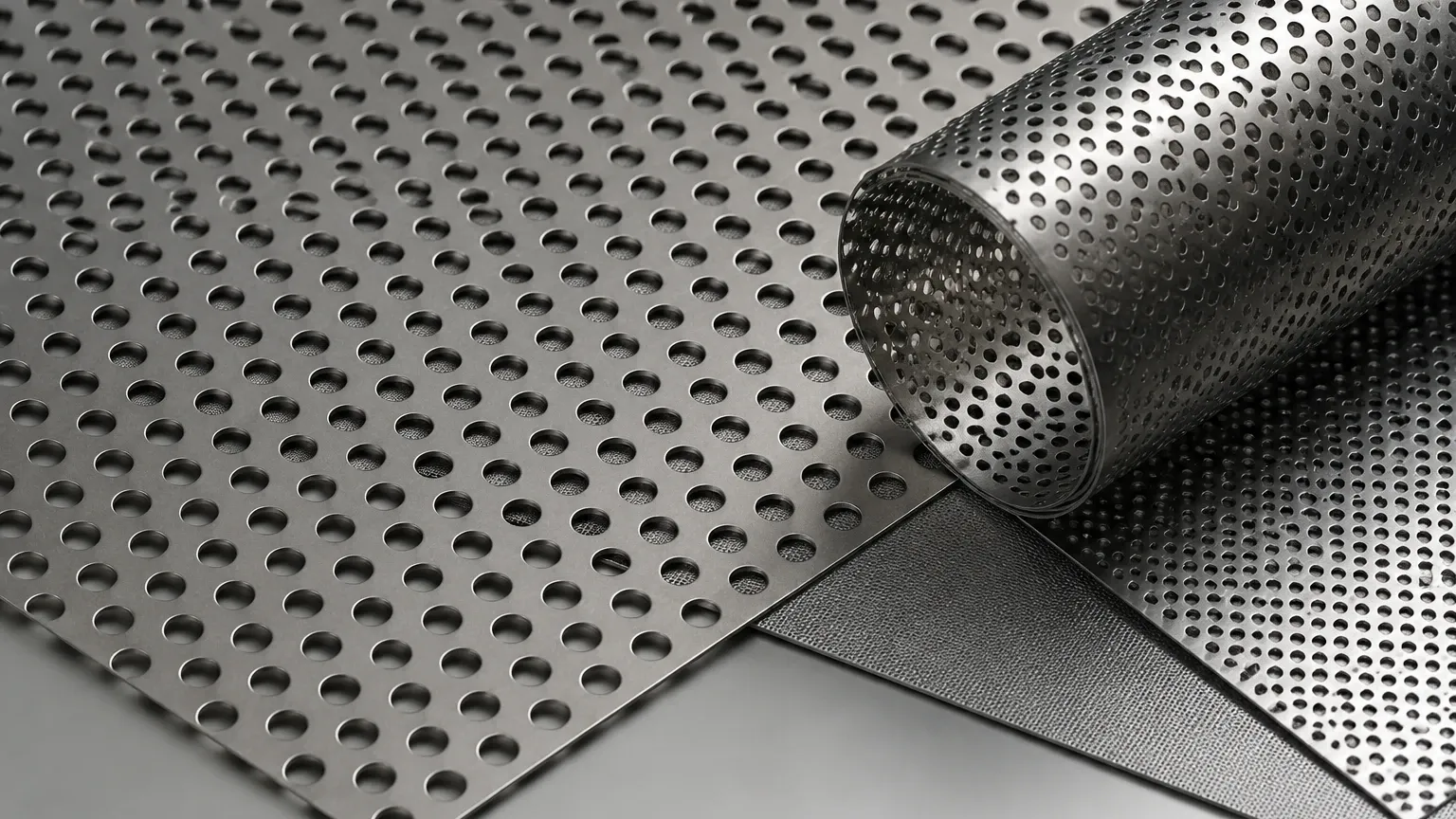
In industrial filtration and structural engineering, perforated metal serves as a fundamental component for media support, particle separation, and fluid dynamics management. When specifying perforated metal 2mm, engineers and procurement professionals are typically addressing one of two critical dimensions: the hole diameter or the sheet thickness. Achieving the correct balance between these two parameters, along with the pitch and pattern, is essential for ensuring the structural integrity and functional efficiency of the final component.
As a specialized manufacturer of stainless steel filtration solutions, Kaifil provides precision-engineered Perforated & Expanded Metal designed to meet the rigorous demands of chemical processing, food production, and hydraulic systems. Understanding the technical nuances of 2mm specifications allows for optimized performance and reduced total cost of ownership in industrial environments.
Understanding the Specifications of Perforated Metal 2mm
The term "perforated metal 2mm" is frequently used in technical inquiries, but it requires precise definition during the design phase. In most industrial contexts, this refers to a 2mm hole diameter, which is a versatile size for medium-coarse filtration and protective screening. However, it can also refer to the gauge of the base material.
Hole Diameter and Pitch
A 2mm hole diameter is widely utilized because it offers a balance between mechanical strength and open area. The performance of the sheet is largely determined by the pitch—the distance from the center of one hole to the center of the adjacent hole. For a 2mm hole, a common pitch might range from 3mm to 4mm. A tighter pitch increases the open area but reduces the structural rigidity of the sheet. Engineers must calculate the "bridge" (the material remaining between the holes) to ensure the sheet does not deform under hydraulic pressure or mechanical load.
Sheet Thickness (Gauge)
When 2mm refers to the thickness of the metal sheet, it indicates a heavy-duty specification suitable for high-pressure environments or structural components. A rule of engineering in perforation is that the hole diameter should generally not be smaller than the material thickness. Attempting to punch 1mm holes in a 2mm thick stainless steel plate increases the risk of tool breakage and results in irregular hole geometry. Therefore, if a project requires a 2mm sheet thickness, the hole diameter is typically 2mm or larger to maintain manufacturing feasibility and part quality.
Material Considerations for Industrial Applications
Material selection is the primary determinant of a filter’s lifespan, especially in corrosive or high-temperature environments. While perforated metal can be produced from various alloys, stainless steel remains the industry standard for high-performance filtration.
Stainless Steel 304 vs. 316L
For most general industrial applications, Grade 304 stainless steel provides excellent durability and basic corrosion resistance. However, in chemical processing or marine environments where chloride exposure is a concern, Grade 316L is preferred. The addition of molybdenum in 316L enhances resistance to pitting and crevice corrosion. At Kaifil, we prioritize these materials for our custom filtration components to ensure they withstand the rigors of CIP (Clean-in-Place) cycles and aggressive process fluids.
Specialty Alloys and Surface Finishes
In specific B2B sectors, such as pharmaceutical or food and beverage, the surface finish of the perforated metal is as important as the dimensions. A 2mm perforated sheet may undergo electropolishing to remove microscopic burrs and create a smooth, passive surface that prevents bacterial growth and facilitates easier cleaning. Other options include pickling and passivating to restore corrosion resistance after the mechanical punching process.
Engineering the Open Area and Flow Dynamics
The "Open Area" percentage is the most critical metric for engineers designing filtration systems. It determines the flow rate, pressure drop, and the efficiency of the media supported by the perforated metal.
Calculating Open Area
For a standard 60-degree staggered pattern—the most common and structurally sound arrangement—the formula for calculating the open area percentage is:
Open Area % = (D² × 90.69) / P²
*Where D = Hole Diameter and P = Pitch.*
For a perforated metal 2mm hole with a 3.5mm pitch, the open area would be approximately 29.6%. If the application requires a higher flow rate, the pitch might be reduced to 3mm, increasing the open area to roughly 40%. Engineers must weigh this against the required burst pressure of the filter cartridge or screen.
Impact on Pressure Drop
In hydraulic and gas filtration, a 2mm perforation often acts as a support layer for finer wire mesh. If the open area is too low, it creates a bottleneck, leading to a significant pressure drop across the filter element. This increases energy consumption for pumps and compressors. Conversely, if the open area is too high, the support structure may fail under the weight of the accumulated filter cake or the force of the fluid flow.
Manufacturing Processes and Precision Standards
The production of perforated metal 2mm involves high-speed CNC punching presses or rotary perforated dies. Precision is paramount to ensure uniformity across large production runs.
Punching and Tolerances
During the punching process, the metal is subjected to intense localized pressure. This can cause internal stresses that lead to "oil-canning" or warping of the sheet. Quality manufacturers utilize leveling rollers after perforation to ensure the final product is perfectly flat. Standard industry tolerances for 2mm perforations usually fall within +/- 0.1mm, though tighter tolerances can be achieved for specialized aerospace or medical applications.
Margin Configurations
Margins refer to the unperforated areas along the edges of the sheet. In B2B procurement, specifying margins is essential for subsequent fabrication steps like welding or forming into cylinders. Common options include:
* Minimum Margins: The perforation pattern extends as close to the edge as possible.
* Specified Margins: A custom unperforated border (e.g., 20mm) is left on all four sides to facilitate mounting or welding into a frame.
* End Patterns: Determining whether the holes should be "finished" (symmetrical) or "unfinished" at the edges.
Industrial Applications for 2mm Perforations
The versatility of 2mm perforated metal makes it a staple in various sectors. Its role often transitions from a simple barrier to a sophisticated component of a larger mechanical system.
Industrial Filtration and Separation
In water treatment and chemical processing, 2mm perforated sheets are used as primary strainers to remove large debris before the fluid reaches finer secondary filters. They also serve as the inner and outer cages for pleated filter cartridges, providing the mechanical strength necessary to prevent the pleats from collapsing under high differential pressure.
Food and Beverage Processing
Perforated metal 2mm is frequently used in grain drying, malt kilning, and fruit juice extraction. The 2mm hole size is ideal for retaining solids while allowing liquids or hot air to pass through efficiently. Because these applications involve human consumption, the use of food-grade stainless steel and the complete removal of burrs are non-negotiable requirements.
Acoustic and Architectural Solutions
Beyond filtration, 2mm perforations are used in acoustic panels to dampen sound in industrial machinery rooms. The holes allow sound waves to pass into absorbing material behind the metal. Architecturally, these sheets provide aesthetic cladding that offers ventilation and light diffusion while maintaining a secure barrier.
Selection Criteria for Engineers and Procurement
When sourcing perforated metal 2mm, purchasing teams must look beyond the price per square meter. The total cost of ownership is influenced by the quality of the fabrication and the suitability of the material for the specific environment.
1. Hole-to-Thickness Ratio: Ensure the design is manufacturable. A 2mm hole in a 3mm plate is difficult and expensive to produce; a 2mm hole in a 1.5mm plate is standard and cost-effective.
2. Burr Management: For filtration and food-grade applications, specify "deburred" or "brushed" finishes to prevent media damage and contamination.
3. Flatness Requirements: Large sheets of perforated metal tend to curl. Specify the required flatness tolerance if the material is to be used in precision machinery.
4. Batch Consistency: For OEM partners, consistency in hole alignment and pitch is vital for automated assembly processes.
Customization and OEM Solutions with Kaifil
At Kaifil, we understand that standard off-the-shelf perforated metal rarely meets the exact needs of complex industrial systems. We specialize in providing customized Perforated & Expanded Metal solutions that are tailored to specific filtration accuracies and mechanical requirements.
Our engineering team works closely with clients to determine the optimal hole pattern, material grade, and secondary processing needed for their application. Whether you require 2mm perforated stainless steel for a hydraulic return line filter or a custom-sized screen for chemical processing, our manufacturing capabilities ensure high precision and durability.
By focusing on technical excellence and material integrity, Kaifil helps engineers achieve reliable filtration performance. When specifying perforated metal 2mm, confirming the exact hole-to-pitch ratio and material grade with our technical team can significantly enhance the efficiency and service life of your equipment. For those looking to optimize their filtration systems, reviewing the available patterns and material options is the first step toward a high-performance solution.
