


Perforated Metal 2mm Holes
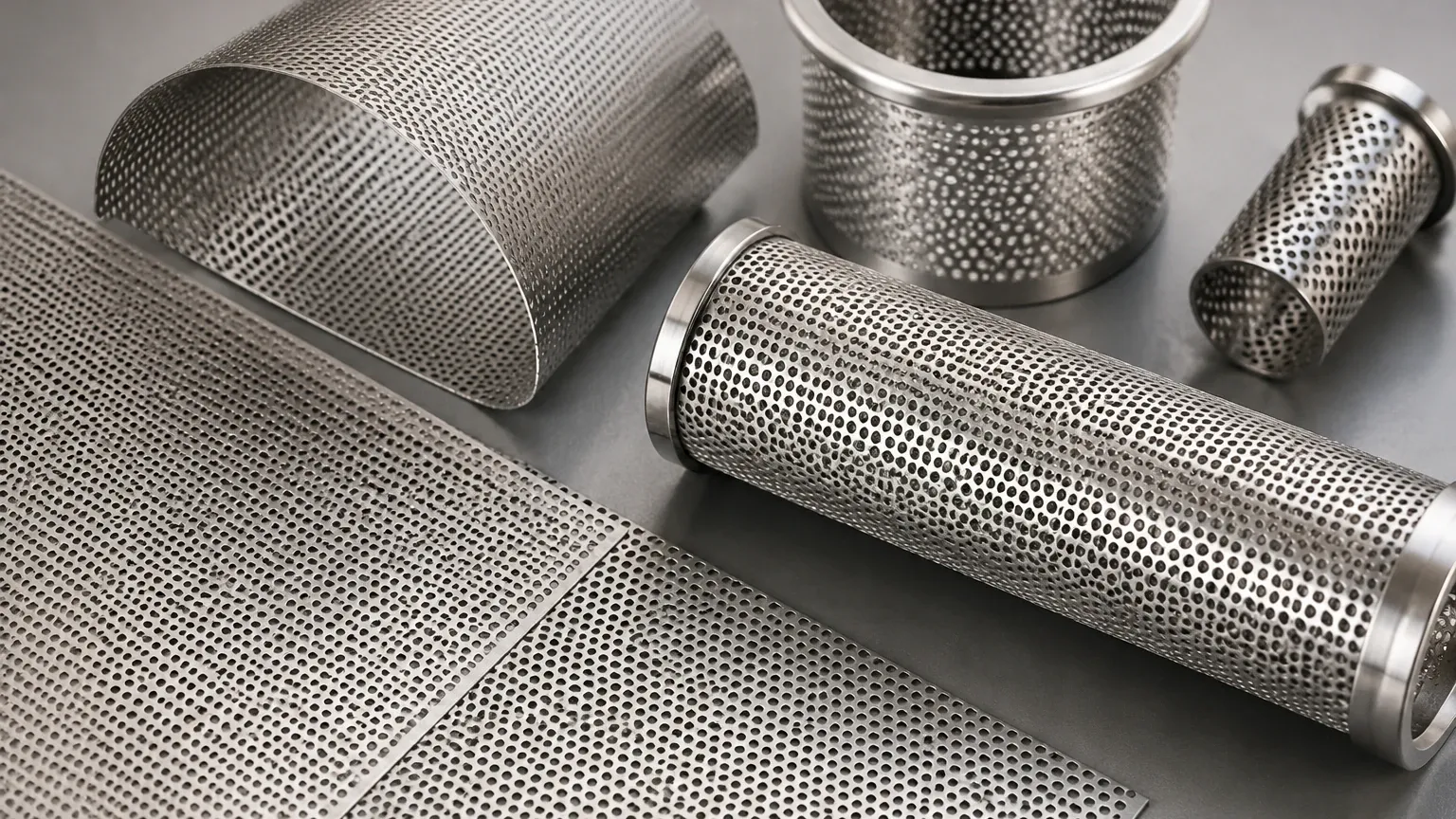
In industrial filtration and precision engineering, the specification of aperture size is a critical factor that determines both the efficiency of a separation process and the structural integrity of the filter component. Perforated metal 2mm holes represent a widely utilized specification in B2B sectors, balancing fine filtration capabilities with the mechanical strength required for high-pressure or high-flow environments. As a specialized manufacturer, Kaifil provides these components in various configurations to meet the rigorous demands of chemical processing, food production, and hydraulic systems.
Selecting the right perforated metal involves more than just choosing a hole size. It requires an understanding of material properties, open area percentages, and the manufacturing limits associated with the hole-to-thickness ratio. This guide examines the technical considerations essential for engineers and procurement teams when integrating 2mm perforated solutions into industrial applications.
Understanding the Engineering of Perforated Metal 2mm Holes
The term "2mm holes" typically refers to the diameter of the circular punch used in the perforation process. However, in a technical context, the performance of the sheet is governed by the arrangement of these holes. There are two primary patterns: staggered and straight.
1. 60-Degree Staggered Pattern: This is the most common configuration for industrial use. It provides the highest open area and uniform strength across the sheet. For a 2mm hole, the "pitch" (the distance from the center of one hole to the center of the next) is usually set between 3mm and 4mm to ensure sufficient "bridge" width—the solid metal remaining between the holes.
2. Straight Row Pattern: In this layout, holes are aligned both horizontally and vertically. While this is easier to align for specific aesthetic or structural mounting requirements, it generally offers lower open area and less structural stability under multidirectional stress compared to staggered patterns.
When specifying Perforated & Expanded Metal for filtration, the precision of the 2mm aperture is paramount. Even slight deviations in hole diameter can lead to "bypass," where particles larger than the intended threshold pass through the filter, potentially damaging downstream equipment like pumps or high-precision nozzles.
Material Selection and Chemical Compatibility
The environment in which the perforated metal will operate dictates the material choice. Because 2mm holes are often used in liquid filtration and gas separation, corrosion resistance is a primary concern. Kaifil specializes in stainless steel solutions, which are the industry standard for demanding environments.
* Stainless Steel 304: Suitable for general industrial applications, providing excellent strength and basic corrosion resistance. It is commonly used in food processing and architectural components where exposure to harsh chemicals is limited.
* Stainless Steel 316L: The preferred choice for marine environments, pharmaceutical manufacturing, and chemical processing. The addition of molybdenum enhances resistance to pitting and crevice corrosion, particularly in chloride-rich environments. For 2mm perforated sheets used in wastewater treatment or chemical reactors, 316L is often the baseline requirement.
* Specialty Alloys: In high-temperature or highly acidic environments, alloys such as Monel or Hastelloy may be required. These materials maintain the integrity of the 2mm perforations even under thermal expansion or aggressive chemical attack.
Calculating Open Area and Filtration Efficiency
The "Open Area" is the percentage of the sheet that consists of holes. This figure is vital for calculating flow rates and pressure drops across the filter. For perforated metal 2mm holes in a 60-degree staggered pattern, the formula for open area (OA) is:
OA% = (D² × 90.69) / P²
Where:
* D = Hole Diameter (2mm)
* P = Pitch (Center-to-center distance)
For example, a 2mm hole on a 3.5mm pitch results in an open area of approximately 29.6%. Increasing the pitch to 4.5mm drops the open area to roughly 17.9%. Engineers must balance the need for high flow (higher open area) with the need for structural durability (wider bridges). A sheet with too high an open area may deform under the pressure of a high-viscosity fluid or during backwashing cycles.
Manufacturing Challenges: The Hole-to-Thickness Ratio
A common technical constraint in the production of perforated metal is the relationship between the hole diameter and the sheet thickness. In standard mechanical punching, the rule of thumb is that the hole diameter should not be smaller than the material thickness (1:1 ratio).
For perforated metal 2mm holes, the ideal sheet thickness is between 0.5mm and 2.0mm. If a project requires a 2mm hole in a 3mm thick plate, standard punching may lead to excessive tool wear, burr formation, or even punch breakage. In such cases, specialized manufacturing techniques or laser drilling may be necessary, though these increase the total cost of production.
At Kaifil, we evaluate the thickness-to-diameter ratio during the design phase to ensure that the resulting product is free of excessive burrs. Burrs are small protrusions of metal left around the hole after punching; in filtration, these can trap debris or cause turbulence, so precision leveling and deburring are essential post-processing steps.
Industrial Applications for 2mm Perforations
The versatility of 2mm perforations makes them suitable for a wide array of B2B applications. Unlike mesh, which can be prone to wire displacement, perforated metal provides a rigid, fixed aperture that maintains its shape under mechanical stress.
1. Pre-Filtration and Strainers
In water treatment and hydraulic systems, 2mm perforated sheets act as primary strainers. They protect finer mesh filters or sensitive instruments by removing large debris, scales, and suspended solids. Their rigidity allows them to be formed into cylindrical cartridges or conical strainers without losing hole geometry.
2. Food and Beverage Processing
Stainless steel perforated sheets with 2mm holes are used in grain drying, fruit juice straining, and sorting equipment. The smooth surface of the perforated metal is easier to clean and sterilize than woven wire mesh, making it ideal for Sanitary/Hygienic applications where preventing bacterial growth is critical.
3. Acoustic and Airflow Management
In industrial machinery housing, 2mm holes provide a balance between airflow for cooling and acoustic damping. The specific hole size can be tuned to dissipate certain sound frequencies, reducing the noise pollution generated by heavy-duty compressors or engines.
Customization and OEM Considerations
Off-the-shelf perforated sheets rarely meet the exact requirements of complex industrial systems. Customization is often necessary to ensure the component fits perfectly within a housing or meets specific flow dynamics. When ordering custom Perforated & Expanded Metal, purchasing teams should confirm several technical details:
* Margins: Do you require "unperforated" borders around the edges of the sheet for welding or bolting? Standard sheets often have "random" margins where the pattern is cut off, but custom OEM orders can specify exact solid borders.
* Forming and Fabrication: Will the sheet remain flat, or does it need to be rolled into a cylinder, flanged, or welded into a basket? The orientation of the staggered pattern (longitudinal vs. transverse) affects how the metal bends.
* Surface Treatment: Depending on the application, the metal may require electropolishing to improve corrosion resistance and cleanability, or powder coating for identification and additional protection.
Maintenance and Longevity in Filtration Systems
The lifespan of a perforated metal component with 2mm holes depends heavily on the cleaning cycle and the nature of the filtrate. Because these holes are relatively small, they can be prone to "blinding" or clogging if the particles in the fluid are near-sized (approx. 1.8mm to 2.2mm).
To maximize the replacement cycle, Kaifil recommends:
* Regular Backwashing: Using high-pressure fluid in the reverse direction to dislodge trapped particles.
* Chemical Cleaning: For stainless steel components in the food or chemical industry, using compatible CIP (Clean-in-Place) solutions to remove organic buildup or scale.
* Inspection for Erosion: In high-velocity systems, the edges of the 2mm holes can erode over time, gradually increasing the aperture size and reducing filtration accuracy. Regular gauge checks are recommended for critical processes.
By focusing on the technical synergy between material grade, hole pattern, and manufacturing precision, engineers can ensure that their choice of perforated metal 2mm holes provides a reliable, long-term solution for their industrial filtration needs. Kaifil’s commitment to quality and custom engineering supports global industries in achieving optimized performance through precision-manufactured metal components.
