


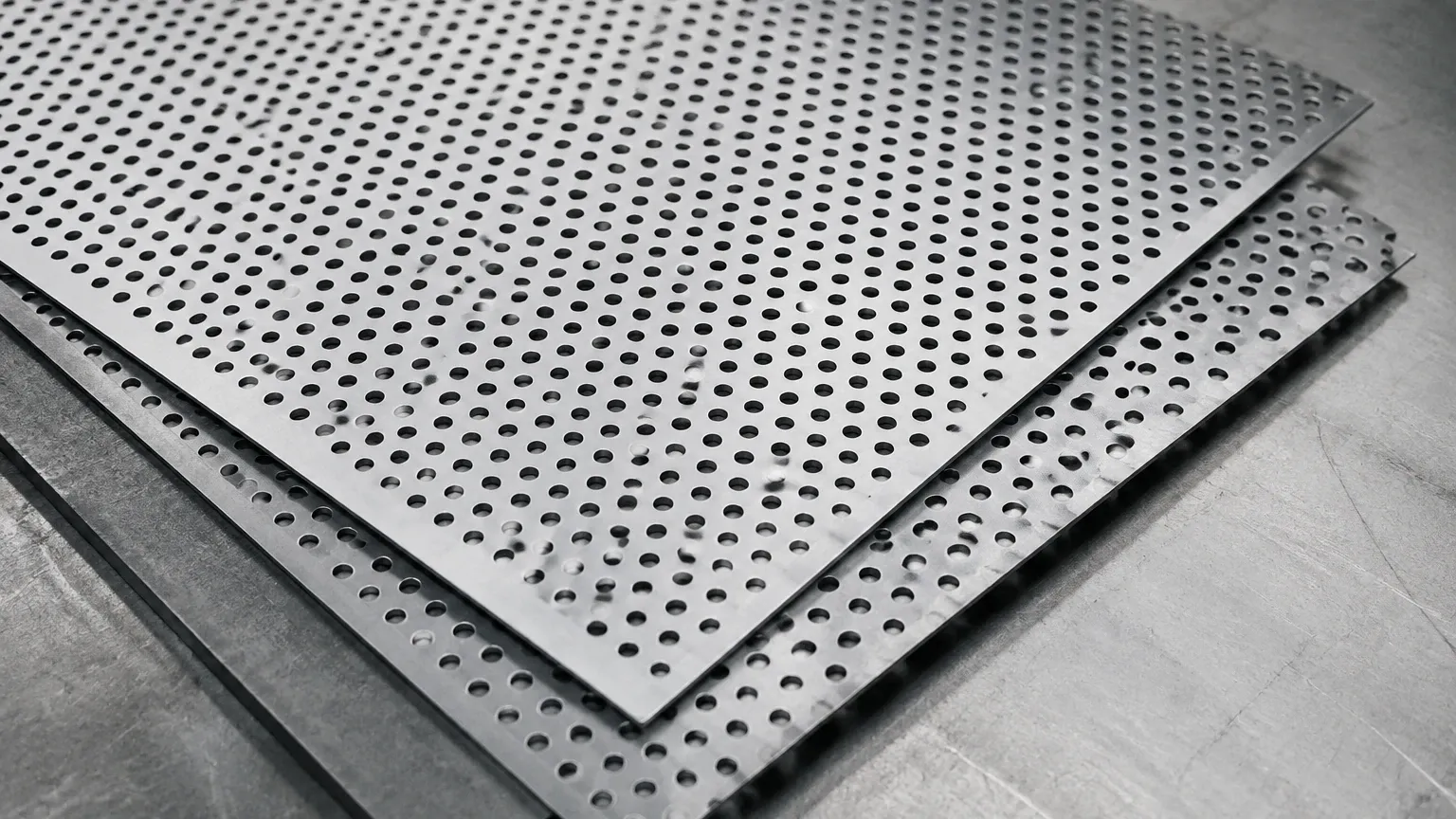
Perforated Metal Sheet 2mm Thick
In industrial filtration and structural engineering, the selection of material thickness is a critical decision that dictates the mechanical integrity, flow dynamics, and longevity of a component. A perforated metal sheet 2mm thick (approximately 14 gauge) represents a versatile middle ground in metal processing. It offers sufficient rigidity to withstand significant pressure differentials while remaining workable for secondary processes like rolling, bending, and welding. For engineers and procurement specialists, understanding the technical nuances of this specific thickness is essential for optimizing the performance of filtration systems and industrial screens.
Understanding the Engineering Value of 2mm Perforated Sheets
The choice of a 2mm thickness is rarely arbitrary in industrial design. At this gauge, the metal provides a structural robustness that thinner foils or sheets lack. In filtration applications, the 2mm sheet often serves as the primary support structure for finer wire mesh layers. When high-viscosity fluids or high-pressure gas streams are processed, the support medium must resist deformation (oil canning) and fatigue.
From a manufacturing perspective, a perforated metal sheet 2mm thick allows for a wide range of hole diameters and patterns. However, a fundamental rule of perforation engineering is that the hole diameter should generally not be smaller than the material thickness. For a 2mm sheet, this means that hole diameters of 2mm or greater are standard. Attempting to punch holes significantly smaller than the thickness increases the risk of tool breakage and can result in tapered holes or excessive burr formation, which negatively impacts filtration precision and flow consistency.
Material Selection and Chemical Compatibility
When specifying a perforated metal sheet 2mm thick, the base alloy is the most significant factor in determining the product's lifespan. Since these components are frequently exposed to corrosive chemicals, high temperatures, or abrasive particles, material selection must align with the operating environment.
Stainless Steel (304 and 316L)
Stainless steel is the industry standard for high-performance filtration. Grade 304 offers excellent corrosion resistance for general industrial use, while Grade 316L, with its molybdenum content, is preferred for marine environments, chemical processing, and pharmaceutical applications where resistance to pitting and crevice corrosion is paramount. The 2mm thickness in stainless steel provides a high strength-to-weight ratio, making it ideal for self-supporting filter baskets and internal cores.
Carbon Steel and Galvanized Steel
For applications where corrosion is not the primary concern, or where the environment is controlled (such as in hydraulic oil systems), carbon steel provides a cost-effective alternative. Galvanized 2mm sheets offer an added layer of zinc protection, suitable for outdoor structural grilles or HVAC intake screens where moisture is present but chemical aggression is low.
Aluminum Alloys
In aerospace or mobile equipment applications where weight reduction is critical, aluminum perforated sheets are utilized. A 2mm aluminum sheet provides significant stiffness at a fraction of the weight of steel, though it requires specific considerations for welding and galvanic corrosion when in contact with dissimilar metals.
Geometric Configurations and Open Area Calculations
The performance of a perforated metal sheet 2mm thick is defined by its open area—the percentage of the sheet that consists of holes. This figure directly influences the pressure drop across the filter and the velocity of the fluid passing through it.
Hole Patterns
* Round Holes (Staggered): The most common configuration, offering the best balance of strength and open area. A 60-degree staggered pattern is standard, providing uniform stress distribution across the sheet.
* Square Holes: These provide a higher open area but reduced structural strength compared to round holes. They are often used in screening applications where the shape of the particles being filtered is a factor.
* Slotted Holes: Frequently used in centrifugal liners or vibrating screens, slotted holes are effective for separating elongated particles.
Calculating Open Area
For a standard 60-degree staggered round hole pattern, the open area (OA) percentage can be calculated using the formula:
OA% = (d² × 90.69) / p²
*Where d is the hole diameter and p is the center-to-center pitch.*
For a 2mm thick sheet with 3mm holes and a 5mm pitch, the open area is approximately 32.6%. Engineers must balance the need for a high open area (for flow efficiency) with the requirement for structural thickness (for pressure resistance).
Industrial Applications in Filtration and Beyond
A Perforated & Expanded Metal solution using 2mm thick sheets is found across various demanding sectors. Its primary role is often as a "coarse" filter or a reinforcement layer.
Filter Cartridge Cores and Cages
In high-pressure hydraulic and process filtration, 2mm perforated sheets are rolled into cylinders and longitudinally welded to form the inner core or outer protective cage of a filter cartridge. This thickness ensures the cartridge does not collapse under the pressure of accumulated contaminants.
Strainers and Centrifuge Baskets
In food and beverage processing, 2mm thick perforated baskets are used to separate solids from liquids. The thickness allows the basket to withstand the centrifugal forces and the mechanical stress of frequent cleaning and sterilization.
Acoustic and Architectural Panels
Beyond filtration, 2mm perforated sheets are used in machinery enclosures for sound attenuation. The mass of the 2mm metal, combined with specific perforation patterns, helps dissipate sound energy in industrial power plants and server rooms.
Key Evaluation Criteria for Procurement
When sourcing a perforated metal sheet 2mm thick, technical professionals must look beyond basic dimensions. Precision in manufacturing determines whether the component will fit seamlessly into a larger assembly.
1. Tolerances: Standard commercial tolerances for sheet size and hole diameter may not be sufficient for precision filtration. Specify ±0.1mm or tighter if the sheet is to be integrated into a CNC-machined housing.
2. Flatness: The perforation process introduces internal stresses that can cause the sheet to curl or bow. For 2mm sheets, leveling (rolling the sheet after perforation) is often required to ensure the material lies flat for subsequent welding or assembly.
3. Margins: The "margin" is the unperforated area around the edges of the sheet. Specifying exact margins is crucial for welding; a sheet perforated to the very edge is difficult to weld without distorting the hole pattern or creating weak spots.
4. Surface Finish: For pharmaceutical and food-grade applications, the sheet must be free of oil, grease, and burrs. Passivation for stainless steel is recommended to restore the chromium oxide layer after the mechanical stress of punching.
Common Risks and Quality Control
Manufacturing a high-quality perforated metal sheet 2mm thick involves managing several technical risks. The most common issue is the presence of "burrs" on the exit side of the hole. In a 2mm sheet, a dull punch can create significant burrs that trap contaminants or damage delicate filter media (like wire mesh) layered against it.
Another risk is hole distortion. If the pitch is too small relative to the 2mm thickness, the "ligaments" (the metal between the holes) can stretch or break during the punching process. Quality manufacturers like Kaifil utilize precision die clearances and high-tonnage presses to maintain the geometric integrity of every hole, ensuring that the flow characteristics remain consistent across the entire surface of the sheet.
Customization and Secondary Processing
Rarely is a perforated sheet used in its flat, raw state. Most industrial applications require secondary processing to transform the 2mm sheet into a functional component.
* Rolling and Welding: 2mm stainless steel is robust enough to be rolled into small diameters for filter tubes. Plasma or TIG welding is typically used to ensure a clean, strong seam that matches the parent material's corrosion resistance.
* Bending and Forming: The material can be formed into U-channels or complex frames to serve as support structures in large-scale water treatment intake screens.
* Degreasing and Cleaning: Especially in oxygen service or high-purity chemical applications, the 2mm sheet must undergo ultrasonic cleaning to remove all traces of punching lubricants.
Conclusion: Selecting the Right Specification
The perforated metal sheet 2mm thick is a staple of industrial engineering because it bridges the gap between lightweight screens and heavy-duty plates. When specifying this material, engineers should confirm the exact chemical environment to choose the correct alloy, calculate the required open area to meet flow requirements, and define the necessary tolerances for secondary assembly. By focusing on these technical details, procurement teams can ensure they receive a filtration component that provides reliable service, even in the most demanding industrial environments.
