


22 Gauge Perforated Sheet Metal
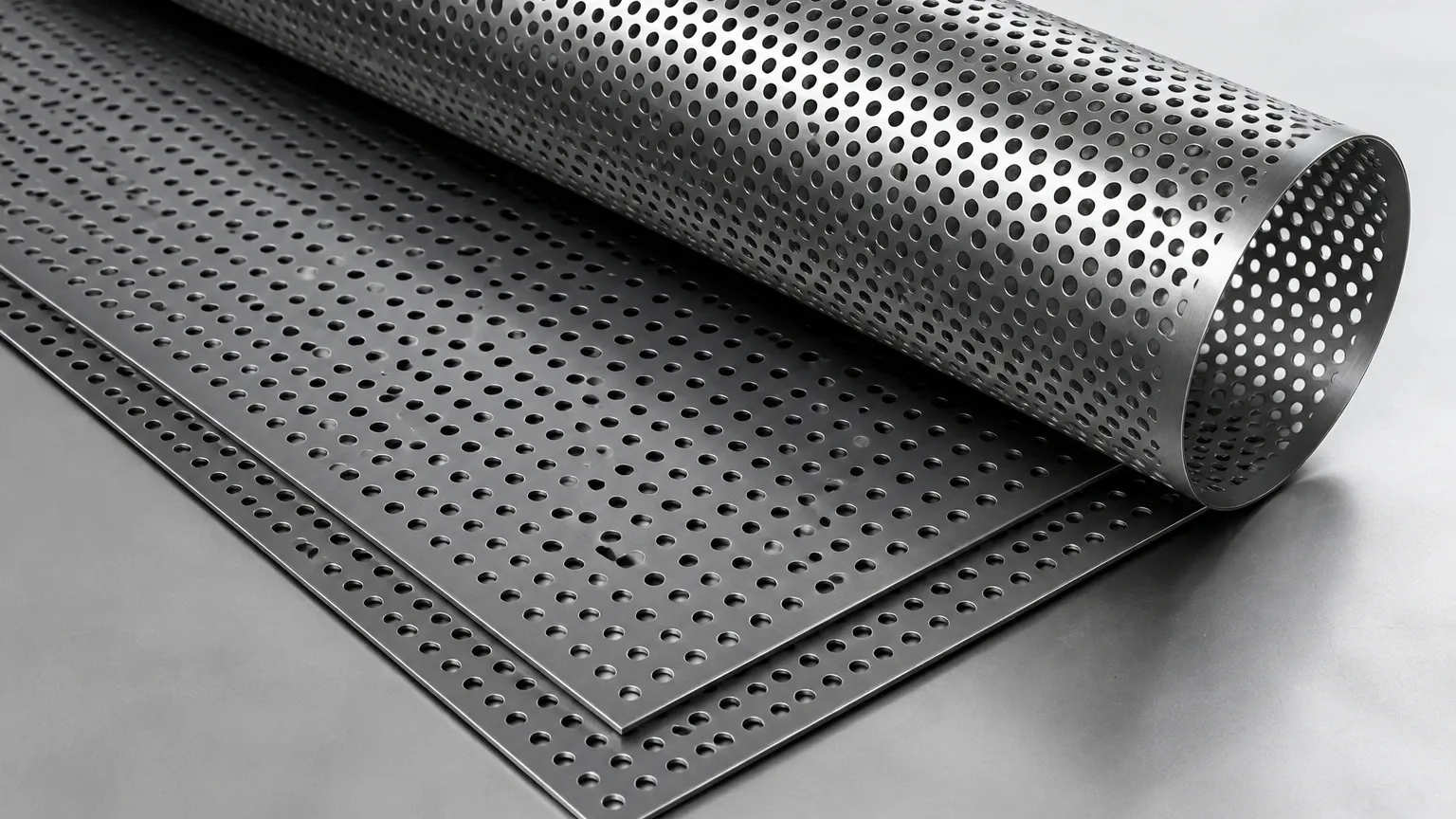
In industrial filtration and precision engineering, the selection of material thickness and perforation patterns is a critical factor in determining the efficiency, durability, and structural integrity of a system. Among the various specifications available, 22 gauge perforated sheet metal occupies a significant role due to its balance of flexibility and mechanical strength. For engineers and procurement teams, understanding the technical nuances of this specific gauge is essential for optimizing filtration performance and ensuring long-term reliability in demanding environments.
As a specialized manufacturer of stainless steel filtration solutions, Kaifil utilizes Perforated & Expanded Metal to create high-performance components. This article provides a technical analysis of 22 gauge perforated sheet metal, focusing on its material properties, engineering considerations, and industrial applications.
Technical Specifications of 22 Gauge Perforated Metal
The term "gauge" refers to a standard unit of measurement for the thickness of sheet metal. For stainless steel, which is the primary material used in high-end industrial filtration, 22 gauge typically corresponds to a thickness of approximately 0.030 inches (0.76 mm). In contrast, 22 gauge galvanized or carbon steel may vary slightly, generally measuring around 0.0299 inches.
Dimensional Consistency
When specifying 22 gauge perforated sheet metal, dimensional tolerances are paramount. In precision filtration, even a minor deviation in thickness can affect the welding process or the fit of a filter cartridge into its housing. Engineers must confirm whether the gauge is based on the Manufacturers' Standard Gauge for Sheet Steel or the U.S. Standard Gauge for Stainless Steel to ensure compatibility with existing hardware.
Hole Patterns and Geometry
The performance of a perforated sheet is defined by its hole pattern. The most common configurations include:
* Round Holes (Staggered): The industry standard for filtration, offering the best balance of open area and structural strength. A 60-degree staggered pattern is typically preferred because it provides uniform stress distribution.
* Round Holes (Straight): Used when specific alignment is required for secondary processes, though it offers lower overall strength compared to staggered patterns.
* Square Holes: Often selected for high open-area requirements, though they are more prone to stress concentrations at the corners.
* Slotted Holes: Frequently used in sieving and sorting applications where the shape of the particulate requires a specific orientation.
Material Selection for Industrial Filtration
While 22 gauge defines the thickness, the material composition determines the sheet's resistance to corrosion, temperature, and chemical exposure. Kaifil focuses on stainless steel alloys to meet the rigorous demands of B2B industrial sectors.
Stainless Steel 304
This is the most common grade used for general industrial applications. It offers excellent formability and weldability, making it ideal for 22 gauge sheets that need to be rolled into cylindrical filter cores. It provides adequate corrosion resistance for food and beverage applications and standard water treatment systems.
Stainless Steel 316L
For chemical processing, pharmaceutical production, and marine environments, 316L stainless steel is the preferred choice. The addition of molybdenum enhances its resistance to pitting and crevice corrosion, particularly in chloride-rich environments. The "L" denotes low carbon content, which minimizes carbide precipitation during welding—a crucial factor when fabricating 22 gauge perforated components into complex filter assemblies.
Specialized Alloys
In high-temperature or highly acidic environments, alloys such as Monel or Hastelloy may be required. However, for the majority of precision filtration tasks, the mechanical properties of 22 gauge stainless steel provide the necessary durability without the excessive weight of heavier gauges.
Engineering Considerations: Strength vs. Open Area
One of the most critical decisions an engineer must make is the calculation of the "Open Area" percentage. This value represents the ratio of the area of the holes to the total area of the sheet. For 22 gauge perforated sheet metal, the open area directly impacts two competing factors: flow rate and structural integrity.
Calculating Open Area
For a standard 60-degree staggered round hole pattern, the formula for open area is:
Open Area % = (D² × 90.69) / P²
*Where D = Hole Diameter and P = Pitch (center-to-center distance between holes).*
The Trade-off
A high open area (e.g., 50% or higher) reduces the pressure drop across the filter, which is energy-efficient and allows for higher flow rates. However, as the open area increases, the "bridge" (the metal between the holes) becomes narrower. In a 22 gauge sheet, which is relatively thin, an excessively high open area can lead to material fatigue or deformation under high-pressure differentials. Engineers must balance the required filtration accuracy with the mechanical support needed to withstand the operating pressure of the hydraulic or chemical system.
Applications in Precision Filtration and Industrial Systems
22 gauge perforated sheet metal is versatile enough to serve multiple roles within an industrial setup. Its thickness allows it to be easily manipulated while remaining rigid enough to maintain its shape under load.
Support Cores for Filter Cartridges
In many liquid filtration systems, a fine wire mesh or pleated filter media is used to capture contaminants. However, these media lack the structural strength to resist the inward pressure of the fluid. A 22 gauge perforated stainless steel tube acts as the internal support core, providing the necessary backbone to prevent the filter media from collapsing.
Pre-Filtration and Strainers
In water treatment and food processing, 22 gauge sheets are often used as primary strainers to remove large debris before the fluid reaches more sensitive downstream equipment. The smooth surface of perforated metal makes it easier to clean via backwashing or mechanical scraping compared to woven wire mesh.
Acoustic and Ventilation Panels
Beyond filtration, this gauge is frequently used in industrial machinery enclosures. It provides ventilation for cooling while offering acoustic dampening properties. The precision of the perforations ensures that airflow is controlled, preventing the overheating of sensitive electronic components in industrial control units.
Quality Standards and Manufacturing Precision
When sourcing 22 gauge perforated metal, technical professionals must look beyond basic dimensions. The quality of the manufacturing process determines the longevity of the component.
Burrs and Surface Finish
The punching process can leave sharp edges, known as burrs, on the exit side of the hole. In pharmaceutical or food-grade applications, these burrs can trap bacteria or shed metallic particles into the product stream. High-quality 22 gauge sheets undergo de-burring and surface finishing processes, such as electropolishing, to ensure a smooth, hygienic surface.
Flatness and Camber
Internal stresses during the perforation process can cause the sheet to curl or bow (camber). For 22 gauge material, maintaining flatness is essential if the sheet is to be laser-cut or welded into a larger assembly. Precise leveling during production ensures that the material meets the tight tolerances required for OEM integration.
Margin Requirements
Margins refer to the unperforated areas along the edges of the sheet. For engineers designing custom filters, specifying the exact margin is crucial for welding. A "no-margin" sheet (where the pattern runs to the edge) can be difficult to weld without damaging the hole geometry, whereas a planned margin provides a clean surface for secure attachment to end caps or flanges.
Selection Guide: Confirming Requirements Before Procurement
To ensure the successful integration of 22 gauge perforated sheet metal into a project, purchasing teams and engineers should confirm the following technical details with their manufacturer:
1. Hole Size and Shape: Define the exact diameter required to meet the filtration threshold.
2. Pitch and Orientation: Determine if the holes should be staggered (for strength) or straight (for specific flow paths).
3. Material Grade: Select 304, 316L, or a specialty alloy based on the chemical compatibility of the fluid being filtered.
4. Sheet Dimensions and Margins: Provide precise length, width, and unperforated border specifications.
5. Secondary Processing: Confirm if the material needs to be rolled, welded, or coated (e.g., PTFE coating) before delivery.
Total Cost of Ownership and Performance
While thinner gauges may offer a lower initial material cost, the total cost of ownership is determined by the filter's lifespan and maintenance requirements. 22 gauge perforated metal provides a durable solution that resists the vibration and pressure surges common in industrial hydraulic and chemical systems. By selecting the correct material grade and perforation pattern, facilities can reduce the frequency of filter replacements and minimize downtime.
Kaifil’s expertise in manufacturing custom stainless steel filtration components ensures that every sheet of perforated metal meets the specific mechanical and chemical requirements of the application. Whether used as a standalone strainer or as a support structure for complex filter cartridges, 22 gauge perforated sheet metal remains a fundamental component in modern industrial filtration technology.
For technical consultation on material selection or custom perforation patterns, engineers are encouraged to review the available Perforated & Expanded Metal options and speak with a specialist to align product specifications with operational goals.
