


4×8 Perforated Metal Sheet Price Philippines
In the industrial landscape of the Philippines, the demand for versatile and durable materials is constant, particularly in sectors such as food processing, chemical manufacturing, and water treatment. One of the most sought-after specifications for structural and filtration applications is the 4×8 perforated metal sheet. Understanding the 4×8 perforated metal sheet price philippines requires a technical deep dive into material grades, manufacturing precision, and the specific environmental challenges of the region.
For engineers and procurement professionals, the "price" of a perforated sheet is rarely a flat rate. It is a variable determined by mechanical properties, corrosion resistance requirements, and the complexity of the perforation pattern. This guide examines the factors that influence market pricing and the engineering considerations necessary for selecting the right Perforated & Expanded Metal solutions for industrial projects.
Understanding the Market for 4×8 Perforated Metal Sheets in the Philippines
The Philippines' industrial sector operates in a unique environment characterized by high humidity and, in many regions, high salinity due to coastal proximity. These factors significantly influence the selection of perforated metal. While carbon steel or galvanized options may offer a lower initial 4×8 perforated metal sheet price philippines, they often fail to meet the longevity requirements of high-stakes industrial environments.
Standard 4×8 sheets (1219mm x 2438mm) are the industry benchmark because they align with standard fabrication machinery and transport dimensions. In the local market, pricing is often influenced by the origin of the raw material and the precision of the perforation process. High-quality stainless steel, such as Grade 304 or 316, is frequently imported to meet the stringent standards of the pharmaceutical and food and beverage industries, where hygiene and chemical stability are non-negotiable.
Primary Price Drivers for Perforated Metal Sheets
When evaluating the 4×8 perforated metal sheet price philippines, several technical variables must be accounted for. These are not merely aesthetic choices but engineering decisions that impact the structural integrity and filtration efficiency of the component.
1. Material Grade and Composition
The most significant factor in pricing is the alloy used.
* Stainless Steel 304: The most common grade for general industrial use, offering good corrosion resistance at a moderate price point.
* Stainless Steel 316/316L: Contains molybdenum, providing superior resistance to chlorides and acids. This is essential for marine applications or chemical processing plants in the Philippines, though it carries a higher price premium.
* Aluminum and Galvanized Steel: These are lighter or more cost-effective alternatives but may lack the mechanical strength or chemical resistance required for heavy-duty filtration.
2. Sheet Thickness (Gauge)
The thickness of the metal sheet, often measured in millimeters or gauge, directly affects the weight of the material and the difficulty of the perforation process. Thicker sheets require more force and specialized tooling to punch, which increases the manufacturing cost. For industrial filtration, finding the balance between a thin profile for high flow rates and a thick profile for structural rigidity is key to cost-optimization.
3. Perforation Pattern and Complexity
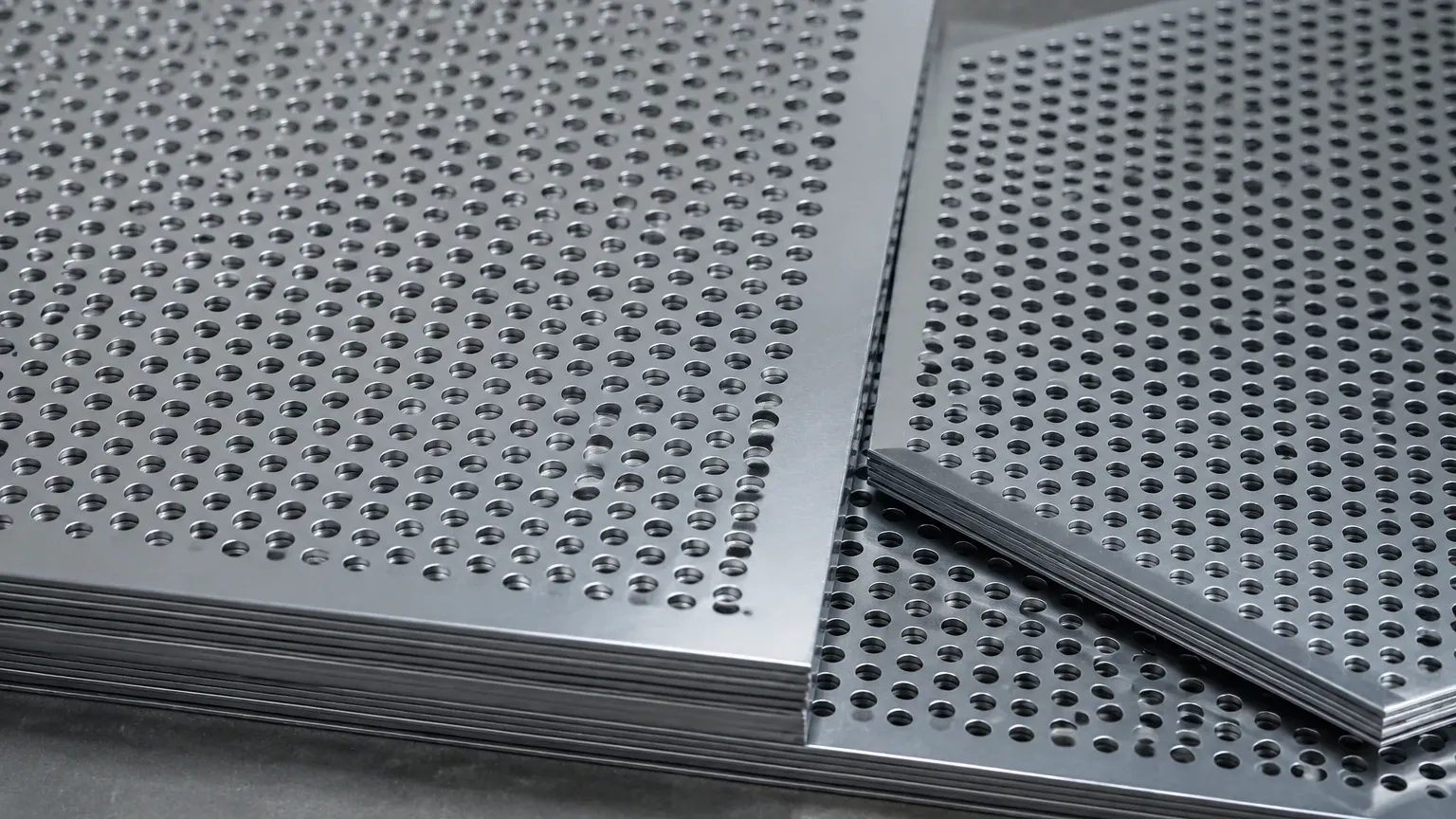
Standard round holes in a staggered pattern are generally the most cost-effective. However, custom requirements—such as square holes, slotted holes, or decorative hexagonal patterns—require specific die sets. The "Open Area" percentage also plays a role; higher open areas mean more material is removed, which can influence the structural stability of the sheet and the precision required during the punching process.
Material Selection: Impact on Performance and Cost
For B2B buyers in the Philippines, selecting a material based solely on the 4×8 perforated metal sheet price philippines can lead to premature failure. In filtration applications, the interaction between the fluid and the metal surface is critical.
Corrosion Resistance in Tropical Climates
The Philippines' climate accelerates oxidation. Using a low-grade perforated sheet in an outdoor or high-moisture environment leads to "tea staining" or pitting corrosion. This is why Kaifil emphasizes the use of high-quality stainless steel. While the upfront cost of SS316 is higher, its ability to withstand the local environment without degrading ensures that the filtration system remains operational for years, reducing the frequency of replacement.
Mechanical Strength and Durability
Perforated metal must often withstand high pressure, especially in hydraulic or high-flow water treatment systems. The manufacturing process must ensure that the margins (the unperforated areas around the edges) are calculated correctly to maintain the sheet's flatness and prevent buckling under load. Engineering these margins correctly is a hallmark of professional manufacturing, ensuring the sheet integrates perfectly into larger assemblies.
Technical Specifications: Hole Patterns and Open Area Calculations
Engineers must look beyond the dimensions of the sheet and focus on the geometry of the perforations. This technical data is vital for calculating flow rates, pressure drops, and particle retention.
The Importance of Open Area
The open area is the percentage of the sheet that consists of holes. It is calculated using the hole diameter (D) and the center-to-center spacing (P). For a 60-degree staggered round hole pattern, the formula is:
Open Area % = (D² × 90.69) / P²
A higher open area allows for greater throughput but reduces the mechanical strength of the sheet. In the Philippines market, where 4×8 sheets are often used as primary screens in agricultural or industrial processing, getting this calculation right is essential for operational efficiency.
Hole Diameter and Pitch
The relationship between the hole diameter and the thickness of the metal is a critical engineering constraint. Generally, the hole diameter should not be less than the material thickness to avoid tool breakage and ensure clean, burr-free edges. Precision in these measurements ensures that the 4×8 perforated metal sheet price philippines reflects a product that will not cause downstream issues in a filtration sequence.
Comparing Perforated & Expanded Metal for Industrial Use
While the focus is often on perforated sheets, it is worth comparing them to expanded metal, as both fall under the broader category of Perforated & Expanded Metal solutions.
Perforated Metal is created by punching holes into a solid sheet. This allows for extremely precise hole sizes and shapes, making it ideal for fine filtration and applications where exact flow control is required. It offers a smooth surface and high structural consistency.
Expanded Metal is made by shearing and stretching a single sheet. This process creates diamond-shaped openings without any material waste, making it a more cost-effective option for applications like safety walkways, machine guards, or coarse filtration where precise hole geometry is less critical. However, expanded metal has a textured, three-dimensional surface that may not be suitable for all sanitary or high-precision industrial processes.
In the Philippines, the choice between the two often comes down to the specific application. If the goal is precision sifting or chemical filtration, perforated metal is the standard. If the goal is structural reinforcement or basic screening, expanded metal may offer a lower price point.
Logistics and Procurement Strategies for the Philippine Region
Procuring industrial components in the Philippines involves navigating logistics and lead times. When inquiring about the 4×8 perforated metal sheet price philippines, it is important to consider the following:
* Customization vs. Stock: Standard 4×8 sheets with common hole sizes (e.g., 3mm or 5mm round holes) are often available with shorter lead times. However, custom filtration requirements—such as specific margin widths or non-standard alloys—require direct coordination with a manufacturer like Kaifil.
* Quality Certification: Ensure the supplier provides material mill certificates. In the B2B sector, verifying that "Grade 304" actually meets the ASTM or ISO standards for chemical composition is vital to prevent system failure.
* Shipping and Handling: 4×8 sheets are large and can be susceptible to bending if not crated properly. Professional suppliers use specialized packaging to ensure the sheets arrive flat and ready for fabrication.
Working with an OEM manufacturer allows for greater flexibility. Instead of settling for what is in stock locally, engineers can specify the exact parameters needed for their filtration system, often resulting in a more efficient design that justifies the shipping and import considerations.
Total Cost of Ownership and Long-term Value
The true 4×8 perforated metal sheet price philippines is not the figure on the initial invoice; it is the total cost of ownership (TCO) over the component's lifespan. A cheaper, poorly manufactured sheet may suffer from:
1. Burrs and Rough Edges: These can trap contaminants, leading to bacterial growth in food applications or increased pressure drop in hydraulic systems.
2. Inconsistent Hole Sizes: This leads to inaccurate filtration, allowing oversized particles to pass through and potentially damage downstream equipment like pumps or valves.
3. Material Fatigue: Poorly calculated open areas or low-grade alloys can lead to cracking under vibration or pressure cycles.
By investing in precision-engineered perforated metal, companies in the Philippines can extend their maintenance cycles and reduce downtime. High-quality stainless steel filtration components are easier to clean (CIP – Clean-In-Place) and more resistant to the aggressive chemicals used in industrial sanitation.
Conclusion
Selecting a 4×8 perforated metal sheet for industrial use in the Philippines requires a balance of technical specification and market awareness. While the 4×8 perforated metal sheet price philippines is a key factor in procurement, it must be weighed against the material's performance in tropical and industrial environments.
Whether your application requires the precision of perforated sheets for fine chemical filtration or the ruggedness of expanded metal for structural use, understanding the engineering behind the product is the first step toward a successful project. For those seeking high-performance, customized solutions, exploring professional Perforated & Expanded Metal options ensures that your filtration systems meet the highest standards of durability and efficiency.
Before finalizing a purchase, engineers should confirm material grades, verify open area calculations, and ensure that the manufacturer can meet the specific tolerances required for their industrial application. This technical diligence ensures that the chosen metal sheet provides reliable service throughout its intended operational life.
Download 4×8 Perforated Metal Sheet Price Philippines as a PDF
