


4×8 Perforated Metal Sheet Near Me
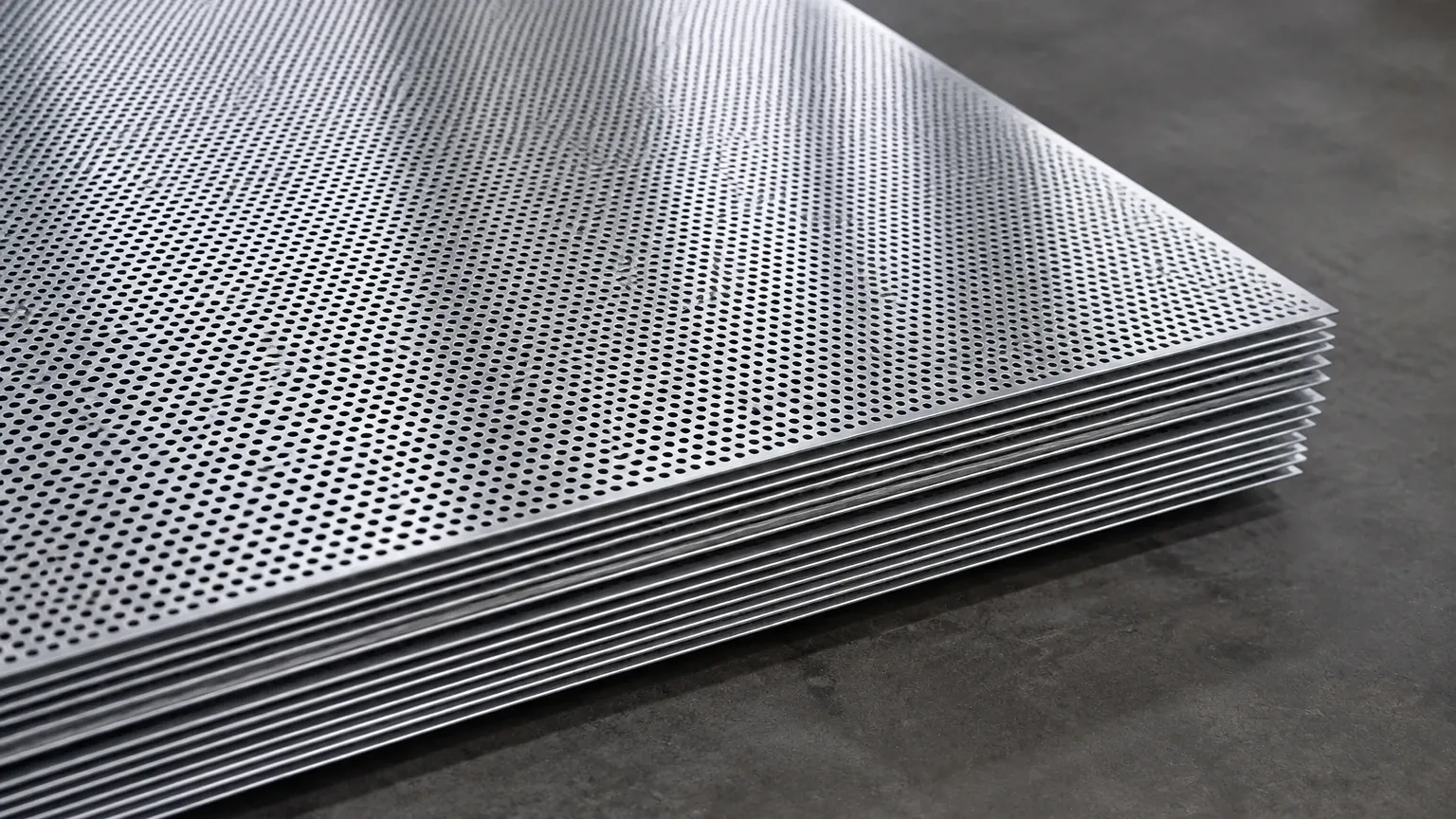
In industrial procurement and engineering design, the 4×8 perforated metal sheet remains a foundational component. Whether used as a support structure for fine wire mesh, a primary screen in heavy-duty filtration, or a protective guard in chemical processing plants, the dimensions of 4 feet by 8 feet (approx. 1220mm x 2440mm) represent the industry standard for sheet material. When technical professionals search for a "4×8 perforated metal sheet near me," the objective is often a balance between immediate logistical availability and the specific technical tolerances required for high-performance applications.
Selecting the right Perforated & Expanded Metal involves more than identifying a local supplier. It requires a deep understanding of material grades, hole patterns, open area percentages, and how these factors influence the total cost of ownership and the efficiency of the industrial process. For engineers in the chemical, food and beverage, and pharmaceutical sectors, the choice of a 4×8 sheet is the first step in a complex assembly or filtration system.
Understanding the Specifications of 4×8 Perforated Metal Sheets
The 4×8 format is ubiquitous because it aligns with standard manufacturing machinery and logistics frameworks. However, the "standard" nature of the sheet size does not imply that the specifications are uniform. For industrial applications, several critical variables must be defined before procurement.
Material Composition
In demanding environments, material selection is the primary determinant of longevity. While carbon steel and aluminum are common for architectural or general-purpose use, industrial filtration and processing often demand stainless steel.
* 304 Stainless Steel: The most common grade, offering excellent corrosion resistance for most industrial environments.
* 316L Stainless Steel: Preferred for pharmaceutical and marine applications due to its superior resistance to pitting and crevice corrosion in chloride-rich environments.
* Specialty Alloys: For high-temperature or highly acidic processes, alloys like Monel or Hastelloy may be required, though these are rarely found in off-the-shelf 4×8 stock and typically require custom manufacturing.
Hole Patterns and Geometry
The geometry of the perforations dictates both the mechanical strength of the sheet and its performance in fluid dynamics.
1. Round Holes: The most versatile and common pattern. Round holes offer a high degree of structural integrity and are easier to clean, making them ideal for food and beverage applications.
2. Square Holes: Often used when a higher open area is required for maximum airflow or visibility, though they may have lower structural stability under high-pressure loads compared to round holes.
3. Slotted Holes: Frequently utilized in sorting and sifting applications where the orientation of the particles matters.
Material Selection for Industrial Environments
When searching for a 4×8 perforated metal sheet near me, engineers must prioritize the chemical compatibility of the metal with the media being processed. In the context of industrial filtration, the perforated sheet often serves as the "backup" or support layer for a finer wire mesh. If the support sheet fails due to corrosion, the entire filtration assembly is compromised.
The Role of Gauge and Thickness
The thickness of a 4×8 sheet is typically measured in gauge or decimal inches. For industrial filtration components, thickness is a critical factor in managing pressure drops. A sheet that is too thin may deflect under the force of the fluid, leading to mechanical failure or bypass. Conversely, an unnecessarily thick sheet increases the weight and cost of the component without providing proportional benefits. Common thicknesses for 4×8 sheets range from 22 gauge (0.030") for light screening to 1/4" or thicker for heavy-duty industrial strainers.
Surface Finishes and Post-Processing
Industrial applications often require specific surface treatments to ensure compliance with safety and hygiene standards.
* Degreasing: Removing lubricants used during the punching process.
* Passivation: Essential for stainless steel to restore the protective oxide layer and prevent premature rusting.
* Electropolishing: Used in pharmaceutical and food industries to create a microscopically smooth surface that resists bacterial growth and is easier to sanitize.
Perforated vs. Expanded Metal: Engineering Trade-offs
While the search for a 4×8 perforated metal sheet near me is specific, engineers often evaluate whether expanded metal might be a more suitable alternative for certain parts of their project. Both Perforated & Expanded Metal have distinct advantages depending on the application.
Perforated Metal Characteristics
Perforated metal is created by punching holes into a solid sheet. This process allows for extremely precise control over hole size, shape, and spacing (pitch). For filtration, this precision is non-negotiable. It allows for the calculation of exact flow rates and ensures that the structural support provided to a mesh layer is uniform across the entire 4×8 surface.
Expanded Metal Characteristics
Expanded metal is produced by slitting and stretching the sheet simultaneously. This process creates diamond-shaped openings without any material waste, making it a cost-effective solution for structural supports, walkways, or safety guards. However, expanded metal lacks the precise filtration accuracy of perforated metal. It is also inherently "3D" (unless flattened), which may not be suitable for applications requiring a flush mounting of filter media.
Key Performance Metrics: Open Area and Filtration Efficiency
In any B2B procurement scenario involving perforated sheets, the "Open Area" percentage is the most vital technical metric. It is the ratio of the area of the holes to the total area of the sheet.
Calculating Open Area
For a standard 60-degree staggered round hole pattern, the formula for open area is:
% Open Area = (D² x 90.69) / P²
Where:
* D = Hole Diameter
* P = Pitch (the distance from the center of one hole to the center of the adjacent hole)
Impact on Pressure Drop
In filtration systems, a higher open area generally results in a lower pressure drop across the filter. However, as the open area increases, the mechanical strength of the 4×8 sheet decreases. Engineers must find the "sweet spot" where the sheet provides sufficient support for the internal pressure of the system while allowing for efficient flow. When sourcing a 4×8 perforated metal sheet near me, confirming these calculations with the manufacturer ensures that the final product will perform as expected under operational loads.
Sourcing Strategies: Local Availability vs. Technical Customization
The search for a "4×8 perforated metal sheet near me" often yields results from local metal service centers or hardware distributors. While these sources are excellent for immediate, small-scale needs, they may fall short for specialized industrial requirements.
The Limitations of Local Stock
Local distributors typically stock "commodity" patterns—usually round holes with standard staggered centers in common gauges of carbon steel or 304 stainless steel. If your application requires a specific 316L alloy, a non-standard hole size for precise filtration, or a specific margin (the unperforated area around the edges of the sheet), local stock is unlikely to suffice.
Advantages of Direct Manufacturer Engagement
Working directly with a specialized manufacturer like Kaifil provides several advantages over local generalist sourcing:
1. Custom Margins: For 4×8 sheets that need to be welded into a frame, having specific unperforated margins is critical for a clean, strong weld.
2. Precision Leveling: Large 4×8 sheets can develop internal stresses during the punching process, leading to "oil canning" or warping. Professional manufacturers use precision leveling equipment to ensure the sheet is perfectly flat.
3. Technical Documentation: B2B buyers in regulated industries (pharmaceutical, aerospace) require Mill Test Reports (MTRs) and Certificates of Conformance. Specialized manufacturers provide this documentation as a standard part of the quality control process.
Quality Assurance and Compliance in Metal Fabrication
When evaluating a supplier for a 4×8 perforated metal sheet, technical professionals should confirm the quality standards maintained by the facility. This is especially important when the metal will be used in the production of Perforated & Expanded Metal components for sensitive industries.
Burrs and Surface Integrity
The punching process naturally creates burrs on the "downside" of the sheet. In filtration, these burrs can snag fine mesh or create turbulence in fluid flow. High-quality perforated sheets undergo deburring processes to ensure smooth edges. When sourcing near you, it is advisable to ask about the supplier’s deburring capabilities.
Dimensional Tolerances
While the nominal size is 4×8, the actual dimensions can vary. Standard industry tolerances for length and width are typically +/- 1/8", but some precision applications require much tighter control. Furthermore, the "squareness" of the sheet—ensuring that the corners are exactly 90 degrees—is vital for automated assembly processes.
Application Focus: From Support to Final Product
In the context of Kaifil’s expertise, the 4×8 perforated metal sheet is often just the raw material for more complex filtration solutions.
* Filter Cartridge Cores: Perforated sheets are rolled and welded to form the inner core of high-pressure filter cartridges. The hole pattern must be perfectly aligned to ensure uniform flow and structural support for the pleated media.
* Industrial Strainers: Large-scale 4×8 sheets are fabricated into basket strainers for water treatment and chemical processing, where they act as the primary barrier for large particulates.
* Centrifuge Screens: In the food industry, specifically sugar and dairy processing, perforated metal sheets with extremely fine holes are used in centrifugal machines to separate solids from liquids.
Conclusion: Confirming Requirements Before Purchase
Before finalizing a purchase for a 4×8 perforated metal sheet near me, purchasing teams and engineers should consolidate their technical requirements into a clear specification sheet. This ensures that the quote received from a supplier—whether local or international—accurately reflects the needs of the application.
Checklist for Procurement:
* Material Grade: Is 304 sufficient, or does the environment require 316L?
* Hole Diameter and Pitch: Have the flow rate and pressure drop been calculated?
* Open Area: Does the percentage align with the system’s efficiency requirements?
* Thickness/Gauge: Is the sheet strong enough to withstand the operational pressure?
* Margins: Are specific unperforated borders required for secondary fabrication?
* Flatness: Does the application require precision leveling?
By focusing on these technical parameters, industrial professionals can move beyond simple proximity-based sourcing and secure components that contribute to the long-term reliability and efficiency of their filtration and processing systems. Whether the 4×8 sheet is used as a standalone screen or as a component in a complex custom filter, the quality of the perforation and the integrity of the metal are the foundations of industrial performance.
