


4mm Perforated Metal Sheet
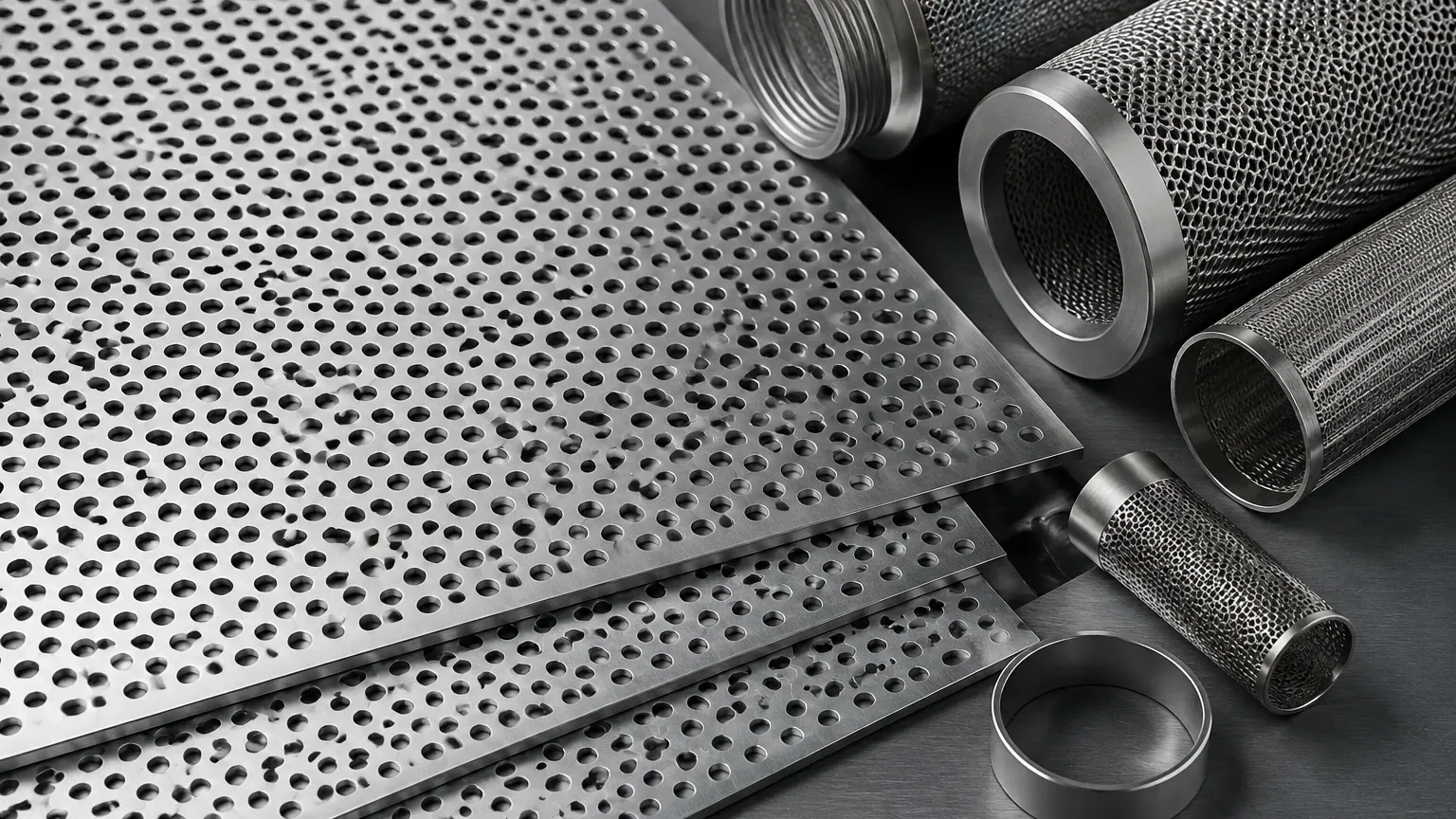
In the realm of industrial filtration and structural engineering, the 4mm perforated metal sheet represents a versatile and robust component capable of meeting demanding mechanical and fluid-handling requirements. Whether the 4mm specification refers to the thickness of the base plate or the diameter of the individual perforations, this particular dimension is a standard in heavy-duty applications where structural integrity and precise flow control are paramount.
As a specialized manufacturer, Kaifil provides advanced Perforated & Expanded Metal solutions tailored to the specific needs of the chemical, pharmaceutical, and food processing industries. Understanding the technical nuances of these materials—from material selection to open area calculations—is essential for engineers tasked with optimizing filtration efficiency and equipment longevity.
Technical Specifications of 4mm Perforated Metal
When specifying a 4mm perforated metal sheet, engineers must distinguish between the sheet thickness and the hole diameter. Both parameters significantly influence the performance of the component in an industrial setting.
Sheet Thickness vs. Hole Diameter
In many heavy industrial applications, a 4mm thick sheet is utilized for its high load-bearing capacity and resistance to mechanical deformation. Conversely, a 4mm hole diameter is a common choice for medium-coarse filtration, grain separation, and protective screening.
A critical engineering rule of thumb is the "thickness-to-hole ratio." Ideally, the hole diameter should not be smaller than the sheet thickness to prevent excessive tool wear and potential fracturing during the CNC punching process. For a 4mm thick sheet, a 4mm or larger hole diameter is standard, ensuring the structural stability of the bridges (the metal remaining between the holes).
Open Area and Flow Dynamics
The "Open Area" percentage determines how much fluid or air can pass through the sheet. For a 4mm perforated metal sheet with a staggered round hole pattern, the open area is calculated based on the hole diameter (D) and the pitch (P—the distance from the center of one hole to the center of the next).
A higher open area reduces pressure drop across the filter but may compromise the mechanical strength of the sheet. In hydraulic and water treatment applications, maintaining a balance between flow rate and the sheet's ability to withstand system pressure is vital.
Material Selection for Industrial Environments
Material choice is the most significant factor in determining the service life of a perforated sheet, especially in corrosive or high-temperature environments. Kaifil specializes in high-grade stainless steel alloys to ensure maximum durability.
Stainless Steel 304 (SS304)
SS304 is the most widely used material for 4mm perforated metal sheets. It offers excellent formability and good corrosion resistance for general industrial use. It is commonly found in architectural panels, protective guards, and food processing equipment where extreme chemical exposure is not a primary concern.
Stainless Steel 316 and 316L (SS316/316L)
For more demanding environments, such as chemical processing plants or marine applications, SS316 or its low-carbon variant, SS316L, is preferred. The addition of molybdenum enhances resistance to pitting and crevice corrosion, particularly in chloride-rich environments. In pharmaceutical filtration, SS316L is often the standard due to its superior corrosion resistance and ease of sterilization.
Specialized Alloys
In high-temperature applications or environments involving aggressive acids, specialty alloys like Duplex stainless steel or Monel may be used. These materials provide the necessary mechanical strength and chemical stability to prevent premature failure of the filtration system.
Manufacturing Processes: Perforation and Expansion
The production of Perforated & Expanded Metal involves distinct manufacturing techniques, each offering unique advantages for industrial users.
CNC Punching
The most common method for creating a 4mm perforated metal sheet is CNC punching. This process uses high-precision presses to punch holes into a solid metal plate. It allows for a wide variety of hole shapes—round, square, slotted, or hexagonal—and ensures consistent hole geometry across the entire surface. CNC punching is ideal for applications requiring specific margins (unperforated edges) for welding or mounting.
Laser Cutting
For thicker plates or complex hole patterns that exceed the capabilities of traditional punching, laser cutting is employed. While generally slower than punching, laser cutting offers unmatched precision and the ability to create intricate designs without the need for custom tooling. This is particularly useful for small-batch OEM components or prototypes.
The Expanded Metal Alternative
Expanded metal is created by simultaneously slitting and stretching the sheet, resulting in a diamond-shaped mesh. Unlike perforated metal, expansion produces no waste material, making it a cost-effective alternative for walkways, grates, and certain types of coarse filtration. However, for precise filtration accuracy and ease of cleaning, the perforated sheet remains the preferred choice in the pharmaceutical and food industries.
Industrial Applications of 4mm Perforated Metal Sheets
The versatility of the 4mm specification allows it to serve multiple functions across various sectors.
1. Chemical and Petrochemical Processing
In chemical reactors and distillation columns, perforated sheets serve as support plates for catalyst beds or as internal components in separators. A 4mm thick sheet provides the necessary rigidity to support the weight of the catalyst while maintaining the required flow characteristics.
2. Food and Beverage Industry
Perforated sheets are essential in grain drying, malting floors, and centrifugal liners. In these applications, the 4mm hole size is often used to allow moisture or smaller particles to pass through while retaining the primary product. Stainless steel construction ensures compliance with strict hygiene standards.
3. Water Treatment and Filtration
In large-scale water intake systems, 4mm perforated metal sheets act as primary screens to remove debris and protect downstream pumps and membranes. Their durability is crucial in handling the constant flow and potential impact of solid objects found in raw water sources.
4. Acoustic and Architectural Applications
Beyond filtration, these sheets are used for sound attenuation in industrial machinery enclosures. The perforations allow sound waves to pass into absorbing material, significantly reducing noise pollution in factory environments.
Engineering Considerations: Strength and Pressure Drop
When integrating a 4mm perforated metal sheet into a system, engineers must perform several critical evaluations to ensure performance expectations are met.
Mechanical Strength and Deflection
A 4mm thick sheet offers substantial resistance to bending. However, under high pressure or heavy loads, the sheet may still deflect. Engineers must calculate the maximum allowable stress and ensure that the support structures (such as frames or ribs) are spaced correctly to prevent permanent deformation.
Pressure Drop ($ΔP$)
Every perforated sheet introduces a resistance to flow. The pressure drop is influenced by the fluid's velocity, viscosity, and the sheet's open area. A 4mm thick sheet has a longer "bore" (the depth of the hole) than thinner sheets, which can increase turbulence and slightly higher pressure drops at high velocities. This must be accounted for in the pump sizing and system design.
Edge and Margin Requirements
For ease of installation, many industrial filters require "plain margins"—areas at the edges of the sheet without perforations. These margins facilitate clean welding to flanges or frames. Specifying the exact width of these margins is a critical step in the custom manufacturing process.
Customization and OEM Solutions
At Kaifil, we recognize that standard off-the-shelf components rarely meet the exacting needs of specialized industrial processes. Our OEM capabilities allow for the production of customized 4mm perforated metal sheets that align perfectly with your technical drawings.
Custom Hole Patterns
While round holes are standard, certain applications benefit from slotted or square holes. Slotted holes are often used in vibrating screens to prevent blinding (clogging), while square holes offer a higher open area for increased flow. We work with clients to determine the optimal geometry for their specific filtration challenges.
Secondary Processing
Beyond perforation, we provide secondary services such as leveling (to ensure the sheet is perfectly flat), shearing, rolling, and welding. This allows us to deliver ready-to-install filter cartridges or screen assemblies, reducing the assembly time for our customers.
Quality Assurance and Purchasing Criteria
For purchasing teams and engineers, selecting a reliable supplier is as important as the technical specifications themselves. When evaluating a 4mm perforated metal sheet, consider the following quality benchmarks:
* Dimensional Accuracy: Ensure the hole diameter and pitch meet the tolerances required for your filtration accuracy.
* Surface Finish: In food and pharmaceutical applications, a smooth, burr-free surface is essential to prevent bacterial growth and facilitate cleaning.
* Material Certification: Always request Mill Test Reports (MTRs) to verify the chemical composition and mechanical properties of the stainless steel used.
* Flatness: Large sheets can warp during the punching process. Professional leveling is required to ensure the sheet meets industrial flatness standards.
Conclusion
The 4mm perforated metal sheet is a fundamental component in modern industrial infrastructure. Its balance of strength, durability, and customizable flow characteristics makes it indispensable for filtration, separation, and structural protection. By selecting the appropriate material grade and optimizing the perforation pattern, engineers can significantly enhance the efficiency and lifespan of their equipment.
For more information on material compatibility, custom designs, or to request a technical consultation for your next project, explore our full range of Perforated & Expanded Metal solutions. Kaifil remains committed to delivering precision-engineered filtration components that withstand the most demanding industrial environments.
