


Perforated Metal Panels 4×8
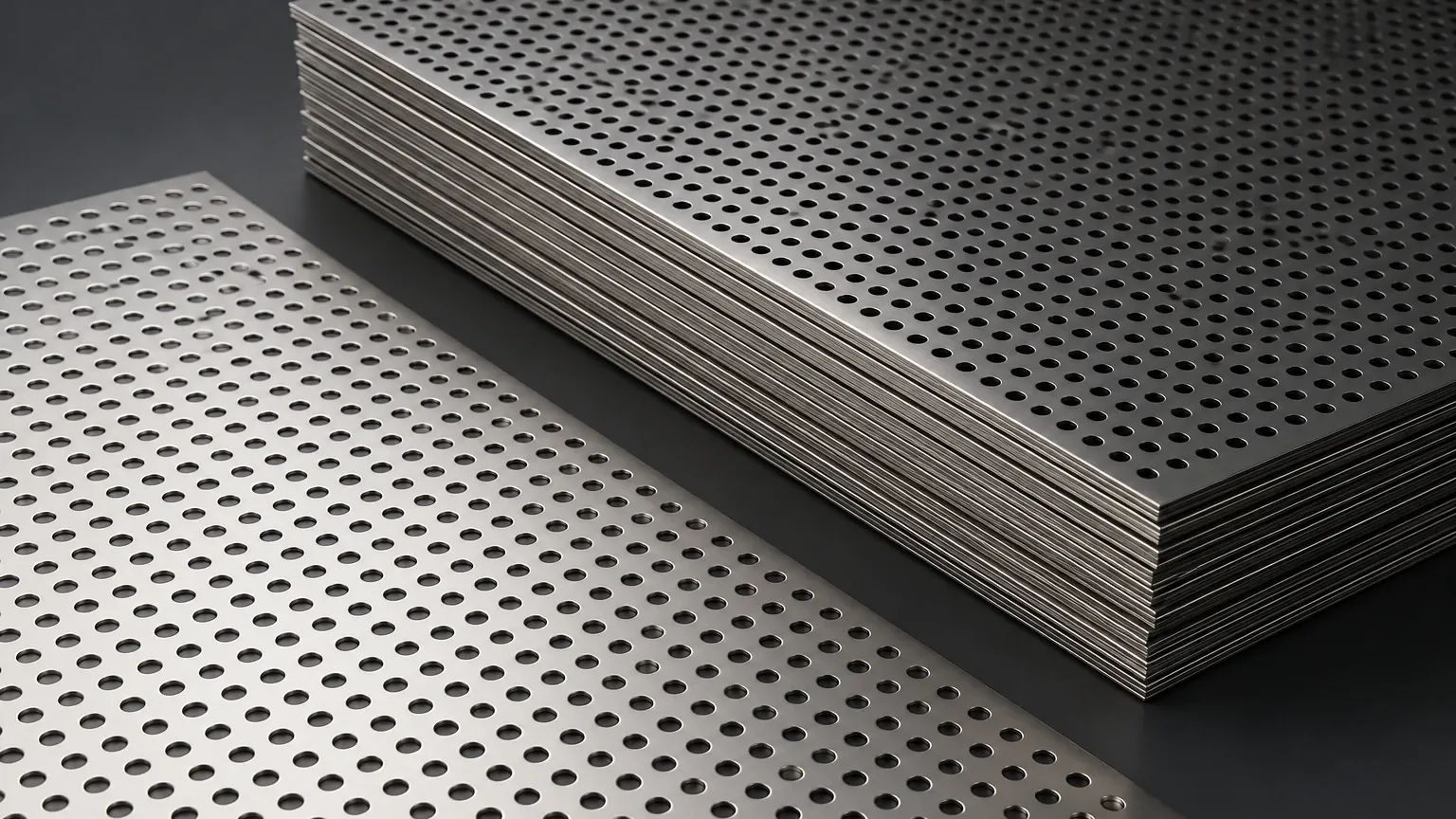
In the landscape of industrial filtration and structural engineering, the specification of components often begins with standardized dimensions that balance material efficiency with ease of integration. Among these, perforated metal panels 4×8 (4 feet by 8 feet) represent a cornerstone for many fabrication projects. These dimensions—standard across global metal supply chains—provide a versatile canvas for engineers to design filtration supports, protective guards, and fluid distribution components.
For technical professionals and procurement teams, selecting the right perforated panel involves more than just choosing a size. It requires a deep understanding of material properties, perforation patterns, and the mechanical implications of the manufacturing process. This guide examines the technical specifications, engineering considerations, and industrial applications of these panels, with a focus on their role in high-performance filtration environments.
Understanding Perforated Metal Panels 4×8 in Industrial Contexts
The 4×8 foot panel (approximately 1220mm x 2440mm) is the industry standard for sheet metal. This size is favored because it aligns with standard CNC punching equipment, laser cutting beds, and shipping pallet dimensions. In industrial filtration, these panels are rarely used as-is; they typically serve as the raw material for secondary fabrication processes, such as rolling into filter cylinders, forming support cages, or being welded into large-scale intake screens.
When specifying Perforated & Expanded Metal for a project, the 4×8 format allows for optimized nesting of parts. For instance, an engineer designing multiple small filter cartridges can minimize scrap by calculating the maximum yield from a single 4×8 sheet. This efficiency directly impacts the total cost of ownership, particularly when working with high-grade alloys like stainless steel.
Material Selection and Grade Specifications
The performance of perforated metal panels 4×8 is fundamentally tied to the alloy from which they are manufactured. In the sectors Kaifil serves—such as chemical processing, pharmaceuticals, and food and beverage—material purity and corrosion resistance are non-negotiable.
Stainless Steel 304 and 304L
As the most common grade for industrial applications, Type 304 offers excellent formability and weldability. It is suitable for general filtration tasks where exposure to harsh chemicals is limited. The "L" (low carbon) variant is preferred for components requiring extensive welding to prevent carbide precipitation.
Stainless Steel 316 and 316L
For more demanding environments, such as marine applications or chemical processing involving chlorides, Type 316 is the standard. The addition of molybdenum enhances pitting and crevice corrosion resistance. In pharmaceutical and food-grade filtration, 316L is often mandated to ensure the highest levels of hygiene and resistance to aggressive cleaning agents.
Special Alloys
Beyond standard stainless steel, perforated panels may be produced from duplex stainless steels, nickel alloys, or aluminum, depending on the weight requirements, temperature extremes, or specific chemical compatibility needed for the application.
Technical Parameters: Hole Patterns and Open Area
The functionality of perforated metal panels 4×8 is defined by the perforation pattern. This determines the "open area percentage," which is a critical calculation for any engineer concerned with flow rates and pressure drops.
Round Hole Patterns
Round holes are the most common due to their structural integrity and the relative ease of the punching process. They are typically arranged in a 60-degree staggered pattern, which provides the highest strength-to-weight ratio and uniform open area.
* Calculation Tip: For a 60-degree staggered round hole pattern, the open area percentage is calculated using the formula:
`Area % = (D² × 90.69) / P²`
(Where D is the hole diameter and P is the pitch/center-to-center distance).
Square and Slotted Holes
Square holes offer a higher open area, which is beneficial for high-flow applications but results in lower structural rigidity. Slotted holes are often used for sorting or straining applications where the shape of the particles being filtered is elongated.
Pitch and Bridge
The "pitch" is the distance from the center of one hole to the center of the next. The "bridge" is the solid metal remaining between the holes. Ensuring an adequate bridge is vital for the structural stability of the 4×8 panel, especially if it will be subjected to high differential pressures in a hydraulic or water treatment system.
The Role of Perforated & Expanded Metal in Filtration Systems
In industrial filtration, perforated metal panels 4×8 serve several distinct functions. While they can act as primary filters for large debris, their most common role is as a structural support for finer filter media.
1. Support Cores for Cartridges: In high-pressure hydraulic or chemical filters, a fine wire mesh or pleated synthetic media is wrapped around a perforated metal core. The core provides the mechanical strength to withstand the collapse pressure (differential pressure) while allowing the fluid to pass through with minimal resistance.
2. Outer Protectors: Perforated panels are often used as outer shrouds to protect delicate inner filter layers from mechanical damage during installation or backwashing cycles.
3. Intake Screens: Large 4×8 panels are frequently used to fabricate intake screens for water treatment plants or cooling systems, where they prevent larger objects from entering the pump system.
4. Diffusers: In gas or liquid flow systems, perforated metal helps to distribute flow evenly across the surface of a secondary filter medium, preventing "channeling" and extending the life of the filter.
Engineering Evaluation: Structural Integrity and Pressure Drop
When integrating perforated metal panels 4×8 into a system, engineers must perform a dual-track evaluation: mechanical strength vs. hydraulic performance.
Structural Integrity
A 4×8 panel’s rigidity is influenced by the material thickness (gauge) and the open area. A high open area (e.g., 60%+) significantly reduces the panel's ability to resist bending or tension. If the panel is to be used in a pressurized vessel, the engineer must calculate the maximum allowable pressure based on the yield strength of the remaining metal bridges.
Pressure Drop (ΔP)
Every perforation introduces a restriction to the flow. In B2B industrial applications, minimizing the pressure drop is essential for energy efficiency. A common mistake is selecting a hole size that is too small for the required flow rate, leading to high turbulence and energy loss. Engineers should consult flow coefficient charts specific to the perforation pattern to ensure the system operates within its designed parameters.
Customization and OEM Manufacturing with Kaifil
While standard perforated metal panels 4×8 are readily available, most industrial projects require some level of customization to meet specific performance targets. Kaifil specializes in bridging the gap between raw material and finished filtration components.
Precision Punching and Tolerances
Standard commercial tolerances for 4×8 sheets may not be sufficient for precision engineering. OEM manufacturing allows for tighter tolerances on hole diameters, pitch, and panel flatness. This is particularly important when the panels are to be automatically welded or integrated into complex assemblies.
Margins and Blank Areas
A "margin" is the unperforated area around the edges of the sheet. For 4×8 panels intended for further fabrication, specifying custom margins is crucial. For example, a 1-inch solid margin on all sides may be required for welding the panel into a frame. Without specifying this, the punching process may run to the very edge of the sheet, making subsequent welding difficult and structurally unsound.
Surface Finishing
Depending on the application, panels may require post-perforation treatments. These include:
* Deburring: Removing the sharp edges (burrs) created by the punch, essential for safety and to prevent flow interference.
* Pickling and Passivation: Chemically cleaning the stainless steel to restore its corrosion-resistant oxide layer.
* Electropolishing: Providing a high-luster, ultra-clean surface often required in the pharmaceutical and food industries.
Key Considerations for Procurement and Specification
Before finalizing an order for perforated metal panels 4×8, purchasing teams and engineers should confirm the following technical details with their manufacturer to avoid project delays or performance failures:
* Material Grade: Ensure the specific alloy (e.g., 316L vs 304) is documented with a Material Test Report (MTR).
* Hole Size and Shape: Define the diameter and whether the holes should be round, square, or slotted.
* Pattern Arrangement: Specify staggered (usually 60 degrees) or straight-line patterns.
* Open Area Percentage: Confirm that the calculated open area meets the flow requirements of the system.
* Gauge/Thickness: Use decimal measurements (e.g., 0.060") rather than gauge numbers to avoid ambiguity, as gauge standards can vary between materials.
* Flatness Requirements: Perforating metal can introduce internal stresses that cause the sheet to curl. If the 4×8 panel must be perfectly flat for CNC machining, specify a leveling process.
* End Patterns: Determine if the pattern should be finished (complete holes at the edges) or unfinished (partial holes).
By addressing these factors during the design and procurement phase, industrial professionals can ensure that their use of perforated metal panels 4×8 results in a durable, efficient, and cost-effective filtration solution. Whether used as a simple strainer or a complex support structure, the quality of the perforated component is fundamental to the integrity of the entire industrial process.
