


Perforated 5
In the landscape of industrial filtration and structural engineering, the specification "perforated 5" typically refers to a metal sheet or component featuring a 5mm hole diameter. This specific dimension is a critical standard in medium-to-coarse filtration, serving as the primary barrier in strainers, the structural core for high-pressure filter cartridges, and the protective screening for industrial machinery. Understanding the technical nuances of perforated 5 materials is essential for engineers tasked with optimizing flow rates, mechanical strength, and filtration efficiency.
At Kaifil, we specialize in the precision manufacturing of Perforated & Expanded Metal solutions. By integrating advanced punching technology with deep metallurgical expertise, we provide components that meet the rigorous demands of the chemical processing, pharmaceutical, and food and beverage sectors. This article examines the engineering considerations, material behaviors, and application-specific benefits of utilizing a 5mm perforation profile in industrial environments.
Understanding the Technical Specifications of Perforated 5 Metal
When an engineer specifies a "perforated 5" pattern, the hole diameter is only one part of the equation. To determine the performance of the sheet, one must also define the pitch (the distance between the centers of adjacent holes) and the hole arrangement. These factors collectively dictate the "open area" percentage, which is the most vital metric for fluid dynamics and filtration capacity.
Hole Arrangement and Pitch
The most common arrangement for a 5mm hole is the 60-degree staggered pattern. This configuration provides the highest structural integrity and the most uniform distribution of open area. For example, a perforated 5mm hole with an 8mm staggered pitch results in an open area of approximately 35%. Conversely, a straight-row pattern with the same dimensions would offer lower mechanical stability under pressure, as the "bridges" (the metal remaining between the holes) are aligned in a way that creates clear lines of potential failure.
Calculating Open Area
For a staggered pattern, the formula for open area is:
* Open Area % = (D² × 90.69) / P²
*(Where D = Hole Diameter and P = Pitch)*
For a perforated 5 specification, adjusting the pitch allows engineers to fine-tune the balance between flow resistance and the sheet's ability to withstand hydraulic shock. In heavy-duty hydraulic applications, a smaller open area might be preferred to ensure the filter cartridge core does not collapse under high differential pressure.
Material Performance: Stainless Steel vs. Alternative Alloys
The choice of material for perforated 5 components is dictated by the operating environment, specifically regarding temperature, chemical exposure, and mechanical stress. While carbon steel and aluminum are available, stainless steel remains the industry standard for high-performance filtration.
Stainless Steel 304 and 316L
Stainless steel 304 is the most common choice for general industrial use, providing excellent corrosion resistance and formability. However, in pharmaceutical and marine environments, 316L is mandated due to its molybdenum content, which offers superior resistance to pitting and crevice corrosion in chloride-rich environments. For perforated 5 applications involving aggressive chemicals or high-temperature steam sterilization (SIP), 316L ensures a longer service life and prevents metallic contamination of the process fluid.
Mechanical Properties
The perforation process introduces internal stresses into the metal. At Kaifil, we employ precision flattening and annealing processes to ensure that the final perforated 5 sheet remains dimensionally stable. This is particularly important when the material is destined to be rolled into cylinders for use as support cores in stainless steel filter cartridges. Any deviation in flatness or hole alignment can lead to gaps in the welding seam, compromising the integrity of the entire filtration unit.
Fluid Dynamics and Open Area Calculations
In industrial filtration, the perforated 5 layer often acts as a "pre-filter" or a support structure for a finer wire mesh. The fluid dynamics at this interface are complex. If the open area of the perforated support is too low, it creates localized high-velocity zones, which can cause "impingement erosion" on the finer mesh layer.
Pressure Drop Considerations
A 5mm hole is relatively large in the context of precision filtration, meaning the initial pressure drop (clean ΔP) across the perforated 5 sheet is usually negligible. However, as the filter cake builds up, the geometry of the 5mm holes becomes the foundation for the cake's structure. Engineers must ensure that the total open area of the perforated support is at least 2 to 3 times the cross-sectional area of the inlet pipe to minimize energy losses within the system.
Turbulence and Flow Distribution
The staggered 5mm pattern helps in breaking up laminar flow and promoting a degree of turbulence that can be beneficial in certain heat exchange applications or when mixing additives into a process stream. By selecting the correct pitch for the perforated 5 pattern, engineers can optimize the flow distribution across the entire surface of the filter media, preventing "dead zones" where bacteria or sediment might accumulate.
Industrial Applications in Filtration and Structural Support
The versatility of the perforated 5 specification makes it a staple in various industrial sectors. Its primary role is often to provide a balance between visibility, ventilation, and physical protection.
Support Cores for Filter Cartridges
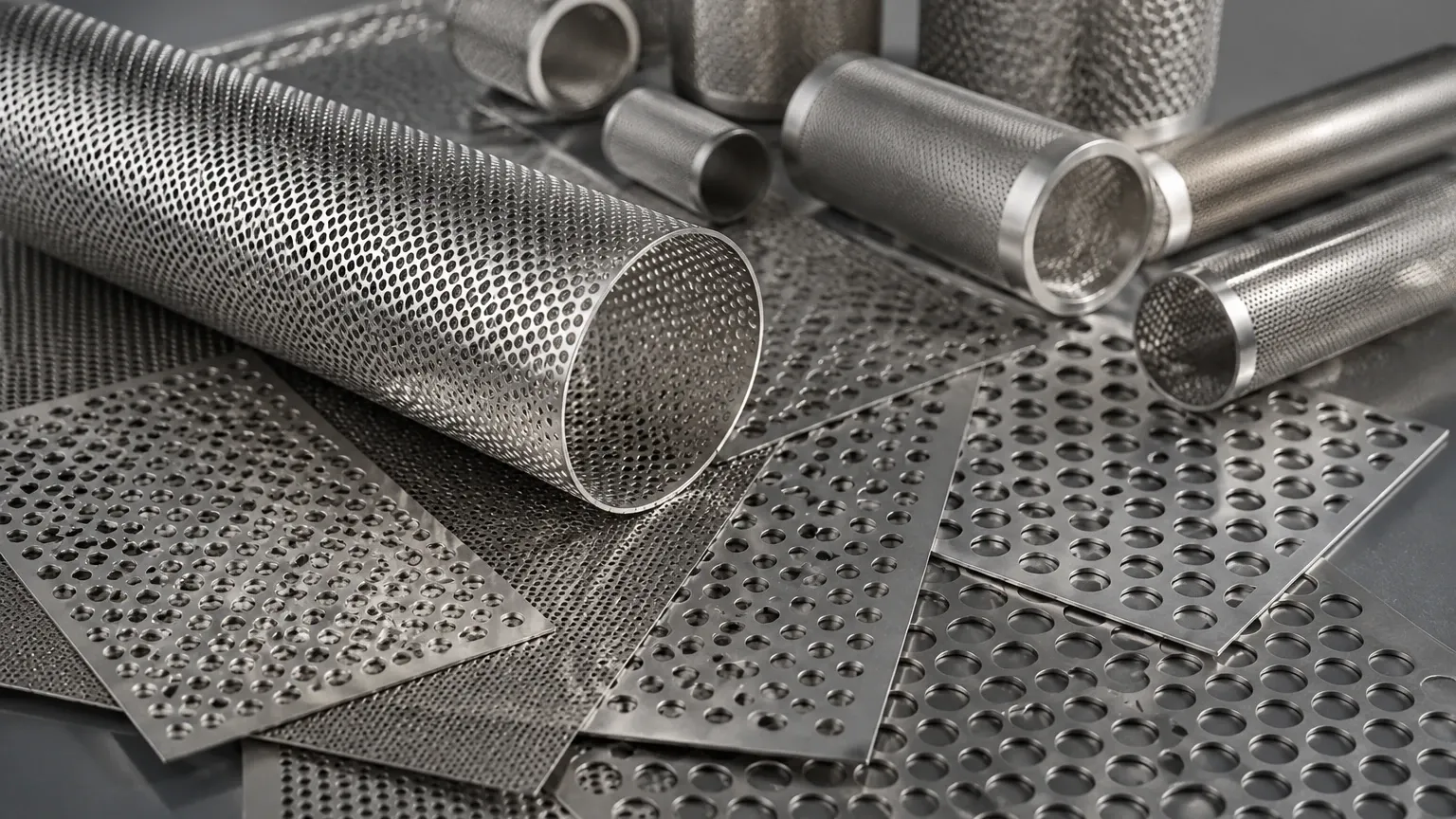
In high-pressure hydraulic and liquid processing systems, fine wire mesh filters lack the structural rigidity to withstand the pressure of the fluid. A perforated 5 stainless steel tube serves as the internal skeleton. The 5mm holes allow for high flow rates while the thick metal bridges provide the hoop strength necessary to prevent the cartridge from bursting or collapsing during pressure spikes.
Industrial Strainers and Baskets
For coarse filtration in water treatment or food processing (such as removing large particulates from fruit juices or cooling water), a perforated 5 sheet is used as the primary filter media. It is robust enough to be cleaned mechanically with brushes or high-pressure water jets without deforming the holes, a significant advantage over woven wire mesh in heavy-duty cleaning cycles.
Protective Screening and Guards
Beyond filtration, perforated 5 sheets are used as safety guards for industrial fans and rotating machinery. The 5mm aperture is small enough to prevent most tools and debris from entering the machinery while allowing for maximum airflow to prevent overheating. In these applications, the aesthetic finish and the absence of burrs—achieved through Kaifil’s precision punching and deburring—are critical for both safety and equipment longevity.
Manufacturing Precision and Customization Options
Producing high-quality perforated 5 metal requires more than just punching holes. The manufacturing process must be tightly controlled to ensure consistency across large production runs.
Precision Punching and Tooling
At Kaifil, we utilize CNC-controlled multi-punch presses. This allows us to maintain extremely tight tolerances on the 5mm hole diameter and the pitch. Variations in hole size, even by a fraction of a millimeter, can lead to inconsistent filtration performance. Our tooling is regularly inspected and replaced to prevent the formation of "slugs" or ragged edges that could trap contaminants.
Custom Margins and Blank Areas
Unlike standard off-the-shelf perforated sheets, industrial components often require "unperforated margins" or specific blank areas for welding and mounting. We customize the perforated 5 layout to include solid borders, which simplifies the assembly process for our customers and increases the overall strength of the finished part. This is especially useful for custom-designed Perforated & Expanded Metal components used in unique OEM equipment.
Secondary Operations
After punching, the metal often requires degreasing, pickling, or passivating, especially for pharmaceutical and food-grade applications. These treatments remove residual oils from the manufacturing process and enhance the chromium oxide layer on the stainless steel, ensuring maximum corrosion resistance from day one.
Maintenance, Cleaning, and Longevity in Demanding Environments
One of the primary reasons engineers select perforated 5 stainless steel over synthetic alternatives is its durability and ease of maintenance. In a B2B environment, the total cost of ownership (TCO) is heavily influenced by how often a component needs to be replaced.
Cleaning Protocols
Perforated 5 components are highly compatible with Clean-in-Place (CIP) systems. The smooth surfaces of the punched holes, when properly deburred and polished, do not provide easy attachment points for biofilms or scale. For stubborn deposits, these metal components can withstand ultrasonic cleaning, chemical solvents, and high-temperature steam without losing structural integrity.
Assessing Wear and Replacement
While stainless steel is exceptionally durable, the high-velocity flow of abrasive slurries can eventually wear down the bridges of a perforated 5 sheet. Engineers should monitor the "bridge thickness" during routine inspections. If the bridges thin significantly, the risk of mechanical failure increases. However, compared to expanded metal or wire mesh, perforated sheets generally offer a more predictable wear pattern and a longer replacement cycle.
Engineering Checklist for Specifying Perforated 5
Before finalizing a purchase order for perforated 5 materials, technical teams should confirm the following parameters to ensure the product is fit for purpose:
1. Material Grade: Is 304 sufficient, or does the chemical environment require 316L or a duplex stainless steel?
2. Open Area Requirement: Based on the desired flow rate and maximum allowable pressure drop, what pitch is required for the 5mm holes?
3. Sheet Thickness (Gauge): Does the thickness provide enough mechanical strength for the intended pressure, or will it be supported by an external frame?
4. Finish Requirements: Does the application require a 2B finish, electropolishing, or simple degreasing?
5. Dimensional Tolerances: What are the acceptable variances for the overall sheet dimensions and the unperforated margins?
By addressing these factors, procurement teams can avoid costly downtime and ensure that the filtration system operates at peak efficiency. Kaifil remains committed to supporting these engineering decisions through technical consultation and high-quality manufacturing of customized metal filtration solutions.
For more information on our capabilities or to request a technical data sheet for your specific project, please visit our product page for Perforated & Expanded Metal.
