


Automotive Paint Strainers
In the automotive industry, the quality of a vehicle's finish is directly proportional to the purity of the coating materials applied. Even the most advanced spray equipment cannot compensate for particulate contamination within the paint itself. Automotive paint strainers serve as the primary line of defense against surface defects, ensuring that primers, basecoats, and clearcoats are free from clumps, undissolved pigments, and airborne debris. For industrial-scale painting operations and OEM applications, the selection of filtration components—specifically durable Strainers & Baskets—is a critical engineering decision that affects both the aesthetic outcome and the operational efficiency of the paint line.
The Critical Function of Filtration in Automotive Finishing
Automotive coatings are complex chemical formulations. During storage, transport, or mixing, these fluids can develop skinning, micro-clumps, or collect environmental dust. If these particulates reach the spray nozzle, they cause two primary issues: equipment failure and surface imperfections.
From an equipment standpoint, solids can clog the precision orifices of high-volume, low-pressure (HVLP) or electrostatic spray guns. This leads to inconsistent spray patterns, increased downtime for cleaning, and potential damage to expensive components. From a quality control perspective, particulates result in "seeds" or "nibs" in the finish. These defects require labor-intensive sanding and buffing or, in severe cases, a complete strip and repaint of the component.
Automotive paint strainers are designed to intercept these solids. By utilizing precise mesh openings, they allow the liquid coating to pass through while trapping any material exceeding the specified micron rating. In high-output industrial environments, these strainers are often integrated directly into the fluid delivery system or the mixing station to ensure continuous purity.
Material Engineering: Why Stainless Steel Strainers & Baskets?
While disposable paper and nylon strainers are common in small-scale repair shops, industrial automotive manufacturing and large-scale refinishing facilities require more robust solutions. Stainless steel is the gold standard for these applications due to several engineering advantages:
Chemical Compatibility
Automotive paints often contain aggressive solvents, including ketones, esters, and aromatic hydrocarbons. Unlike plastic or low-grade metal components, 304 and 316L stainless steel offer exceptional resistance to chemical degradation. This ensures that the filter medium does not leach contaminants into the paint or lose structural integrity over time, even when exposed to high-solids epoxies or solvent-borne urethanes.
Durability and Reusability
Industrial automotive paint strainers made from stainless steel wire mesh are designed for longevity. They can withstand the mechanical stresses of high-pressure fluid systems without tearing or deforming. Furthermore, their ability to be cleaned and reused makes them a more sustainable and cost-effective choice for high-volume lines compared to single-use alternatives.
Precision and Rigidity
Stainless steel mesh allows for extremely tight tolerances in aperture size. This precision is vital when filtering metallic or pearlescent paints, where the strainer must be fine enough to catch contaminants but coarse enough to allow the specialized effect flakes to pass through without being filtered out. The rigidity of a stainless steel basket ensures that the filtration area remains consistent under flow pressure, preventing "bypass" where fluid escapes around the edges of a sagging filter.
Understanding Mesh Specifications for Automotive Paint Strainers
Selecting the correct filtration fineness is a balance between flow rate and particulate capture. In the automotive sector, mesh sizes are typically categorized by the type of coating being processed:
1. Primers and Fillers: These materials have higher viscosities and often contain larger solids. A coarser mesh, typically ranging from 250 to 600 microns (approximately 30 to 60 mesh), is used to ensure adequate flow while removing large debris.
2. Basecoats (Color): Standard basecoats require finer filtration to ensure a smooth color laydown. Mesh sizes between 125 and 190 microns (80 to 120 mesh) are standard. For high-end finishes or those with fine metallic particles, even tighter tolerances may be required.
3. Clearcoats: As the final layer, clearcoats demand the highest level of purity. Any speck of dust is magnified by the gloss. Fine mesh strainers of 100 to 125 microns (120 to 150 mesh) are typically employed here.
Engineers must also consider the "open area" percentage of the mesh. A higher open area reduces pressure drop across the strainer, which is essential for maintaining consistent fluid delivery to the spray gun. When specifying automotive paint strainers, calculating the required surface area based on the pump's flow rate prevents the system from starving or cavitating.
Structural Design and Customization Options
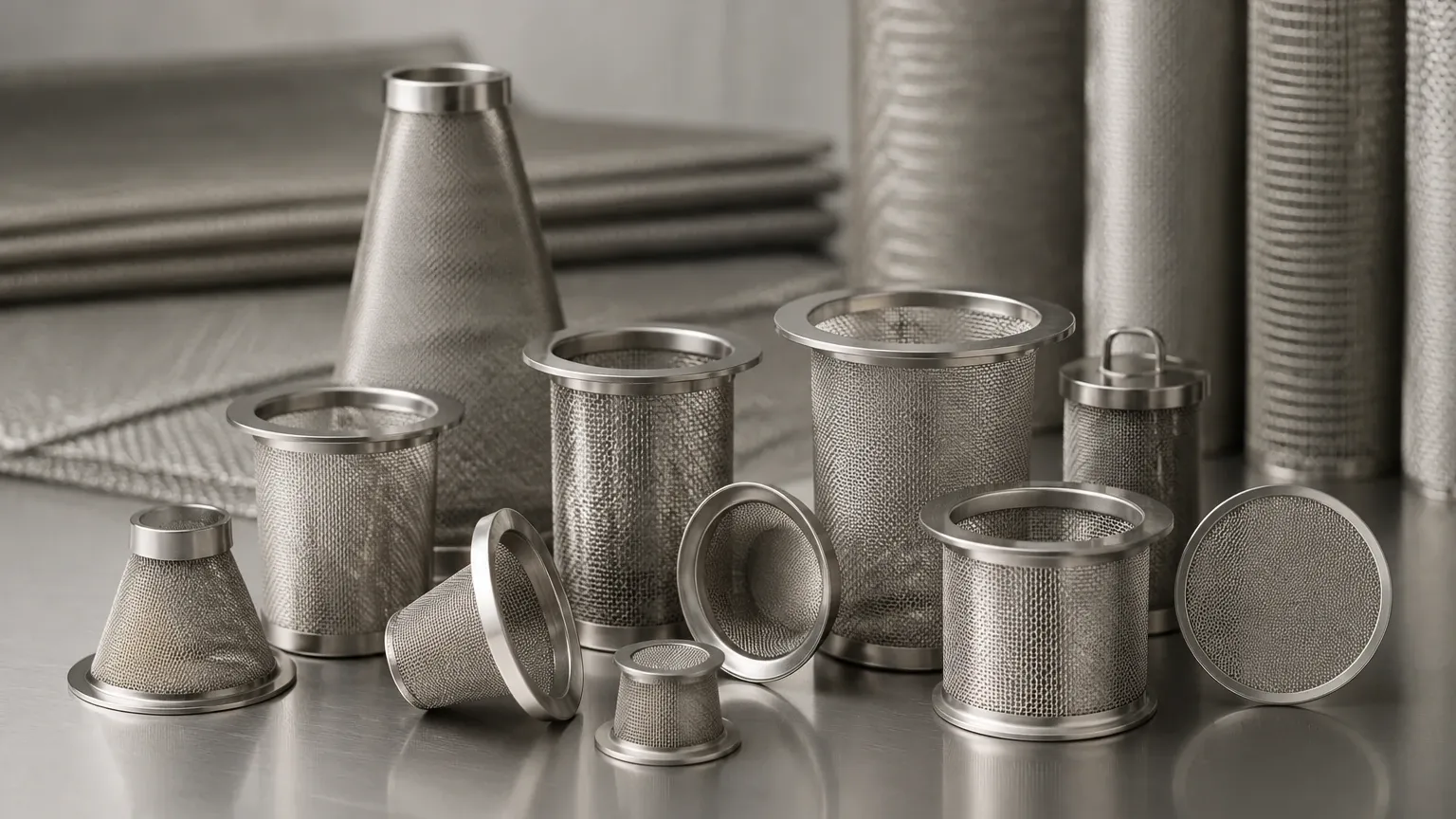
Filtration components in a paint line are rarely "one size fits all." Depending on the point of installation, the physical configuration of the strainer must be optimized for the housing or the mixing vessel. Common designs include:
* Conical Strainers: Often used in gravity-fed systems or at the intake of suction wands. Their shape provides a large surface area relative to their diameter, allowing for high dirt-holding capacity before flow is restricted.
* Basket Strainers: These are typically found in inline filter housings. They are designed for easy removal and cleaning. In industrial paint kitchens, duplex basket strainers allow for the cleaning of one filter while the other remains in operation, ensuring zero downtime.
* Cylindrical and Hat-Style Filters: These are frequently integrated into the handles of spray guns or the fluid outlets of pressure pots. They provide a final point-of-use filtration stage to catch any debris introduced during the hose assembly or fluid agitation.
Customization plays a vital role for OEM equipment manufacturers. Factors such as flange dimensions, reinforcement layers (using perforated metal to support fine wire mesh), and specialized coatings (to reduce paint adhesion and simplify cleaning) can be tailored to specific industrial requirements.
Operational Maintenance and Cleaning Protocols
For reusable stainless steel strainers, a standardized cleaning protocol is essential to maintain filtration performance. If paint is allowed to dry within the mesh, the effective filtration area is reduced, and the risk of "flake-off" (where dried paint chips re-enter the system) increases.
Cleaning Procedures
Immediately after use, strainers should be submerged in a compatible solvent. Ultrasonic cleaning is highly recommended for fine mesh, as it uses high-frequency sound waves to dislodge microscopic particles from the intersections of the wires that manual brushing cannot reach. Once cleaned, the strainer should be inspected for "blinded" (clogged) areas or mechanical damage such as broken wires.
Replacement Cycles
While stainless steel is durable, it is not infinite. Over time, repeated cleaning and exposure to high-pressure pulses can cause metal fatigue. In a B2B production environment, establishing a preventive maintenance schedule for replacing Strainers & Baskets is more cost-effective than risking a line stoppage or a batch of rejected parts. Signs that a strainer requires replacement include permanent deformation of the mesh, visible gaps in the weave, or an unexplained increase in pressure drop even after thorough cleaning.
Engineering Considerations for Industrial Paint Lines
When integrating filtration into a large-scale automotive painting operation, engineers must look beyond the mesh size. Several systemic factors influence the success of the filtration strategy:
* Viscosity vs. Temperature: Paint viscosity changes with ambient temperature. A strainer that performs well at 25°C may cause excessive pressure drop if the temperature falls and the paint thickens. In some cases, heated filtration systems are used to maintain consistent flow.
* Shear Sensitivity: Some modern waterborne coatings are shear-sensitive. Forcing these materials through a very fine mesh at high velocity can break down the emulsion or damage the pigments. Sizing the strainer for a lower velocity (by increasing surface area) mitigates this risk.
* Total Cost of Ownership (TCO): While the initial cost of a custom stainless steel basket is higher than a box of disposable strainers, the TCO is often lower in an industrial setting. Reduced waste disposal costs, improved uptime, and a significant reduction in rework labor contribute to a rapid return on investment.
Conclusion: Selecting the Right Filtration Partner
Achieving a flawless automotive finish requires a holistic approach to fluid purity. For engineers and purchasing teams, the goal is to source filtration components that provide repeatable precision and survive the rigors of a chemical-heavy environment. Whether the application involves a robotic spray line for OEM parts or a large-scale refinishing facility, the quality of the Strainers & Baskets used will define the reliability of the entire coating process.
When evaluating suppliers for automotive paint strainers, it is important to confirm their ability to provide specific micron ratings, their experience with 300-series stainless steel, and their capacity for custom fabrication. A well-engineered filtration solution does more than just catch dirt; it stabilizes the production process, protects expensive application equipment, and ensures that the final product meets the high aesthetic standards demanded by the automotive market.
