


All Clad Strainers
In the landscape of industrial fluid handling, the term "all clad" traditionally refers to a construction method where multiple layers of metal are bonded together to leverage the unique properties of each material—typically combining the thermal conductivity or structural strength of one metal with the corrosion resistance of another. For engineers and procurement specialists in the chemical, pharmaceutical, and food processing sectors, seeking out all clad strainers or fully stainless steel filtration components is a matter of ensuring process purity and equipment longevity.
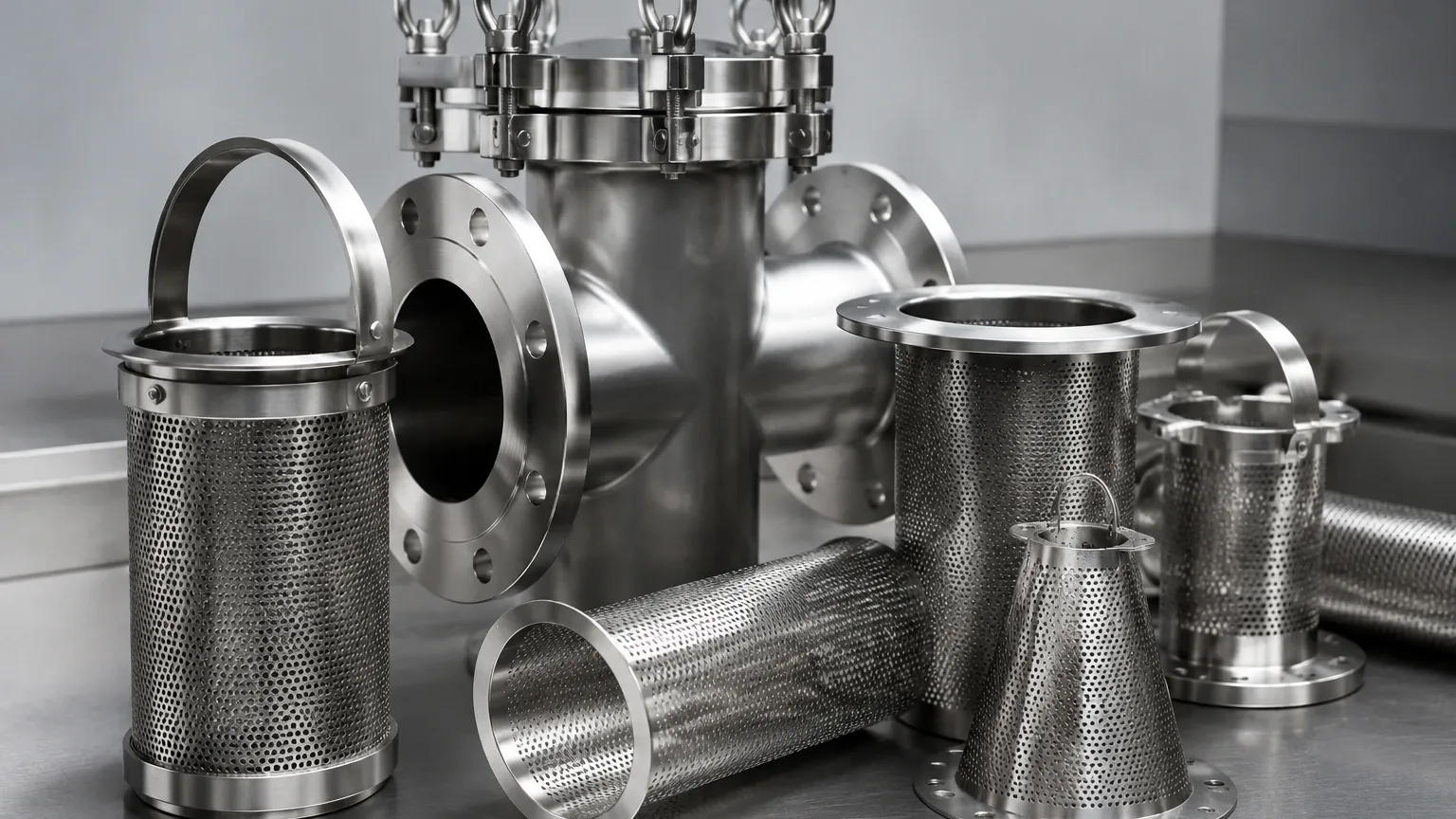
Industrial filtration requires more than just a simple mesh; it demands a robust mechanical structure capable of withstanding high differential pressures, abrasive particles, and aggressive chemical cleaning cycles. When evaluating Strainers & Baskets for heavy-duty applications, understanding the nuances of material cladding, alloy selection, and fabrication techniques is essential for optimizing the total cost of ownership and maintaining strict safety standards.
The Engineering Logic Behind All Clad and Multi-Layer Strainers
In industrial contexts, an "all clad" approach to strainer design often involves the use of multi-layered stainless steel wire mesh or composite metal plates. Unlike consumer-grade products, industrial all clad strainers are engineered to solve specific mechanical challenges. For instance, a single layer of fine mesh may provide the necessary filtration accuracy but lack the structural rigidity to survive a high-pressure surge.
By utilizing a clad or sintered multi-layer construction, manufacturers like Kaifil can bond a fine filtration layer between heavier support layers. This creates a monolithic structure that offers:
* Enhanced Mechanical Strength: The outer layers protect the delicate inner mesh from physical damage during installation or backwashing.
* Fixed Pore Geometry: Cladding or sintering ensures that the mesh openings do not shift under pressure, maintaining a consistent micron rating throughout the service life.
* Improved Heat Resistance: Multi-layer stainless steel components can operate in temperatures exceeding 500°C, far beyond the limits of polymer-based filters.
For technical teams, the transition from standard single-layer baskets to high-performance all clad strainers often results in fewer emergency shutdowns and a significant reduction in media migration risks.
Material Integrity: Why Stainless Steel Dominates
When discussing all clad strainers in a B2B environment, the discussion inevitably centers on stainless steel grades. The choice between 304, 316, or 316L stainless steel determines the strainer’s compatibility with the process fluid.
1. 304 Stainless Steel: Suitable for general industrial use, providing good corrosion resistance for water-based applications and mild chemicals.
2. 316/316L Stainless Steel: The industry standard for pharmaceutical and food-grade applications. The addition of molybdenum enhances resistance to pitting and crevice corrosion, particularly in chloride-rich environments.
3. Specialty Alloys: In highly aggressive chemical processing, strainers may require cladding with Hastelloy or Monel.
An "all clad" construction ensures that every wetted part—from the flange to the mesh to the support basket—is made of the same high-grade material. This eliminates the risk of galvanic corrosion, which occurs when two dissimilar metals are in contact within an electrolyte. For engineers, confirming that the entire assembly is "all clad" or fully stainless is a critical step in the specification process to prevent premature failure of the housing or the filter element itself.
Design Considerations for Industrial Strainers & Baskets
Selecting the right Strainers & Baskets involves more than matching a pipe size. Engineers must calculate several variables to ensure the filtration system does not become a bottleneck in the production line.
Open Area Ratio
The ratio of the open area of the strainer mesh to the cross-sectional area of the inlet pipe is a key performance indicator. A higher open area ratio (typically 4:1 or higher in industrial applications) results in a lower initial pressure drop and longer intervals between cleanings. All clad strainers with precision-engineered mesh allow for a high percentage of open area without sacrificing the structural integrity of the basket.
Micron Rating and Particle Retention
Whether the application requires coarse straining (measured in inches or millimeters) or fine filtration (measured in microns), the consistency of the mesh is paramount. In all clad designs, the filtration layer is often protected by a perforated metal sheet. This "clad" assembly prevents the mesh from deforming, which could otherwise allow oversized particles to pass through the system.
Flow Dynamics
Internal turbulence can lead to erosion of the strainer material over time. High-quality industrial strainers are designed to promote laminar flow as much as possible, reducing the mechanical stress on the wire mesh. Customization options, such as slanted baskets or specialized pleating, can further optimize flow for high-viscosity fluids like syrups or heavy oils.
Common Risks in Substandard Strainer Selection
Procurement teams may be tempted by lower-cost alternatives that do not adhere to strict "all clad" or high-grade stainless steel standards. However, the risks associated with substandard filtration components can be catastrophic in a B2B setting:
* Media Migration: If the wire mesh is not properly bonded or clad to the support structure, individual wires can break off and contaminate the downstream product. This is particularly dangerous in the food and pharmaceutical industries.
* Bypass Leakage: Poorly manufactured strainers may have gaps between the basket and the housing. Even a small gap can allow a significant portion of the fluid to bypass the filter, rendering the entire process ineffective.
* Corrosion Fatigue: Non-passivated welds or the use of inferior alloys in the support structure can lead to localized corrosion. This weakens the strainer, eventually leading to a structural collapse under normal operating pressures.
By specifying all clad strainers with verified material certifications (MTRs), engineers can mitigate these risks and ensure compliance with industry regulations such as FDA or ASME standards.
Customization and OEM Capabilities
No two industrial processes are identical, which is why customization is a hallmark of professional filtration manufacturing. Kaifil specializes in developing bespoke solutions that go beyond off-the-shelf components. When engineers require all clad strainers for unique geometries or specific environmental challenges, OEM capabilities become invaluable.
Customization options often include:
* Variable Mesh Configurations: Combining different mesh counts to create a graduated filtration effect.
* Reinforced Handle and Flange Designs: Ensuring the baskets can be easily removed and cleaned without deforming the sealing surfaces.
* Surface Finishes: Options such as electropolishing to reduce surface roughness, which is essential for preventing bacterial growth in sanitary applications.
* Magnetic Inserts: Integrating magnetic rods within the strainer basket to capture fine ferrous particles that might otherwise pass through a standard mesh.
Maintenance and the Total Cost of Ownership
While the initial investment in high-quality all clad strainers may be higher than standard components, the long-term savings are substantial. The durability of stainless steel and the structural stability of clad designs extend the replacement cycle significantly.
Cleaning Protocols
Industrial strainers are designed for reuse. The ability to withstand Clean-in-Place (CIP) or Steam-in-Place (SIP) cycles is a major advantage of all-stainless construction. Unlike disposable filters, all clad baskets can be ultrasonically cleaned or high-pressure washed repeatedly without losing their filtration accuracy.
Replacement Cycles
Engineers should monitor the differential pressure (ΔP) across the strainer. A consistent increase in ΔP after cleaning cycles indicates that the mesh is becoming permanently blinded or that the structure is deforming. High-quality strainers from reputable manufacturers like Kaifil are designed to maintain their performance characteristics over thousands of cleaning cycles, providing a much lower total cost of ownership compared to cheaper, less durable alternatives.
Conclusion: Making an Informed Selection
In the world of industrial filtration, "all clad strainers" represent the intersection of material science and mechanical engineering. Whether you are protecting a high-pressure pump, ensuring the purity of a chemical batch, or maintaining sanitary standards in a food processing plant, the integrity of your Strainers & Baskets is non-negotiable.
Before taking the next step in your procurement process, it is essential to confirm the specific alloy grades, the pressure ratings of the support structures, and the manufacturing standards used in the fabrication process. By partnering with a specialized manufacturer like Kaifil, technical teams can access the expertise needed to design and implement filtration solutions that are not only effective but also durable enough to withstand the most demanding industrial environments. Focusing on factual material performance and proven engineering designs will ensure that your filtration system remains a reliable asset for years to come.
