


Downpipe Strainers
In industrial infrastructure and large-scale facility management, the integrity of drainage and fluid transport systems depends heavily on the effectiveness of primary filtration. Downpipe strainers serve as the critical first line of defense, preventing coarse debris, sediment, and organic matter from entering piping networks where they can cause blockages, pump damage, or downstream contamination. Unlike residential-grade gutter guards, industrial downpipe strainers are engineered components designed to withstand high flow velocities, corrosive environments, and significant mechanical loads.
For engineers and facility managers, selecting the appropriate strainer involves a deep understanding of hydraulic dynamics, material science, and the specific requirements of the industrial process. Whether integrated into a chemical processing plant's drainage system or a pharmaceutical facility’s rainwater harvesting loop, these components must provide a balance between high filtration efficiency and minimal pressure drop.
Technical Design and Material Engineering
The performance of downpipe strainers is fundamentally tied to their construction materials and structural design. In industrial settings, stainless steel is the preferred material due to its superior strength-to-weight ratio and resistance to environmental degradation.
Stainless Steel Grades
Kaifil utilizes high-grade stainless steel, typically AISI 304 or 316, to manufacture these components.
- Type 304 Stainless Steel: Suitable for general industrial applications where moisture and standard atmospheric conditions are present. It offers excellent durability and cost-effectiveness for most standard drainage needs.
- Type 316 Stainless Steel: Essential for facilities located in coastal regions or those handling aggressive chemical runoff. The addition of molybdenum provides enhanced resistance to pitting and crevice corrosion, particularly in chloride-rich environments.
Structural Configurations
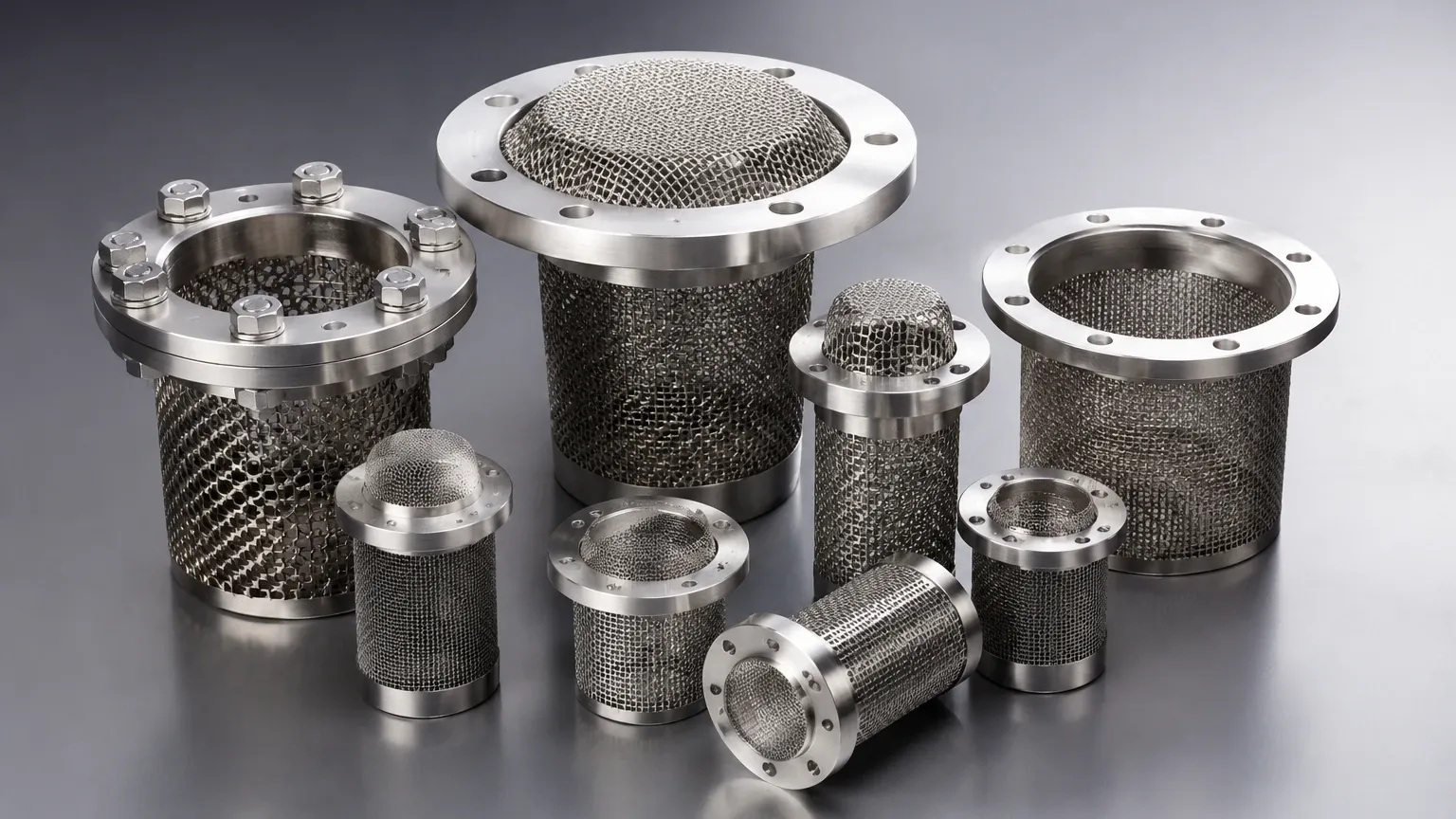
Industrial strainers are often categorized under the broader umbrella of Strainers & Baskets, reflecting their common design as removable inserts. The physical structure usually consists of a perforated metal body or a heavy-duty wire mesh reinforced by a rigid frame. For downpipe applications, the "balloon" or "dome" shape is common, as it allows water to flow around the base of the strainer even if the top is partially covered by debris, thereby preventing immediate overflow.
Hydraulic Performance and Flow Dynamics
One of the most critical engineering considerations when specifying downpipe strainers is the impact on hydraulic flow. A poorly designed strainer can act as a bottleneck, leading to water backup and potential structural damage to the building or piping system.
Open Area Ratio
The efficiency of a strainer is often measured by its "Open Area Ratio" (OAR). This is the ratio between the total area of the holes in the mesh or perforated plate and the cross-sectional area of the pipe. For industrial downpipe systems, an OAR of at least 3:1 or 4:1 is typically recommended. This ensures that even when the strainer is 50% clogged, the remaining open area still exceeds the cross-sectional area of the downpipe, maintaining design flow rates.
Pressure Drop (ΔP)
Every filtration element introduces some level of resistance to flow, known as pressure drop. In gravity-fed downpipe systems, the available head pressure is relatively low. Therefore, the strainer must be engineered to minimize ΔP. Engineers must calculate the maximum expected rainfall intensity (often based on 100-year storm data) and ensure the strainer’s flow coefficient (Cv) can accommodate the resulting volume without causing a significant rise in the water level above the intake.
Application-Specific Requirements
While the basic function of downpipe strainers remains consistent, the specific industrial context dictates the final design specifications. Different sectors face unique challenges that influence the choice of mesh size and reinforcement.
Chemical and Petrochemical Processing
In these environments, runoff may contain trace chemicals or hydrocarbons. The strainers must be compatible with these fluids to prevent premature failure. Furthermore, in hazardous zones, non-sparking materials or specific grounding configurations may be required to prevent static discharge during high-velocity fluid flow.
Food, Beverage, and Pharmaceutical Facilities
Hygiene is the primary concern here. Downpipe strainers used in these sectors, particularly for indoor process drainage, must feature smooth surfaces and high-quality welds (often ground flush) to prevent bacterial growth. Stainless steel’s ability to withstand rigorous CIP (Clean-in-Place) cycles and aggressive sanitizing agents makes it the only viable choice.
Power Generation and Heavy Manufacturing
In large-scale manufacturing plants, downpipes often handle massive volumes of water from expansive roof areas. The strainers must be structurally reinforced to handle the weight of heavy debris loads, such as gravel from roof ballast or industrial dust accumulation, without collapsing into the piping system.
Installation and Integration Strategies
Proper installation is as important as the design of the strainer itself. Industrial downpipe strainers are typically installed at one of three points: the roof outlet (sump), the mid-section of the downpipe (via a cleanout box), or at the ground-level discharge point.
Mechanical Retention
To prevent the strainer from being dislodged by high winds or heavy flow, industrial versions often feature mechanical retention mechanisms. These may include friction-fit tensioning legs, bolt-down flanges, or bayonet-style locking systems. For engineers, confirming the compatibility of the strainer’s mounting mechanism with the existing pipe material (e.g., cast iron, PVC, or stainless steel) is a vital pre-purchase step.
Customization for Non-Standard Piping
Many industrial facilities utilize custom-sized piping or non-circular downpipes. Kaifil specializes in OEM solutions, allowing for the fabrication of strainers that match specific diameters, lengths, and shapes. Customization also extends to the filtration media; for instance, a dual-stage strainer might combine a coarse outer cage to stop large debris with a fine inner mesh to capture smaller particulates.
Maintenance Protocols and Total Cost of Ownership
While stainless steel downpipe strainers are highly durable, they are not "set and forget" components. A structured maintenance program is essential to ensure long-term system reliability.
Inspection and Cleaning Cycles
The frequency of maintenance depends on the surrounding environment. Facilities near deciduous trees or those in high-dust industrial zones require more frequent inspections. In many B2B contexts, differential pressure sensors are installed across critical strainers to alert maintenance teams when cleaning is required.
Manual cleaning typically involves removing the basket or dome and clearing the accumulated debris. Because Kaifil designs these components with industrial ergonomics in mind, many models feature integrated handles or quick-release mechanisms to minimize downtime during maintenance windows.
Evaluating Total Cost of Ownership (TCO)
When comparing filtration options, purchasing teams should look beyond the initial acquisition cost. A low-cost plastic or thin-gauge galvanized strainer may fail within a few seasons due to UV degradation or corrosion, leading to expensive pipe cleaning or emergency repairs. A high-quality stainless steel strainer offers a much lower TCO over a 10-to-20-year horizon by eliminating replacement costs and protecting expensive downstream infrastructure.
Selection Criteria for Procurement and Engineering Teams
Before finalizing a specification for downpipe strainers, technical professionals should confirm the following parameters with their manufacturer:
1. Maximum Flow Rate: Ensure the strainer can handle peak flow events without bypass or overflow.
2. Debris Profile: Identify the type of debris expected (e.g., leaves, grit, plastic scraps) to determine the ideal mesh or perforation size.
3. Chemical Compatibility: Verify that the stainless steel grade (304 vs 316) is appropriate for the local environment and the fluid being transported.
4. Structural Loading: Determine if the strainer needs to be load-rated (e.g., if it is installed in a pedestrian area or a high-traffic roof).
5. Regulatory Compliance: Ensure the design meets local building codes and environmental regulations regarding stormwater management.
By addressing these factors, engineers can ensure that their choice of Strainers & Baskets provides the necessary protection for their facility's fluid handling systems. Kaifil’s expertise in custom metal filtration ensures that every downpipe strainer is built to the exact tolerances required for demanding industrial service, providing peace of mind and operational continuity.
