


Duplex Strainers
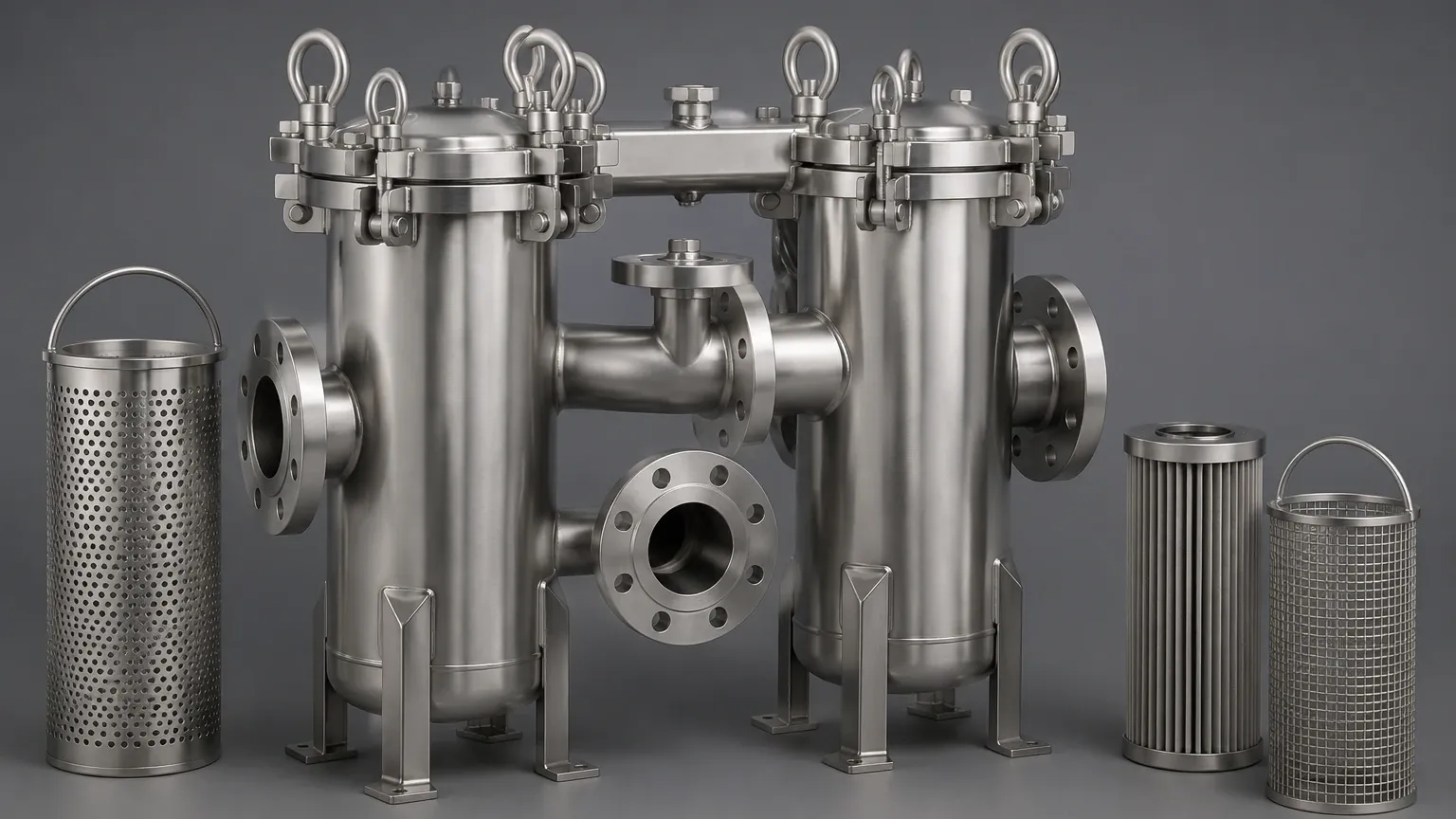
In industrial fluid handling, the requirement for continuous operation often dictates the choice of filtration and straining equipment. Duplex strainers, also known as twin-basket strainers, are engineered specifically for applications where the flow cannot be interrupted for maintenance or cleaning. Unlike simplex strainers, which require a system shutdown to remove and clean the filter element, a duplex system utilizes two separate chambers connected by a diverter valve. This design allows one chamber to remain in service while the other is isolated for servicing, ensuring 24/7 operational uptime.
For engineers and procurement teams in sectors such as chemical processing, power generation, and marine engineering, understanding the technical nuances of duplex strainers is essential for optimizing system reliability and reducing the total cost of ownership. This guide examines the mechanical principles, material considerations, and selection criteria necessary for integrating high-performance Strainers & Baskets into industrial piping systems.
Mechanical Design and Operational Principles
The core functionality of duplex strainers relies on the integration of two identical straining chambers and a change-over valve mechanism. This mechanism is the critical point of engineering; it must provide a tight seal to isolate the offline chamber while maintaining a low pressure drop across the active chamber.
Diverter Valve Types
There are several common valve configurations used in duplex systems:
- Plug Valves: These utilize a tapered or cylindrical plug that rotates to redirect flow. They are robust and provide excellent sealing, making them suitable for high-pressure applications.
- Ball Valves: Often used in smaller-diameter duplex strainers, ball valves offer quick operation and reliable shut-off.
- Sliding Gate Valves: Common in very large diameter systems, these use a sliding mechanism to transition flow between chambers, often designed to minimize the risk of fluid hammer during the switch-over process.
Continuous Flow Transition
A well-engineered duplex strainer ensures that the flow is never fully restricted during the transition from one chamber to the other. This is achieved through a "overlap" design in the valve, where the second chamber begins to open before the first chamber is completely closed. This prevents pressure spikes that could damage downstream equipment like pumps or sensitive instrumentation.
Key Engineering Considerations for Selection
Selecting the appropriate duplex strainer involves more than matching pipe diameters. Engineers must calculate specific hydraulic parameters to ensure the unit does not become a bottleneck in the process.
Flow Rate and Viscosity
The flow rate (measured in GPM or m³/h) and the viscosity of the fluid are the primary drivers of strainer sizing. Higher viscosity fluids, such as heavy oils or resins, require larger surface areas to maintain acceptable pressure drops. When evaluating duplex strainers, it is standard practice to size the unit so that the initial "clean" pressure drop does not exceed 2 psi (0.14 bar) for liquid service.
Pressure Drop ($ΔP$) Calculations
The total pressure drop across a duplex strainer is the sum of the drop across the housing and the drop across the internal basket. As debris accumulates, the $ΔP$ increases. Industrial systems typically include differential pressure gauges to alert operators when the offline chamber needs to be engaged. If the $ΔP$ exceeds the structural limit of the basket (the collapse pressure), the mesh may fail, allowing contaminants to bypass the filter and potentially damage expensive downstream components.
Temperature and Pressure Ratings
Duplex strainers must be rated for the maximum operating pressure and temperature of the system, often following ASME B16.5 or B16.34 standards. Thermal expansion must also be considered, particularly in steam or high-temperature chemical applications, to prevent the diverter valve from seizing.
Material Science in Straining Elements
As a manufacturer specializing in stainless steel filtration, Kaifil emphasizes the importance of material compatibility. The choice of material for both the housing and the internal Strainers & Baskets determines the unit's lifespan in corrosive environments.
Stainless Steel Advantages
Stainless steel (primarily Grades 304 and 316L) is the industry standard for duplex strainers in the pharmaceutical, food and beverage, and chemical sectors.
- 304 Stainless Steel: Suitable for general industrial use, providing good corrosion resistance and mechanical strength.
- 316L Stainless Steel: The "L" denotes low carbon content, which improves weldability and resistance to intergranular corrosion. 316L contains molybdenum, making it superior for applications involving chlorides or acidic environments.
Basket Construction
The internal basket is the primary wear part. It usually consists of a perforated metal support cylinder lined with a fine wire mesh. The "open area ratio" is a critical metric here; a high-quality duplex strainer should offer an open area ratio of at least 6:1 relative to the cross-sectional area of the inlet pipe. This ensures that even as the basket begins to clog, the flow remains relatively unimpeded.
Customization and Precision Filtration
Standard off-the-shelf duplex strainers may not meet the specific requirements of specialized industrial processes. Customization allows for the optimization of filtration precision and housing ergonomics.
Micron Ratings and Mesh Selection
Filtration requirements can range from coarse straining (removing large pebbles or scale) to fine filtration (removing particles down to 5-10 microns).
- Perforated Plate: Used for heavy-duty straining where particles are larger than 1mm.
- Wire Mesh: Layers of woven stainless steel wire allow for much finer filtration. Sintered mesh can be used for high-pressure applications where the mesh must resist deformation.
- Magnetic Inserts: For systems handling lubricating oils or hydraulic fluids, magnetic posts can be added to the baskets to capture fine ferrous particles that might otherwise pass through the mesh.
Connection Types
Depending on the installation environment, duplex strainers can be configured with various connection types, including:
- Flanged (ANSI, DIN, JIS): The most common for industrial piping.
- Threaded (NPT, BSP): Used for smaller diameter lines.
- Socket Weld: Preferred in high-pressure or high-vibration environments where leak prevention is paramount.
Operational Risks and Maintenance Protocols
While duplex strainers are designed for continuous use, improper maintenance or operation can lead to system failures. Understanding these risks is part of effective facility management.
Air Entrapment and Venting
When a cleaned chamber is brought back online, it is initially filled with air. If this air is not vented before the chamber is opened to the flow, it can cause air pockets in the piping, leading to pump cavitation or inaccurate readings from flow meters. High-quality duplex systems include vent valves on the chamber covers to allow for safe priming.
Seal and Gasket Integrity
The seals on the chamber covers and the diverter valve seats are subject to wear. In chemical applications, elastomer compatibility (e.g., Viton, EPDM, PTFE) must be verified to prevent swelling or degradation. A routine inspection of the isolated chamber's seals while the other side is active is a key benefit of the duplex design.
Differential Pressure Monitoring
Relying on manual inspection schedules for cleaning baskets is inefficient. Integrating differential pressure transmitters into the SCADA system allows for automated alerts. This ensures that the switch-over to the clean chamber happens at the optimal time, preventing unnecessary pressure loss and protecting the integrity of the baskets.
Procurement Checklist for Engineers
Before finalizing a purchase order for duplex strainers, technical professionals should confirm the following data points with the manufacturer to ensure application suitability:
1. Fluid Characteristics: Confirm the chemical composition, concentration, and viscosity at both minimum and maximum operating temperatures.
2. Particle Load: Estimate the volume of solids to be removed. High solids loading may require oversized baskets to extend the time between cleaning cycles.
3. Filtration Target: Define the specific micron rating required. Over-filtering (choosing a mesh that is too fine) leads to rapid clogging and excessive maintenance.
4. Space Constraints: Duplex strainers have a larger footprint than simplex units. Confirm the center-to-face dimensions and the clearance required for basket removal.
5. Compliance Requirements: Specify if the unit must meet PED (Pressure Equipment Directive), ASME Section VIII, or food-grade (FDA/3A) standards.
Conclusion
Duplex strainers are a fundamental component in maintaining the continuity of industrial processes. By allowing for the cleaning of filtration elements without halting production, they provide a significant operational advantage in high-stakes environments. When selecting these systems, focusing on the quality of the internal Strainers & Baskets and the reliability of the diverter mechanism is paramount.
As a specialist in custom stainless steel filtration, Kaifil provides the engineering expertise and manufacturing precision required to develop duplex straining solutions that withstand the rigors of chemical, hydraulic, and industrial water treatment applications. By prioritizing material integrity and hydraulic efficiency, engineers can ensure their systems remain protected and productive over the long term.
