


Elephant Strainers
In industrial fluid handling, protecting downstream equipment from large debris and particulate matter is a critical engineering requirement. Among the various configurations of Strainers & Baskets used in suction-side applications, elephant strainers—often referred to as high-capacity suction strainers or foot valve strainers—serve a specialized role. These components are designed to handle high flow rates while maintaining a low pressure drop, ensuring that pumps and other sensitive machinery remain protected from damage caused by solids.
For engineers and procurement professionals, selecting the correct suction strainer involves more than just matching a pipe diameter. It requires a deep understanding of fluid dynamics, material compatibility, and the specific environmental conditions of the intake site. This guide examines the technical specifications, design considerations, and operational advantages of elephant strainers within the broader context of industrial filtration.
Understanding Elephant Strainers in Industrial Filtration
Elephant strainers are characterized by their large surface area relative to their inlet size. The name is derived from their robust, often oversized appearance, which is necessary to accommodate the high volume of fluid required by industrial pumps without creating excessive resistance. Unlike standard inline strainers that might be integrated into a pressurized piping system, elephant strainers are typically found at the beginning of a suction line, submerged in a tank, sump, or open water source.
Their primary function is to act as a first line of defense. By capturing large debris—such as stones, wood, plastic, or large scale—before it enters the suction pipe, they prevent mechanical failure in pump impellers and blockages in heat exchangers. Because they operate on the suction side of the pump, their design must prioritize a high open-area ratio to minimize the risk of cavitation.
Material Engineering and Structural Design
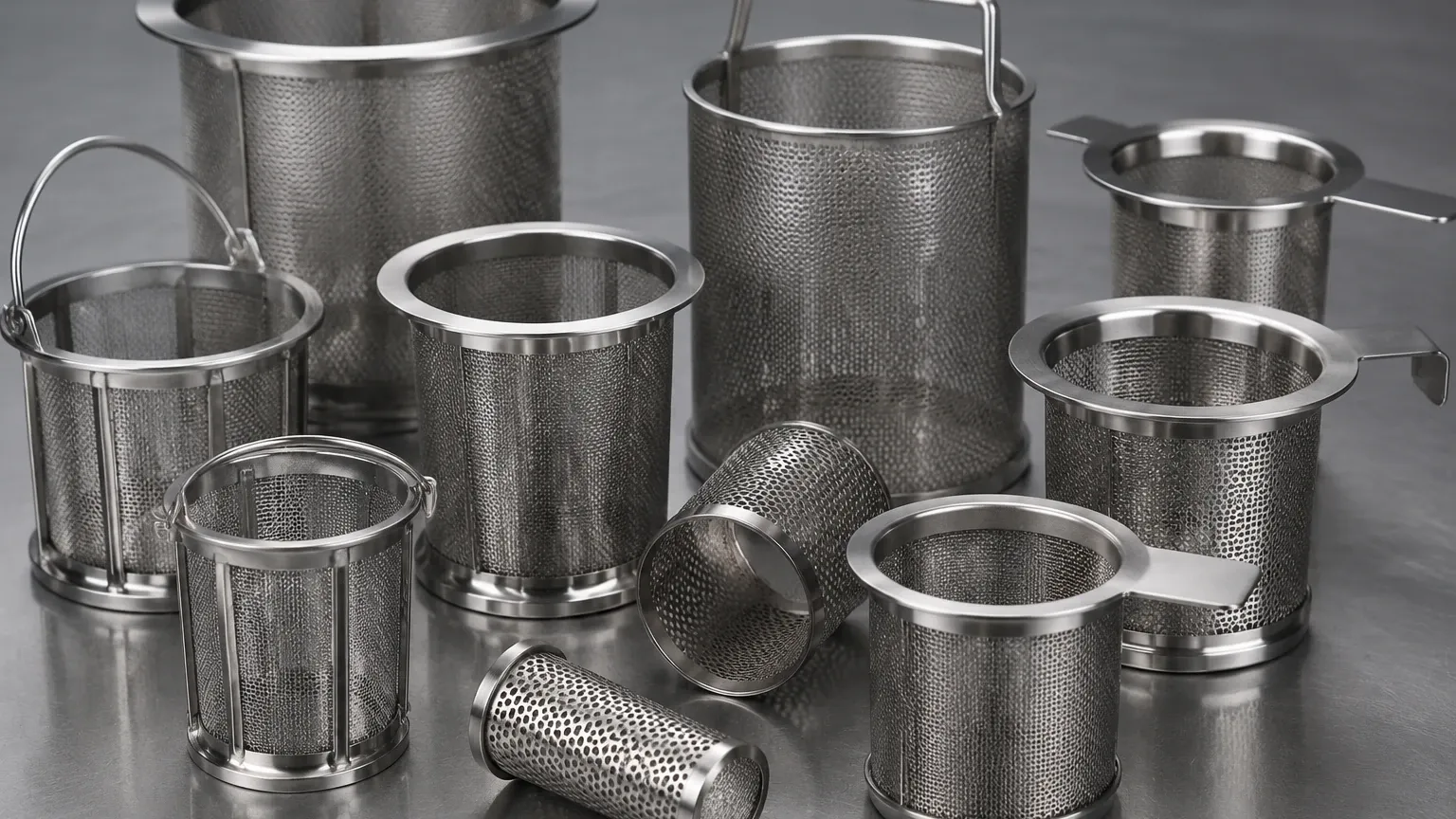
To withstand the rigors of industrial environments, elephant strainers are almost exclusively manufactured from high-grade metals. Stainless steel, specifically 304 and 316 grades, is the industry standard due to its corrosion resistance and structural integrity.
Perforated Metal vs. Wire Mesh
The construction of an elephant strainer typically involves a two-layer approach:
1. The Structural Core: A heavy-gauge perforated metal cylinder or cone provides the mechanical strength required to withstand the pressure differentials and physical impact of debris.
2. The Filtration Layer: A fine wire mesh is often wrapped around or pleated within the structural core to achieve the desired filtration accuracy. This mesh can range from coarse 4-mesh screens for large debris to 100-mesh or finer for more sensitive applications.
Welding and Assembly
In high-demand applications, the integrity of the weld points is paramount. Kaifil utilizes advanced welding techniques, such as TIG (Tungsten Inert Gas) or plasma welding, to ensure that the mesh and perforated core are fused without creating weak points or crevices where corrosion could begin. For pharmaceutical or food-grade applications, these welds are often ground smooth and passivated to meet strict sanitary standards.
Performance Metrics: Flow Rate and Pressure Drop
One of the most critical factors in the design of elephant strainers is the Net Positive Suction Head (NPSH). If a strainer is too restrictive, the pressure at the pump inlet will drop below the vapor pressure of the liquid, leading to cavitation. Cavitation causes rapid erosion of pump components and significantly reduces the efficiency of the system.
Open Area Ratio
To prevent cavitation, engineers calculate the "Open Area Ratio" (OAR). This is the ratio of the total area of the holes in the strainer to the cross-sectional area of the inlet pipe. A standard rule of thumb for suction strainers is an OAR of at least 3:1 or 4:1. Elephant strainers often exceed this, providing ratios of 6:1 or higher. This massive surface area ensures that even if a portion of the strainer becomes partially blinded by debris, the remaining open area is sufficient to maintain required flow rates.
Velocity Reduction
By increasing the surface area, elephant strainers also reduce the intake velocity at the face of the strainer. Lower velocities are beneficial for two reasons:
* Reduced Debris Impingement: High-velocity intake can pull debris toward the strainer with enough force to wedge it into the openings, making cleaning difficult.
* Vortex Prevention: High intake velocities near the surface of a fluid can create vortices, which draw air into the pump. The large footprint of an elephant strainer helps dissipate these forces.
Application-Specific Selection Criteria
When specifying elephant strainers within the Strainers & Baskets category, several application-specific variables must be confirmed to ensure long-term performance.
Chemical Compatibility
The fluid being filtered dictates the choice of material. While SS304 is suitable for most freshwater and general industrial applications, SS316 or 316L is required for environments involving chlorides, salt water, or acidic chemicals. In extreme cases, specialized alloys like Duplex stainless steel may be necessary to prevent pitting and stress corrosion cracking.
Particle Size and Distribution
Defining the "allowable" particle size is essential. If the mesh is too coarse, downstream equipment is at risk. If it is too fine, the strainer will clog prematurely, leading to increased maintenance costs. Engineers must analyze the typical debris profile of the source water or process fluid to select the optimal micron rating.
Environmental Conditions
For strainers used in open water intakes (such as river or sea water), the design must account for biological fouling. Zebra mussels, algae, and other aquatic life can quickly colonize the surface of a stainless steel strainer. In these instances, specialized coatings or the integration of backwashing systems may be required.
Maintenance Protocols and Longevity
Even the most robustly designed elephant strainers require a maintenance strategy. Because these components are often submerged and not easily visible, monitoring performance through indirect means is common practice.
Differential Pressure Monitoring
Installing pressure gauges on either side of the strainer (or a vacuum gauge on the suction line) allows operators to monitor the pressure drop across the unit. A significant increase in vacuum or a drop in discharge pressure indicates that the strainer is becoming clogged and requires cleaning.
Cleaning Methods
* Manual Cleaning: For smaller sumps or tanks, the strainer may be pulled from the fluid for manual hosing or scrubbing.
* Backpulsing: In some systems, a brief reversal of flow can be used to dislodge accumulated debris from the face of the mesh.
* Ultrasonic Cleaning: For stainless steel strainers used in chemical or food processing, periodic ultrasonic cleaning can remove fine particulates trapped within the wire mesh that manual cleaning cannot reach.
Customization for Specialized Industrial Systems
Standard off-the-shelf components rarely meet the precise needs of complex industrial installations. Customization is often necessary to integrate elephant strainers into existing infrastructure or to meet specific performance targets.
Connection Types
Depending on the piping standard, elephant strainers can be manufactured with various connection types, including:
* Flanged Connections: ANSI, DIN, or JIS standards for secure, leak-proof attachment to heavy-duty piping.
* Threaded Inlets: NPT or BSP threads for smaller-scale applications.
* Quick-Connect Couplings: For systems that require frequent removal for cleaning.
Geometric Variations
While the "elephant" shape is common, the actual geometry can be adjusted. Flat-bottom strainers are used for shallow tanks, while elongated cylindrical versions are preferred for deep-well intakes where horizontal space is limited. Kaifil specializes in these custom configurations, ensuring that the structural design of the Strainers & Baskets matches the physical constraints of the installation site.
Total Cost of Ownership Considerations
When evaluating the cost of elephant strainers, engineers should look beyond the initial purchase price. The "Total Cost of Ownership" (TCO) includes the cost of energy (due to pressure drop), maintenance labor, and the potential cost of downstream equipment failure.
A high-quality stainless steel elephant strainer from a manufacturer like Kaifil offers a lower TCO by:
* Extending Pump Life: By providing superior protection against solids.
* Reducing Energy Consumption: By maintaining a high open-area ratio and low resistance to flow.
* Minimizing Downtime: Through durable construction that resists corrosion and mechanical wear.
Conclusion
Elephant strainers are vital components in the management of industrial fluid systems. Their ability to handle high volumes while protecting critical infrastructure makes them indispensable in sectors ranging from water treatment to chemical processing. By focusing on material quality, precise engineering of the open area ratio, and application-specific customization, facilities can ensure efficient and reliable operation.
For technical teams looking to optimize their filtration systems, selecting a partner with deep manufacturing expertise is essential. Kaifil provides the engineering support and high-performance stainless steel solutions necessary to meet the most demanding industrial requirements. Whether you are designing a new intake system or upgrading existing Strainers & Baskets, understanding the technical nuances of elephant strainers is the first step toward operational excellence.
