


Electric Fence Strainers
In industrial and high-security perimeter management, the structural integrity of wire-based systems relies heavily on the mechanical components used to maintain tension. Among these, electric fence strainers serve as critical hardware, ensuring that the conductive wire remains taut and functional over long distances and through varying environmental conditions. For engineers and procurement professionals, understanding the technical specifications, material requirements, and mechanical design of these components is essential for maintaining system longevity and reducing the total cost of ownership.
While the term "strainer" in an industrial context often refers to filtration components used to remove solids from liquid streams, mechanical strainers—such as those used in fencing—share a common engineering goal with Strainers & Baskets used in filtration: the preservation of system performance through high-quality material selection and precision manufacturing. This article examines the engineering principles behind electric fence strainers and how they relate to broader industrial hardware standards.
The Engineering Fundamentals of Wire Tensioning Components
Electric fence strainers are mechanical devices designed to apply and maintain tension on a fence line. Without proper tensioning, wires sag due to gravity, thermal expansion, or physical impact, which can lead to short circuits, reduced voltage delivery, and a failure of the physical barrier.
From a mechanical engineering perspective, a strainer must perform two primary functions: it must provide a mechanism for tightening the wire (typically via a ratchet or a threaded bolt) and it must lock that tension in place securely. The most common designs include:
1. Ratchet Strainers: These utilize a rotating spool and a locking pawl. As the spool is turned, the wire wraps around it, increasing tension. The pawl prevents the spool from rotating backward.
2. In-Line Strainers: These are installed directly onto the wire line without requiring the wire to be cut. They are often used for retrofitting or adjusting tension in existing systems.
3. End-of-Line Strainers: Fixed to strainer posts, these act as the primary anchor point for the wire run.
For industrial applications, the choice between these designs depends on the total length of the wire run, the expected mechanical load, and the frequency of maintenance cycles.
Material Performance: Stainless Steel vs. Galvanized Solutions
In the production of industrial hardware, material selection is the most significant factor in determining the component's lifespan. Electric fence strainers are exposed to constant mechanical stress and environmental stressors, including moisture, UV radiation, and chemical exposure in industrial zones.
Galvanized Steel
Standard strainers are often made from galvanized steel. While cost-effective, the zinc coating is a sacrificial layer. Once the coating is compromised by the friction of the wire or the ratcheting mechanism, the underlying steel is susceptible to oxidation. In high-salinity or chemically active environments, galvanized components may fail prematurely.
Stainless Steel (Grade 304 and 316)
For demanding industrial environments, such as chemical processing plants or coastal facilities, stainless steel strainers are the preferred choice.
* Grade 304: Offers excellent corrosion resistance and mechanical strength for most standard industrial applications.
* Grade 316: Contains molybdenum, providing superior resistance to chlorides and acidic environments.
At Kaifil, the emphasis on high-performance alloys in the manufacturing of Strainers & Baskets highlights the importance of material integrity. Whether the component is filtering a process fluid or maintaining the tension of a security perimeter, using the correct grade of stainless steel prevents catastrophic failure and extends the replacement cycle.
Mechanical Design and Load-Bearing Capacity
When specifying electric fence strainers, engineers must calculate the maximum tensile load the component will experience. This includes the static tension required for the wire to remain taut and the dynamic loads caused by wind, ice accumulation, or animal/intruder impact.
Key design considerations include:
* Yield Strength: The point at which the strainer material will permanently deform. High-quality strainers are designed with a safety factor (typically 2:1 or 3:1) above the expected maximum tension.
* Spool Diameter: A larger spool diameter reduces the stress concentration on the wire as it wraps, preventing premature wire fatigue or snapping.
* Locking Mechanism Precision: The teeth on a ratchet strainer must be precision-machined to ensure a secure fit with the pawl. Poorly manufactured teeth can slip under high load, leading to a loss of tension across the entire line.
Precision manufacturing, such as that used in the production of wire mesh filters and custom metal components, ensures that these mechanical tolerances are strictly met, providing a reliable lock that can withstand years of constant pressure.
Environmental Factors and Corrosion Resistance
Industrial facilities often present harsh conditions that can degrade mechanical hardware. For electric fence strainers, the primary threats are galvanic corrosion and atmospheric oxidation.
Galvanic Corrosion
This occurs when two dissimilar metals (e.g., a galvanized strainer and a stainless steel wire) come into contact in the presence of an electrolyte (moisture). To prevent this, engineers should ensure that the strainer material is compatible with the fencing wire. Using stainless steel strainers with stainless steel wire is the most effective way to eliminate galvanic risks.
Thermal Expansion and Contraction
Metal wires expand in the heat of summer and contract in the cold of winter. A rigid system without high-quality strainers will either sag or snap. High-performance strainers often work in tandem with tension springs to accommodate these changes, but the strainer itself must remain robust enough to handle the peak contraction forces during winter months.
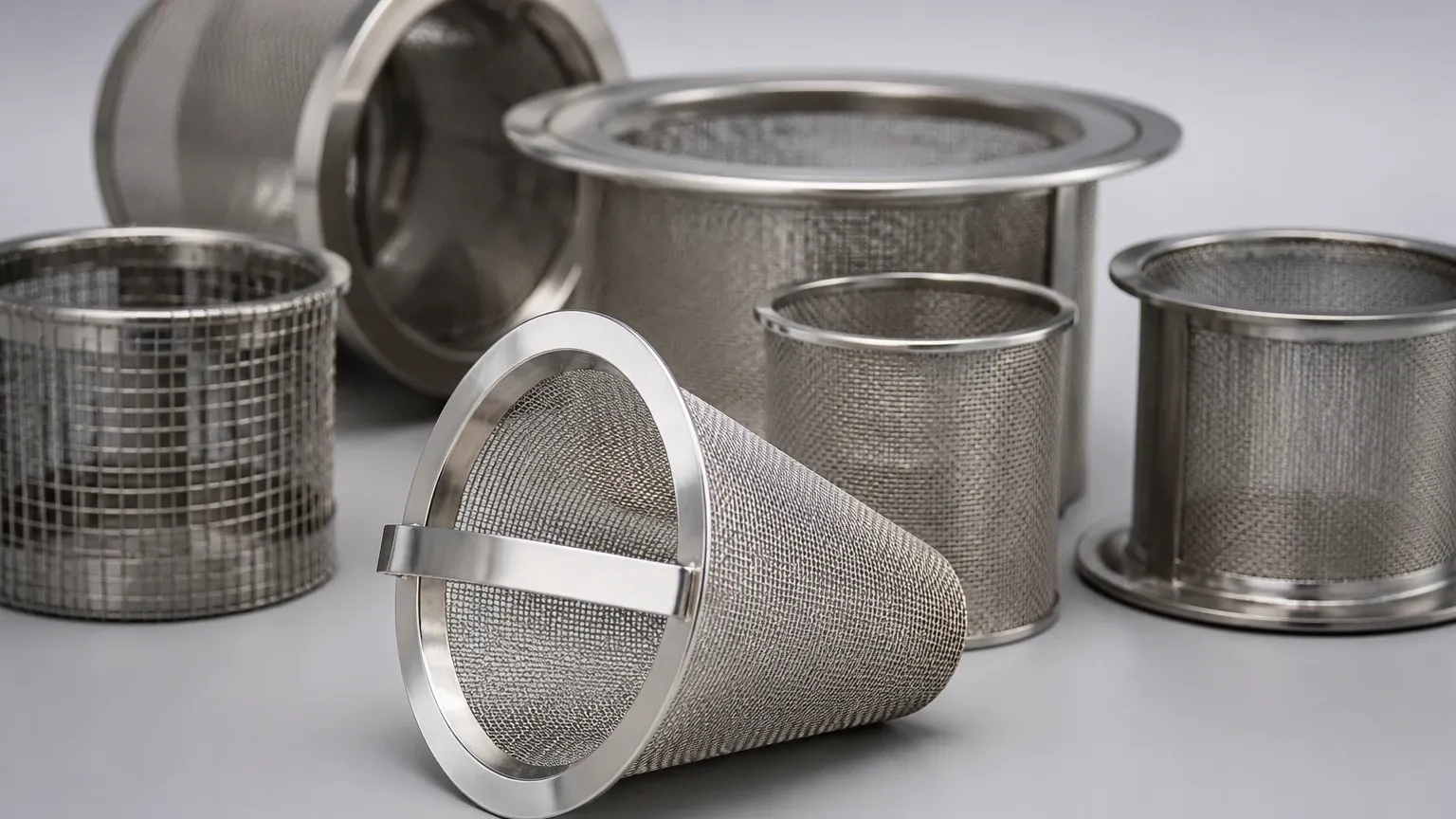
Integrating Precision Components into Industrial Strainers & Baskets
The manufacturing expertise required to produce durable electric fence strainers is closely aligned with the production of industrial filtration components. Both require specialized knowledge in metal forming, welding, and surface treatment.
For instance, the techniques used to create robust Strainers & Baskets for fluid filtration—such as TIG welding, precision stamping, and electrolytic polishing—are the same processes that ensure a mechanical strainer can survive a decade of outdoor exposure. When sourcing components, purchasing teams should look for manufacturers who understand these metallurgical nuances.
In filtration, a "basket strainer" protects downstream equipment by capturing debris. In fencing, a "wire strainer" protects the integrity of the perimeter by maintaining tension. In both cases, the failure of a single component can lead to a complete system shutdown or security breach. This is why Kaifil focuses on custom solutions that meet specific application requirements, ensuring that every metal component—whether for filtration or mechanical support—performs to its rated specifications.
Selection Criteria for Technical Purchasing Teams
When evaluating suppliers for electric fence strainers or related metal hardware, technical teams should confirm the following data points to ensure they are making an informed decision:
1. Material Certification: Request mill test reports (MTRs) to verify the chemical composition of the stainless steel or the thickness of the galvanization.
2. Load Ratings: Confirm the maximum breaking strain (MBS) and the recommended working load limit (WLL).
3. Compatibility: Ensure the strainer design is compatible with the gauge and type of wire being used (e.g., high-tensile steel, polywire, or stainless steel cable).
4. Customization Options: For unique industrial layouts, determine if the manufacturer can provide custom mounting brackets or specialized finishes to match the facility's requirements.
5. Total Cost of Ownership (TCO): While a stainless steel strainer has a higher upfront cost than a plastic or low-grade steel alternative, the reduction in maintenance labor and replacement frequency usually results in a lower TCO over the life of the installation.
Conclusion
Electric fence strainers are more than simple hardware; they are engineered components that play a vital role in the reliability of industrial security and containment systems. By applying the same rigorous standards used in the selection of industrial Strainers & Baskets, engineers can ensure that their wire-based systems remain effective and durable.
Choosing a manufacturer with deep expertise in stainless steel fabrication and custom metal solutions is the best way to guarantee performance. Whether you are designing a filtration system or a high-security perimeter, the quality of the individual components determines the success of the entire project. For those requiring precision-engineered metal solutions, reviewing product options and application support from experienced manufacturers like Kaifil is the critical next step in system optimization.
