


Electric Fence End Strainers
In both agricultural infrastructure and industrial fluid management, the term "strainer" refers to a critical component designed to maintain the integrity of a system by either managing tension or removing unwanted particulates. While the specific application of electric fence end strainers focuses on the mechanical tensioning of wire over long distances, the engineering principles—material durability, corrosion resistance, and precision manufacturing—align closely with the high-performance Strainers & Baskets used in industrial filtration.
For engineers and procurement professionals, understanding the technical requirements of these components is essential for ensuring system longevity. Whether the goal is to secure a perimeter with high-tensile wire or to protect downstream equipment in a chemical processing plant, the selection of the right metal alloy and structural design determines the total cost of ownership and operational reliability.
The Mechanics of Tensioning: Electric Fence End Strainers
Electric fence end strainers are specialized mechanical devices installed at the termination points or corners of an electric fencing system. Their primary function is to apply and maintain the necessary tension on the fence wire, preventing sagging that could lead to electrical shorts or structural failure.
In a high-tensile system, the wire is subjected to significant environmental stressors, including thermal expansion and contraction. Without a robust end strainer, the wire would lose its effectiveness as a barrier. These components typically utilize a ratcheting mechanism or a bobbin-style design, allowing the operator to tighten the wire using a standard wrench or specialized tensioning tool. From a manufacturing perspective, these devices must be capable of withstanding hundreds of pounds of constant pull without deforming or failing under load.
Key Components of End Strainers
1. The Frame: Often constructed from heavy-duty galvanized steel or stainless steel to provide the structural backbone.
2. The Cog/Ratchet: A precision-cast or machined component that allows for incremental tensioning and locks the wire in place.
3. The Locking Pin: A high-strength pin that ensures the ratchet does not slip under high pressure.
Material Selection: The Case for Stainless Steel
Whether manufacturing electric fence end strainers or industrial Strainers & Baskets, material selection is the most significant factor in performance. In outdoor or corrosive industrial environments, standard carbon steel is often insufficient due to its susceptibility to oxidation.
AISI 304 Stainless Steel
Grade 304 is the most common stainless steel used in strainer manufacturing. It offers an excellent balance of strength and corrosion resistance. For end strainers used in standard agricultural settings, 304 provides the necessary durability to withstand rain and humidity. In filtration, it is the standard for food and beverage applications where hygiene and basic corrosion resistance are required.
AISI 316 and 316L Stainless Steel
For more demanding environments—such as coastal fencing installations or chemical processing plants—AISI 316 stainless steel is preferred. The addition of molybdenum enhances resistance to chloride-induced pitting. In the context of industrial filtration, 316L (the low-carbon version) is often used to prevent sensitization during welding, ensuring that the mesh and frame of the strainer remain corrosion-resistant at the joints.
Engineering Industrial Strainers & Baskets
While end strainers manage mechanical tension, industrial Strainers & Baskets manage fluid purity. These components are integrated into piping systems to protect pumps, valves, and meters from debris. Despite the difference in application, the manufacturing expertise required for both involves precision wire handling and robust metal fabrication.
Basket Strainer Design
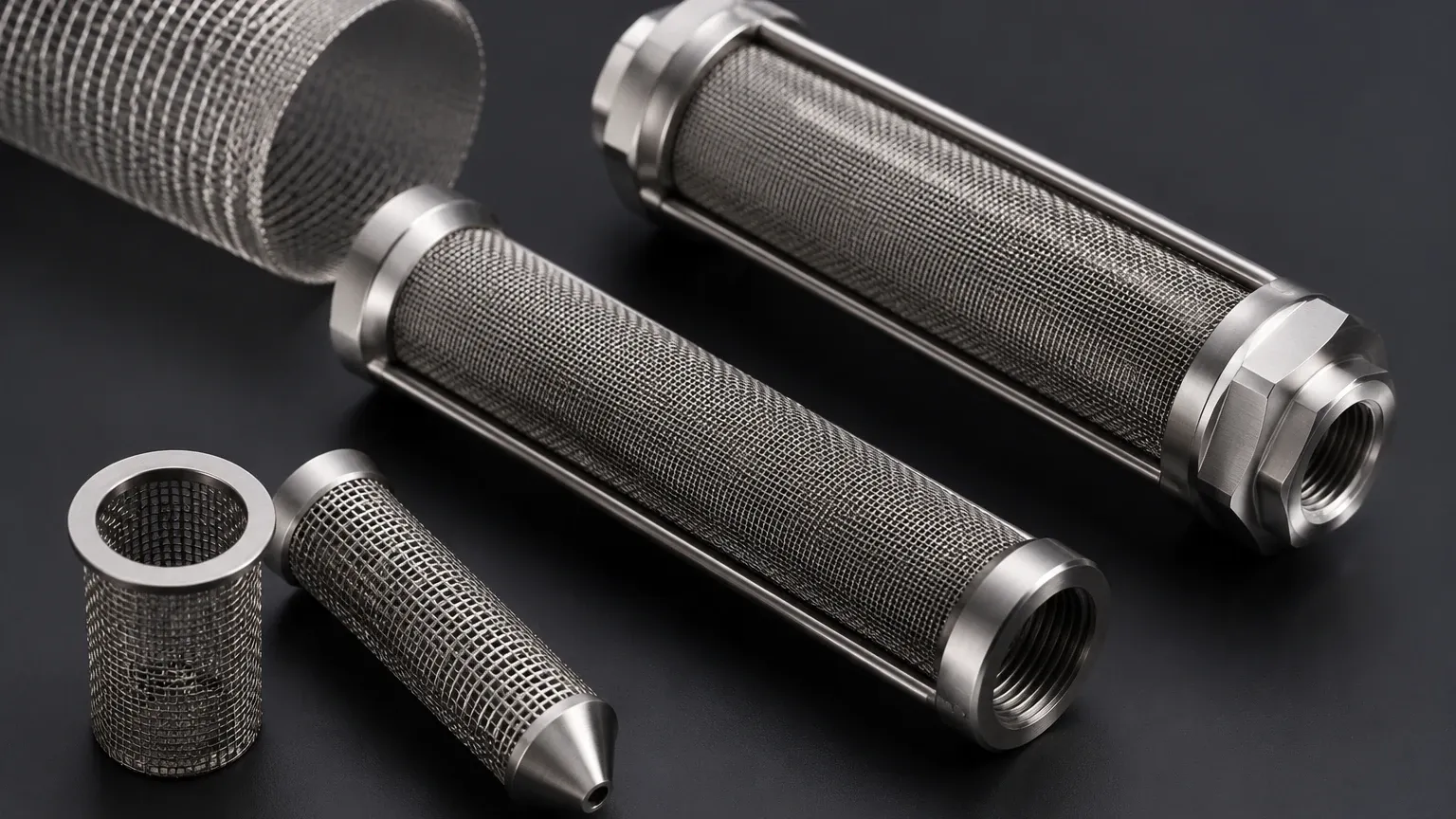
Basket strainers are characterized by their large surface area, which allows for high flow rates with minimal pressure drop. The "basket" is typically fabricated from perforated metal lined with a fine wire mesh. The choice of mesh count (the number of openings per linear inch) determines the filtration accuracy, which can range from coarse particles (several millimeters) to fine particulates (measured in microns).
Structural Integrity Under Pressure
Just as an electric fence end strainer must hold tension, an industrial basket must withstand differential pressure. If a basket becomes clogged, the pressure on the upstream side increases. A poorly manufactured strainer basket may collapse, allowing debris to bypass the filter and damage expensive downstream equipment. Engineering these components requires calculating the maximum allowable pressure drop (PSID) and ensuring the support structure of the basket can handle these forces.
Manufacturing Precision: From Wire Mesh to Finished Product
As a professional manufacturer, Kaifil emphasizes the importance of precision in every stage of production. The fabrication of metal strainers—whether for tensioning or filtration—involves several critical processes:
1. Weaving and Perforation
For filtration baskets, the wire mesh must be woven with high consistency to ensure uniform pore sizes. Perforated metals used as support structures must have clean edges to prevent turbulence and potential points of mechanical failure.
2. Welding and Assembly
Advanced welding techniques, such as TIG (Tungsten Inert Gas) or resistance welding, are used to join the mesh to the strainer frame. In high-tension components like electric fence end strainers, the integrity of the weld is paramount to prevent the ratchet assembly from detaching under load.
3. Surface Treatment
To further enhance corrosion resistance, components may undergo passivation or electropolishing. Passivation removes free iron from the surface of the stainless steel, while electropolishing provides a smooth, mirror-like finish that is easy to clean and highly resistant to bacterial growth, a requirement in pharmaceutical and food-grade applications.
Application-Specific Considerations
When specifying Strainers & Baskets or mechanical end strainers, engineers must evaluate the specific needs of their application.
Environmental Factors
* Coastal Environments: High salt content in the air necessitates the use of 316 stainless steel for both fence strainers and industrial intake filters.
* Chemical Exposure: In processing plants, the pH levels and chemical composition of the fluid will dictate the alloy choice. Specialized alloys like Duplex stainless steel may be required for extreme conditions.
Load and Flow Requirements
* Mechanical Load: For electric fence end strainers, the gauge of the wire and the length of the fence line determine the required tensile strength of the strainer.
* Flow Velocity: In fluid systems, the velocity of the liquid impacts the wear rate of the strainer mesh. High-velocity systems require reinforced baskets to prevent wire fatigue.
Customization and OEM Solutions
Standard off-the-shelf components often fall short in specialized industrial applications. Customization allows for the optimization of a strainer’s dimensions, material, and performance characteristics.
Kaifil provides OEM services that allow clients to develop bespoke filtration and tensioning components. This includes:
* Custom Dimensions: Fitting strainers into existing piping layouts or unique fence post configurations.
* Specialized Mesh Configurations: Combining multiple layers of wire mesh to achieve specific filtration goals while maintaining structural strength.
* Reinforced Designs: Adding internal or external supports to baskets that must operate under extreme pressure differentials.
Maintenance and Replacement Cycles
To ensure the long-term success of any straining system, a regular maintenance schedule is required.
For electric fence end strainers, this involves periodic inspections to ensure the ratchet remains locked and the wire tension is adequate. Environmental debris should be cleared from the mechanism to prevent jamming.
For industrial baskets, maintenance typically involves monitoring the pressure gauge. A significant increase in differential pressure indicates that the basket is full and requires cleaning. In many B2B environments, "Duplex" strainers are used, which consist of two separate baskets and a diversion valve. This allows one basket to be cleaned while the other remains in operation, preventing system downtime.
Conclusion
While the search for electric fence end strainers often begins with a need for perimeter security and wire management, it leads to a broader discussion about the importance of high-quality metal components in industrial systems. The durability and performance of Strainers & Baskets depend on a manufacturer's ability to combine material science with precision engineering. By selecting components made from high-grade stainless steel and designed for the specific rigors of the environment, organizations can ensure the reliability of their infrastructure and the purity of their industrial processes.
