


Elkay Sink Strainers
In the realm of commercial and industrial plumbing, the efficiency of a drainage system is often determined by the quality of its smallest components. Among these, sink strainers play a critical role in maintaining system integrity by preventing debris from entering the piping network and causing costly blockages. For many engineers and facility managers, Elkay sink strainers have long been a recognized standard for commercial-grade durability and performance. However, selecting the right strainer requires a deep understanding of material science, flow dynamics, and the specific demands of the industrial environment.
When evaluating filtration and drainage components, technical professionals must look beyond aesthetics. The performance of elkay sink strainers and similar high-quality industrial components depends on their ability to withstand corrosive cleaning agents, high temperatures, and constant mechanical use. This article explores the technical specifications of commercial sink strainers, their relationship to broader industrial Strainers & Baskets, and the engineering considerations necessary for optimal selection.
Understanding the Engineering of Commercial Sink Strainers
Commercial sink strainers are engineered to facilitate rapid fluid evacuation while retaining solid waste. Unlike residential models, which may prioritize cost over longevity, industrial-grade strainers are typically constructed from heavy-gauge stainless steel. This material choice is vital for resisting the pitting and crevice corrosion often seen in environments where harsh chemicals or high-salinity fluids are present.
Most high-end elkay sink strainers utilize Type 304 stainless steel. This austenitic alloy contains approximately 18% chromium and 8% nickel, providing excellent resistance to oxidation and corrosion. In specialized laboratory or chemical processing applications, engineers may even specify Type 316 stainless steel, which includes molybdenum to further enhance resistance to chlorides and industrial solvents.
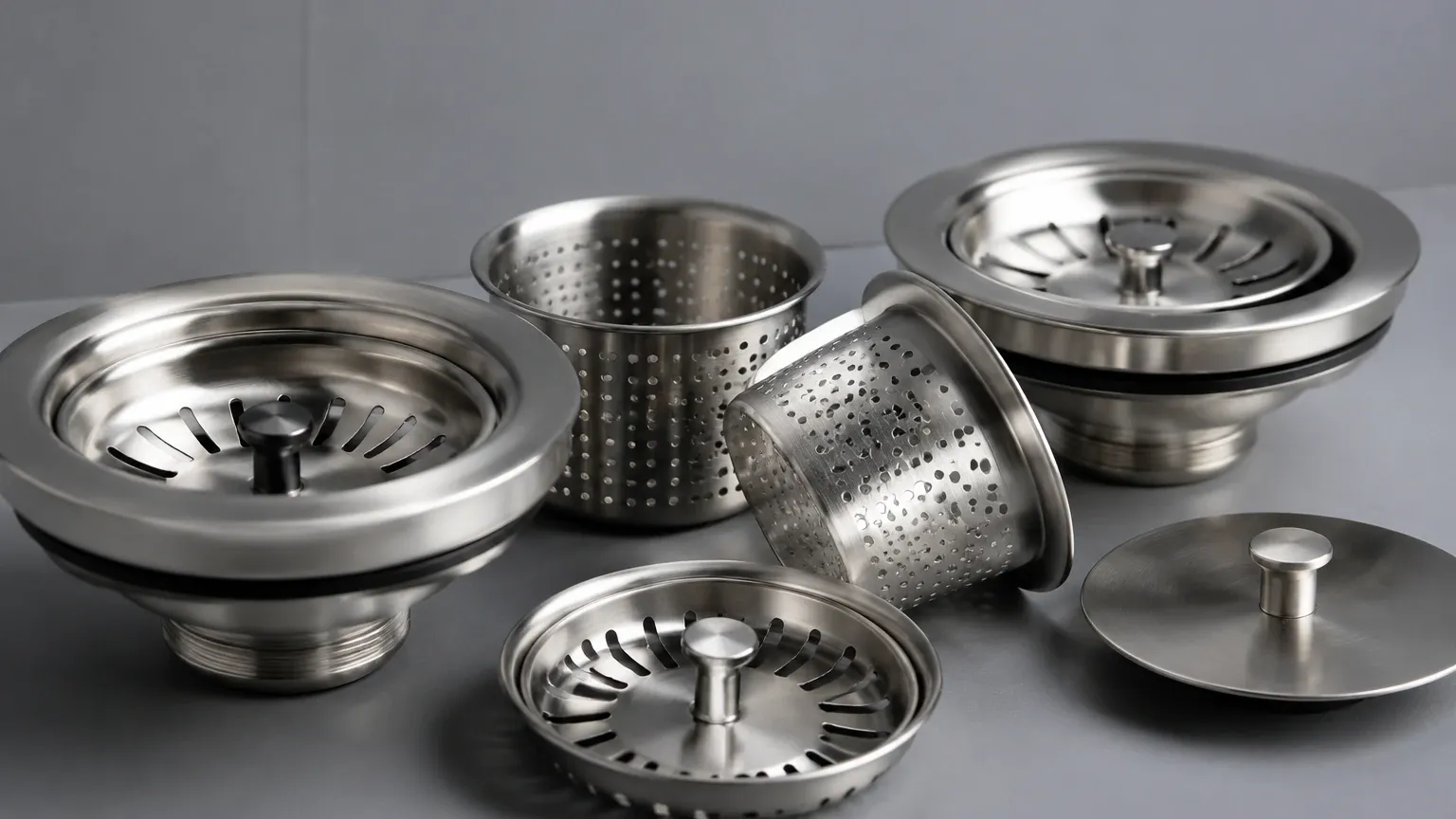
The structural design of these strainers involves a multi-component assembly: the strainer body, the removable basket, the locking nut, and the tailpiece. Each component must be manufactured to precise tolerances to ensure a watertight seal. For instance, the threading on the strainer body (typically a standard 1-1/2 inch or 3-1/2 inch NPSM thread) must be perfectly machined to prevent cross-threading and ensure compatibility with standard commercial waste lines.
Key Features of Elkay Sink Strainers in Industrial Environments
When specifying elkay sink strainers for a project, several design features distinguish them from generic alternatives. These features are designed to minimize maintenance requirements and maximize the lifespan of the plumbing infrastructure.
1. Deep Well Design
Many commercial models feature a "deep well" configuration. This design allows for a greater volume of debris to be captured before the flow rate is significantly impacted. In a high-volume commercial kitchen or a manufacturing facility, this translates to fewer interruptions for cleaning and a reduced risk of sink overflow.
2. Positive Sealing Mechanisms
The basket component of the strainer often employs a ball-bearing or spring-loaded plunger mechanism. This ensures that the basket remains in the "open" position during high-flow events but can be securely closed to hold water when necessary. The reliability of this mechanism is a frequent point of failure in lower-quality strainers, making it a key evaluation criterion for procurement teams.
3. Conical and Perforated Geometries
The perforation pattern in the basket is a critical engineering detail. The hole diameter and the total open area (TOA) determine the filtration efficiency. Elkay sink strainers are designed with a TOA that balances particle retention with the need for high-velocity drainage. If the holes are too small, the strainer will clog too quickly; if they are too large, damaging debris can pass through to the trap.
Comparing Strainers & Baskets for Heavy-Duty Applications
While sink strainers are a subset of the broader Strainers & Baskets category, the engineering principles remain consistent across all industrial filtration applications. In industrial fluid handling, a basket strainer is often a larger, inline component used to protect pumps, valves, and heat exchangers. However, the sink-mounted version serves as the first line of defense in many process-intensive industries.
When comparing standard sink hardware to industrial basket strainers, engineers must consider the following:
* Pressure Ratings: Standard sink strainers are designed for atmospheric pressure systems (gravity drainage). In contrast, industrial basket strainers may be rated for high-pressure fluid lines.
* Micron Ratings: While a sink strainer might capture particles down to 1-2 millimeters, industrial baskets can be lined with fine wire mesh to capture particles as small as 5 microns.
* Flow Capacity: The geometry of the basket significantly impacts the pressure drop across the strainer. A well-designed basket will have a high ratio of open area to the inlet pipe area to ensure minimal resistance to flow.
For facilities that require custom filtration solutions, manufacturers like Kaifil provide high-precision metal filter components that can be integrated into specialized drainage systems. Whether it is a standard Elkay-style sink strainer or a custom-engineered wire mesh basket, the goal is the same: protecting the downstream system from contamination and damage.
Material Selection: Stainless Steel 304 vs. 316
In the context of elkay sink strainers and industrial filtration, material selection is the primary determinant of total cost of ownership (TCO). While Type 304 stainless steel is the industry standard for most commercial applications, it is not a universal solution.
Type 304 Stainless Steel: This is the most common material for elkay sink strainers. It offers excellent formability and weldability, which allows for complex strainer geometries. It is highly resistant to most food acids and common cleaning chemicals. However, in environments with high chloride concentrations (such as coastal facilities or plants using heavy brine), Type 304 can suffer from stress corrosion cracking.
Type 316 Stainless Steel: For more demanding industrial environments, Type 316 is the preferred choice. The addition of 2-3% molybdenum significantly improves resistance to pitting in chloride-rich environments. For pharmaceutical or chemical processing sinks, where aggressive solvents or acids are used, specifying a 316 stainless steel strainer is a necessary engineering precaution to prevent premature failure.
Performance Evaluation and Flow Dynamics
An often-overlooked aspect of sink strainer selection is the fluid dynamics of the drain. A strainer that is poorly matched to the flow rate of the faucet or the process discharge can lead to "ponding," which creates hygiene risks and slows down operations.
Engineers use the Flow Coefficient (Cv) to evaluate how much fluid can pass through a strainer at a given pressure drop. For gravity-fed systems like sinks, the "head" of water in the sink provides the pressure. A high-quality strainer, such as those found in the elkay sink strainers product line, is designed to maintain a high Cv even as the basket begins to fill with debris. This is achieved through optimized hole spacing and the use of the vertical sidewalls of the basket for filtration, rather than just the bottom surface.
Furthermore, the interface between the strainer and the sink must be perfectly flush. Any protrusion or gap can lead to the accumulation of biofilm and bacteria, which is a major concern in food and beverage and pharmaceutical sectors. Precision manufacturing ensures that the flange of the strainer sits tightly against the sink surface, facilitated by high-grade gaskets or professional-grade sealing compounds.
Customization and OEM Solutions for Filtration Systems
While off-the-shelf elkay sink strainers meet the needs of many standard commercial projects, unique industrial processes often require customized solutions. This is where the expertise of a specialized manufacturer becomes invaluable. Customization options for Strainers & Baskets often include:
* Variable Mesh Liners: Adding a fine wire mesh liner to a standard basket to capture smaller particulates in laboratory settings.
* Custom Dimensions: Manufacturing strainers for non-standard sink openings or high-capacity industrial vats.
* Specialized Coatings: Applying PTFE or other chemical-resistant coatings to stainless steel components for extreme environments.
* Heavy-Duty Reinforcement: For applications where the basket is subject to mechanical impact or high-velocity discharge, reinforced frames can be added to prevent deformation.
Kaifil specializes in these types of OEM and customized filtration solutions. By working closely with engineers, a manufacturer can develop filtration components that fit perfectly into existing systems while providing the specific performance characteristics required by the application.
Maintenance and Replacement Cycles
To ensure the longevity of elkay sink strainers and broader filtration systems, a rigorous maintenance schedule is required. In industrial settings, the replacement cycle of these components is often dictated by the "wear and tear" of daily cleaning and the chemical exposure of the environment.
Cleaning Protocols: Strainer baskets should be cleaned at the end of every shift. For stainless steel components, it is important to avoid using steel wool or carbon steel brushes, as these can leave behind iron particles that lead to "tea staining" or surface rust. Instead, nylon brushes or stainless steel scrubbers should be used.
Inspection Points: Maintenance teams should regularly inspect the following:
1. Gasket Integrity: Check for signs of brittleness or cracking in the rubber or fiber gaskets.
2. Locking Nut Tension: Ensure the strainer remains vibration-resistant and tightly coupled to the sink.
3. Basket Fit: Verify that the basket still seats correctly and that the sealing mechanism (if present) functions smoothly.
4. Surface Pitting: Look for small dark spots on the stainless steel, which could indicate the onset of chloride-induced pitting.
Conclusion: Making Informed Purchasing Decisions
Selecting the right drainage and filtration components is a balance of engineering requirements and budgetary constraints. While elkay sink strainers offer a reliable baseline for commercial quality, engineers must always verify that the material, flow capacity, and design are compatible with their specific industrial process.
By understanding the technical nuances of Strainers & Baskets, procurement teams can move beyond simple part numbers and make decisions based on performance data and long-term durability. Whether you are outfitting a commercial kitchen, a pharmaceutical lab, or a chemical processing plant, the right strainer is an investment in the reliability and safety of your entire facility's infrastructure.
