


Strainer Meaning in Hindi
In the context of industrial fluid handling and mechanical engineering, understanding the terminology used across different regions is essential for global procurement and technical collaboration. While the technical specifications of filtration equipment remain constant, the linguistic nuances can vary. For professionals operating in the Indian market or collaborating with Hindi-speaking engineering teams, the strainer meaning in hindi is primarily understood as "छलनी" (Chhalni) or "छानने का यंत्र" (Chhanne ka yantra).
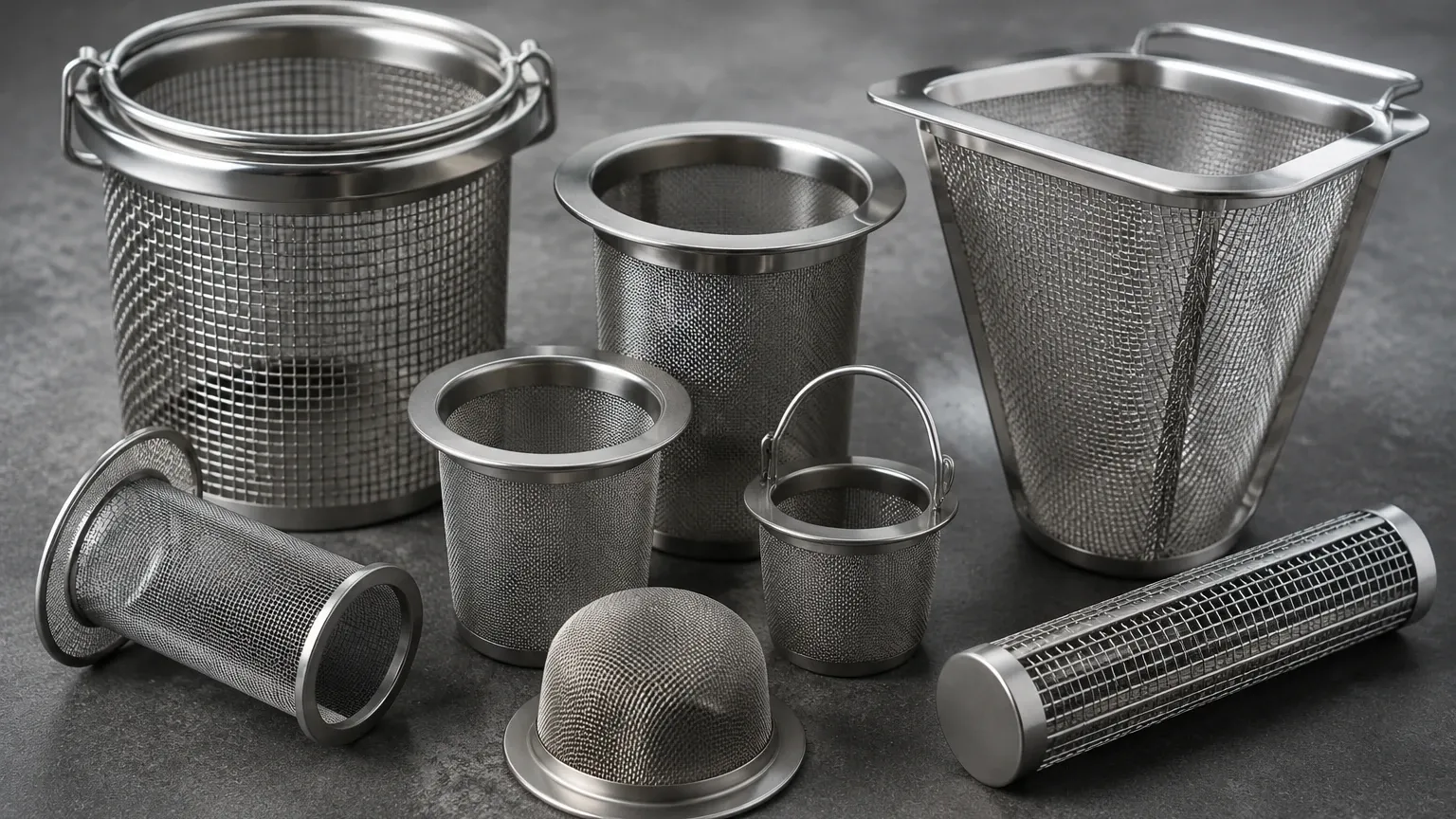
However, in a professional B2B and industrial environment, the English term "strainer" is widely adopted as the standard nomenclature. Despite this, knowing the local terminology aids in facility management and on-site communication. Beyond the literal translation, an industrial strainer represents a critical component designed to protect downstream equipment from damage caused by particulate matter. This article explores the technical complexities, selection criteria, and engineering considerations of Strainers & Baskets within modern industrial systems.
The Role of Strainers and Baskets in Industrial Processes
Industrial strainers are closed vessels with a cleanable screen designed to remove foreign particles from a flowing liquid or gas. Unlike filters, which are typically designed to remove particles in the sub-micron range and are often disposable, strainers are generally used for coarser filtration (above 40 microns) and are designed for reuse through cleaning or backwashing.
In complex piping systems, the presence of scale, rust, weld beads, or other debris can cause catastrophic failure to sensitive components. The primary function of a strainer is to act as a "safety net" for:
* Pumps: Preventing solids from entering the impeller housing, which could cause erosion or jamming.
* Valves: Protecting valve seats from scoring, which ensures tight shut-off and prevents leakage.
* Nozzles: Preventing clogging in spray systems, which is vital in chemical coating and food processing lines.
* Heat Exchangers: Reducing the risk of fouling on heat transfer surfaces, thereby maintaining thermal efficiency.
Technical Classification: Y-Strainers vs. Basket Strainers
Selecting the correct geometry for a strainer is as important as the material of construction. The two most common configurations in industrial settings are Y-strainers and basket (or Simplex/Duplex) strainers.
Y-Strainers
Named for their shape, Y-strainers are typically used in pressurized lines, either for liquid or gas. They are most effective in applications where the amount of material to be removed is small, resulting in longer intervals between cleanings. Their compact design makes them ideal for installations where space is at a premium. From an engineering perspective, Y-strainers can be installed in either horizontal or vertical positions (downward flow), providing significant flexibility in piping layout.
Basket Strainers
Basket strainers, often referred to as Simplex strainers, feature a vertical cylinder that houses a removable basket. These are preferred for high-flow applications where the debris loading is higher. The "basket" design allows for a much larger surface area compared to a Y-strainer, which results in a lower initial pressure drop and a higher dirt-holding capacity.
For processes that cannot be shut down for cleaning, Duplex strainers are employed. These consist of two separate basket chambers connected by a diverting valve. When one basket becomes clogged, the flow is diverted to the second chamber, allowing the operator to clean the first basket without interrupting the process flow.
Engineering Considerations for Material Selection
In the B2B sector, the durability of a strainer is dictated by its material compatibility with the process fluid. Kaifil specializes in stainless steel solutions, which are the industry standard for demanding environments. The choice of material impacts both the total cost of ownership and the equipment's lifespan.
1. Stainless Steel 304: Suitable for general-purpose applications, providing good corrosion resistance and mechanical strength at a cost-effective price point.
2. Stainless Steel 316/316L: The preferred choice for chemical processing and marine environments. The addition of molybdenum enhances resistance to pitting and crevice corrosion, particularly in chloride-rich environments.
3. Specialty Alloys: For highly aggressive fluids or extreme temperatures, alloys like Monel or Hastelloy may be required, though stainless steel remains the most versatile for the majority of industrial filtration needs.
Beyond the housing, the mesh or perforation material must also be considered. The structural integrity of the basket is paramount, as it must withstand the differential pressure (ΔP) created as it captures debris.
Understanding Filtration Accuracy: Mesh vs. Perforation
When specifying Strainers & Baskets, engineers must define the required filtration accuracy. This is typically expressed in one of two ways: perforation size or mesh count.
* Perforated Plate: This is a sheet of metal with punched holes. It is used for removing larger particles (e.g., 1/16" to 1/4"). Perforated plates are inherently strong and often serve as the structural support for finer mesh linings.
* Wire Mesh: For finer filtration, a woven wire cloth is used. "Mesh count" refers to the number of openings per linear inch. For example, a 100-mesh screen has 100 openings per inch. As the mesh count increases, the size of the opening decreases, allowing for the capture of smaller particles.
An essential engineering metric is the Open Area Ratio (OAR). This is the ratio of the total area of the holes in the screen to the internal cross-sectional area of the inlet pipe. A high OAR (typically 4:1 or 6:1) ensures that the strainer can accumulate a significant amount of debris before the pressure drop becomes excessive, thereby extending the maintenance cycle.
Pressure Drop and Flow Characteristics
Every component added to a piping system introduces a resistance to flow, measured as pressure drop (ΔP). For engineers, calculating the "clean pressure drop" is a prerequisite for pump sizing. The total pressure drop is influenced by:
* Fluid Viscosity: Thicker fluids require more energy to pass through the mesh.
* Specific Gravity: Heavier fluids increase the ΔP.
* Flow Velocity: Pressure drop increases with the square of the velocity.
* Mesh Size: Finer screens create higher resistance.
It is a common mistake to specify a mesh that is much finer than necessary. While a finer mesh provides "better" filtration, it also leads to faster clogging and higher energy consumption due to increased pressure drop. The rule of thumb in industrial filtration is to use the coarsest mesh that will adequately protect the downstream equipment.
Customization and OEM Capabilities
Standard off-the-shelf strainers often fail to meet the specific requirements of specialized industrial applications. Customization is frequently necessary in terms of:
* End Connections: Whether the system requires flanged (ANSI, DIN, JIS), threaded (NPT, BSPT), or socket-weld connections.
* Housing Dimensions: Modifying the height or width of the basket to fit within existing piping constraints.
* Reinforced Baskets: Adding internal supports or heavier gauge materials for high-pressure applications where the risk of basket collapse is high.
* Surface Finishes: In the food, beverage, and pharmaceutical industries, internal surfaces must be polished (often to a specific Ra value) to prevent bacterial growth and ensure clean-in-place (CIP) compatibility.
Kaifil provides extensive OEM support, working closely with engineering teams to develop bespoke filtration components that align with specific flow rates and chemical compatibility requirements. This collaborative approach ensures that the final product is not just a component, but a solution optimized for the specific operational environment.
Maintenance and Operational Best Practices
The effectiveness of a strainer is entirely dependent on its maintenance schedule. A neglected strainer can become a bottleneck, leading to pump cavitation or pipe rupture.
Differential Pressure Monitoring
The most reliable way to determine when a strainer needs cleaning is by monitoring the differential pressure across the unit. Installing pressure gauges on the inlet and outlet sides allows operators to see the ΔP in real-time. Most industrial systems are designed with a "dirty" ΔP limit; once reached, the basket must be removed and cleaned.
Cleaning Procedures
For Y-strainers, a "blow-off" valve can be installed on the strainer cap, allowing the unit to be flushed without stopping the flow. For basket strainers, the process typically involves venting the pressure, opening the cover (often via quick-opening swing bolts), and manually removing the basket. It is critical to inspect the gaskets or O-rings during every cleaning cycle to prevent external leaks.
Conclusion: Selecting the Right Partner
Understanding the strainer meaning in hindi or any other language is the first step in global communication, but the technical execution of filtration requires a deep understanding of fluid dynamics and material science. When selecting Strainers & Baskets, engineers must look beyond the initial purchase price and consider the total cost of ownership, including maintenance ease, durability, and the protective value the unit provides to the rest of the system.
As a manufacturer specializing in custom stainless steel filtration, Kaifil provides the technical expertise necessary to navigate these decisions. From selecting the appropriate mesh count to designing custom housings for high-viscosity fluids, our focus remains on delivering reliable, high-performance components that ensure the longevity and efficiency of industrial operations worldwide.
